
After 400 Years, Trade Issues Still at Center of American Politics

this-is-america-charlie-brown-mayflower-voyagers-production-cel-setup
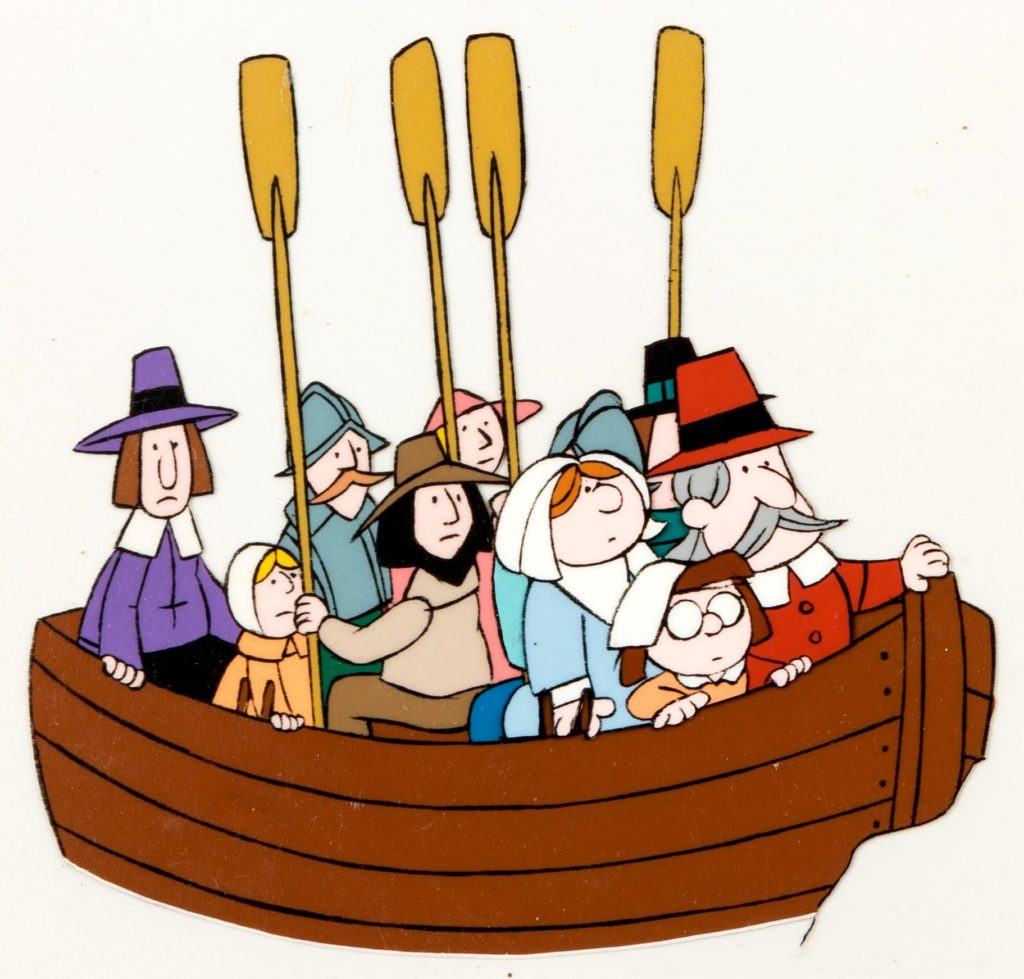
Mayflower voyagers head to the New World in this production cel from 1988’s This is America, Charlie Brown. This lot went to auction in July 2014.

By Jim O’Neal

In the early 17th century, people in England were legally required to worship as prescribed by the Church of England. However, although the church had broken from the Catholic Church, many people felt the rituals and prayers were Catholic features that should be dropped.

Puritans, so-called because of their religious purity, wanted to make these reforms from within the church. Other groups called “Separatists” set up their own congregations, but their leaders were imprisoned so they moved to the Netherlands, which was more tolerant.

In 1620, the Puritans set sail across the Atlantic to begin a new life in America. They started in two ships, but one was not seaworthy so they had to continue in just one, the Mayflower. Winter storms ravaged them during the 66-day voyage, but they managed to craft the Mayflower Compact, a document which pledged their loyalty to the Crown while asserting their right to make their own laws.

As the French, Dutch and Swedish arrived in North America, Britain decided to restrict their colonies by enacting the Navigation Acts, which required that all commodity trade take place in British ships crewed by British sailors.

Naturally, the colonists came to see these measures as willful suppression of their trade and manufacturing. Tensions rose on both sides of the Atlantic that would lead inexorably to the American War of Independence that we are so familiar with.

Free trade is still being debated yet today – almost 400 years later – as we see both major political parties arguing over new trade agreements with Asia. President Obama’s Trans-Pacific Partnership (TPP) involves the Pacific Ocean this time. Some things never seem to change (much).
Jim O'NielIntelligent Collector blogger JIM O’NEAL is an avid collector and history buff. He is President and CEO of Frito-Lay International [retired] and earlier served as Chairman and CEO of PepsiCo Restaurants International [KFC Pizza Hut and Taco Bell].
Iranian Revolution Created Tensions That Have Yet to be Resolved

don-ivan-punchatz-ayatollah-khomeini-unpublished-alternate-time-magazine-cover-illustration-original-art-1984
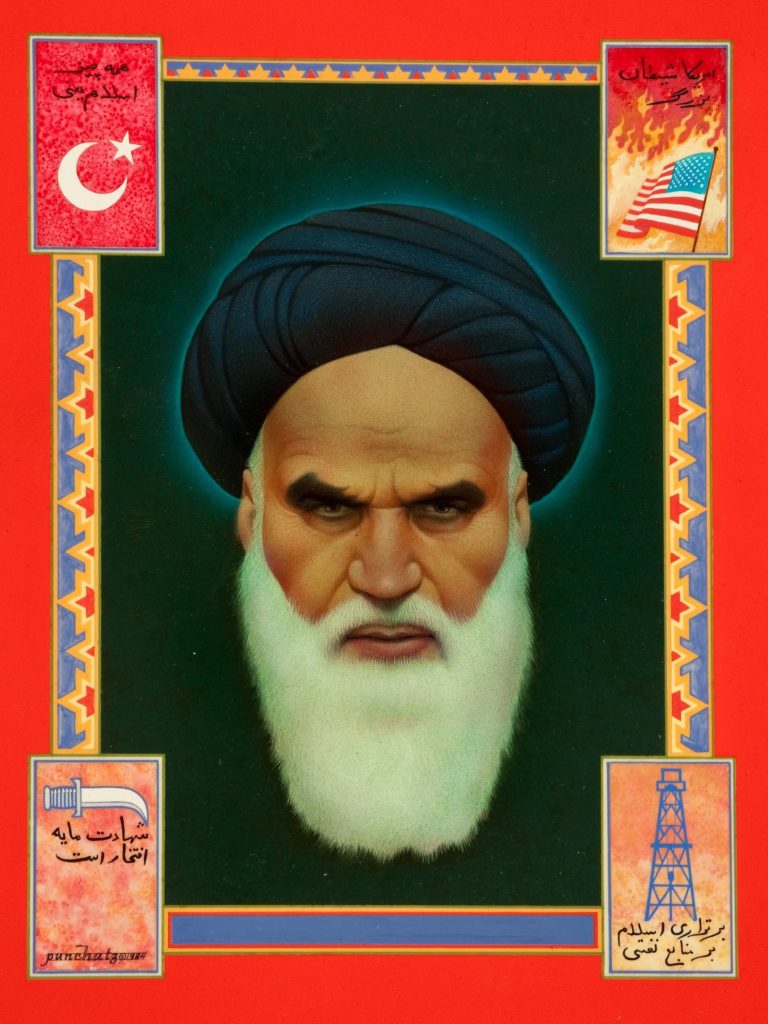
An unpublished Time cover illustration of Ayatollah Khomeini by Don Ivan Punchatz (1936-2009), dated 1984, went to auction in September 2012.

By Jim O’Neal

No act of terror could have exceeded the profound tension of the 1970s after the unpredictable drama that enveloped a Middle East nation in 1979. For Americans, it closed out the decade with a new and ferocious attack on our pride and sense of well-being.

It arrived from a most unlikely source: a bearded, humorless, 79-year-old Muslim cleric – in exile the previous 15 years from his native Iran, the last of them in Neauphle-le-Château (outside of Paris), preaching Sharia law and campaigning for the ouster of the Shah.

Remarkably, in early 1979, the Ayatollah Ruhollah Khomeini achieved his life’s goal: toppling the Shah’s Pahlavi dynasty and replacing him as de facto head of a modern theocracy. As he did, the enthusiasm of his insurrection fanned the flames of anti-Western fanaticism throughout the Muslim world. An Islamic Revolution was formally under way.

After centuries of being guided by conservative mullahs, Iran had been wrenched into the 20th century by what the Shah described as a “white revolution” (bloodless). He was the son of an army officer who had seized control of Iran in the 1920s. The Shah succeeded his father, was briefly deposed and then reinstalled by a CIA-led coup in 1953.

The Shah was active, stripping the clergy of their vast land holdings, declaring radical new rights for women, dramatically increasing urbanization and strengthening ties to the West. In addition to being a source of oil, Iran became a strategic impediment to the advancement of its neighbor, the Soviet Union. As western alliances flourished, so did Iran. Previously a desert state, it was transformed into a stunning country with shiny steel mills, nuclear power and an army well-stocked with American artillery.

Unfortunately, much of the populace did not want to abandon their rich heritage. They found inspiration in the sermons of Muslim leaders and viewed the western world as plagued with problems. The increasing tension forced the Shah to crack down hard and by 1979, he could not prevent popular resistance.

Early on Nov. 4, 1979, a mob of demonstrators breached the American Embassy in Tehran, took the staff as hostages and began their 444-day declaration of vengeance against the Great Satan. They defied the United Nations, the United States, and a failed 1980 rescue mission that left aircraft wreckage, the bodies of eight U.S. servicemen, and Jimmy Carter’s reelection effort in the desert sands.

Thirty-seven years later, the struggle of East-West continues and only the leaders have changed. However, the West is now viewed as occupiers instead of hostages and multiple conflicts in various countries offer little hope for peace. Civil wars usually last about 10 years. This may turn out to be a generational conflict, involving competing civilizations, perhaps all armed with nuclear capabilities.

To date, no one has offered a coherent strategy for an endgame as we continue to argue and debate who or what to blame.

Jim O'NielIntelligent Collector blogger JIM O’NEAL is an avid collector and history buff. He is President and CEO of Frito-Lay International [retired] and earlier served as Chairman and CEO of PepsiCo Restaurants International [KFC Pizza Hut and Taco Bell].
Science Tends to March On, Despite Public Opinion Polls

aldous-huxley-brave-new-world-london-chatto-windus-1932
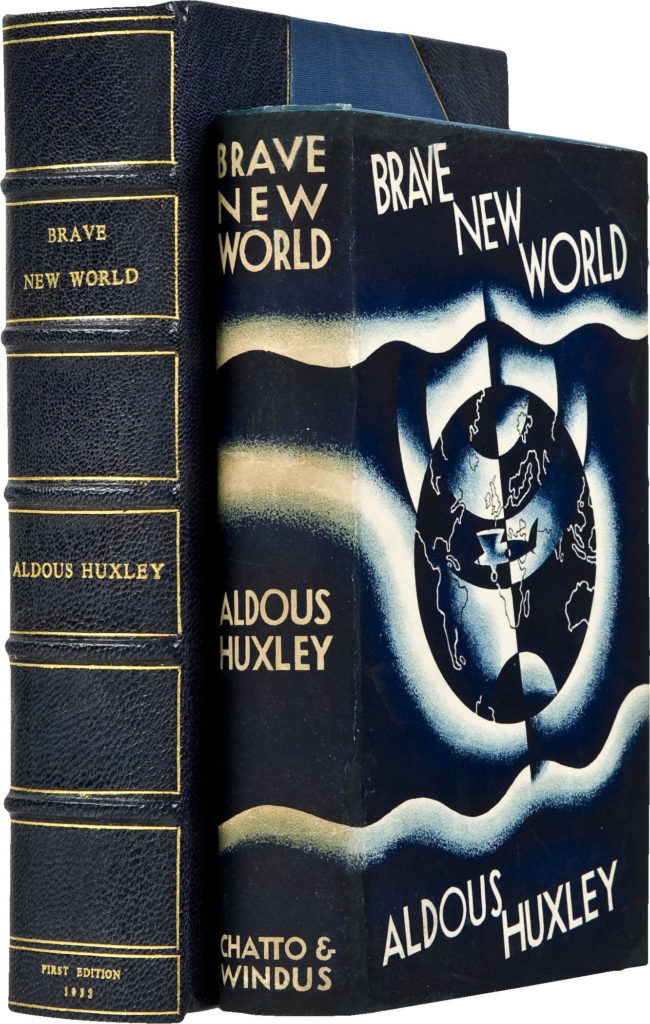
A 1932 first edition of Aldous Huxley’s Brave New World, with its custom leather clamshell box, sold for $3,585 at an October 2008 Heritage auction.

By Jim O’Neal

The healthy, lusty cry that emanated from a delivery room in a British mill town hospital at precisely 11:47 on a summer night in 1978 brought joy to Lesley and John Brown. Since their marriage in 1969, the couple had wanted a baby and now they had one, thanks to $1,500 John won betting on football. There was also the brilliance of two British doctors who became the first physicians to create a test-tube baby. They had been unsuccessful in 80 previous tries.

The formal term for the method that produced little 6-pound Louise Brown was IVF – “in vitro fertilization” (literally “in glass”), but “test tube” better fit the imagination that was running wild around the world. With the news, people began recalling Aldous Huxley’s 1932 novel Brave New World and its vision of a society where “babies are mass produced from chemical solutions in laboratory bottles.”

Actually, Louise was nothing close to this concept. She represented the union of John’s sperm and Lesley’s egg, and was carried to term by her mother as other babies were. Only the joining of the ingredients had been done in a lab. The incipient embryo was transferred back to Lesley, where it implanted itself on the wall of the hormone-prepared uterus.

The moral and legal implications touched off incendiary debates when the news from Britain spread. And the fact the story came from a hysterical tabloid (the Browns sold the story rights to the Daily Mail for $500,000) took the episode further into the realm of science-fiction.

The clergy were unanimous against “baby factories” and scientists “playing God” – but the issue was overtaken in the headlines by women’s rights, feminism, industrial abuses of the environment (Earth Day), fossil fuels and materialism. Climate change, and income and wealth inequality battles were on the way.

In August 1998, I hosted a PepsiCo dinner for the Scottish scientists from the Roslin Institute (University of Edinburgh) who had just cloned the first mammal from an adult somatic cell, the famous Dolly the Sheep. Dolly was born on July 5, 1996, and the great controversy this time was “designer babies.” As I recall, they suspected the Koreans would be the first to attempt humans, but the only ones I’ve read about are pigs, deer, horses and bulls.

I think Dolly died just before her seventh birthday from a lung disease – living about half as long as hoped. I assume little Louise Brown must have 5 to 10 million IVF cousins by now.

Science marches on, despite public opinion polls.

Jim O'NielIntelligent Collector blogger JIM O’NEAL is an avid collector and history buff. He is President and CEO of Frito-Lay International [retired] and earlier served as Chairman and CEO of PepsiCo Restaurants International [KFC Pizza Hut and Taco Bell].
Canal a Vital Investment that Helped Open the West from Chicago

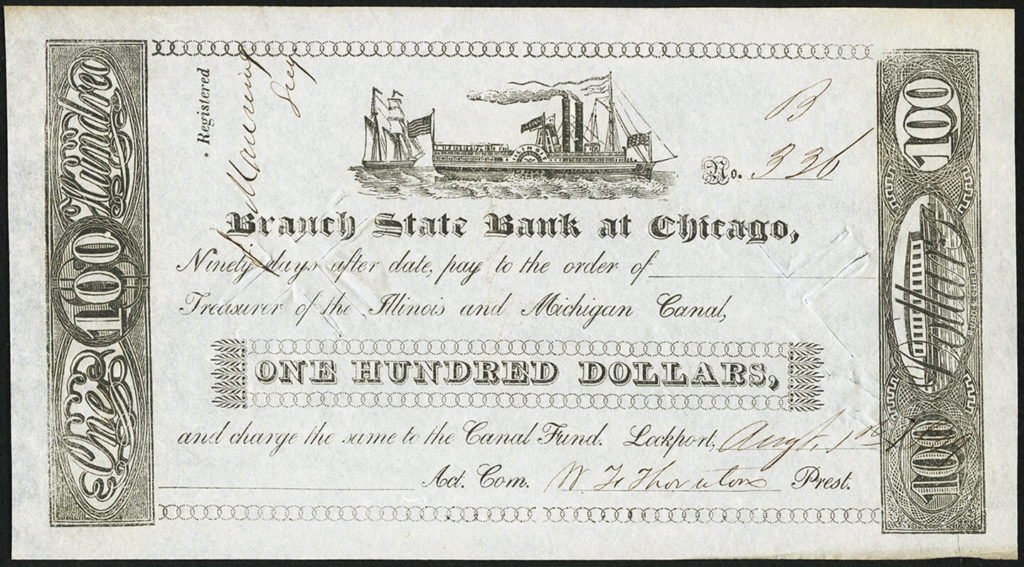
lockport-il-illinois-and-michigan-canal-at-branch-state-bank-at-chicago-100-post-note
Notes were issued by banks to help fund the Illinois and Michigan Canal Company. This Branch State Bank at Chicago $100 post note is dated Aug. 1, 1839.

By Jim O’Neal

Chicago had a big opportunity buried deep within a challenging situation.

In the early 19th century, trade goods from the Great Lakes region could be shipped on three routes. The Erie Canal got goods to New York, the Saint Lawrence River to the ports on the northern Atlantic, or goods went south on the Mississippi River to New Orleans into the Gulf of Mexico. The last option was best for goods grown or mined around Lake Michigan or Superior.

One issue was the lack of a physical connection to the Mississippi or any of its tributaries. There was a geographically infuriating obstacle in the way: a relatively low plateau with a wide expanse. It was this barrier, just a few dozen feet high, that separated the growing lakeside city of Chicago from the rivers of the west.

As early as 1673, French-Canadian explorer Louis Jolliet had remarked how easy it should be to cut a small canal across the hilltop marsh and make a direct link to the mighty river. Although Jolliet knew very little about artificial waterways, he was aware of a giant canal being built in France, the Canal du Midi, a 150-mile structure linking the Mediterranean to the Atlantic. It had started six years earlier and would take another eight years to complete. But, surely a small waterway here in America would be “trivial.”

Wrong!

Neither the French nor British had pursued a project during their occupation of this land and only when Illinois become a state in 1818 did any serious discussions begin. Finally, on Independence Day 1836, the Illinois and Michigan Canal Company broke ground and digging began.

The implications for Chicago were enormous. Connect to the Mississippi and trade commerce would explode. Immigrant laborers were attracted in large numbers. In the 12 years it took to finish the canal, the population grew to 20,000 and six years later it had tripled.

It took 12 long years because the scope of the canal was much larger than anticipated. It became a fully formed waterway; 60 feet wide at the top, 26 feet wide on the bottom and 6 feet deep. However, it was 96 miles long, had 17 locks, four aqueducts, and a giant pumping station with feeder springs. It allowed vessels to pass without interruption from the Lakes to the new city of LaSalle on the Illinois River.

When the steamer General Thornton arrived in the middle of Chicago on April 19, 1848 (bringing a load of sugar from New Orleans), a cascade of other events followed: Chicago got its first telegraph, the Board of Trade opened, the first steam-powered elevator started unloading on the docks, and the first railroad connection was started.

Suddenly, Chicago was a vital fulcrum for commerce and business – conveniently located between East and West. Journeys that had taken fur traders three weeks or farmers 10 days could now be accomplished in less than one day’s sailing! A torrent of goods flooded in: lumber, wheat, corn, stone, salt and livestock for the packinghouses to fill the nation’s dinner tables.

People quickly found travel into the American interior delightfully uncomplicated since the first half of the journey was easily waterborne. Chicago’s new Grand Canyon was much more than the trivial ditch Jolliet had envisioned, but when gold was discovered in California the following year, the mass migration started, filling in the middle of the country as they went.

This was one “Big Dig” that paid off … big time!

Jim O'NielIntelligent Collector blogger JIM O’NEAL is an avid collector and history buff. He is President and CEO of Frito-Lay International [retired] and earlier served as Chairman and CEO of PepsiCo Restaurants International [KFC Pizza Hut and Taco Bell].
J.P. Morgan was Crucial to the Financial Development of the United States

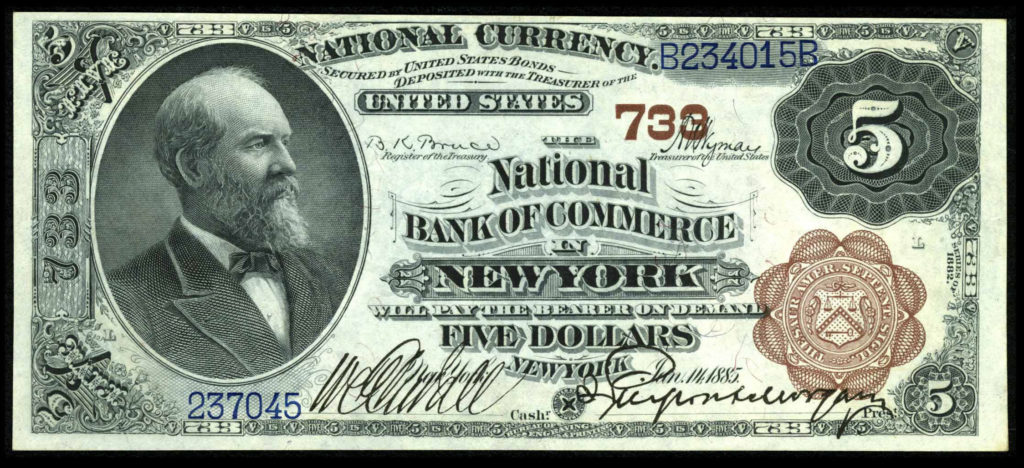
5-brown-back-bears-signature-of-new-york-financier-j-pierpont-morgan-a
An 1882 $5 Brown Back, National Bank of Commerce in New York note, bearing the signature of J.P. Morgan as vice president (lower right), went to auction in September 2007.

By Jim O’Neal

John Pierpont “J.P.” Morgan may have been the preeminent U.S. banker in the last half of the 19th century. He was born in 1837, avoided serving in the Civil War by paying a substitute the traditional $300 to take his place, and started his banking career … first in London with his father and then in New York City. In addition to becoming a famous financier, he accumulated a world-class art and precious gem collection.

It is his role in helping finance the development of the United States that provides the most interest. In fact, throughout the entire span of his lengthy financial career, there was a chronic lack of capital in the United States to fund economic development. This was primarily due to the lack of a strong national bank or a system to monitor monetary policy and ensure adequate liquidity … without triggering runaway inflation.

This situation was exacerbated by a series of “financial panics” that seemed to occur with regularity every 15 to 20 years due to myriad factors (e.g. bank failures, speculative bubbles, asset-liability mismatches, over-leverage, economic recessions, depressions, etc.). The United States had several in the 19th and 20th centuries and we almost collapsed the entire financial system in 2007-08 after the bursting of the housing bubble and too much bank leverage using exotic products. Central bankers around the world are still struggling with economic development while sovereign governments abdicate their fiscal responsibility.

morgan
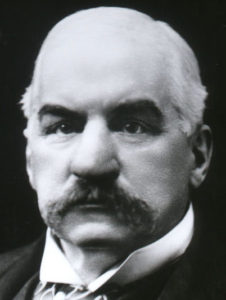
J.P. Morgan

During Morgan’s career, there was also the issue associated with European investors being skittish about investments in America that were hard to monitor from 3,000 miles away. This was especially true for railroads that were enormously capital intensive. This void created a perfect role for Morgan in New York and his father in London. They could match up sound investments in the United States with eager foreign investors by taking “moral responsibility” (their term) for overseeing their clients’ investment through their bank.

If a railroad went bankrupt, J.P. would personally step in and take charge by managing the bankruptcy, replacing top management, restructuring the financing, installing a new board (often including himself) and staying until the company’s health was restored. This reorganization of railroads came to be called “Morganization.”

Once the essential railroad structure of America had been knitted together into a sound economic and geographic sector, he then turned his talent to industrial organizations. He put together the first billion-dollar corporation by combining several small steel companies with Carnegie Steel and creating U.S. Steel. Next was Edison Electric and Thomson-Houston to form General Electric, one of the original 12 Dow Jones companies.

He and his partners put together International Harvester, financed AT&T, bailed out the U.S. Treasury when they were about to run out of gold during the 1893 Panic, and almost single-handily stopped the Panic of 1907. In this case, he was a national hero, but within a short period many Americans were horrified that one private citizen had so much power. This led to a national monetary commission and eventually the Federal Reserve System of today.

When J.P. Morgan died in 1913 and billionaire John D. Rockefeller read in The New York Times that his estate was only worth $80 million, Rockefeller reportedly shook his head and said, “And to think, he wasn’t even a rich man!”

Jim O'NielIntelligent Collector blogger JIM O’NEAL is an avid collector and history buff. He is President and CEO of Frito-Lay International [retired] and earlier served as Chairman and CEO of PepsiCo Restaurants International [KFC Pizza Hut and Taco Bell].
Fate Gave Assassins Second Chance to Change the World

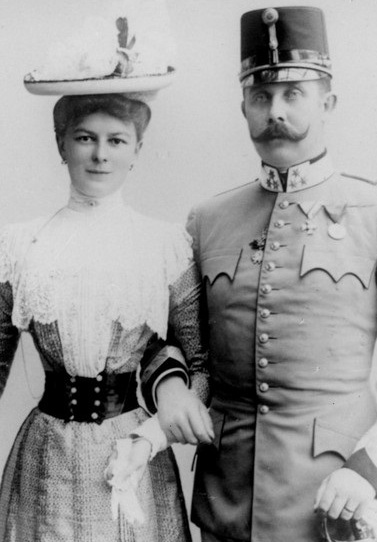
sophie-and-franz-ferdinand
Archduke Franz Ferdinand met Sophie Chotek at a ball in 1894. They were married in 1900 and she was granted the title Duchess of Hohenberg.

By Jim O’Neal

Gavrilo Princip was a 19-year-old student at the beginning of 1914, immersed in the study of ethics and politics. He was born to a kmet family (the Serbian version of a serf) in Austrian-controlled Bosnia and grew up in extreme poverty. Like many other young Serbs, he had grown frustrated with the conditions under the Austro-Hungarian empire and dreamed of liberating them to join the Serbian kingdom next door.

Princip chose Sunday, June 28, 1914, to stake his claim on history.

When Archduke Franz Ferdinand – heir apparent to the Austro-Hungarian throne – prepared to visit Sarajevo on that date, Princip and six other members of the Black Hand terrorist group planned his assassination. None of them had ever handled a gun and they only knew their target was in line to succeed Franz Joseph.

On the morning of June 28, as Franz Ferdinand and his wife Sophie climbed into the back of a black convertible sedan, the seven plotters took their positions along a parade route in the Bosnia capital. The first two assassins to encounter them lost their nerve and fled. A third lobbed a grenade toward the car and missed, striking the car behind Ferdinand’s and then bungled his own suicide by not swallowing enough cyanide.

But fate decided to give the murderers another chance.

When Ferdinand resumed the tour an hour later, his driver took a wrong turn and ended up five feet from where Princip was standing in front of a delicatessen. Princip fired two shots directly into the car, killing both Ferdinand and Sophie.

The archduke’s murder triggered a feud between Austria-Hungary and Serbia that prompted Russia to come to the aid of the Serbs. Germany decided to aid the Austrians, and France jumped in to help Russia, and England to aid Belgium (which had been overrun by German troops on the way to invade France). The politicians justified their actions by pointing to carefully worded alliances that required mutual action.

There were some superficial attempts at diplomacy, but at 10 a.m. on Aug. 2, 1914, a group of German cavalrymen attacked a French sentry post on the border town of Belfort and gunfire was exchanged.

World War I, fought over little consequence, had begun and millions would suffer.

Jim O'NielIntelligent Collector blogger JIM O’NEAL is an avid collector and history buff. He is President and CEO of Frito-Lay International [retired] and earlier served as Chairman and CEO of PepsiCo Restaurants International [KFC Pizza Hut and Taco Bell].
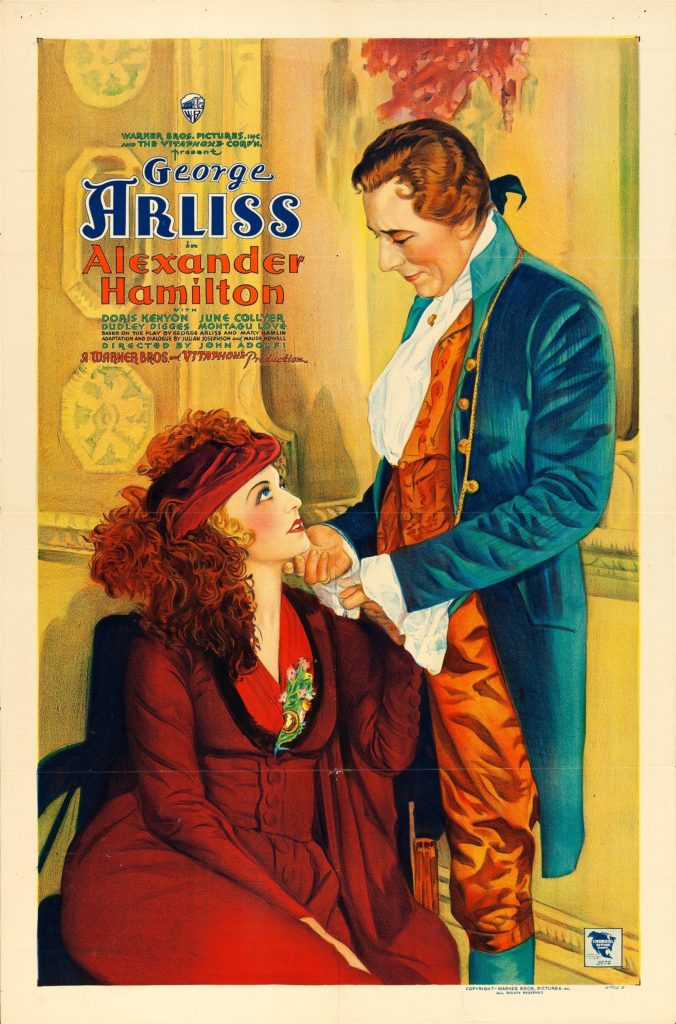
Hamilton-Burr Duel Remains a Puzzle of American History

alexander-hamilton-warner-brothers-1931-one-sheet
Warner Brothers’ 1931 film Alexander Hamilton was based on the play that opened on Broadway in 1917. This original poster for the movie sold for $5,975 at a July 2016 Heritage auction.

By Jim O’Neal

Alexander Hamilton was born in the West Indies, arriving in America in 1772 to pursue an education. Aaron Burr was born in 1756 in Newark, N.J. When they met for their famous duel, Hamilton was a former Revolutionary War General and had been the first Secretary of the Treasury. Burr was a respected soldier, former U.S. Senator and the vice president of the United States.

Their duel is still controversial and somewhat puzzling. Why would two prominent Americans end up early one morning in a situation where one would be killed and the political career of the other effectively ended?

Burr has steadily become one of the great villains of American history. But before the duel, he was an impressive man. Contemporary reports asserted he was open and kind, and wrote letters to his servants, solicitous about their welfare. He had fought to eliminate slavery throughout the country and is credited with helping end the practice in New York in 1799.

Before the contentious election of 1800, Burr and Hamilton were friends who enjoyed dining together and their two daughters were also friendly. Yet the two men, among the most prominent lawyers in New York and the entire country, found themselves enmeshed in the code duello, a system of honor no better than current street rules for gangs in Chicago or Los Angeles.

It had started in February 1804 at a political dinner when Hamilton had supposedly called Burr a “dangerous man” unfit to lead. A doctor, Charles Cooper, leaked the comments to an Albany newspaper, which printed them. When Burr confronted Hamilton, Burr was told to ask Dr. Cooper, and then several more letters were exchanged, each one slightly more hostile than the previous.

Eventually, Burr challenged Hamilton to the duel in June 1804 and they agreed to meet in Weehawken, N.J., the exact spot Hamilton’s son had been killed in a duel three years earlier. The time was to be 7 to 7:30 a.m. on July 11 and both men were using modified pistols of over .50 caliber, more lethal than World War II heavy .50 caliber machineguns.

These guns were designed for killing, not dueling!

Hamilton was hit in the lower right side, fell, was carried to a boat waiting in the Hudson River and taken back to a friend’s house in New York. He died 36 hours later and his funeral was very impressive – a procession of his coffin on a carriage and his general’s uniform proudly on top. It was a memorable date, July 14, Bastille Day, and the 15th anniversary of the French Revolution.

Burr was indicted for murder, but never tried. In 1805, President Thomas Jefferson dropped him from the presidential ticket and Burr’s career careened into a deep spiral, his honor tarnished forever.

The infamous code duello had claimed two more victims.

Jim O'NielIntelligent Collector blogger JIM O’NEAL is an avid collector and history buff. He is President and CEO of Frito-Lay International [retired] and earlier served as Chairman and CEO of PepsiCo Restaurants International [KFC Pizza Hut and Taco Bell].
After Civil War, Challenge Was Putting Pieces of Nation Back Together

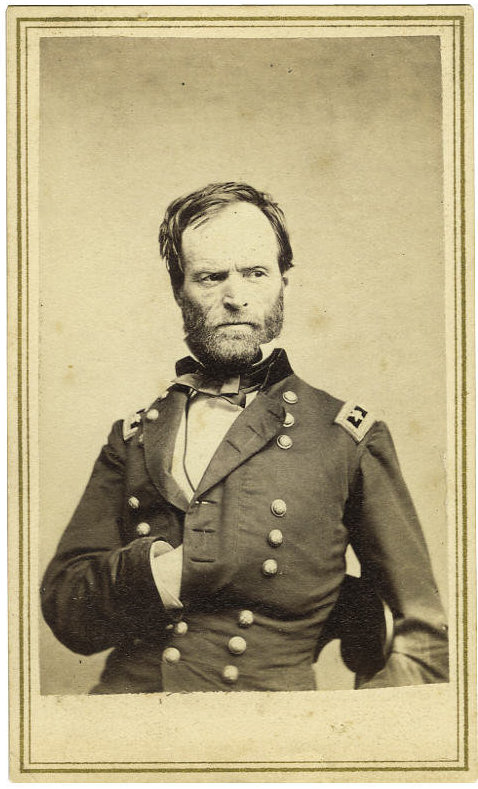
gen-william-tecumseh-sherman-four-scarce-cartes-de-visite
A set of four cartes de visite of William Tecumseh Sherman, including this image of the general posed like Napoleon, sold for $2,868 at a December 2006 Heritage auction.

By Jim O’Neal

After Confederate General Robert E. Lee surrendered to General Ulysses S. Grant, the issue of the remaining Confederate armies was now only a question of time. However, the next anticipated surrender of General Joe Johnston and his army of 22,000 soldiers did not go smoothly.

On April 14, General William Tecumseh Sherman received a surprise communique from Johnston asking for a meeting to discuss terms for “exterminating the existing war.” This was a relief for Sherman since he had been concerned about a “guerilla war” and knew how Spain had foiled Napoleon using similar tactics.

Sherman answered immediately and suggested they meet on April 17 halfway between their two armies. However, tragedy struck before the meeting when President Lincoln was assassinated at Ford’s Theatre. When Sherman received the news via coded message, he quickly realized this could escalate into a major disaster. Lincoln’s death was calamitous per se, but it also had the potential to plunge the North into a vengeful bloodbath against a prostrated and fearful South. They would, in turn, fight back the only way they had left: chaos, disorder and continued violence. The war could drag out for a long time.

To Sherman it seemed imperative that he reach a prompt accommodation with Johnston and quell any acts of vengeance.

When they finally met, Sherman had apparently misunderstood the limits of his authority. He offered overly generous terms to Johnston and Confederate States Secretary of War John Breckinridge (who had been vice president for President James Buchanan pre-War). Then all hell broke loose in Washington, D.C., when new President Andrew Johnson and his cabinet learned the conditions of surrender. They canceled the armistice, ordered Sherman to resume hostilities and dispatched Grant to modify the terms of surrender.

Fortunately, there was no more fighting and Grant was able to effect the formal surrender. Sherman was infuriated, primarily because Secretary of War Edwin Stanton had insulted him and questioned his motives and loyalty. Things quieted down, but Sherman and Stanton were bitter enemies for the rest of their lives.

Now all that was left to do was to put all the pieces of the nation back together. Some cynics think this work is still under way.

Jim O'NielIntelligent Collector blogger JIM O’NEAL is an avid collector and history buff. He is President and CEO of Frito-Lay International [retired] and earlier served as Chairman and CEO of PepsiCo Restaurants International [KFC Pizza Hut and Taco Bell].
Decision by General Lee Averted Nightmare Scenario for Nation

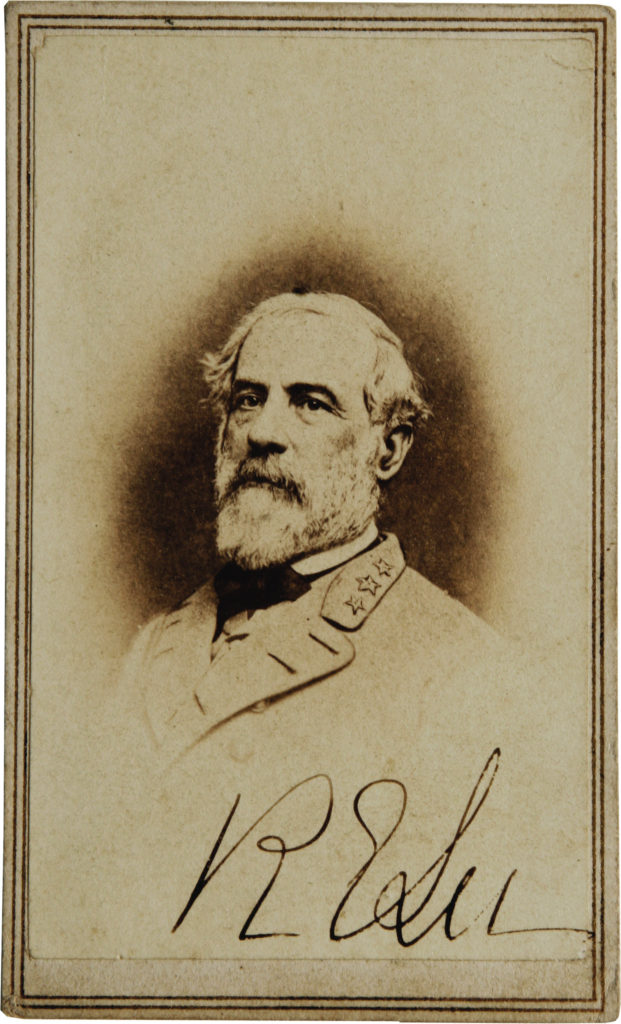
robert-e-lee-signed-carte-de-visite
This signed carte de visite of Confederate General Robert E. Lee sold for nearly $9,000 at a December 2006 auction.

By Jim O’Neal

The Civil War was drawing to an end and the first week of April 1865 had been tough on Southern soldiers. After losses at the Battle of Sayler’s Creek, Union General Phil Sheridan wired General Ulysses S. Grant: “If this thing is pressed, I think Lee will surrender.” When President Lincoln read this, he telegraphed Grant, “Let it be pressed!”

On April 7, Grant sent a note to Confederate General Robert E. Lee. In it, he stressed the dire situation of the South and tried to convince Lee that further resistance would only result in more useless “effusion of blood.” If Lee surrendered his Army of Northern Virginia, it could be avoided.

Both Lee and General James Longstreet read the note very carefully and finally decided … “Not yet.”

Lee sent a note back to Grant suggesting the South’s assessment was more optimistic, however, he asked Grant to elaborate on the details of a surrender. There were several more notes, but in the interim, the Confederates held one last War Council before making a decision.

A number of Lee’s top lieutenants decried any surrender, pointing out that Joe Johnston still had his entire army intact, as did Nathan Bedford Forrest in the West and Edmund Kirby Smith and John Mosby in Virginia. More importantly, they could disband into the surrounding countryside. Since they knew the terrain, a full-scale guerilla war could last indefinitely. The North would be forced to eventually give up and go home, even if it took 20 years!

This was the nightmare scenario that Lincoln, Grant and all top military minds had dreaded: a guerilla army of tens of thousands, scattered across the South, living off the land. It would be an impossible war to extinguish completely and the nation would slowly unravel. (We learned a similar lesson in Iraq and are still in the Afghanistan quagmire after 15 years and counting.)

Perhaps in his finest act, General Lee decided the restoration of the United States of America was the right thing to do, despite the bitterness of defeat, after all the sacrifices, and the destruction of their society, economy and culture. Historians credit this one single decision as the most important in the entire war.

Grant and Lee met on April 9 and the terms of surrender were very generous. Confederate officers and enlisted men could take their horses home, all arms and munitions surrendered and all troops were disqualified from the war. At Lee’s request, 25,000 rations were given to the half-starved men. The formal surrender continued for seven hours and at 4:30 p.m., Grant wired U.S. Secretary of War Edwin Stanton a simple message: “General Lee surrendered the Army of Northern Virginia this afternoon on terms proposed by myself.”

Yet for the promise of this day, dire questions remained about the rest of the Confederacy. The war was not over.

More tomorrow.

Jim O'NielIntelligent Collector blogger JIM O’NEAL is an avid collector and history buff. He is President and CEO of Frito-Lay International [retired] and earlier served as Chairman and CEO of PepsiCo Restaurants International [KFC Pizza Hut and Taco Bell].
Penicillin Changed Medicine — But Deadly Enemies Lurk

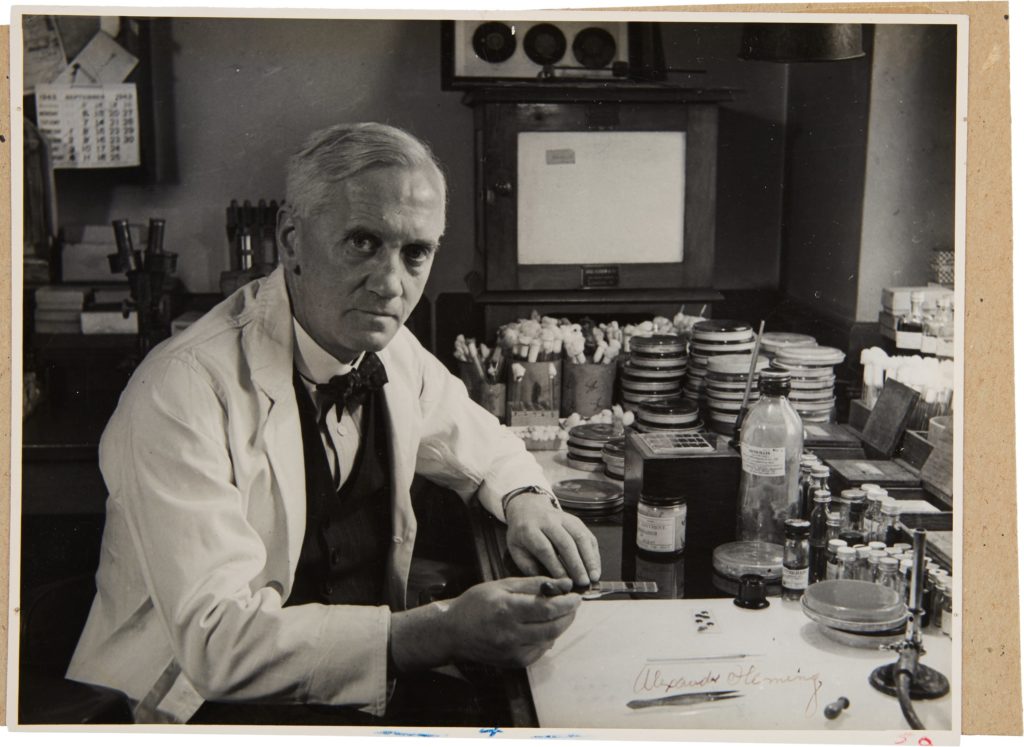
alexander-fleming-signed-photograph
A photograph signed by Nobel Prize winner Alexander Fleming sold for $1,250 at an April 2016 auction.

By Jim O’Neal

In the fifth century B.C., Herodotus noted in his “History” that every Babylonian was an amateur physician, since the sick were laid out in the street so that any passerby could offer advice for a cure. For the next 2,400 years, that was as good an approach as any to curing infections; doctors’ remedies were universally useless.

Until the middle of the 20th century, people routinely died from infections. Children were killed by scarlet fever, measles and even tonsillitis. Mothers systematically died from infections following childbirth and many who survived were taken later by pneumonia or meningitis.

Soldiers most commonly died from infections such as gangrene or septicemia, not from war injuries. Even a small cut could lead to a fatal infection. Bandaging a wound simply sealed in the infectious killers to carry out their deadly missions. Of the 10 million killed in World War I, 5 million died of infections.

There were few antidotes to infections … vaccination against smallpox with cowpox vaccine (Edward Jenner in 1796), introduction of antiseptics (Joseph Lister in 1865), and the advent of sulfa drugs in 1935. But there was no known cure for a stunning number of other deadly threats: typhoid fever, cholera, plague, typhus, scarlet fever, tuberculosis. The list seemed endless and most of these ended in death.

All of this changed in 1940.

Alexander Fleming’s discovery of penicillin while examining a stray mold in his London lab in 1928, and its eventual development by a team at Oxford University, led to the discovery of antibiotics. This was the most important family of drugs in the modern era. Before World War II ended, penicillin had saved the lives of hundreds of thousands and offered a viable cure for major bacterial scourges such as pneumonia, blood poisoning, scarlet fever, diphtheria and syphilis/gonorrhea.

The credit usually goes to Fleming, but the team of Howard Florey, Ernst Chain, Norman Heatley and a handful of others on the Oxford team deserve a major share. The efficacy and eventual use of the drug required them to perform their laboratory magic.

Neither Fleming nor Florey made a cent from their achievements, although Florey, Fleming and Chain did share a Nobel Prize. British pharmaceutical companies remarkably failed to grasp the significance of the discovery, so American companies – Merck, Abbott, Pfizer – quickly grabbed all the patents and proceeded to make enormous profits from the royalties.

The development of antibiotics is one of the most successful stories in the history of medicine, but it is unclear whether its ending will be a completely happy one. Fleming prophetically warned in his 1945 Nobel lecture that the improper use of penicillin would lead to it becoming ineffective. The danger was not in taking too much, but in taking too little to kill the bacteria and “[educating] them on how to resist it in the future.” Penicillin and the antibiotics that followed were prescribed too freely for ailments they could cure, and for other viral infections they had no effect on. The result is strains of bacteria that are now unfazed by antibiotics.

Today, we face a relentless and deadly enemy that has demonstrated the ability to mutate at increasingly fast rates – and these “super bugs” are capable of developing resistance. We must be sure to “keep a few steps ahead.”

Hear any footsteps?

Jim O'NielIntelligent Collector blogger JIM O’NEAL is an avid collector and history buff. He is President and CEO of Frito-Lay International [retired] and earlier served as Chairman and CEO of PepsiCo Restaurants International [KFC Pizza Hut and Taco Bell].