General Longstreet at Center of One of Civil War’s Greatest Controversies

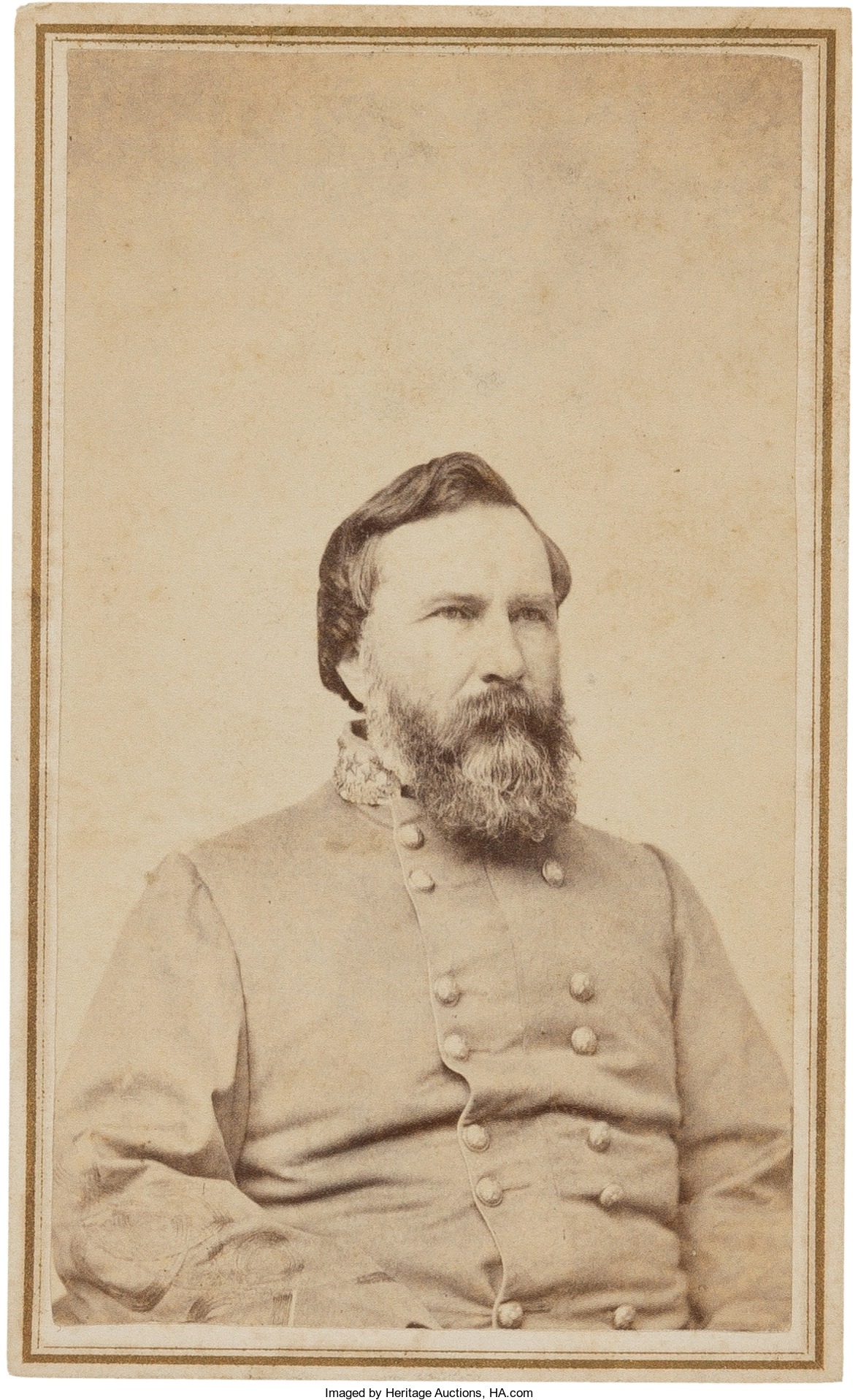
A signed carte de visite of Confederate General James Longstreet sold for $3,250 at a June 2015 Heritage auction.

“Bring me Longstreet’s head on a platter and the war will be over.” – President Abraham Lincoln

By Jim O’Neal

Confederate General James Longstreet (1821-1904) was born in South Carolina and his mother sent him to live with an uncle who decided his should have a military career. He received an appointment to West Point, where he underperformed academically. However, he made many lifelong friends, including future President Ulysses Grant.

Commissioned into the infantry, he served until the outbreak of the Mexican-American War. From 1847 to 1849, he served under generals Zachary Taylor and Winfield Scott, was wounded at the Battle of Chapultepec, and finally resigned from the U.S. Army in June 1861. It was nearly a month after Fort Sumter.

Like many of his southern colleagues, he joined the Confederacy and ended up in the Army of Northern Virginia after Robert E. Lee declined Lincoln’s offer to head up the entire Union Army. Almost inexorably, this led to the most famous battle of the Civil War. On July 1, 1863, Longstreet rode onto the battlefield of Gettysburg as infantry units were cleaning up after a decisive day-one victory. He was 42 years old.

After surveying the Federals rallying on Seminary Ridge, he lowered his field glasses, turned to General Lee and spoke – launching one of the greatest controversies of the entire Civil War. “General Lee, we could not call the enemy to position better suited to our plans… all we have to do is to flank his left…” The words either surprised or angered Lee, who pointed a fist toward the ridge beyond town: “If the enemy is there tomorrow, I will attack him!”

Despite the open disagreement, Longstreet reluctantly supervised the disastrous infantry assault known as Picket’s Charge (the high-water mark of the Confederacy) as ordered. The date was July 1863, and despite being preceded by a massive artillery bombardment, its futility was an avoidable mistake: 12,500 Confederate soldiers in nine infantry units advanced over three-quarters of a mile – charging into a withering hail of Union pure death. The staggering 50 percent casualty rate resulted in a defeat that the South never recovered from – either militarily or psychologically.

Noted historians are still debating who to blame: Lee, for overriding the advice of his most-trusted second-in-command, or Longstreet for being too slow to carry out a direct order.

Personally, I side with General George Pickett, one of three Confederate generals who led the assault under Longstreet and who was bitterly unequivocal: “That old man [Lee] destroyed my division.” His regular daily report is missing and is believed to have been intentionally destroyed, perhaps by Longstreet personally. It was now just a matter of time until the South’s war machine gradually came to a stop. The war would continue until April 1865, but the end was never again in doubt.
Intelligent Collector blogger JIM O’NEAL is an avid collector and history buff. He is president and CEO of Frito-Lay International [retired] and earlier served as chairman and CEO of PepsiCo Restaurants International [KFC Pizza Hut and Taco Bell].
Artists Helped Establish America’s First National Park

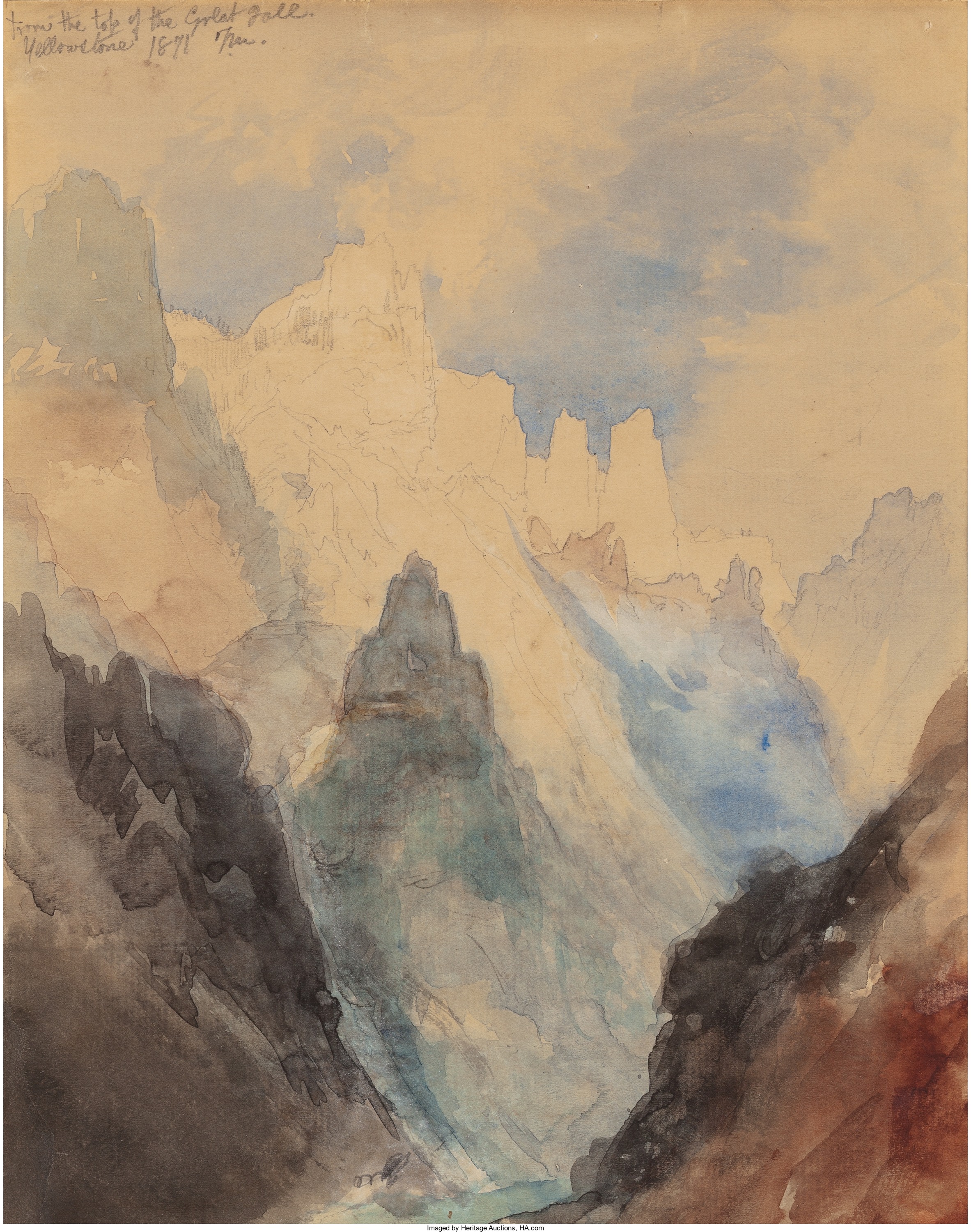
Thomas Moran’s watercolor, pencil and gouache on paper titled From the Top of Great Fall, Yellowstone, 1871, sold for $51,500 in November 2014.

By Jim O’Neal

In March 1872, a tract of land beneath the headwaters of the Yellowstone River became a national park when the U.S. Congress passed an act to authorize it and President Ulysses S. Grant approved it.

A great deal of the credit belongs to two 19th-century artists: Thomas Moran (amazing color sketches and paintings) and William Henry Jackson (brilliant photographs). They provided the real impetus to convince Congress to set aside 2.2 million acres of Wyoming, Montana and Idaho wilderness as the first national park in the United States (and probably the world).

Because Congress had a chance to see Moran’s and Jackson’s breathtaking pictures, America got Yellowstone National Park.

Before the artists’ work became widely known, little reliable proof was available to support the fanciful reports that had been trickling back East. They had started shortly after the famous Lewis and Clark journey had ended in 1806 after an epic three-year discovery which did NOT include any of the Yellowstone area.

However, there were numerous eyewitness reports from trappers and mountain men who described a strange landscape filled with boiling springs, towering geysers and foul-spelling vapors. One prominent fur trader, Warren Angus Ferris, wrote: “The largest of these wonderful fountains projects water several feet in diameter to the height of more than 150 feet.” But without images to support these claims, they were generally considered exaggerated and only partially credible.

As an aside, there was also a plain within Yellowstone called Two-Ocean Plateau, from which creeks trickled into streams that eventually passed to both the Atlantic and Pacific Oceans. The result was that Yellowstone’s melting snow peaks watered great swaths of American land. Yet none of those passing on the Oregon Trail came close enough to see it. Neither did the hardy Mormon pioneers who were heading for the valley where they would build Salt Lake City.

Even those heading for the Montana gold fields turned away at the sight of the seemingly impenetrable-looking mountains. All of them balked at the high passes that were still choked with snow in late June. So all the contemporary maps marked Yellowstone as “unexplored” and “terra incognita” or did not bother to mention it at all.

In 1860, it was probably the final important place in all of America to be so little-known.

However, by 1870, the Montana Territory was becoming populated as gold and silver were discovered. Towns were built and unknown corners of the territory were being explored. One group even headed up the Yellowstone River and what they discovered over the next six weeks was almost beyond belief. One member, Nathaniel Langford, wrote two essays for Scribner’s Magazine. They told of truly amazing things: hundred-foot geysers, enormous waterfalls, bubbling hot springs, wild-flowered meadows and towering snowcapped volcanoes.

It was the formal crowning for Yellowstone and was followed by the Ferdinand Hayden expedition, which took along Thomas Moran, the very artist who had drawn the magnificently imagined Scribner’s pictures. What he drew and painted that year and what Hayden found on his expedition put in motion a series of activities that would have lasting consequences for America’s perception of the glories of her countryside.

The 2.2 million acres exceeded the size of both Rhode Island and Delaware, and almost 5 million visitors now visit annually to see one of our country’s true national treasures.

Intelligent Collector blogger JIM O’NEAL is an avid collector and history buff. He is president and CEO of Frito-Lay International [retired] and earlier served as chairman and CEO of PepsiCo Restaurants International [KFC Pizza Hut and Taco Bell].

We Have Lost Something Sacred in Today’s Judicial Nomination Process

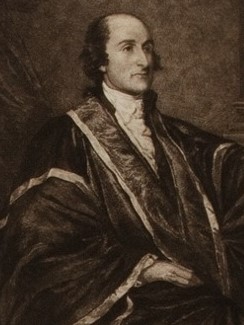
John Jay (1745-1829) was the first Chief Justice of the United States.

By Jim O’Neal

The Supreme Court was created in 1789 by Article III of the U.S. Constitution, which stipulates “the judicial power of the United States shall be vested in one Supreme Court.” Congress organized it with the Judiciary Act of 1789.

John Jay of New York, one of the Founding Fathers, was the first Chief Justice of the United States (1789–95). Earlier, he was president of the Continental Congress (1778-79) and worked to ratify the U.S. Constitution by writing five of the Federalist Papers. Alexander Hamilton and James Madison wrote the other 85-plus essays, which were published in two volumes called “The Federalist” (“The Federalist Papers” title emerged in the 20th century).

Nearly 175 years later, in 1962, President John F. Kennedy nominated Byron Raymond “Whizzer” White to replace Associate Justice Charles Whittaker, who became chief legal counsel to General Motors (presumably with a nice salary increase). Whittaker had been the first person to serve as judge at all three levels: Federal District Court, Federal Court of Appeals, and the U.S. Supreme Court (a distinction matched by Associate Justice Sonia Sotomayor).

White was the 1960 Colorado state chair for JFK’s 1960 presidential campaign and had met both the future president and his father Joe while attending Oxford University on a Rhodes Scholarship in London when Joe Kennedy was ambassador to the Court of St James. This was after White had graduated from Colorado University Phi Beta Kappa, where he was also a terrific athlete, playing basketball, baseball and finishing runner-up for the Heisman Trophy. He is unquestionably the finest athlete to serve on the Supreme Court.

He continued mixing scholarship and athletics at Yale Law School, where he graduated No. 1 in his class magna cum laude and played three years in the National Football League for the Pittsburg Pirates (now the Steelers). He was elected to the College Football Hall of Fame in 1954.

Judge White was in the minority on the now-famous Roe v. Wade landmark decision on Jan. 22, 1973. Coincidentally, there was a companion case that has been virtually forgotten called Doe v. Bolton (Mary Doe v. Arthur K. Bolton, Attorney General of Georgia, et al.) that was decided on exactly the same day and on the identical issue (overturning the abortion law of Georgia). White was in the minority here, too.

White’s nomination was confirmed by a simple voice vote (i.e. by acclamation). He was the first person from Colorado to serve on the Supreme Court and it appears that one of his law clerks … Judge Neil Gorsuch, also from Colorado … most likely will become the second, although it is unlikely he will receive many Democratic votes, much less a voice vote.

Times have certainly changed in judicial politics and, unfortunately, for the worse … sadly. Advise and Consent has morphed into a “just say no” attitude and we have lost something sacred in the process.

Intelligent Collector blogger JIM O’NEAL is an avid collector and history buff. He is president and CEO of Frito-Lay International [retired] and earlier served as chairman and CEO of PepsiCo Restaurants International [KFC Pizza Hut and Taco Bell].
Masters Golf Tournament Won’t Be the Same Without Tiger Woods

A set of gloves worn by Tiger Woods during each of his four rounds at the 2011 Masters, autographed by Woods, sold for $9,560 at a July 2015 Heritage auction.

By Jim O’Neal

The modern-day golf Majors include the U.S. and British Opens, the PGA and the Masters Golf Tournament. Jack Nicklaus’ 18 victories in these events is considered the most revered record in the sport.

It wasn’t that long ago that a lot of people were convinced it was only a matter of time until Tiger Woods broke that record and virtually all others of significance in the game. This was especially true in the spring of 1997 following Woods’ stunning professional debut. By the time he arrived at Augusta, he had won three tournaments in seven months as a professional, was chosen as Sports Illustrated’s “Sportsman of the Year,” and, amazingly, was the favorite to win the coveted Masters.

Nicklaus went so far as to predict that Woods would eventually win the Masters 11 times!

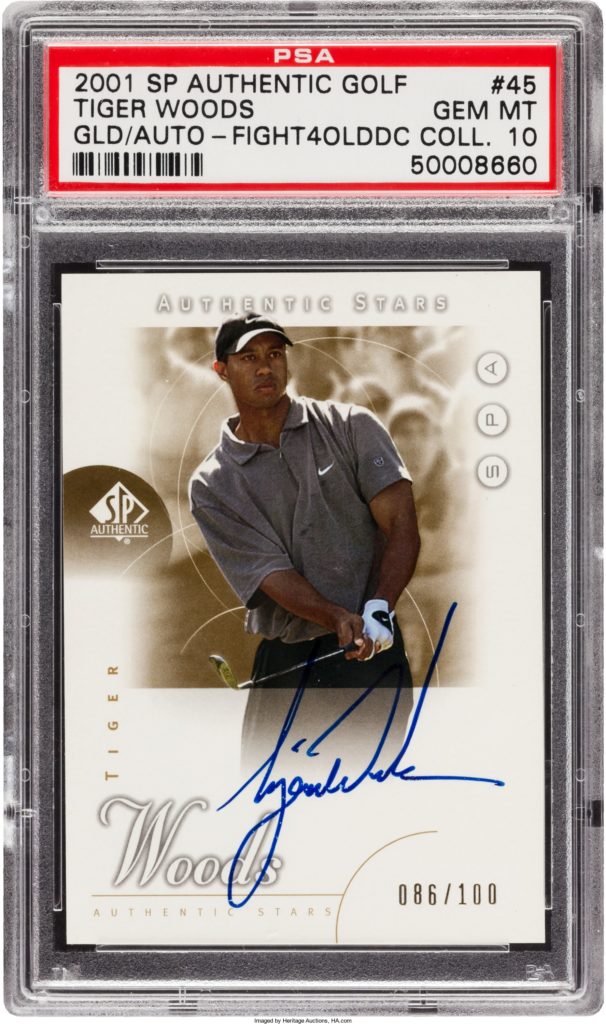
The limited edition 2001 SP Authentic Gold Tiger Woods #45 card is popular with collectors.

As brilliant as he was, it seemed unlikely that Woods would be able to contend with the hype and pressure heaped his way. He not only did, but he made it look easy. He led the tournament by three strokes on Friday (day two), by 9 strokes on Saturday night, and a record 12 strokes on Sunday when the tournament ended. “He’s a boy among men,” Tom Watson innocently said as Woods ran away from the field, “and he’s teaching the men a lesson.” A very sincere compliment from one of golf’s biggest stars.

Woods’ victory wasn’t just an amazing performance by a young star, it was a major social and political event in American history for the simple reason that Tiger was a black man. Woods’ father was African-American, Native-American and Caucasian. His mother was from Thailand. Tiger jokingly calls himself a “Cablinasian.”

Regardless of his ethnic breakdown, the fact is Tiger was a man of color. As late as 1963, this meant that he would not have been allowed to be eligible for membership in the Professional Golf Association (PGA) since membership was limited to “Caucasian only.”

For many years, Augusta National had been a symbol of the old South, a place that clung to segregation, much the way George Wallace had, only without State Troopers. During the first 40 years the Masters was played, the only black men inside the ropes were those carrying golf bags as caddies. Clifford Roberts, who had become the sole master of the Masters after Bobby Jones died in 1971, insisted that the tournament wanted black players and would welcome them when they qualified. But during the 1960s, when both Charlie Sifford and Pete Brown won events on the PGA tour, neither was invited to play in the Masters.

Now a man of color has actually won the Masters and it’s a relief that another barrier has been shattered. But there was a real controversy brewing. A television crew asked 1979 Champion Fuzzy Zoeller, “What do you think about Tiger?” Few golfers have been more friendly than Fuzzy. He is a gregarious, funny man who loves to tell jokes. As the TV cameras rolled, he picked the wrong time to be funny with his references to the potential 1998 Champions Dinner menu. “That little boy is driving well and he’s putting well. … So, you know what you guys do when he gets in here? You pat him on the back and say congratulations and enjoy it and tell him not to serve fried chicken next year. Got it. Or collard greens or whatever the hell they serve.”

When Zoeller’s comments aired a week later, all hell broke loose. He lost his No. 1 sponsor and the controversy took a long time to settle down after multiple apologies, all of which Tiger accepted graciously.

Sadly, four-time Masters winner Woods will not be competing in tomorrow’s Masters due to continued back problems. He will be missed by every Masters fan in America. It will not be the same without him.

Intelligent Collector blogger JIM O’NEAL is an avid collector and history buff. He is president and CEO of Frito-Lay International [retired] and earlier served as chairman and CEO of PepsiCo Restaurants International [KFC Pizza Hut and Taco Bell].
Newspapers Have Been Rushing to ‘Break News’ for 150 Years

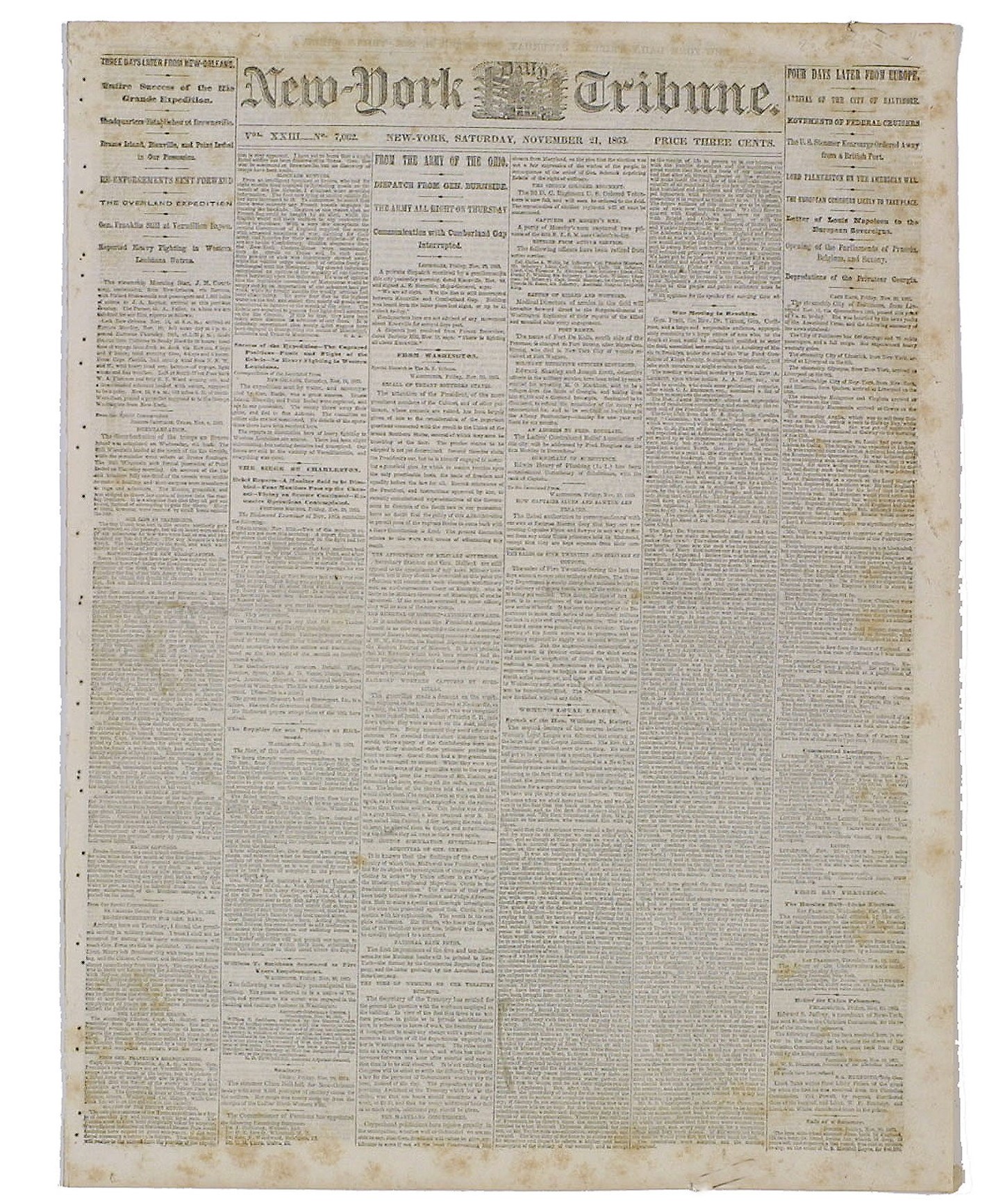
A Nov. 21, 1863, edition of the New York Tribune, which reprinted President Lincoln’s Gettysburg Address, sold for $632.50 at a June 2005 auction.

By Jim O’Neal

Today’s occasionally frenetic journalism began during the Civil War, for two basic reasons.

The first was the telegraph, since this was the first instant-news war in history, and the issue was much like we have with today’s internet. Reports could be filed almost immediately and it resulted in a mad rush to be first with “breaking news.”

The other was steam, used for steam-powered locomotives and the relatively new steam-powered printing presses. Reporters could hop on a train and return to their offices quickly if a telegraph office wasn’t handy. Either way, the demand for timely and accurate news from the front lines transformed American journalism. It was a culture of “Telegraph all the news you can get, and when there is no news, send the rumors.”

They did a lot of that, and the competition was ferocious. New York had 18 daily newspapers, with four or five focused on the war – including the New York Tribune (Horace Greeley), The New York Herald (James Gordon Bennett), and The New York Times (Henry J. Raymond). Of the three, Greeley was the acknowledged celebrity and well-known for his erratic views as opposed to straight news.

He would later challenge President Grant’s reelection in 1872 by splitting the Republican Party, which resulted in the Democrats cancelling their convention and throwing their support to Greeley. So it was Republican Grant against Liberal Republican Greeley … and no Democrats. Grant won easily and Greeley died before the Electoral College could vote (Greeley actually received three posthumous electoral votes).

Bennett may have been the first great genius in American journalism. He had migrated from Scotland after being trained as a Catholic priest, had the finest education, and was devoted to a balanced approach to the news. However, even he occasionally fell victim to rushing to print too fast.

An interesting feature of the “war newspapers” was that each copy was handed around and read by dozens of people. Another is that the armies – both sides – did not report casualties. There were no official lists of those killed, captured or wounded. This was done by individual reporters, who compiled lists and published them. This enhanced reader interest immensely when a reporter was covering specific units where loved ones were involved.

As a group, Civil War correspondents were a motley group of ruffians who called themselves the “Bohemian Brigade.” There was lots of criticism, particularly of The New York Herald, for sending out these hard-drinking characters into the field. Even so, simply substitute today’s gossipy and irresponsible websites for the Civil War telegraph and it becomes perfectly clear how little reporting the news has changed in 150 years.

Intelligent Collector blogger JIM O’NEAL is an avid collector and history buff. He is president and CEO of Frito-Lay International [retired] and earlier served as chairman and CEO of PepsiCo Restaurants International [KFC Pizza Hut and Taco Bell].
Presidential Sons a Complex, Dark Addendum to First Family History

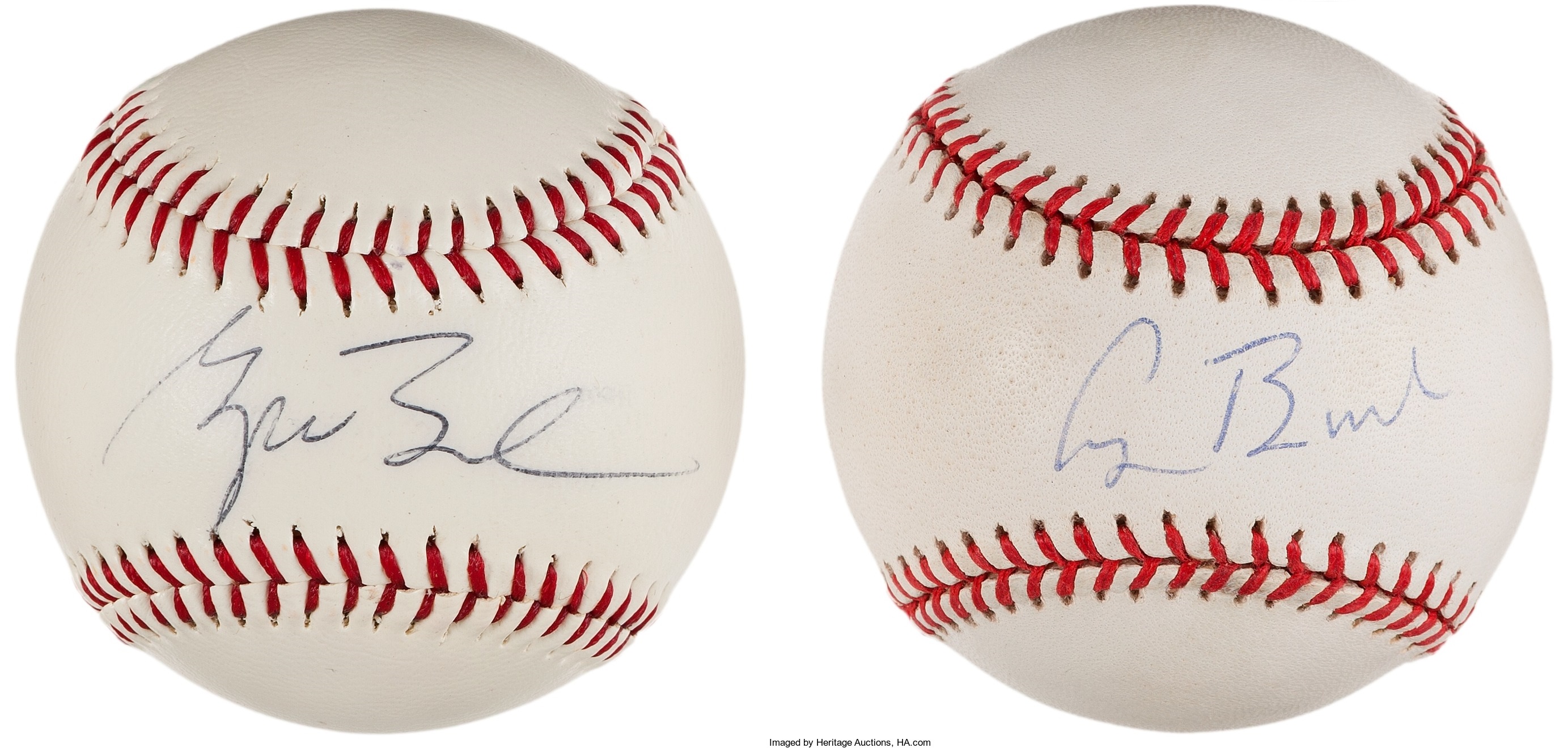
A pair of baseballs signed by Presidents George H.W. Bush and George W. Bush, from the collection of baseball legend Stan Musial, sold for $2,629 at a November 2013 Heritage auction.

By Jim O’Neal

After favored son John Quincy Adams became president of the United States, there was an unspoken feeling that – like the sons of kings and monarchs – he might be destined for greatness. However, it would be a surprising 176 years before another president’s son, George W. Bush, would be sworn in as president.

The stories of presidential sons between these two bookends make up a complex and slightly dark addendum to the First Families of the United States. Some historians have a theory that the closer the male child is to his father, the more likely he is to die or self-destruct. Whether it is fact or coincidence is open for debate.

  • George Washington had no biological children, but was stepfather to a notorious young man, John Parke Curtis, who ruined his estate and died prematurely at age 26.
  • Thomas Jefferson’s only son died shortly after birth (unnamed).
  • James Madison’s stepson was an alcoholic, gambler and womanizer. After Madison died, he cheated his own mother (Dolley), and Congress had to intervene to help the former First Lady.
  • James Monroe’s only son died in infancy.
  • Andrew Jackson Jr. was an adopted son who mismanaged the Hermitage. He died of tetanus after shooting himself in a hunting accident.
  • Martin Van Buren Jr. died from tuberculosis in a Parisian apartment with his father sitting helpless by his bedside.
  • James Polk’s nephew and ward – Marshall Polk – was expelled from both Georgetown and West Point, ending his life in prison.
  • Calvin Coolidge Jr. died of blood poisoning from an infected blister after playing tennis.

A number managed to live longer lives, yet seemed to be cursed with a plethora of issues:

  • John Tyler Jr. was an alcoholic.
  • Ulysses S. Grant Jr. got caught up in an investment fraud scheme.
  • Chester A. Arthur Jr. was a playboy with an unaccountably suspicious source of “easy money” and investigative reporters hounded him and only stopped when his father’s term of office ended.

Franklin Roosevelt Jr. was the first of two sons named after their father and died suddenly after birth. The second namesake, married five times, was banned from the prestigious New York Social Register. Then, the powerful Tammany Hall machine became irked and ended his political career, as well.

Remarkably, when this terrible scourge progressed, fate would sometimes (greedily) step in and run the table. This happened to Franklin Pierce, who lost all three eldest sons in a row. It also happened to Andrew Johnson when first-born Charles Johnson died in a horse accident, Richard Johnson likely committed suicide at age 35, and younger brother Andrew Johnson Jr. died at a youthful 26.

Intuition says this phenomenon is more than random chance or a curse. Perhaps it is the pressure of being the first born, or something that drives the children of powerful figures to escape through substance abuse or risky behavior. Even President George W. Bush admitted to fighting alcoholism for years.

Mine is not to psychoanalyze, but simply to point out a series of eerie similar situations for your interest and speculation.

Intelligent Collector blogger JIM O’NEAL is an avid collector and history buff. He is president and CEO of Frito-Lay International [retired] and earlier served as chairman and CEO of PepsiCo Restaurants International [KFC Pizza Hut and Taco Bell].
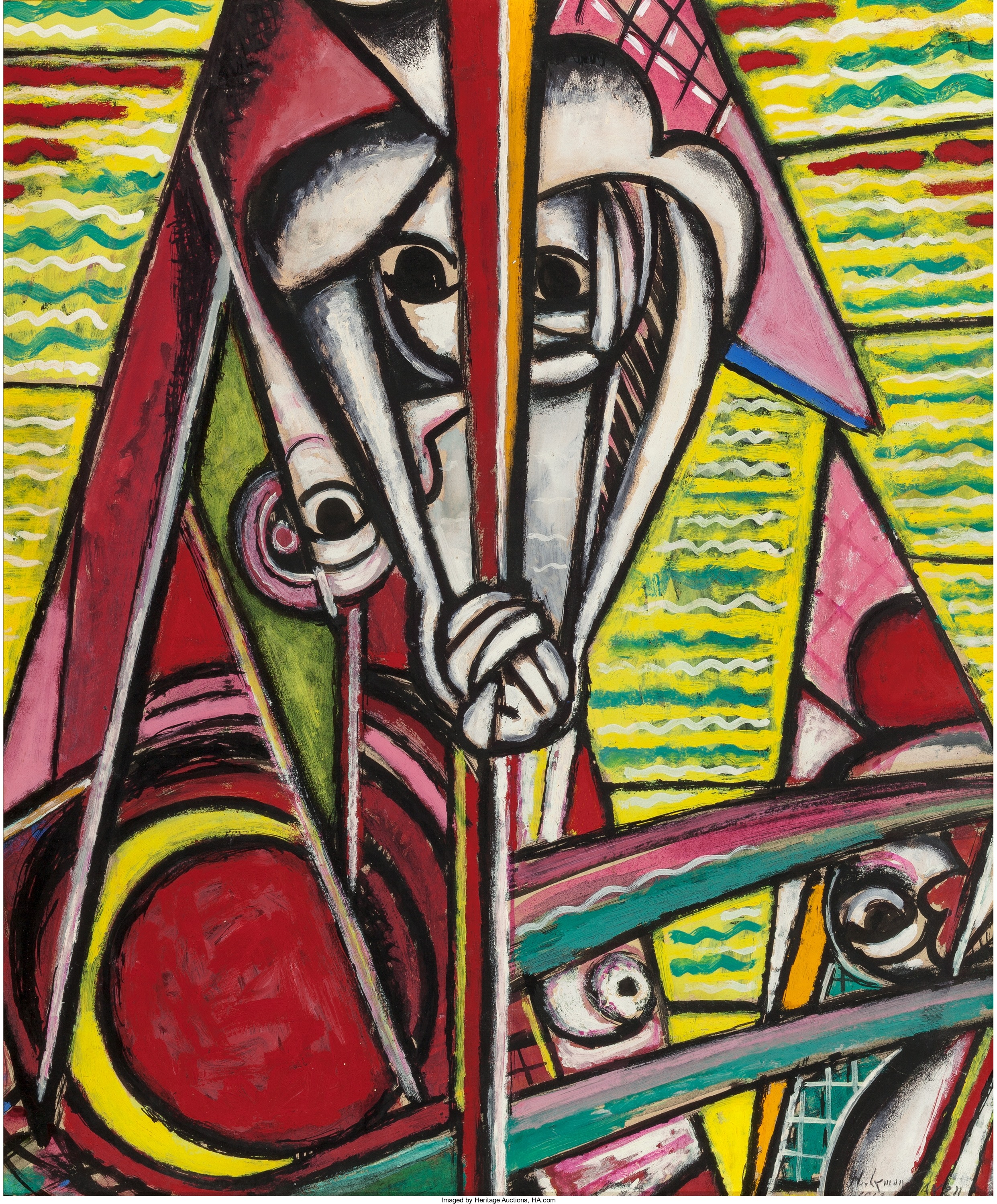
Americans Looked Beyond ‘Modern Art’ to a Grander Project … the Panama Canal

Henry Lyman Sayen’s Cubist Composition, 1917, realized $100,000 at a November 2014 Heritage auction.

By Jim O’Neal

In 1913, the International Exhibition of Modern Art was the first large exhibition of its kind in America. It was held at the 69th Regiment Armory in NYC, before moving on to Chicago and Boston. More than 70,000 people walked the length of the Armory to witness the visions of Picasso, Matisse and Duchamp. Judging by press reports, not a single person appears to have left without voicing an opinion, most likely a negative one.

Who, they asked, could call such rubbish art?

Americans, generally accustomed to realistic art, were astonished by the experimental styles of Fauvism, Cubism and Futurism – the avant-garde experimental styles of Europe. Many in the New York crowd would have nothing to do with it and in Boston and Chicago, art students burned Matisse and others in effigy.

Kenyon Cox, a prominent author, illustrator and teacher, saw in the show nothing less than the “total destruction of the art of painting.” The star image of the exhibition was Duchamp’s “Nude Descending a Staircase,” or as Teddy Roosevelt called it, “Naked Man Running Down Stairs.” TR added it reminded him of a Navajo rug he stood on each morning while shaving. Still, other people saw something else entirely … “An Explosion in a Shingle Factory” or “An Earthquake on the Subway.”

As New Yorkers were scoffing at modern painting, a more contemporary and pleasing project was nearing completion 2,300 miles south of Manhattan. The dream of uniting the Pacific and Atlantic oceans dated back to the Spanish explorations in the 16th century.

It seemed like such a simple task to dig a canal bisecting the thin strip of land connecting North and South America. Americans wanted a connecting waterway all their own, a way to move freight and passengers coast to coast with ease.

A French company had tried and failed miserably in the 1880s, as malaria and yellow fever crippled their plans. 20,000 laborers had died and it destroyed the reputation of Ferdinand de Lesseps, the builder of the Suez Canal. His insistence on a sea-level canal (à la the Suez) neglected equatorial rains, half-submerged trees and, most significantly, the extraordinary amounts of terrain involved.

For perspective, the site required the excavation of three times the dirt removed to create the Suez, an unprecedented reconfiguration of the earth itself. Equipment for such a task did not exist yet.

But no president loved a challenge more than Teddy Roosevelt, who launched into it with vigor in 1904. America would dig the Big Ditch just as they would later land a man on the moon. The secret sauce included controlling malaria, creating an elaborate system of locks to minimize the digging, and a vision for world leadership. TR sensed it was America’s destiny to use the two oceans to safely convey the civilized world into the new century.

When the Panama Canal opened on Aug. 15, 1914, six months ahead of schedule, Teddy Roosevelt was long gone from the presidency. Attention turned to Europe and an event that would soon cast a giant shadow over the earth: a world war!

Intelligent Collector blogger JIM O’NEAL is an avid collector and history buff. He is president and CEO of Frito-Lay International [retired] and earlier served as chairman and CEO of PepsiCo Restaurants International [KFC Pizza Hut and Taco Bell].
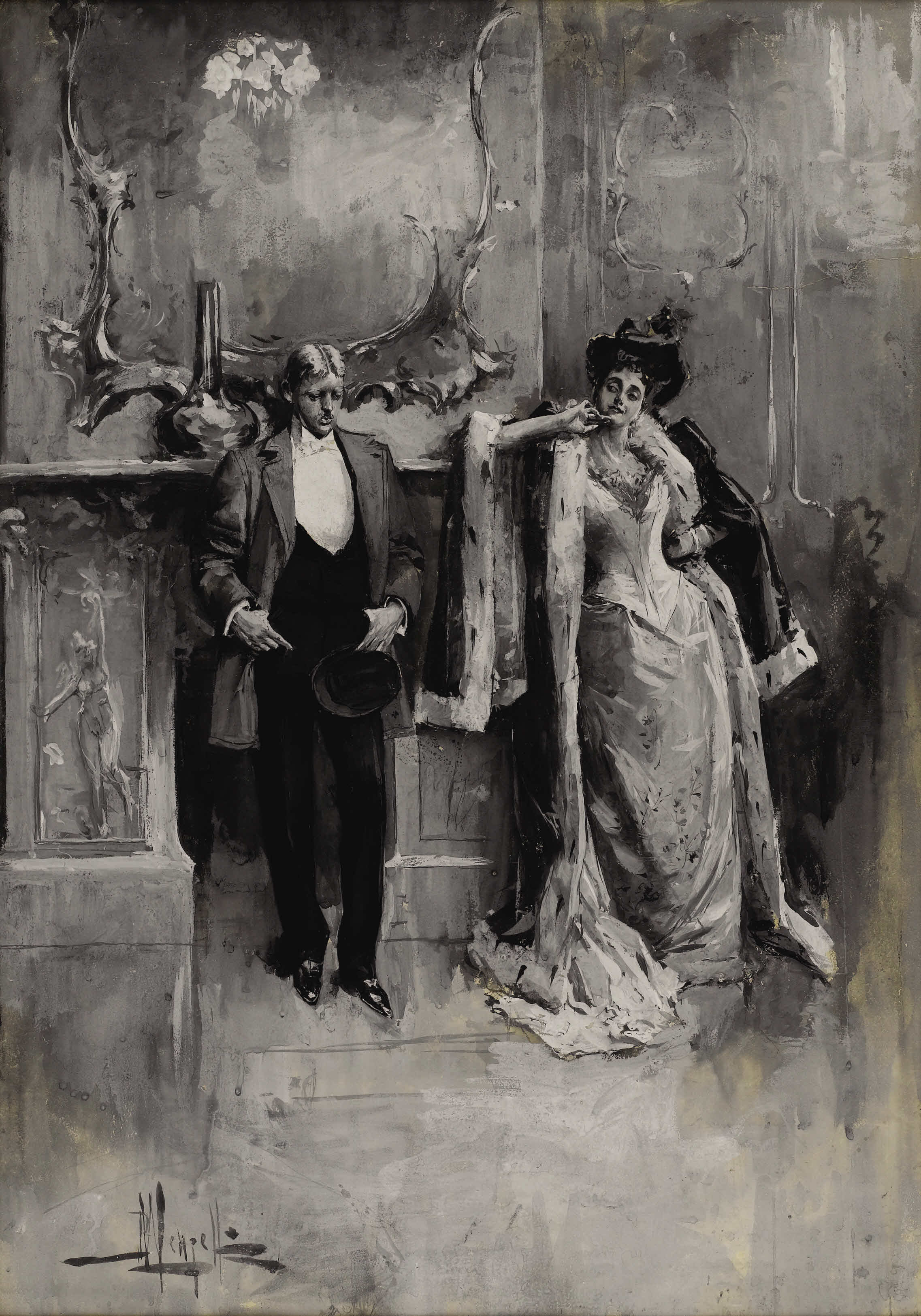
Her Fearless Tongue Made Alice Roosevelt the Most Popular of Presidential Children

Albert Beck Wenzell (1864-1917) painted this gouache on paper, titled Theodore Roosevelt and His Daughter Alice. It went to auction in May 2006.

By Jim O’Neal

To describe Alice Roosevelt Longworth (1884-1980) as a handful would be a gross understatement. She was the only child of Teddy Roosevelt and Alice Hathaway Lee. Her mother died two days after her birth of Bright’s disease – a catch-all term for kidney diseases. Eleven hours before her death, TR’s mother, Martha “Mittie” Roosevelt, had died of typhoid fever. It was a traumatic time in the Roosevelt home and it would haunt Teddy for the rest of his life.

Young Alice never founded a school or hospital, never ran for public office, and was terrified of public speaking, but she became unquestionably the best known and most popular of presidential children.

She was 17 when William McKinley was assassinated in 1901, which vaulted her vice-president father into the White House. When she learned of the news, she reportedly let out a war whoop and danced on the front lawn. Years later in an interview with reporter Sally Quinn (third wife of Ben Bradlee, executive editor of The Washington Post), Alice described her feelings as “utter rapture.” This kind of candor made her almost irresistible to the American public, and the press dubbed her “Princess Alice.”

One infatuated biographer described her as the “first female American celebrity of the 20th century.” Her cousin Joseph Alsop – the famous syndicated columnist whose robust opinions appeared in national newspapers for five decades – referred to her as “Washington’s other memorial.” Her celebrity started early, as people all over the country were talking about her antics, her clothes and her fearless tongue, which all delighted the average citizen.

On Inauguration Day in 1905, she was so exuberantly waving to her friends in the crowd that her father chided her by saying, “Alice, this is MY inauguration!” She was a flirt who smoked cigarettes in public and when her father declared that no daughter of his would smoke under his roof, she devilishly climbed to the roof of the White House to smoke on top of his roof. A perplexed TR told renowned author Owen Wister (“The Virginian”): “I can either run the country or attend to Alice, but I cannot possibly do both!”

After her 1902 society debut, the press constantly speculated on her romantic links with most of Washington’s eligible bachelors. She finally married Congressman Nicholas Longworth (future Speaker of the House) in one of the most famous weddings in American history, with front-page coverage across the country. Longworth was a notorious philanderer. William “Fishbait” Miller, doorkeeper of the House, described him as the “greatest womanizer in the history of Capitol Hill.”

Their marriage was an open sham and Alice was rumored to have had a child with William Borah, who became a senator after Idaho became a state in 1890. He was a perennial contender for president and was responsible for killing President Wilson’s attempt to approve the Treaty of Versailles.

Alice delighted in skewering prominent politicians. Calvin Coolidge “was weaned on a pickle.” Speaking of Herbert Hoover, she said “the Hoover vacuum is more exciting, but of course it is electric.” New York Governor Thomas Dewey, with his slick black hair, reminded Alice of the little groom on the top of a wedding cake. When FDR ran for a third term, she declared, “I’d rather vote for Hitler!”

Her acidic commentary on the rich and famous delighted and amused the public for four generations. Alice Roosevelt died of pneumonia on Feb. 20, 1980. At age 96, she had outlived the children of every other president.

She was a handful.

Intelligent Collector blogger JIM O’NEAL is an avid collector and history buff. He is president and CEO of Frito-Lay International [retired] and earlier served as chairman and CEO of PepsiCo Restaurants International [KFC Pizza Hut and Taco Bell].
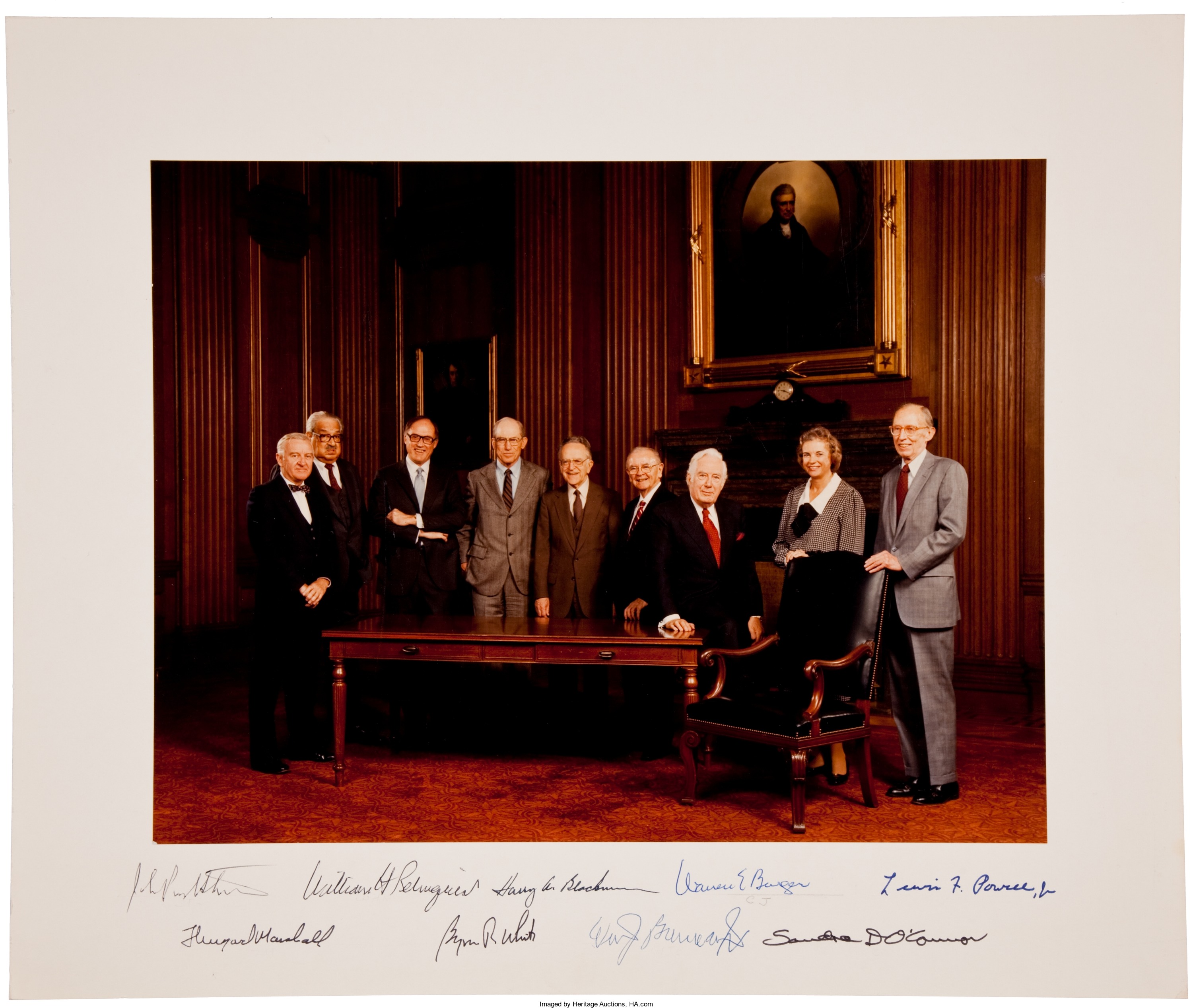
Some Supreme Court Confirmation Hearings Would Make Great Pay-Per-View TV

This oversized photograph of the U.S. Supreme Court, circa 1984, is signed by all nine justices, including Lewis F. Powell Jr. It realized $4,481.25 at an April 2011 Heritage auction.

By Jim O’Neal

When Justice Lewis F. Powell Jr. unexpectedly announced his retirement in June 1987, no commentator failed to emphasize the implications for the future of the Supreme Court. The New York Times stated the obvious: “Powell’s resignation gives President Reagan a historic opportunity to shape the future of the Court.” Justice Powell had played a pivotal role as the tie-breaking vote on controversial issues such as abortion, affirmative action and separation of church and state.

Yet Powell was not merely a simple tie-breaker. Since he frequently swayed the court’s decision from one ideological camp to another by virtue of his swing vote, he was viewed as mainstream. As a result, President Reagan attempted to portray Powell’s replacement, Robert Bork, as neither conservative nor liberal, stressing his “evenhanded and open-minded approach to the law.”

The president’s lack of success was immediately evident when Senator Edward Kennedy – only 45 minutes after Bork’s appointment – fired the opening salvo against Bork’s record on abortion, civil rights and criminal justice. Kennedy declared, “Robert Bork’s America is a land in which women would be forced into back-alley abortions, blacks would be forced to sit at segregated lunch counters, rogue policemen could break down citizens’ doors in midnight raids, schoolchildren could not be taught about evolution, and artists could be censured at the whim of government.”

Once Kennedy unleashed these polemics, there was no turning back. Southern Senators were intimidated by the possible loss of black voters and liberals in the Senate were eager for a good fight after eight years of frustrating losses to conservatives.

Despite being confirmed unanimously for the U.S. Court of Appeals, Judge Bork was stepping into a veritable political hornets’ nest and he was the wrong person in the wrong spot at the wrong time! His copious scholarly writings – an asset in academia – and his lucidly crafted, elegantly penned opinions on the appellate bench were red meat in the hands of hostile interest groups.

Bork with President Ronald Reagan in 1987.

Moreover, Bork’s personal appearance and demeanor seemed as suspect as his ideology. His devilish beard and turgid academic discourses did not endure him to the public or wavering Senators. His detailed, scholarly, lecture-like answers to every single question would be considered naive today … where nominees are well versed in the art of non-answers to tough questions, and grilled by “murder boards” designed to prepare careful answers to virtually everything the nominee has written or spoken since puberty. Today’s Google/Facebook generation of staffers can unearth obscure facts that might be even slightly contentious.

Judge Bork’s nomination was rejected by a resounding 42-58 vote. After being transfixed by the riveting testimony, I personally believe that even if Judge Bork were given another try today (he died in 2012), the outcome would be similar. He had such a high regard of his superior legal acumen and was so openly dismissive of the twits on the Senate Judiciary, it would be another verbal combat that would end just as badly.

It would be a perfect scenario for a pay-for-view cable TV spectacle, especially for Supreme Court nerds like moi.

Intelligent Collector blogger JIM O’NEAL is an avid collector and history buff. He is president and CEO of Frito-Lay International [retired] and earlier served as chairman and CEO of PepsiCo Restaurants International [KFC Pizza Hut and Taco Bell].
Only Four Presidents Never Appointed a Supreme Court Justice

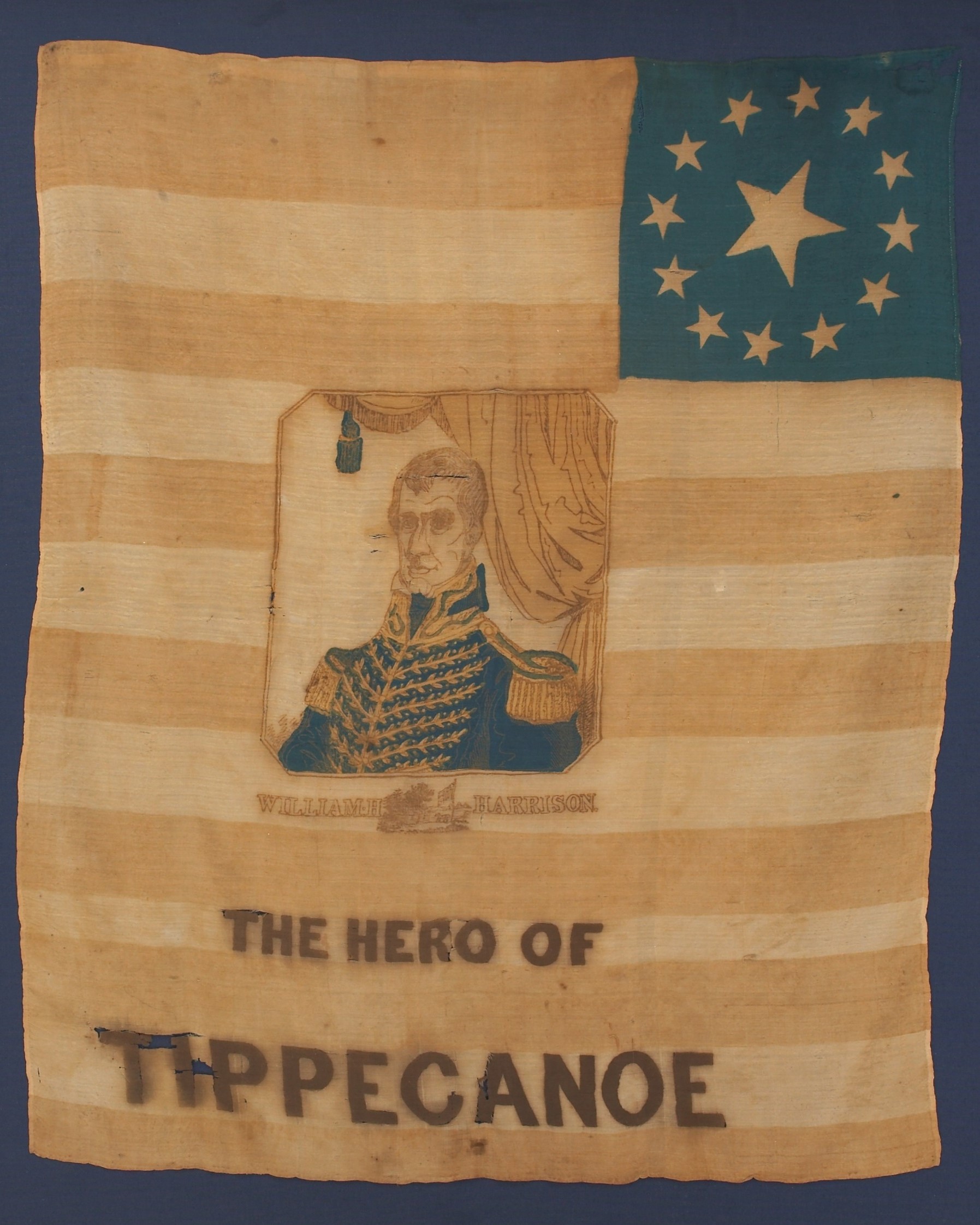
An 1840 silk banner depicting William Henry Harrison realized $33,460 at a May 2010 Heritage auction.

By Jim O’Neal

When Donald Trump’s appointee fills the Supreme Court vacancy created by the death of Justice Antonin Scalia, the chief executive will escape from a small group of presidents who did not appoint a single nominee confirmed by the Senate. Trump’s pick will join the other 117 justices, 17 chief justices and four women who have served on the court.

Presidents without a Supreme Court appointee:

  • William Henry Harrison (1841) – Died only 31 days after being inaugurated.
  • Zachary Taylor (1849-50) – Died 16 months after inauguration.
  • Andrew Johnson (1865-69) – Victim of a hostile Congress that blocked several nominees.
  • Jimmy Carter (1977-81) – The only president to serve a full term with no vacancies during his four years in office.

It seems clear that the Founding Fathers did not spend a lot of time considering the importance of the Supreme Court as an equal branch of government. That would come later during the tenure of Chief Justice John Marshall, who many credit with providing the balance to ensure that our fragile democracy survived.

One example is there are no legal or constitutional requirements for a federal judgeship. There does exist an unwritten prerequisite to have practiced law or to have been a member of the bar, but it is not mandatory. As a matter of historical record, no non-lawyer has ever been a member of the Supreme Court – and it is a virtual certainty that none ever will.

And, although the methodology for judicial appointments was subject to intense debate, the criteria for such appointments was apparently not a matter of significance. Those few delegates who did raise the issue of criteria did so by assuming merit over favoritism. Congress also did not foresee the role political parties would very soon come to play in the appointment and confirmation process.

Only John Adams clearly anticipated the rise of political parties but, of course, he was not a member of the Constitutional Committee. He summarized it rather well: “Partisan considerations, rather than the fitness of the nominees, will often be the controlling consideration of the Senate in passing on nominations.”

I suspect they would all be disappointed by the dramatic, partisan “gotcha” grilling that nominees face today.

Personally, I would prefer the old process the Scots used to select Supreme Court justices. The nominations came from the lawyers, who invariably selected the most successful and talented members of the legal community. This effectively eliminated their most fierce competition, which then allowed them to solicit their best customers. The court would then truly be assured of getting the best-of-the best, while the profession competed for clientele.

Intelligent Collector blogger JIM O’NEAL is an avid collector and history buff. He is president and CEO of Frito-Lay International [retired] and earlier served as chairman and CEO of PepsiCo Restaurants International [KFC Pizza Hut and Taco Bell].