From Humble Beginnings, Islam Now Has 1.4 Billion Followers

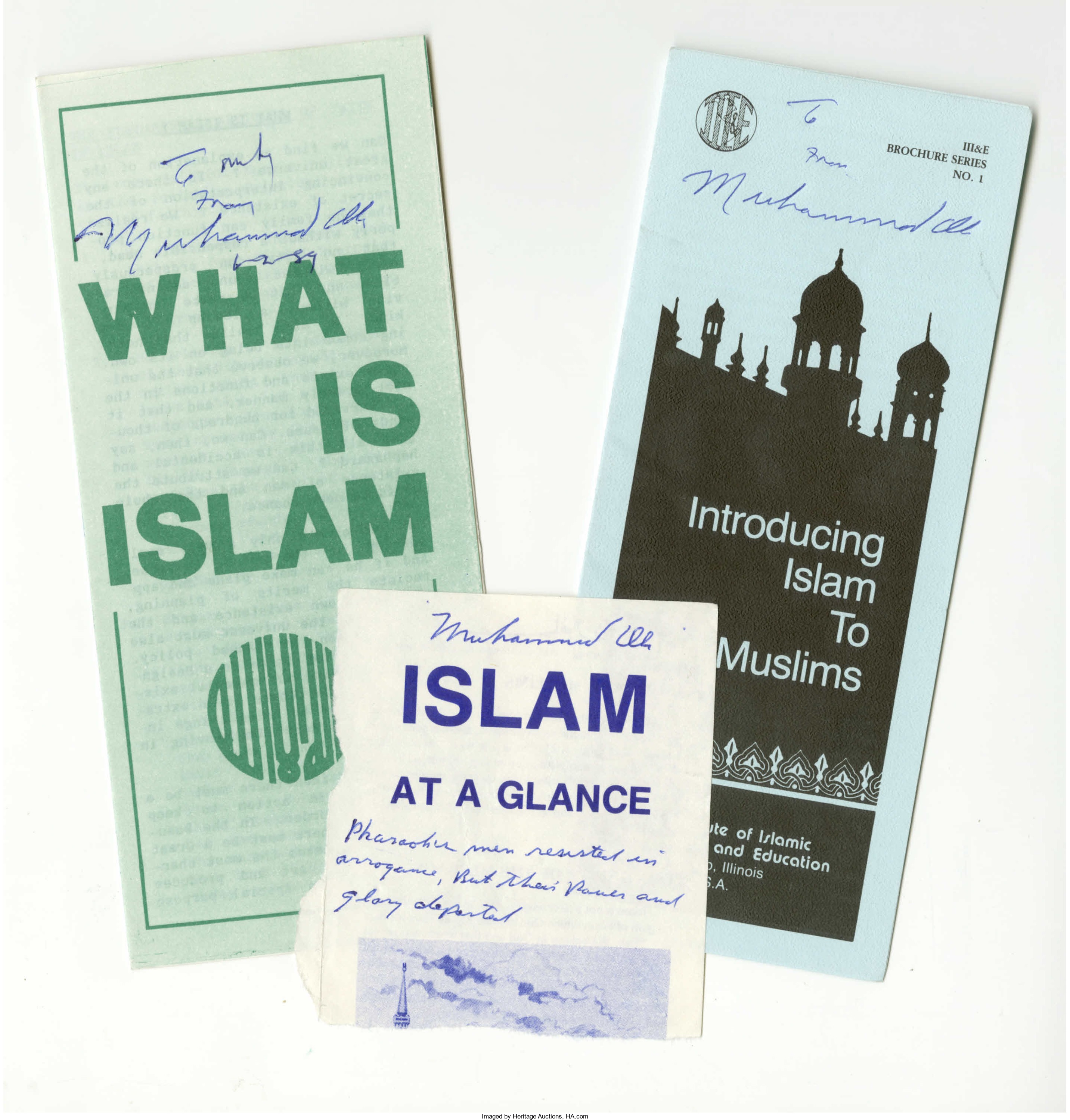
These pamphlets are signed by boxing legend Muhammad Ali, who converted to Islam in the 1960s.

By Jim O’Neal

Revered by Muslims as the prophet of the Islamic faith, Muhammad laid the foundations for the emergence of the Islamic Empire. He was the religion’s political and military leader as much as its spiritual head. He was born in Mecca in 570 after the death of his father. His mother died when he was 6, so he was left in the care of an uncle, who employed him to manage caravans trading with Syria.

In his late 30s, he made regular prayer trips to a cave in Mount Hira, where he eventually received his first revelation from the angel Gabriel. He began preaching and slowly gained a small but loyal following.

Exiled from Mecca in 622 because of his faith, he traveled to Yathrib (on a journey that became known as the Hijra), where he gained vast numbers of new followers and ultimately organized the city into a unified Islamic capital. The city was renamed Medina (“the City of the Prophet”) and Muhammed created a constitution for the state – the Constitution of Medina – which formed the basis of an Islamic tradition.

The Constitution addressed the rights and duties of every group within the community, the rule of law and the issue of war. It recognized the Jewish community of Medina and agreed to mutual obligations with them. Among its edicts was a requirement that all religious members fight as one force if the community came under threat.

The intent was to ensure peace within Medina, while Muhammad gathered followers and soldiers to conquer the Arabian Peninsula. “Whenever you differ about a matter, it must be referred to God and to Muhammad.” Since God spoke through Muhammad, his word carried unquestioned authority.

Islam is the name of the religion (such as Judaism and Christianity), while “Islamic” is an adjective and does not refer to a person. A follower of Islam is a Muslim, and the majority believe the Prophet Muhammad is the final prophet of God, according to the Quran and hadiths (prophetic sayings). Muslims overwhelmingly revere Jesus, and the Quran emphasizes Jesus was a great prophet of God, but, like other prophets, was only a human being.

By the time of Muhammad’s death in 632, nearly all the people of Arabia were Muslims, and today, 1.4 billion across the world are devout followers. More than 50 countries boast of having majority Muslim populations.
Intelligent Collector blogger JIM O’NEAL is an avid collector and history buff. He is president and CEO of Frito-Lay International [retired] and earlier served as chairman and CEO of PepsiCo Restaurants International [KFC Pizza Hut and Taco Bell].
Adams Family History Shows How Fate Can Be Generous, Cruel

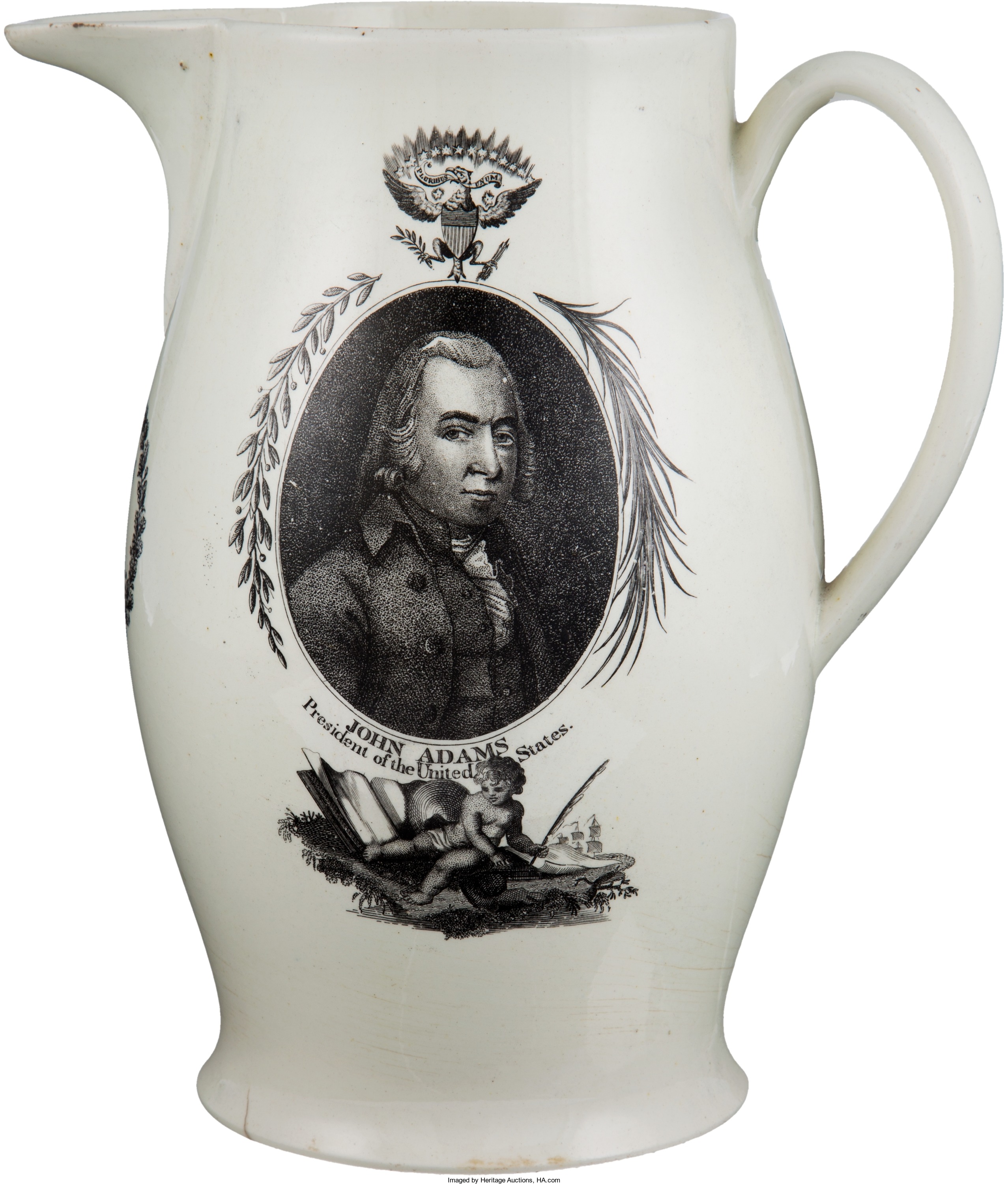
A Liverpool Creamware Pitcher showing President John Adams sold for $6,875 at a December 2016 Heritage auction. Liverpool pitchers were produced for the nation’s first four presidents, with examples picturing Adams among the rarest.

By Jim O’Neal

Abigail “Nabby” Adams (1765-1813) was the first presidential child in American history.

Nabby had a difficult personal life, despite having both a father and brother become president of the United States. Her marriage to William Stephens Smith was rocky, not made any better by Smith’s financial difficulties due to poor investments and business ventures.

In 1810, she was diagnosed with breast cancer, tantamount to a death sentence in those primitive medical times. Her treatment started with a mastectomy (without anesthesia) with typical 19th-century surgical tools: a large fork, a pair of six-inch prongs, a wood-handled razor, and a thick iron spatula heated in a small oven.

Within 2½ years, she was dead as the malignant cells left behind spread throughout her body, rendering her inoperable.

She had three younger brothers. John Quincy Adams is arguably the greatest of all presidential children. Charles Adams was a bright, engaging lawyer who died an alcoholic at age 30. Thomas Adams – also a lawyer – drank excessively and died in debt.

John Quincy Adams’ story is legendary. He would become the sixth president of the United States and, until George W. Bush, the only president’s son to become president himself.

His 1778 voyage to France with his father proved to be a defining event in both their lives. An important bond filled the emotional needs of an adolescent boy, and he became indispensable to his famous father. Fellow commissioner to France Benjamin Franklin was fluent in French, but often too busy to offer help. In a foreign country and ignorant of the native tongue, the future president had only his son to alleviate the striking boredom.

It developed into a strong intellectual, emotional and spiritual relationship, clearly evident in their correspondence for the remainder of their lives. Writing to wife Abigail, John Adams declared their son “is respected wherever he goes, for his vigor and vitality, both of mind and body. His rapid progress in French and general knowledge is highly unusual for a boy of his age.”

John Quincy Adams

When their work in France was done, father and son returned to America. But Congress dispatched Adams back to France, and then to the Netherlands with JQA in tow. Then fate struck again. When he was 14 years old, John Quincy Adams was asked to join a diplomatic mission in Russia to obtain recognition for the new United States.

In 1794, JQA was appointed by President Washington as Minister to the Netherlands, an assignment that would take him all the way to the White House. At various times, he also served as ambassador to Prussia, England and Russia. He would help negotiate the end of the War of 1812 and find time to squeeze in service as a U.S. Senator from Massachusetts. Like father, like (some) sons.

In 1789, John Adams learned that son Charles was bankrupt, an alcoholic and faithless. The Founding Father, a signer of the Declaration of Independence and second president of the United States, renounced him. He died a hopeless alcoholic, just days before John Adams learned he had lost the 1800 presidential election.

Fate can be a cruel master and Lady Luck a fickle companion.

Intelligent Collector blogger JIM O’NEAL is an avid collector and history buff. He is president and CEO of Frito-Lay International [retired] and earlier served as chairman and CEO of PepsiCo Restaurants International [KFC Pizza Hut and Taco Bell].
Supreme Court Appointments Are Always Soap Operas, with Gavel-to-Gavel Coverage

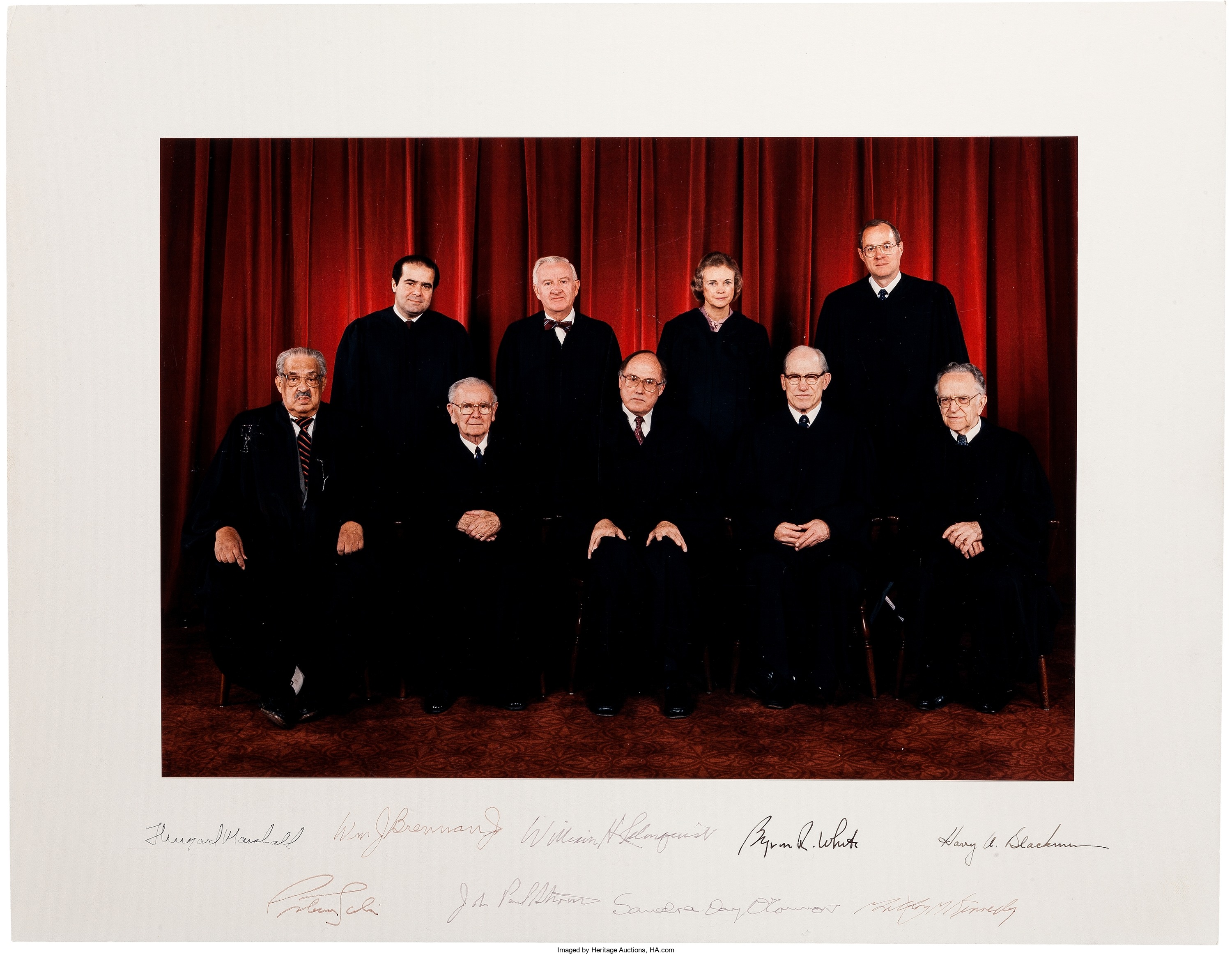
This Rehnquist Supreme Court photograph, circa 1989, is signed by all nine justices, including Antonin Scalia and William H. Rehnquist. It realized $1,171.25 at an April 2015 auction.

By Jim O’Neal

On June 17, 1986 – to the surprise of his colleagues, the public and President Reagan – Chief Justice of the U.S. Supreme Court Warren Burger submitted his resignation. After 17 years as head of the U.S. federal court system and within months of his 79th birthday, Burger wanted to devote all of his time to organizing ceremonies for the bicentennial of the U.S. Constitution in 1987.

Almost immediately, President Reagan announced his choice for Burger’s replacement: sitting Associate Justice William H. Rehnquist. Judge Antonin Scalia of the U.S. Court of Appeals for Washington, D.C., was selected to fill the vacant position. The Burger court had been surprisingly active in civil rights and President Reagan resolved to fill the vacancies with conservative, strict constitutionalists.

Rehnquist certainly met these criteria, as his 14-plus years on the bench validated. He made that abundantly clear during his confirmation hearings that opened July 30, 1986, by telling the Judiciary Committee they should not expect any change in his jurisprudence. His years on the court were on the record.

His primary opponent, Senator Edward Kennedy, acknowledged this, but also assailed the chief justice nominee in harsh terms, thundering, “By his own record, he is too extreme on race, on women’s rights, separation of church and state, and too extreme to be chief justice.” Kennedy’s assertions set the tone for two weeks of stormy testimony. No one dared to dispute Rehnquist’s powerful intellect or keen understanding of the law. He was just “out of the mainstream” – a standard ploy for any opposition.

After three months of divisive, acrimonious debate in the full Senate, he was confirmed 65-33. The 33 nays were the most votes ever cast against a nominee who won confirmation. Charles Evans Hughes prevailed in 1930 after a vote of 52-26, the previous record.

Scalia had a much easier time, perhaps because the partisan vitriol was exhausted on Rehnquist. The New Republic had earlier written, “A Scalia nomination makes political sense.” And a White House official had exclaimed, “What a political symbol! Nino would be the first Italian-Catholic on the court. He has nine children and everyone likes him. He’s a brilliant conservative. What more do you want?” Moreover, the 50-year-old Scalia was 10 years younger than the other possible candidate, Judge Robert Bork.

Even ideological foes were hard-pressed to challenge Scalia’s meritorious credentials. A product of New York public schools, he tied for first at Xavier High School, graduated at Georgetown University as valedictorian summa cum laude, and at Harvard Law was editor of the law review and a postgraduate fellow. This was followed by the law faculty at University of Virginia and appointments at Georgetown Law, the American Enterprise Institute, Stanford Law, and the University of Chicago Law School.

He sailed through the Judiciary Committee 18-0 and the full Senate 98-0. He served on the Supreme Court until his death last year. Strict constitutional conservatives are still in mourning over his loss.

The upcoming hearing on March 20 is designed to select his replacement. We will all have a ringside seat at what promises to be another Supreme Court soap opera, with gavel-to-gavel TV coverage ad nauseam.

Intelligent Collector blogger JIM O’NEAL is an avid collector and history buff. He is president and CEO of Frito-Lay International [retired] and earlier served as chairman and CEO of PepsiCo Restaurants International [KFC Pizza Hut and Taco Bell].
Monarch Butterflies Among the Most Intriguing of Earth’s Insects

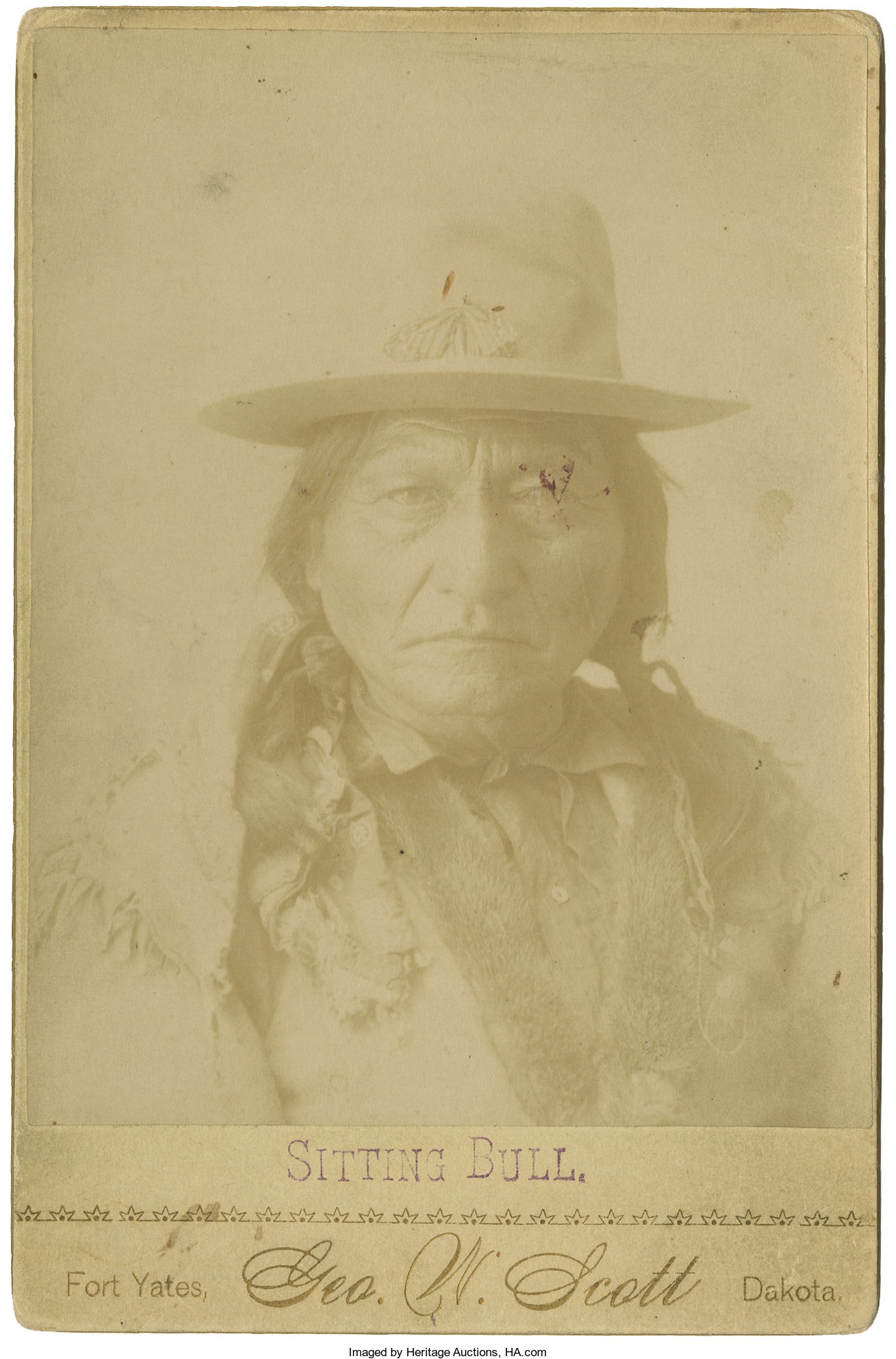
This photo card of Sitting Bull was produced in the 1890s. Look closely and you can see a Monarch butterfly tucked into the brim of his hat.

By Jim O’Neal

For every single human being on Earth, there are 200 million insects. Both in terms of species and sheer numbers, insects outnumber all other animals on the planet. More than a million different species of insects have been described and named, and thousands more are discovered each year … some estimates exceed 30 million total in existence.

Over 70 percent of all known animal species are insects and almost half of them are in the beetle category. Among the more infamous are boll weevils, which crossed into the United States from Mexico in 1892. They proceeded to destroy great swaths of the cotton grown in the South. Even today, efforts to eradicate them in both countries is problematic.

Thanks to the amazing adaptation skills of insects, they flourish in every land habitat and play a key role in the global ecosystem, recycling dead plants and animals, pollinating flowering plants, and providing food for a host of animals. In fact, insects are so vital to life on Earth, we could not survive without them.

Insects are also the most numerous of the arthropods – animals with tough external skeletons and jointed legs.

A remarkable example of biodiversity is the beautiful Monarch butterfly, which starts life as a wingless caterpillar that spends most of its time eating. Its metamorphosis into a butterfly is one of the most dramatic changes in nature. Within two hours of emerging, the butterfly is ready for flight and launches into the air to start looking for a mate so it can breed and create a new generation.

Monarch butterflies spend the winter asleep in the warm woods of Mexico and California. In spring, they awake and fly north to find milkweed plants that do not grow in the warmer southwest. Then, they lay their eggs and die. The next generation then flies further north and does the same thing. After two generations, they reach the Canadian border. Then, the fourth generation migrates all the way back south again, clear across the United States.

It’s not clear if they seek approval from the Department of Homeland Security or simply rely on special TSA exemptions for frequent flyers. Hopefully, they make it safely, since our fortunes seem to be linked in some mysterious way.

Go Monarchs!

Intelligent Collector blogger JIM O’NEAL is an avid collector and history buff. He is president and CEO of Frito-Lay International [retired] and earlier served as chairman and CEO of PepsiCo Restaurants International [KFC Pizza Hut and Taco Bell].
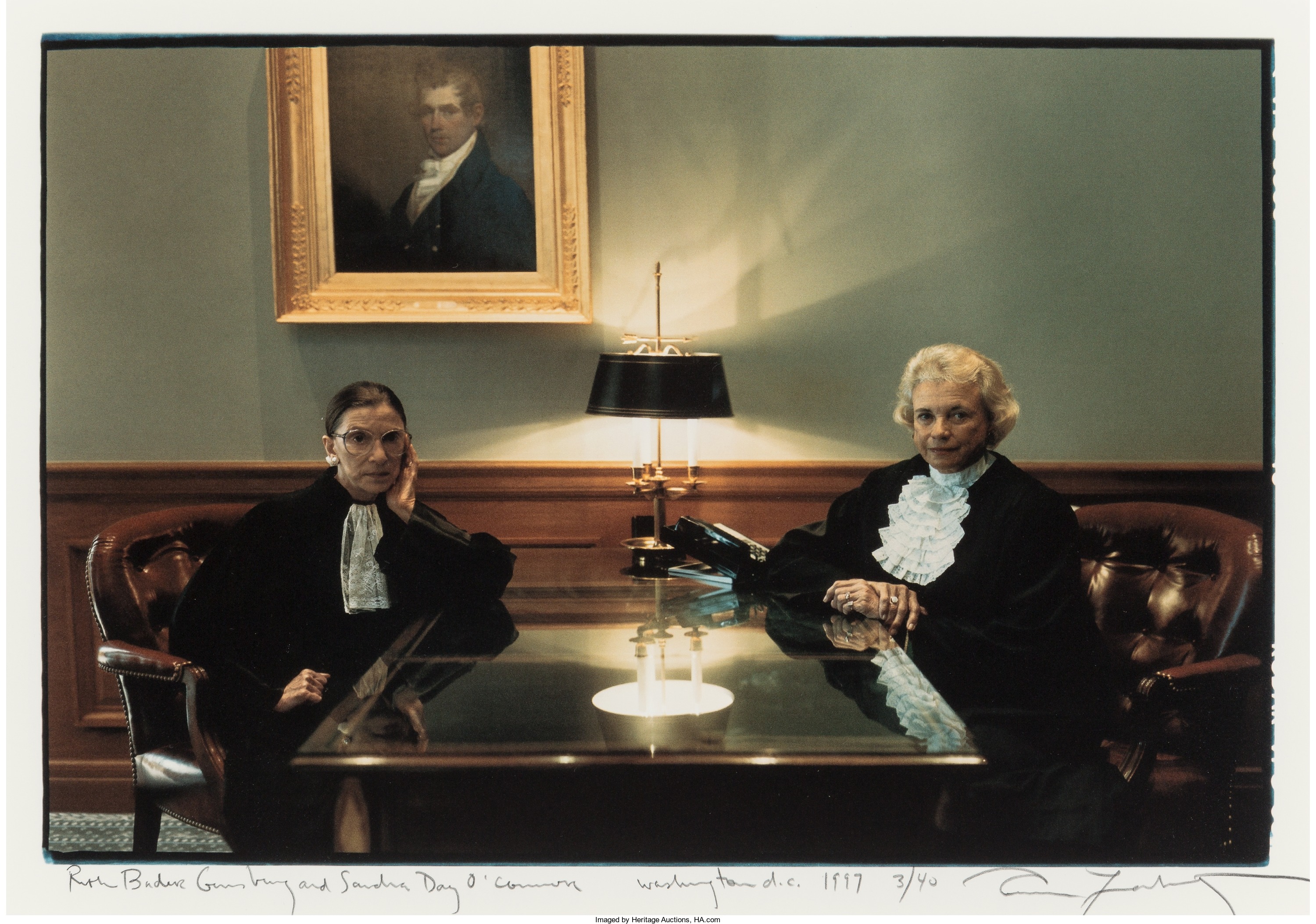
Reagan Made History with Appointment of O’Connor to Supreme Court

An Annie Leibovitz photograph of Ruth Bader Ginsburg (left) and Sandra Day O’Connor, dated 1997 and signed by the photographer, realized $1,750 at a February 2017 auction.

By Jim O’Neal

Ronald Wilson Reagan won two presidential elections, both by overwhelming margins. In 1980, he took 44 states with an electoral vote total of 489. Four years later, he crushed Walter Mondale, winning 49 states and 525 electoral votes (the all-time record).

The Reagan agenda included an attempt to alter the contemporary jurisprudential approach to the federal judiciary; he quickly made it known he would return to traditional criteria in selecting jurists. As a candidate, he made it crystal clear he was opposed to any type of racial or other quotas.

During the 1980 presidential campaign, candidate Reagan had promised “one of the first Supreme Court vacancies in my administration will be filled by the most qualified woman I can find, one who meets the high standards I will demand for all my appointments.” The opportunity to fulfill this pledge came within the first six months of his presidency.

On June 18, 1981, in what appeared to be a major surprise, Associate Justice Potter Stewart publicly announced his retirement from the Supreme Court, effective at the close of the 1980-81 term in July. However, members of the administration had actually known three months earlier and had informed the president (while he was still recovering from the assassination attempt). This gave the administration three months to search quietly for a nominee without outside pressure and feverish media speculation.

On June 25, Attorney General William French Smith gave the president a list of 25 names – approximately half of them women – clearly a new record in this regard. Among the women were Arizona Court of Appeals Judge Sandra Day O’Connor; Chief Justice of the Michigan Supreme Court Mary Coleman; and Judge Amalya L. Kearse of the U.S. Court of Appeals for the Second Circuit, a youthful black Carter appointee. On July 1, O’Connor and two other candidates met with the president and she quickly reminded him they had met 10 years before when he was governor of California and she was a member of the Arizona State Senate.

In addition to the successful interview, there was the Stanford connection: U.S. Supreme Court Justice William Rehnquist graduated from Stanford Law School in the same class as O’Connor. When Senator Barry Goldwater urged her selection, that was enough to clinch it.

The only strong dissent came from the New Right, including the Reverend Jerry Falwell of the Moral Majority, who encouraged all “good Christians” to express concern. Goldwater’s characteristically frank retort was “Every good Christian ought to kick Falwell right in the ass!”

On Sept. 15, 1981, the Senate Judicatory Committee approved Judge O’Connor 17-0 and six days later, the full Senate voted 99-0 to confirm (Senator Max Baucus of Montana – a strong supporter – was out of town for the vote).

So history had been made!

Intelligent Collector blogger JIM O’NEAL is an avid collector and history buff. He is president and CEO of Frito-Lay International [retired] and earlier served as chairman and CEO of PepsiCo Restaurants International [KFC Pizza Hut and Taco Bell].
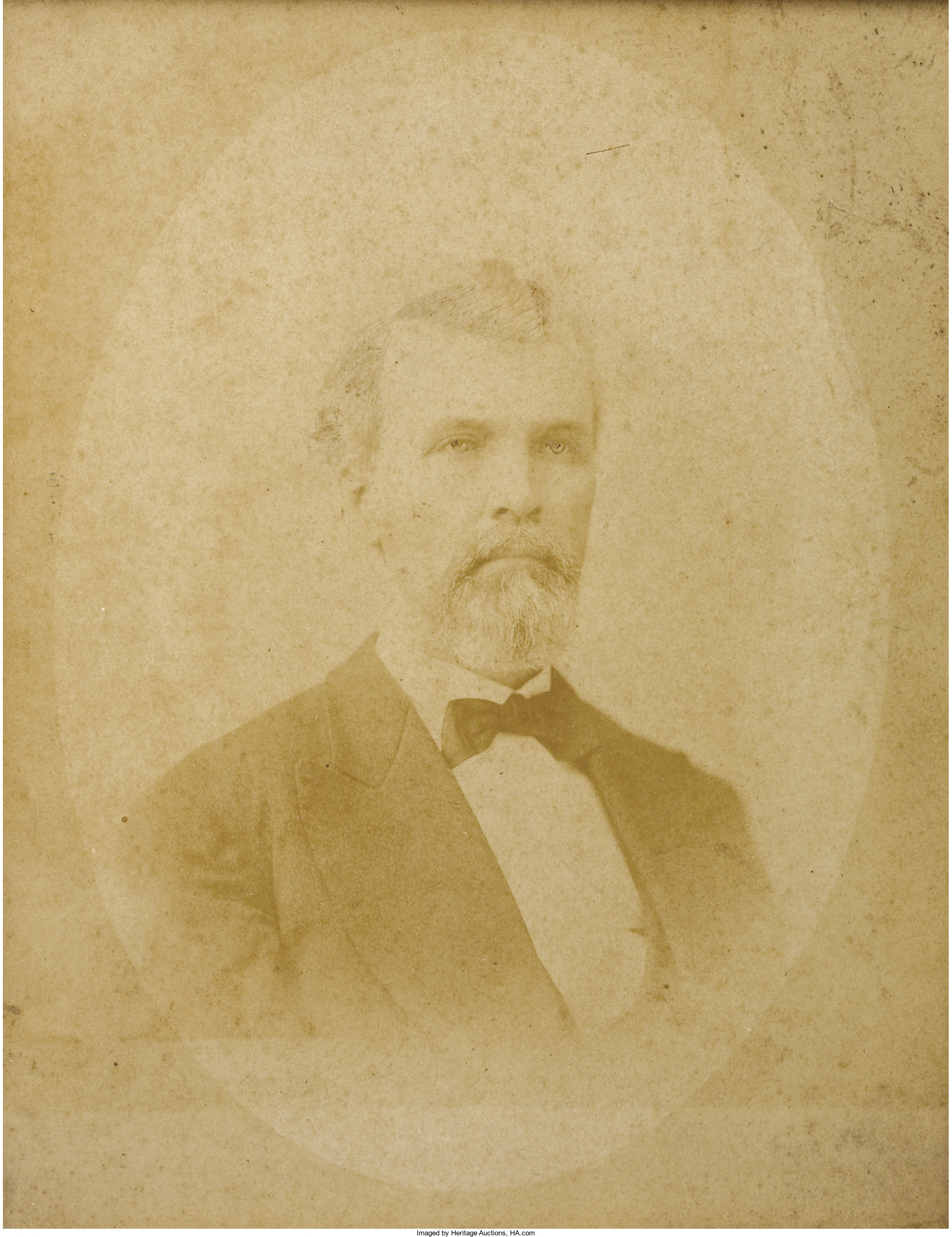
Nathan Bedford Forrest Emerged as the Civil War’s Most Dreaded Cavalry Commander

This albumen photograph, purportedly the last taken of Nathan Bedford Forrest in Memphis before his death in 1877, sold for $7,170 at a December 2007 auction.

By Jim O’Neal

In 1980, Frito-Lay made a strategic blunder by entering the Ready-To-Eat (RTE) cookie category where Nabisco, Keebler and a bevy of regional competitors were dominant in supermarkets. In typical Frito-Lay tradition, we went all-in. I built two new bakeries and bought Grandma’s cookies in Oregon and Jacks in Pulaski, Tenn.

Pulaski has the dubious distinction of being the home of the KKK and there were various memorials to one of my favorite Civil War generals, Nathan Bedford Forrest.

NBF was an early member of the Klan and (by some accounts) its first Grand Wizard. However, his daring exploits in the Confederate military bordered on being astonishing. Union General William Tecumseh Sherman described him as “the most remarkable man our Civil War produced … on either side.”

Forrest joined the Confederate States Army as a lowly private after an extremely successful business career as a land owner, cotton grower and slaver. His personal wealth was estimated at $1.5 million, despite being uneducated, but not illiterate. When he was quickly given command of a regiment, the 3rd Tennessee Calvary, they were so poorly equipped that Forrest used his personal wealth to buy horses and equipment for the entire battalion.

Although he also lacked a formal military education, his special talents for horsemanship and tactics earned him the nickname “Wizard of the Saddle.” His exploits in battle were legendary, even in a hotbed of politics and war like Tennessee, where 100,000 joined the Confederacy and 50,000 joined the North.

Forrest’s untutored instincts were characterized by an almost surreal ability to analyze complex situations. At the Battle of Shiloh in 1862, the Confederates were jubilant after the first day of fighting. But NBF warned everyone, “We’ll be whipped like hell in the morning.” He was uncannily correct, as the seesaw battle doomed any hopes that the war would be quickly ended … by either side.

Lieutenant General Forrest ultimately emerged as the war’s most dreaded cavalry commander. In one astonishing raid, he struck Sherman’s supply lines with a vengeance, capturing over 2,300 Union soldiers, seizing 800 horses and wrecking the Tennessee and Albany railroad so thoroughly it took Sherman’s indefatigable crews six weeks to repair it. An incensed Sherman demanded that Forrest “be hunted down and killed even if it cost 10,000 lives and bankrupts the Federal Treasury.”

It never happened.

Forrest is sometimes (erroneously?) quoted as saying, “I git thar fustest with the mostest” in describing his success. Whether or not he used this phrasing, it is a certainty that his command of mobile warfare is still a viable strategy in the 21st century.

Intelligent Collector blogger JIM O’NEAL is an avid collector and history buff. He is president and CEO of Frito-Lay International [retired] and earlier served as chairman and CEO of PepsiCo Restaurants International [KFC Pizza Hut and Taco Bell].
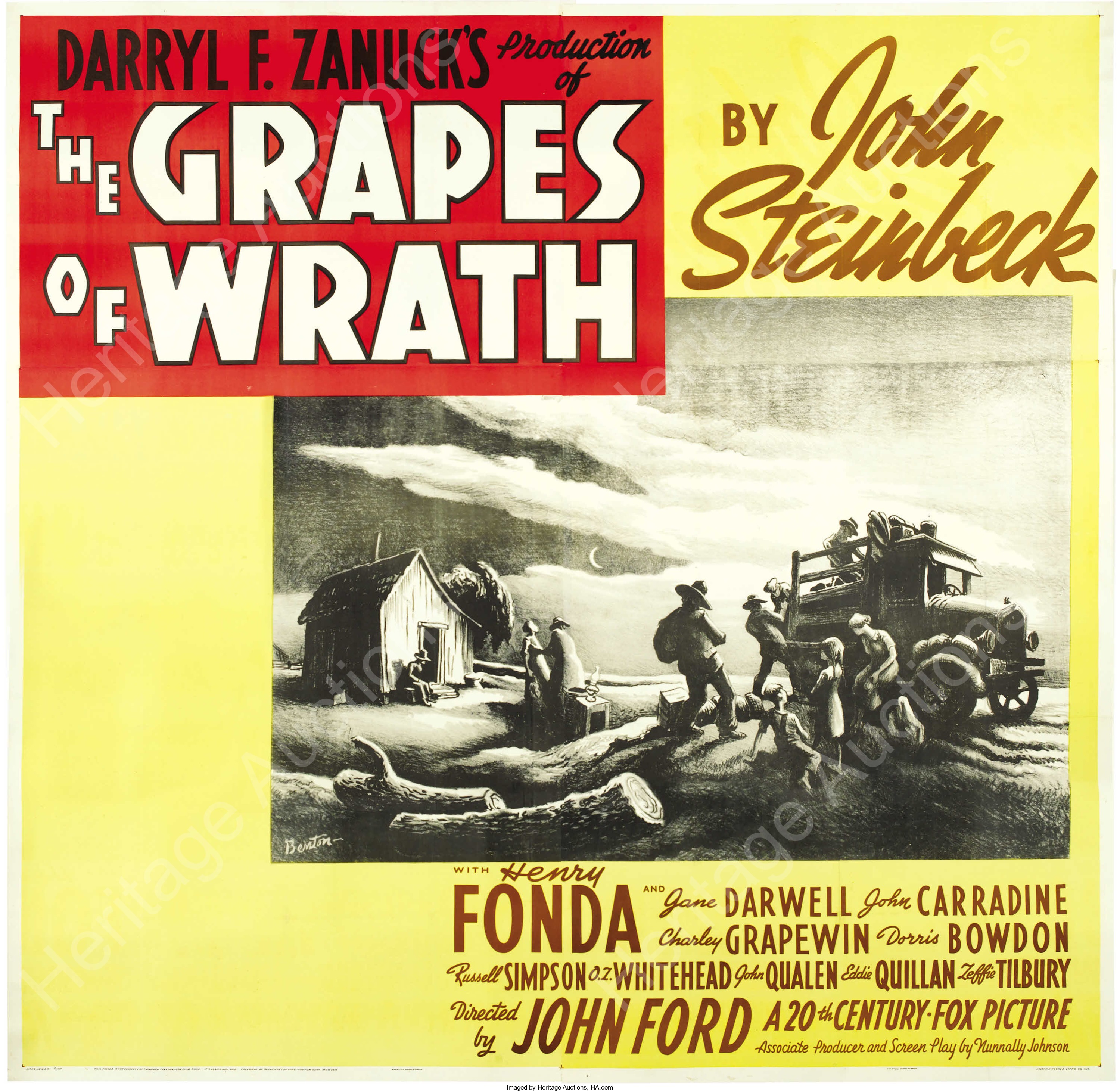
Put on Your Trivia Hat … it’s Time for the Academy Awards

A rare six-sheet poster for The Grapes of Wrath (20th Century Fox, 1940), measuring 81 by 81 inches, sold for $35,850 at a July 2007 Heritage auction.

By Jim O’Neal

The 89th Academy Awards are set for Sunday:

►Three films won 11 Oscars: Ben Hur (1959), Titanic (1997) and The Lord of the Rings: The Return of the King (2003).

►Three films had 14 nominations: All About Eve (1950), Titanic and La La Land (2016).

►Cabaret (1972) won eight Oscars … but not Best Picture.

►Katharine Hepburn has the most Best Actress Oscars … four (yes, more than Meryl Streep).

►Henry Fonda is the oldest actor (76) to win an Oscar for Lead Role in On Golden Pond (1981).

►John Ford won four Oscars for Best Director … The Informer (1935), The Grapes of Wrath (1940), How Green Was My Valley (1941) and The Quiet Man (1952).

►Peter Finch won Best Actor posthumously for Network (1976).

►Heath Ledger won Best Supporting Actor posthumously for The Dark Knight (2008).

►Peter O’Toole was nominated for Best Actor and lost eight times.

►Joan Fontaine and Olivia de Havilland are the only sisters to each win an Academy Award for Best Actress.

►Walt Disney won 22 competitive Oscars and four Honorary.

►Hattie McDaniel was the first African-American to win an Oscar, for her Supporting Role in Gone With the Wind (1939).

►Midnight Cowboy (1969) is the only X-rated movie to win Best Picture.

►Gone With the Wind (1939) is the first color movie to win Best Picture.

►Cate Blanchett won an Oscar playing real-life Oscar-winner Kate Hepburn in Aviator (2004).

►Laurence Olivier is the only person to direct himself in winning an acting Oscar, for Hamlet (1948).

►Barry Fitzgerald was nominated twice for the same role in Going My Way (1944) … Best Actor and Best Supporting (won). The rules were changed to avoid this in the future.

►The most nominations (11) with zero Oscars … The Turning Point (1977) and The Color Purple (1985).

►Halle Berry is the only African-American to win Best Actress, for Monster’s Ball (2001).

Tatum O’Neal and Ryan O’Neal in 1973’s Paper Moon.

►George Bernard Shaw is the first person to win an Oscar and a Nobel Prize (Bob Dylan matched this feat last year).

►Timothy Hutton is the youngest (20) to win Supporting Actor, for Ordinary People (1980).

►Tatum O’Neal is the youngest (10) Supporting Actress, for Paper Moon (1973).

Best of luck to the nominees.

Intelligent Collector blogger JIM O’NEAL is an avid collector and history buff. He is president and CEO of Frito-Lay International [retired] and earlier served as chairman and CEO of PepsiCo Restaurants International [KFC Pizza Hut and Taco Bell].
Appointments to Supreme Court Have a Long History of High Drama

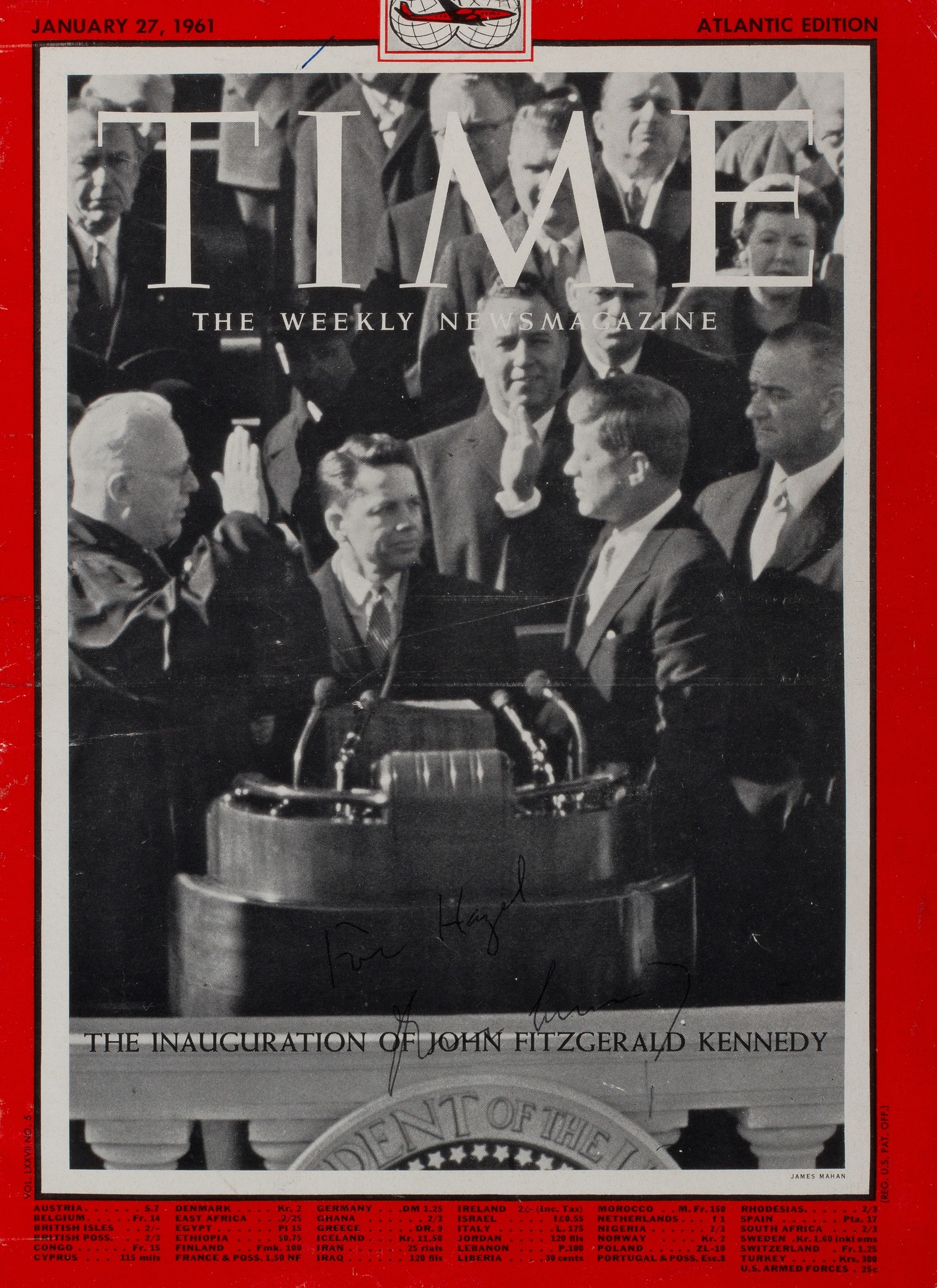
Chief Justice Earl Warren swears in John F. Kennedy on the cover of the Jan. 27, 1961, edition of Time magazine. This copy, signed by Kennedy, sold for $1,135.25 at a December 2012 auction.

By Jim O’Neal

On June 25, 1968, President Lyndon B. Johnson announced Chief Justice Earl Warren’s intention to retire and the nomination of Associate Justice Abe Fortas to replace him. However, after three months of acrimonious, partisan debate, the Senate refused to vote on the Fortas nomination. When Fortas asked the president to withdraw his nomination, Chief Justice Warren withdrew his resignation. “Since they wouldn’t confirm Abe, then they will be stuck with me!”

And, true to his word, Chief Justice Warren did not retire until June 1969, when President Richard Nixon replaced him with U.S. Court of Appeals Judge Warren Earl Burger.

In a bizarre twist, Justice Fortas had come under intense scrutiny and it was revealed that he had a questionable relationship with Louis Wolfson, the first modern corporate raider, according to Time magazine. This led to the resignation of Fortas – the first Supreme Court Justice to do so under these ethical circumstances.

Nixon was ecstatic that he would get to make a second nomination and he carefully chose judge Clement Haynsworth from the U.S. Court of Appeals-Fourth Circuit as part of a “Southern Strategy.” Congress seemed supportive, but to the president’s anger, frustration and embarrassment, the Judicial Committee found clear evidence of financial improprieties. Like Fortas, nothing illegal, but he went down 55-45 in a display of principled equality.

The president quickly countered with Judge Harrold Carswell, an undistinguished ex-District Judge with only six months of experience on the U.S. Court of Appeals. It was clearly an act of vengeance, intended to teach the Senate a lesson and downgrade the Court. Then, suspicious reporters dug up a statement to the American Legion in 1948: “I yield to no man in the firm, vigorous belief in the principles of white supremacy.”

Oops, there went the Southern Strategy, and the Senate voted him down.

It was another bitter defeat for the president, so Nixon turned North and picked Harry Blackmun of Minnesota and an old friend of Chief Justice Burger. He sailed through 94-0 and there would be no further vacancies for 15 months, when Nixon found himself in yet another imbroglio.

In September 1971, terminal illness compelled the retirement of Justices Hugo Black and John Marshall Harlan II, the two most influential figures and veritable giants of the law. Rather than a diligent search, Nixon tried the trial-balloon strategy and floated the name of U.S. Representative Richard Poff of Virginia, but his civil rights skeletons were easy to uncover and he withdrew. Then Nixon sent six nominees to the American Bar Association for review, but they quickly criticized them as manifesting “a relentless pursuit of mediocrity” and urged the president to “add some people of stature.”

In a dramatic television broadcast, Nixon revealed his “formal nominees” … Lewis F. Powell Jr. and a youthful (47) William Rehnquist (approved after three months of wrangling), who would serve on the court for 33 years – 19 as Chief Justice.

Whew! Next stop: March 20, 2017. Good luck, Judge Neil Gorsuch. This is a tough crowd.

Intelligent Collector blogger JIM O’NEAL is an avid collector and history buff. He is president and CEO of Frito-Lay International [retired] and earlier served as chairman and CEO of PepsiCo Restaurants International [KFC Pizza Hut and Taco Bell].
Watergate, Vietnam Reflect Complicated Times in American History

By Jim O’Neal

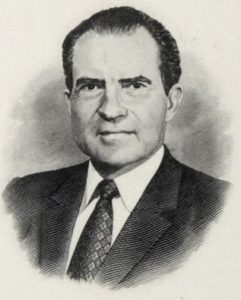
Nixon

Before Richard Nixon went to bed on Nov. 7, 1972, he gathered his supporters at the Sheraton Hotel in Washington, D.C., for a few final words of victory. As he turned away to retire, there was a loud chorus of voices chanting “Four more years!” This was an elite group of Republicans, but there was no way for the television audience to know that some of the most eminent chanters were felons.

And although the president had racked up a historic victory with 18 million more votes than his opponent, that was not the whole story. Only 55 percent of eligible voters actually went to the polls, a strong indication that perhaps a lot of people rejected both candidates. Plus, the Democrats continued to dominate both houses of Congress, limiting the power of the presidency to enact key legislation.

Even more significantly, this term would be the first (and only) in U.S. history where both the original president and vice president failed to complete their terms in office. Especially poignant was that both had been forced to resign … Spiro Agnew over corruption and Nixon over Watergate.

In a reference to Watergate, Democratic Party nominee George McGovern had described the Nixon administration as “the most corrupt in history,” but Gallup had reported in October that barely half the voters had even heard of the break-in and only 7 percent thought the president might be involved. The men around Nixon continued to be deeply involved in the cover-up … anything to push the issue past the election.

Kissinger

The president’s reelection campaign had been enormously enhanced in the final days by electrifying news from Henry Kissinger: He and Le Duc Tho, Hanoi’s chief negotiator, had achieved a breakthrough in their Paris talks. On Oct. 8, the North Vietnamese had dropped their insistence that South Vietnamese President Nguyen Van Thieu be ejected and instead a coalition government be installed in Saigon. Eighteen days later, Kissinger told a televised press conference that a final accord could be reached with just one more meeting. “Peace,” he said, “is at hand.”

But it wasn’t.

Saigon didn’t agree and Thieu vowed that, if necessary, his country would continue the war alone. Then the North became difficult again and Kissinger left Paris in despair on Dec. 14.

Nixon was furious with both sides and cabled North Vietnam’s Premier Pham Van Dong, warning him that unless serious negotiations were resumed within 72 hours, he would reseed Haiphong harbor with mines and unleash America’s aerial might: B-52s, F-4 Phantoms and Navy fighter bombers. General Curtis LeMay had proposed “bombing them back into the Stone Age” and Air Force generals assured the president that in two weeks, they could saturate the enemy homeland with more tonnage than in all the great raids of World War II – a terror-bombing on a scale never known before.

Hanoi did not respond and the result was the most savage chapter in the long history of our involvement as U.S. air bases on Guam and Thailand and carriers in the Gulf of Tonkin pounded them 24/7, flying more than 1,400 bombing sorties a week. Americans were stunned. Only a few days before, they thought the long nightmare was over.

Back in Washington, D.C., the other nightmare was also not going away. Despite the best efforts of All the President’s Men, it was also destined to end badly. A very complicated time in our history.

Intelligent Collector blogger JIM O’NEAL is an avid collector and history buff. He is president and CEO of Frito-Lay International [retired] and earlier served as chairman and CEO of PepsiCo Restaurants International [KFC Pizza Hut and Taco Bell].
Early Broadcast Advertising was Shunned … Until Listeners Demanded More

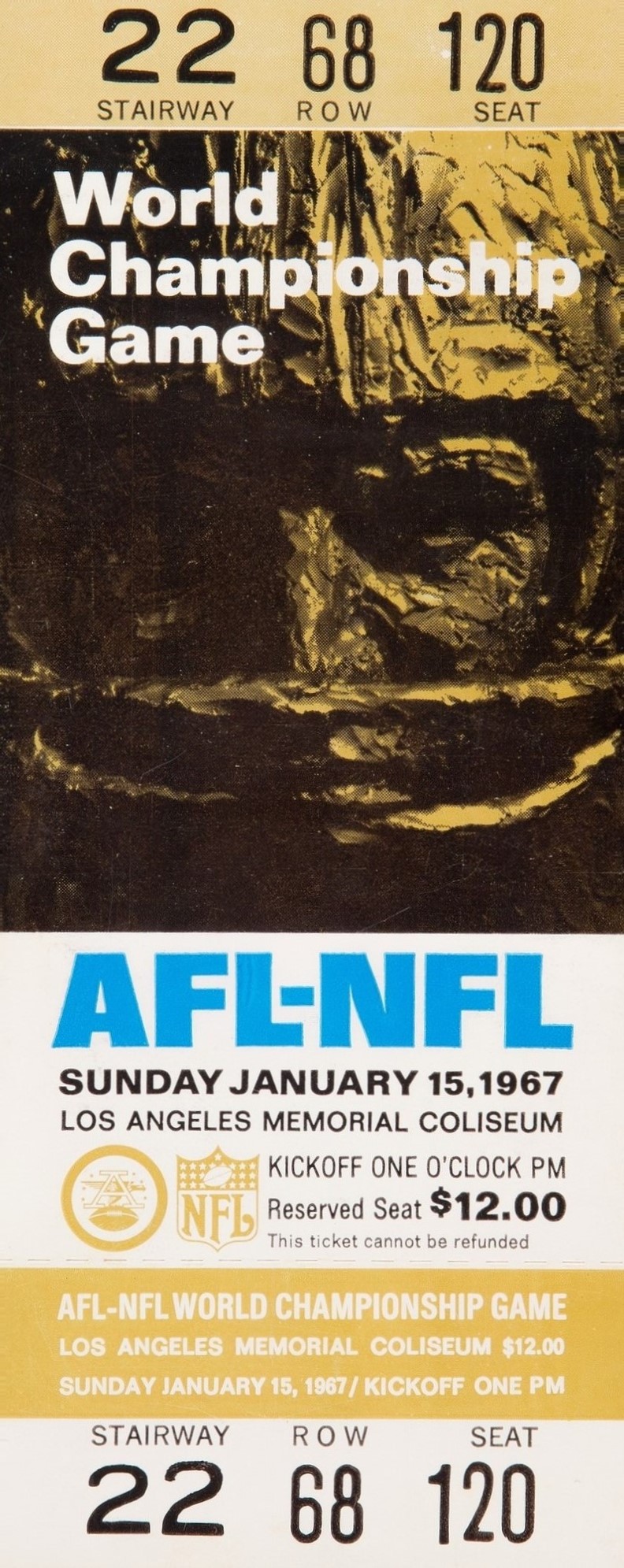
A $12 ticket could get you into the first Super Bowl in 1967. This full-ticket example, a Gold Variation graded PSA NM-MT 8, sold for $26,290 at a May 2015 Heritage auction.

By Jim O’Neal

In 1967, the cost to air a 30-second commercial in the first Super Bowl was about $40,000. Nearly two weeks ago in Super Bowl LI, the cost had increased to $5 million and fans were eager to see the latest creative efforts of Corporate America to hawk their products on TV. Ads are everywhere we look. They pop up on our computers and iPads and are common on race cars, golf apparel and sports stadiums. The Nike swoosh is instantly recognized.

It was not always this way, at least on radio.

During the early days, many radio stations had a practice of observing a weekly “silent night” when they would go off the air. However, the trend was definitely in the opposite direction as listeners were seeking more programming than the stations could produce. This led to hybrid programs combining content with advertising. Early high-profile examples included The Maxwell House Hour (the No. 1 coffee in the U.S.), General Motors Family Party, and The Ipana Troubadours from Bristol Myers toothpaste.

But the issue of regulation hovered over radio like a dark cloud. Some argued for total government control as was the practice in Britain. An even more vigorous debate erupted over commercial advertising. Secretary of Commerce Herbert Hoover asserted it would kill radio. After all, how many listeners would stay by their radios to learn about the advantages of one soap over another? (Quite a few, it turned out.) He argued for the industry to adopt self-policing policies to curtail advertising excesses.

However, broadcasters were salivating over the new revenues and wanted even more. Finally, in 1926, an NBC variety show was interrupted for a special promotional announcement from Dodge cars and it encountered little audience objections. From this point forward, commercial breaks during regular programs were the norm.

Advertising became an integral part of radio broadcasting and never hesitated again.

Some early sponsors did worry about being too aggressive and carefully chose tasteful, discreet language … “Swift & Co has a few practical hints on how to lower your meat bills.” That quickly changed once they discovered consumer-crazy citizens of the 1920s were eager to embrace radio advertising. Far from being insulted, people desperately wanted to hear the messages. They wanted to stay hip, keep up with the latest technologies and the most modern forms of behavior.

A hundred years later, I have a smart phone with more computing power than an Apollo mission, that can hold all my music and trace my ancestry. But after spending most of my life chasing larger screen TVs, I do object to watching my programs on my watch!

Must be a generational thing. Times change.

Intelligent Collector blogger JIM O’NEAL is an avid collector and history buff. He is president and CEO of Frito-Lay International [retired] and earlier served as chairman and CEO of PepsiCo Restaurants International [KFC Pizza Hut and Taco Bell].