Death of Last Astronaut on Moon Reminds Us to Press Forward

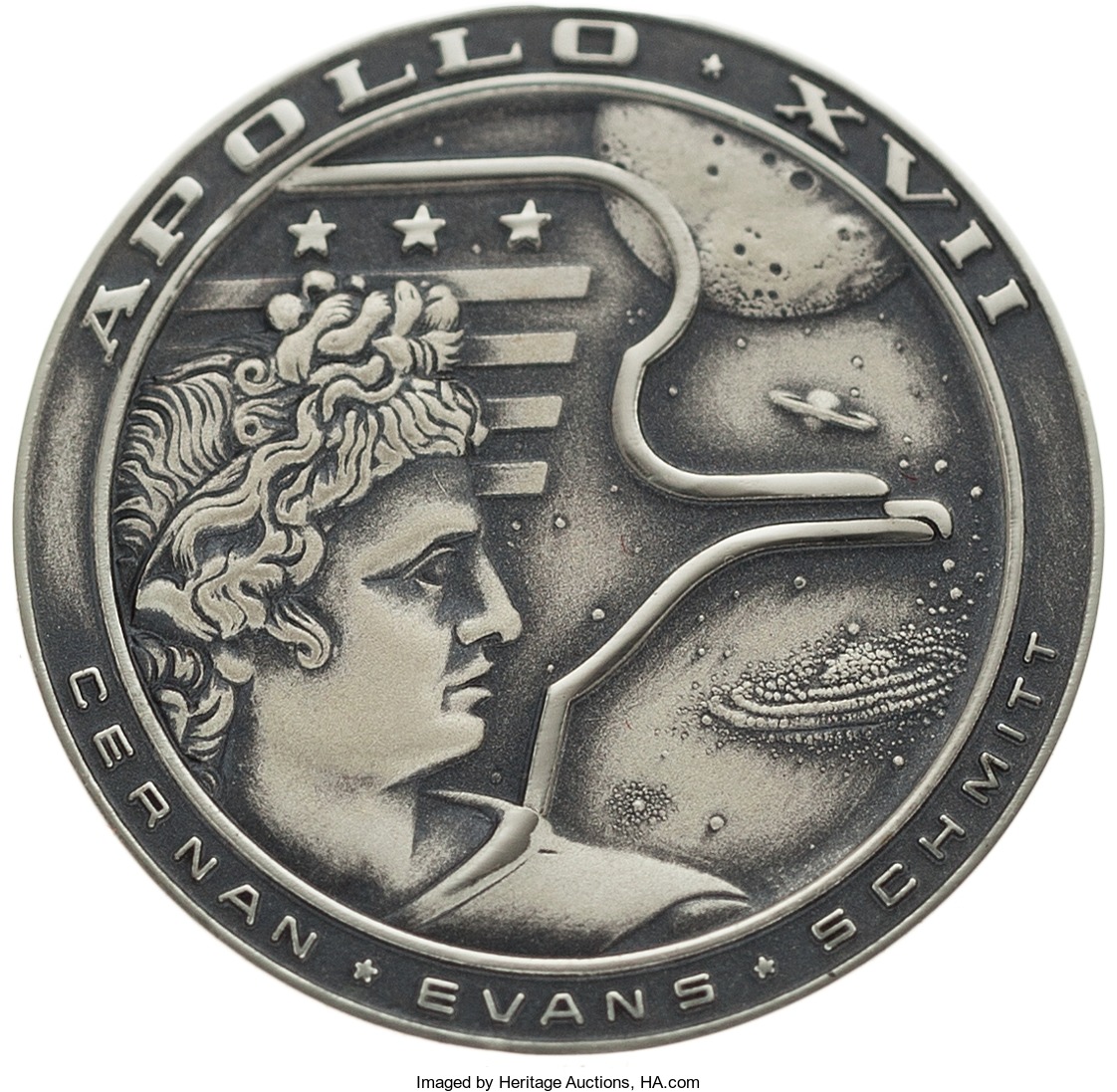
No more than 80 Silver Robbins Medallions were flown aboard Apollo 17, inscribed with the names of crew members Gene Cernan, Ron Evans and Harrison Schmitt. This example, from the personal collection of astronaut Alan Bean, sold for $59,375 at a May 2014 Heritage auction.

By Jim O’Neal

On Jan. 16, 2017, Eugene Andrew Cernan, the last NASA astronaut to walk on the surface of the moon, died in a Houston hospital. His historic flight on Apollo 17 lasted from Dec. 7 to Dec. 19, 1972, and man has not been back since then. Cernan was 82 years old and the first astronaut to be buried at Texas State Cemetery.

Eight space missions visited the moon between 1968 and 1972 as part of NASA’s Apollo program. Each mission carried three American astronauts inside a spacecraft launched by a Saturn V rocket. Apollo 8 was used to test the spacecraft as it orbited the moon. Then, in a dress rehearsal prior to landing, Apollo 10 flew close to the lunar surface.
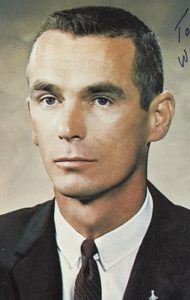
Cernan

The first of the six missions that successfully landed on the moon was Apollo 11 in 1969. Astronauts Neil Armstrong and Buzz Aldrin touched down in July of that year, with Armstrong the first to actually walk on the lunar surface. Just 27 daredevil astronauts made that same remarkable trip and a total of 12 walked on the cratered, lifeless surface.

The Apollo astronauts were blasted into space inside the nose cone of the largest rocket ever built, the Saturn V. It was designed by Wernher von Braun and Arthur Rudolph at Huntsville, Ala., and remains the tallest, heaviest and most powerful rocket brought into full operational status. It was developed as “Operation Paperclip,” a special program using German rocket engineers and approved by President Harry S. Truman in 1945 to leverage their expertise in building Nazi Germany’ V-2 rocket.

Von Braun had started in the U.S. Army after World War II and then transferred when the National Aeronautical and Space Administration was established in 1958 in response to the Russian Sputnik panic. He then became director of NASA’s Marshall Space Flight Center, where they designed the Saturn V. After President John F. Kennedy’s promise to land a man on the moon, von Braun and his team ensured that the United States would win the space race against the Soviet Union.

The giant Saturn V rocket – 40 feet taller than the full Statue of Liberty – consisted of three rockets in one. The first two stages lifted the Apollo spacecraft into space and the third stage put Apollo on course after reaching low Earth orbit. Apollo also had three sections: command, service and lunar modules. All were linked together for the 250,000-mile journey. Once there, the lunar module took two astronauts to the moon’s surface and back. All three astronauts then returned to Earth in the command module. Its conical shape allowed it to withstand the heat of reentry into Earth’s atmosphere for an easy splashdown.

Each night, the moon looms over Earth, peering down and wondering when to expect the next visitors. Perhaps it will be Mars instead. Space … the final frontier!
Intelligent Collector blogger JIM O’NEAL is an avid collector and history buff. He is president and CEO of Frito-Lay International [retired] and earlier served as chairman and CEO of PepsiCo Restaurants International [KFC Pizza Hut and Taco Bell].
McNamara a Fascinating Executive with a Fascinating Career

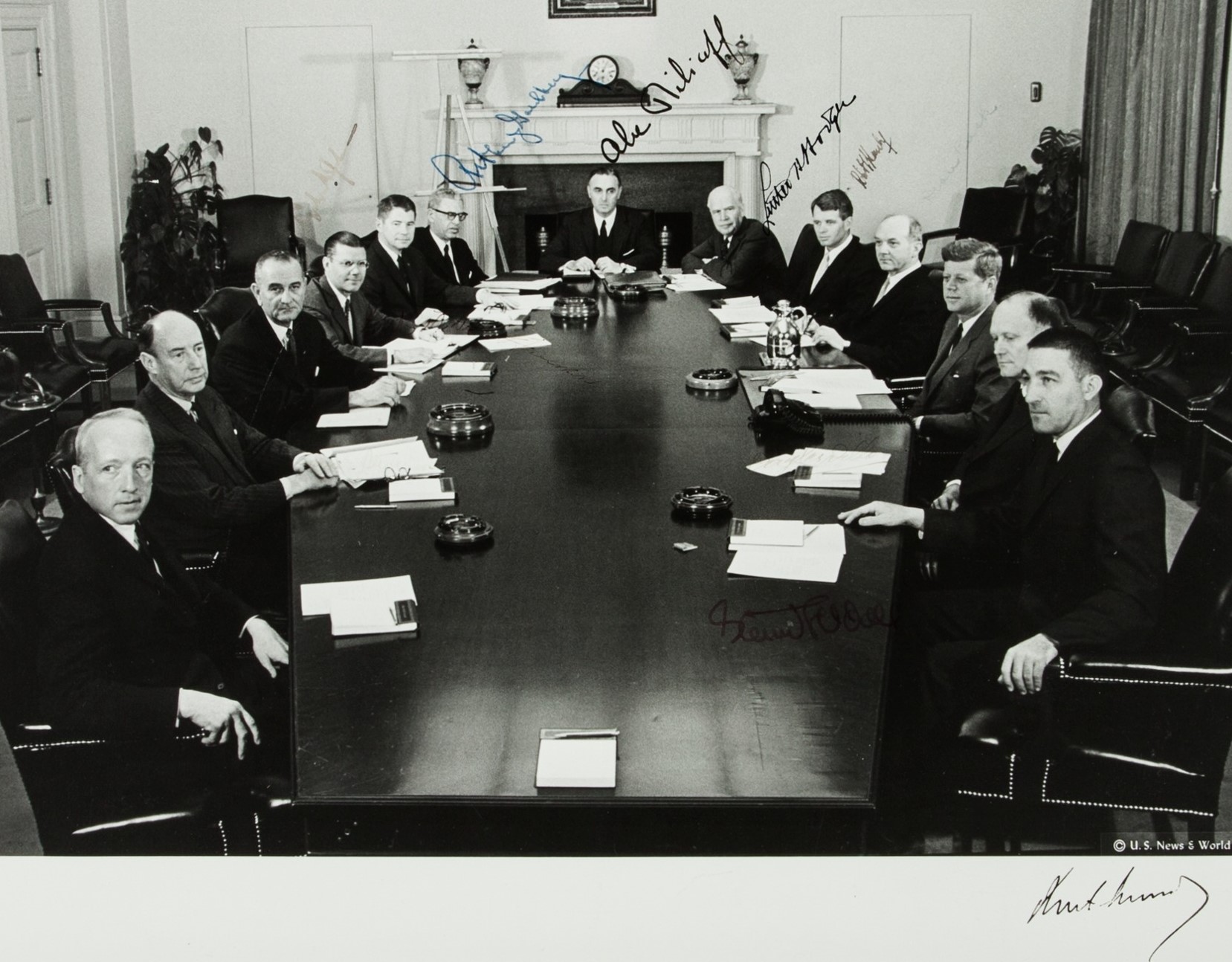
A large photograph of John F. Kennedy and his original cabinet, signed by cabinet members including Robert McNamara (fourth from left), sold for $7,500 at a December 2016 Heritage auction.

By Jim O’Neal

Lieutenant Colonel Robert McNamara had planned to return to Harvard after his stint in the military since he truly enjoyed the Cambridge lifestyle and teaching statistics was his first love. However, in a bizarre twist of coincidence, he and his wife Margaret contracted polio. They were still hospitalized in August 1945 when World War II. His mentor, Tex Thornton, persuaded him to consider a new, higher-paying career in the private sector to help with the family hospital bills.

McNamara and the other Whiz Kids excelled at the Ford Motor Company by utilizing the skills they honed in the Army: control the organization by converting facts and numbers into meaningful information that was actionable. This was particularly valuable at Ford and its archaic operations … pitted against its main competitor General Motors and its classic style of highly accountable, decentralized profit centers. McNamara became the unofficial leader when Thornton left Ford for greener fields in aerospace.

McNamara rose quickly, as Henry Ford II was new and unsure of himself. To Ford, McNamara offered reassurance; when questions arose, he always had answers, not vague estimates, but certitudes, facts and numbers … and a lot of them. On Nov. 9, 1960, McNamara was promoted to president at Ford. It was the first time someone outside the Ford family was in charge.

As fate would have it, the prior day, on Nov. 8, John F. Kennedy became president-elect of the United States. Their careers would soon be joined in a truly unexpected way.

Kennedy sent Sargent Shriver to offer McNamara either the Secretary of Treasury or Secretary of Defense cabinet position. McNamara was disdainful of Treasury, but eager to take on something much more exciting, assuming his boss would agree (it had been only six weeks since he had taken the reins at Ford).

We all know how this turned out, but perhaps not the financial sacrifice involved. By accepting the Defense position, McNamara left $3 million in stock options.

Robert Strange (his mother was Clara Nell Strange) McNamara served as Secretary of Defense under two presidents (JFK and Lyndon B. Johnson) from 1961 to 1968, the longest tenure in history (10 days longer than Donald Rumsfeld), and during the important build-up years in Vietnam. In 1968, he sent a letter to LBJ advising him that the war was unwinnable and recommending the United States end it. The president never replied and McNamara was finished.

Later, he told his friend, Washington Post publisher Katharine Graham, he wasn’t sure if he quit or was fired. She replied, “Are you crazy? Of course you were fired!”

In 2003, Errol Morris produced the documentary The Fog of War, which captures these war years, including a poignant ceremony when McNamara retired and LBJ awarded him the Medal of Freedom. McNamara was so emotional that he had to defer on his acceptance remarks. It is a good flick and recommended since it uses archival film with contemporary comments from McNamara.

A fascinating man and career. He served as president of the World Bank from 1968 to 1981 before dying in 2009 at age 93.

Intelligent Collector blogger JIM O’NEAL is an avid collector and history buff. He is president and CEO of Frito-Lay International [retired] and earlier served as chairman and CEO of PepsiCo Restaurants International [KFC Pizza Hut and Taco Bell].
Immigrants Have Made Traditionalists Uneasy, But Controversy Will Soon Pass

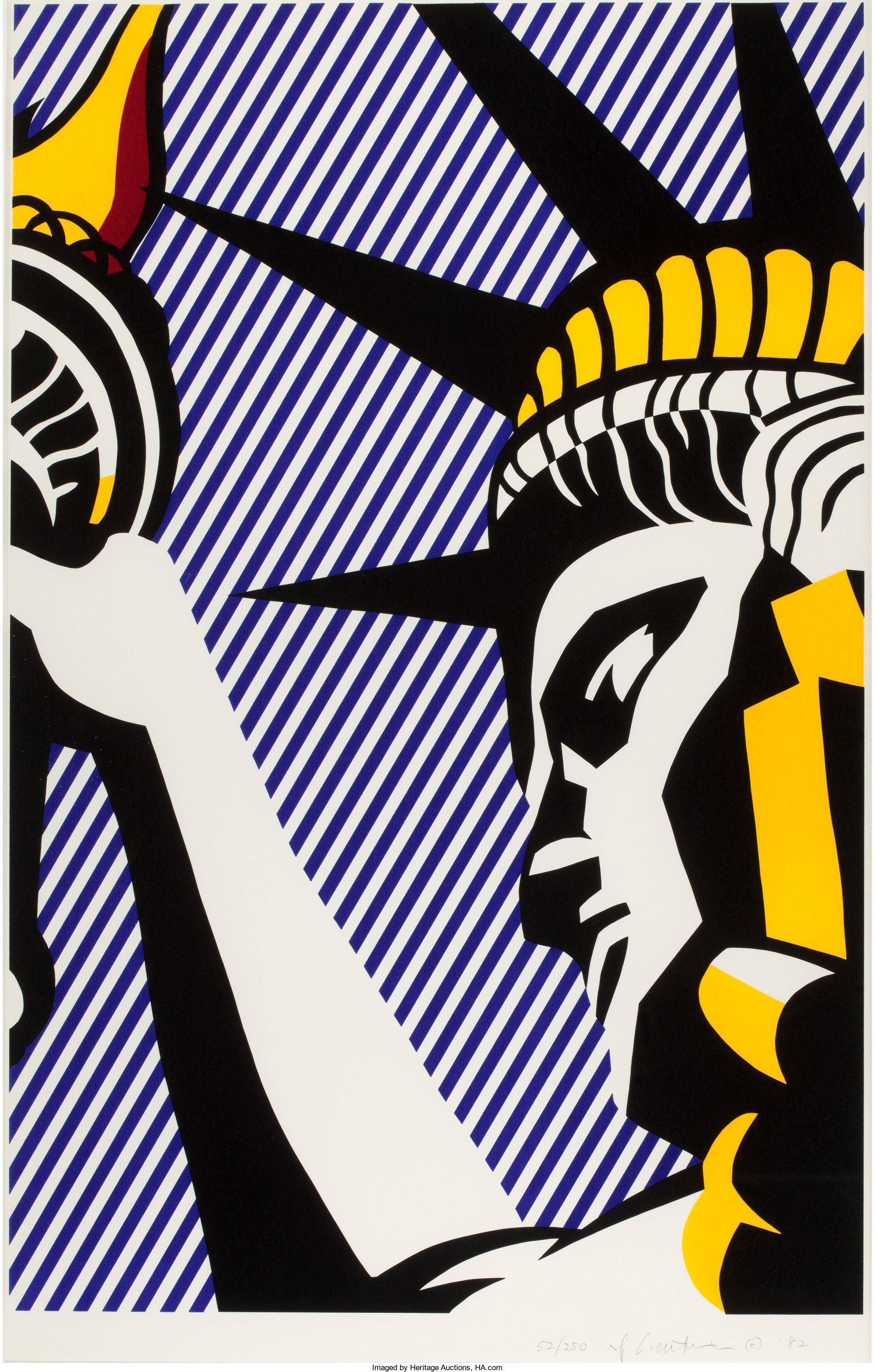
A Roy Lichtenstein screen-print, I Love Liberty, 1982, sold for $27,500 at an October 2014 Heritage auction.

By Jim O’Neal

Immigration is back in the news and it’s easy to forget this is not the first time. Out of the enormous industrial growth in the middle of the 19th century came an almost insatiable appetite for unskilled labor. The result was a tremendous wave of immigration, landing 26 million here between 1870 and 1920. They came from all over the world.

However, this was a new kind of immigrant, fashioned for an industrial society, and it made traditionalists uneasy, just as Thomas Jefferson had once been uncertain about the mixing of the American population. Prominent economists voiced concerns about people wholly incompetent as pioneers mixing with independent proprietors and threatening the democratic theories of the founders.

In 1870, over half of Americans toiled on the farm (close to Jefferson’s vision of yeoman farmers) and yet in the first decade of the 20th century, two-thirds of workers were in factories – semi-intelligent work described by Henry Ford as a job “the most stupid man could learn in two days.” The old immigrants of home-seekers had become new immigrants of job-seekers. A nativist movement was inspired to protect America for people of Anglo-Saxon stock.

This was not the first expression of this sentiment. In the 1850s, a secret society in New York City, the Order of the Star Spangled Banner, morphed into the Know-Nothing Party, which inveighed against the arrival of Irish and German Catholics and with them “popish alliances.” Although the Know-Nothings disappeared after 1860, the tendency toward defining Americans according to ethnicity came roaring back after the Civil War.

Today, we hold up the Statue of Liberty as our beacon to the world, but it was originally intended to be a symbolic gift from sculptor Frédéric Auguste Bartholdi over admiration for American liberties, not a statement about immigration. It was only after Emma Lazarus’ give-me-your-tired sonnet was added to the statue 17 years later that the image of America as an asylum for the oppressed and poor of the world would emerge.

And even this was followed by the Espionage Act of 1917 and Sedition Act of 1918, which allowed the government to prosecute pacifists, socialists and left-wing organizations, all of which had sizable immigrant followers. Then the Johnson-Reed Act of 1924 imposed strict quotas to preserve America as an Anglo-Saxon nation. For the next 40 years, immigration slowed to a trickle and in the 1930s there were years when more people left America than came to live here.

It is a complicated story, but we have thrived as a nation due to the many, many contributions of immigrants. I predict this controversy too shall pass … as it has every time in the past.

Intelligent Collector blogger JIM O’NEAL is an avid collector and history buff. He is president and CEO of Frito-Lay International [retired] and earlier served as chairman and CEO of PepsiCo Restaurants International [KFC Pizza Hut and Taco Bell].
Military Officers Swooped In and Saved Ford Motor Company

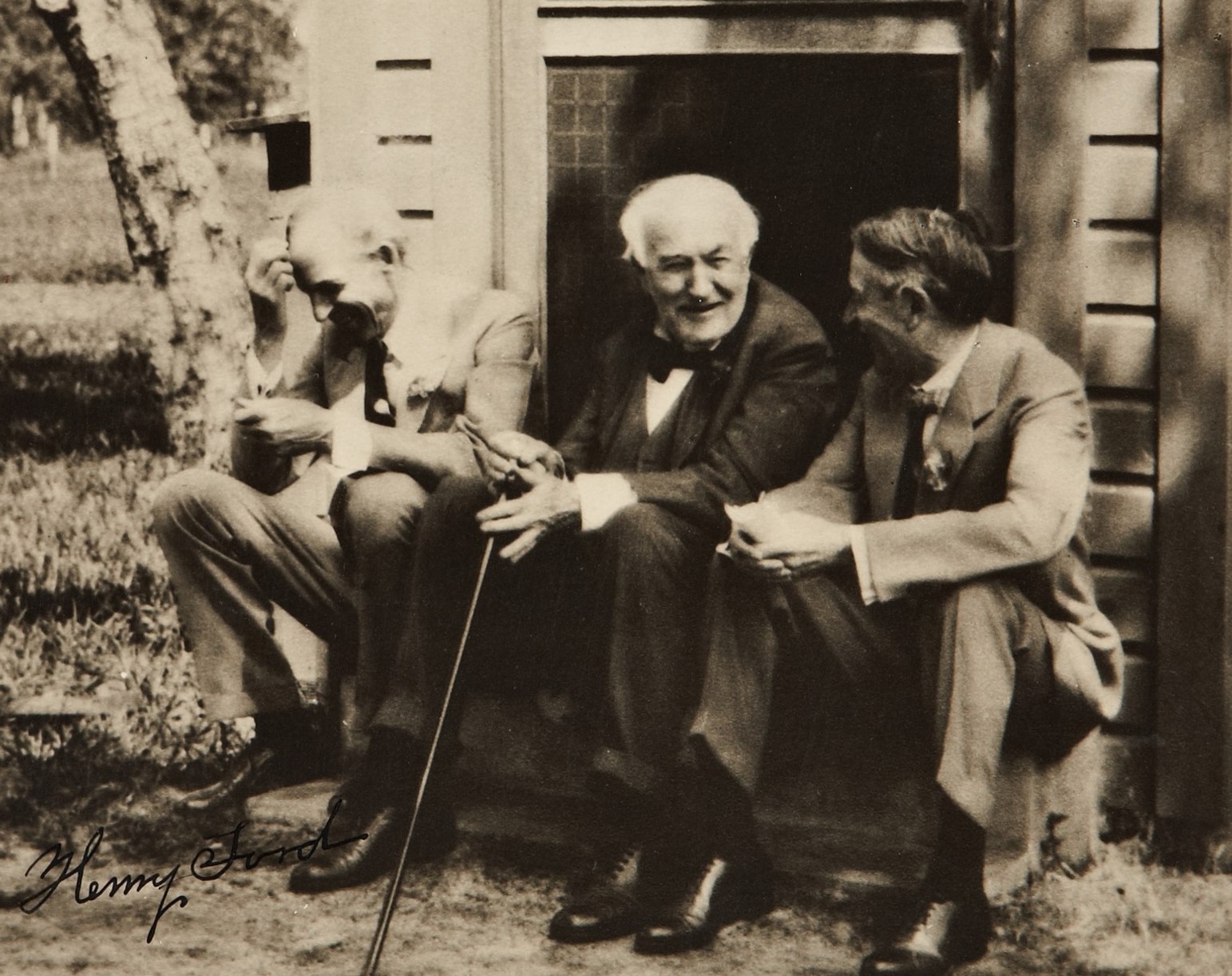
Henry Ford, left, often took trips with Thomas Edison and Harvey Firestone. This photograph, circa 1924, signed by Ford, sold for $1,195 at a June 2010 auction.

By Jim O’Neal

In 1968, General Curtis LeMay was the vice presidential running mate with American Independent Party candidate George Wallace. This unlikely duo snagged 46 electoral votes and five states with almost 10 million popular votes. This was the last time a third-party candidate won a state.

During World War II, LeMay had implemented a controversial bombing campaign in the Pacific. It was during this time that future Ford Motor Company President Robert McNamara was busy analyzing U.S. bomber efficiency and effectiveness, especially the B-29 command of General LeMay, as part of a team headed by Colonel Tex Thornton.

LeMay and McNamara would cross paths again during the Bay of Pigs fiasco and the war in Vietnam.

During the late war years of the 1940s, the Ford Motor Company was struggling to remain viable. President Edsel Ford, son of founder Henry, died of stomach cancer in 1943 and the board made the mistake of bringing back an ailing Henry Ford in an act of desperation. The company was losing $9-10 million a month and the Roosevelt administration had considered nationalization to keep vital war materials flowing.

In 1945, Edsel’s son Henry Ford II was discharged from the Navy and the board quickly named him president of Ford. However, the company he inherited was still a shell of a corporation badly in need of modernizing its production, establishing financial controls and building an organization.

In a stroke of genius, Tex Thornton decided to market his staff of nine wartime officers to corporations that were reconverting from military to civil production. After all, his colleagues were part of a management science operation within the Army Air Force and, without a doubt, were the most talented managerial team of the century … young men who had gained 25 years of experience in just four years.

Thornton sent a cable to young (28) Henry Ford II and after an impressive interview, Ford hired the group with salaries ranging from $10,000 to $16,000. Bob McNamara was the second-highest paid and he took over finance at Ford. This is the group that became the famous “Whiz Kids” (although internally they were called “Quiz Kids” since they were always asking “Why?”). The Ford Motor Company would never be the same, fortunately, and slowly started catching up with rival General Motors.

One amusing anecdote involves The Edsel Show, a live one-hour television special designed to promote Ford’s cars. It aired on Oct. 13, 1957, and featured Bing Crosby, Louis Armstrong, Rosemary Clooney and Frank Sinatra. The show drew great reviews.

Clooney received one of the new Edsels as a gift and after the show, she and Henry Ford were walking together when she went over to get in. The door handle came off in her hand, so she turned and said, “Henry, about your car…”

Quality control was still en route to Dearborn, Mich., but arrived after the Edsel’s funeral.

More about Robert Strange McNamara, who became Secretary of Defense in 1961, in future posts.

Intelligent Collector blogger JIM O’NEAL is an avid collector and history buff. He is president and CEO of Frito-Lay International [retired] and earlier served as chairman and CEO of PepsiCo Restaurants International [KFC Pizza Hut and Taco Bell].
Our Planet is a Truly Remarkable Piece of Real Estate

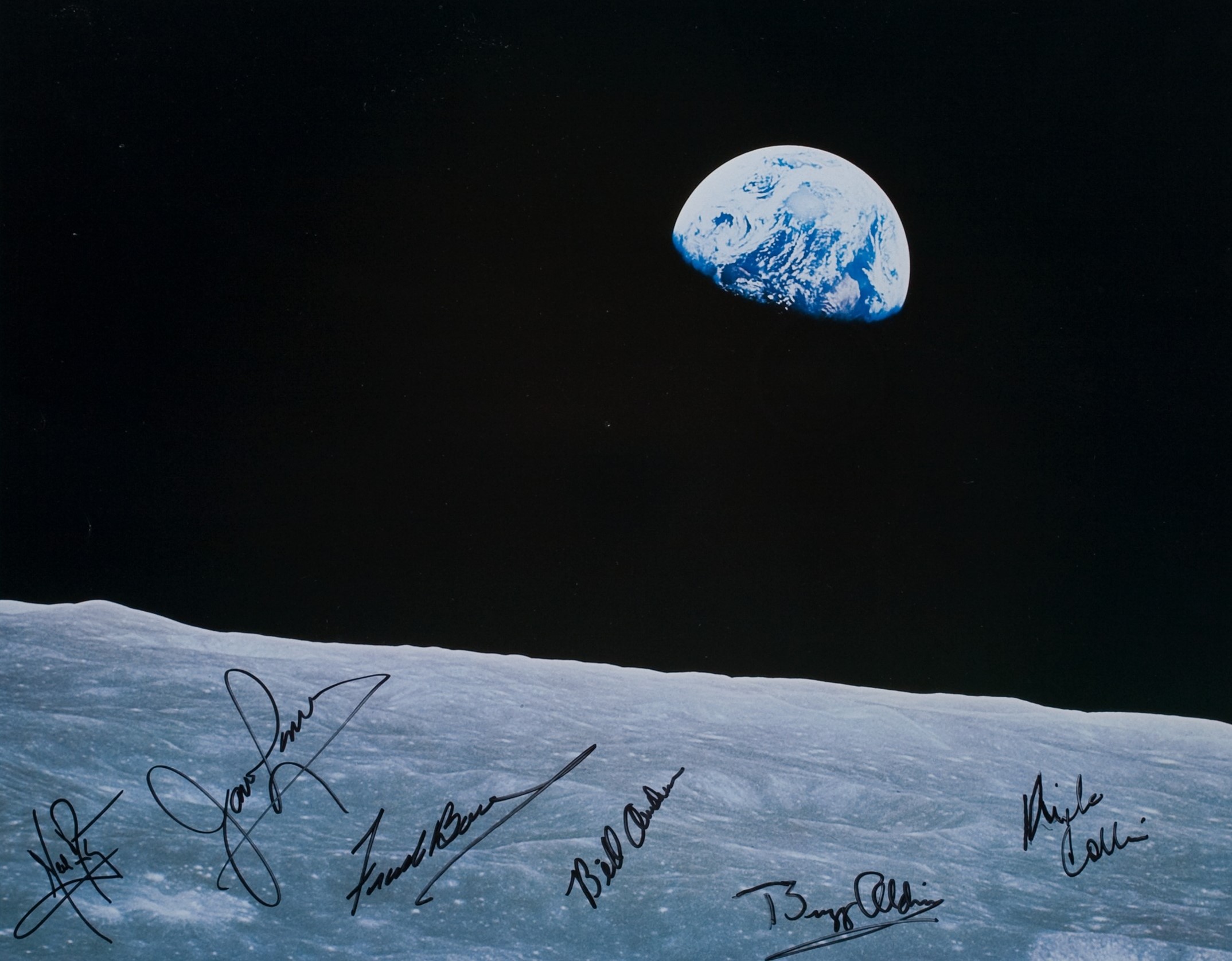
A 1968 “Earthrise” photo signed by the Apollo 8 and Apollo 11 crews sold for $16,730 at a November 2010 Heritage auction.

By Jim O’Neal

In a little-known experiment, a graduate student at the University of Chicago hooked up two test tubes containing water (the “ocean”) and a mixture of methane, ammonia and hydrogen (the “atmosphere”). A few days later, after a few electrical sparks to simulate lightening, there was a goopy broth of organic compounds … “life.” His professor, Nobel Laureate Harold Urey, reportedly exclaimed, “If God didn’t do it this way, he missed a good bet!”

This theory has since been dismissed since Earth didn’t have these inputs available that early.

The experiment happened in 1953 and more than a half-century later, there is still no certainty on how life actually began on this planet. Famous people like Lord Kelvin (1871) have suggested it came from outer space via aliens or comets. But that theory – panspermia – doesn’t answer the basic question; it just moves it to some distant location. But there is general consensus that life on Earth started about 3.5 billion years ago.

Rather than pursue how life started, NASA in the 1960s assembled a team to think about how to look for life … on Mars. British scientist James Lovelock decided to solve the problem by identifying the necessary features for life on Earth. He started with water, since all life depends on it. Then he specified that the average temperature must stay between 60 and 65 degrees to ensure it remained liquid, as it has for the past 3.5 billion years.

Next was salinity, since cells cannot survive levels above 5 percent and the oceans have remained at about 3.4 percent. Oxygen is another must-have element, but close to the 20 percent when it first appeared 2 billion years ago … 16 percent to 20 percent for breathing, but below 25 percent because at that level, forest fires would never go out.

Eventually, Lovelock suggested that the entire planet makes up a single, self-regulating being which he called Gaia. The very presence of life regulates the temperature of the surface, the concentration of oxygen and the chemical composition of the oceans.

Voilà … the perfect conditions for life.

However, Lovelock also warned that the human impact on the environment may disrupt this delicate balance. As early as 1935, another British scientist, Arthur Tansley, described Earth lifeforms, landscapes and climate as a giant ecosystem.

Personally, each time I see pictures of Earth taken from space – this astonishing blue orb suspended in space – it reminds me just how insignificant we are. Relative to the enormity of the ever-expanding universe, we live on a truly remarkable piece of real estate. I hope we can maintain the balance Lovelock identified. Moving isn’t an option … yet.

Intelligent Collector blogger JIM O’NEAL is an avid collector and history buff. He is president and CEO of Frito-Lay International [retired] and earlier served as chairman and CEO of PepsiCo Restaurants International [KFC Pizza Hut and Taco Bell].
Gilded Age Created Super-Wealthy Americans and their Extremely Large Homes

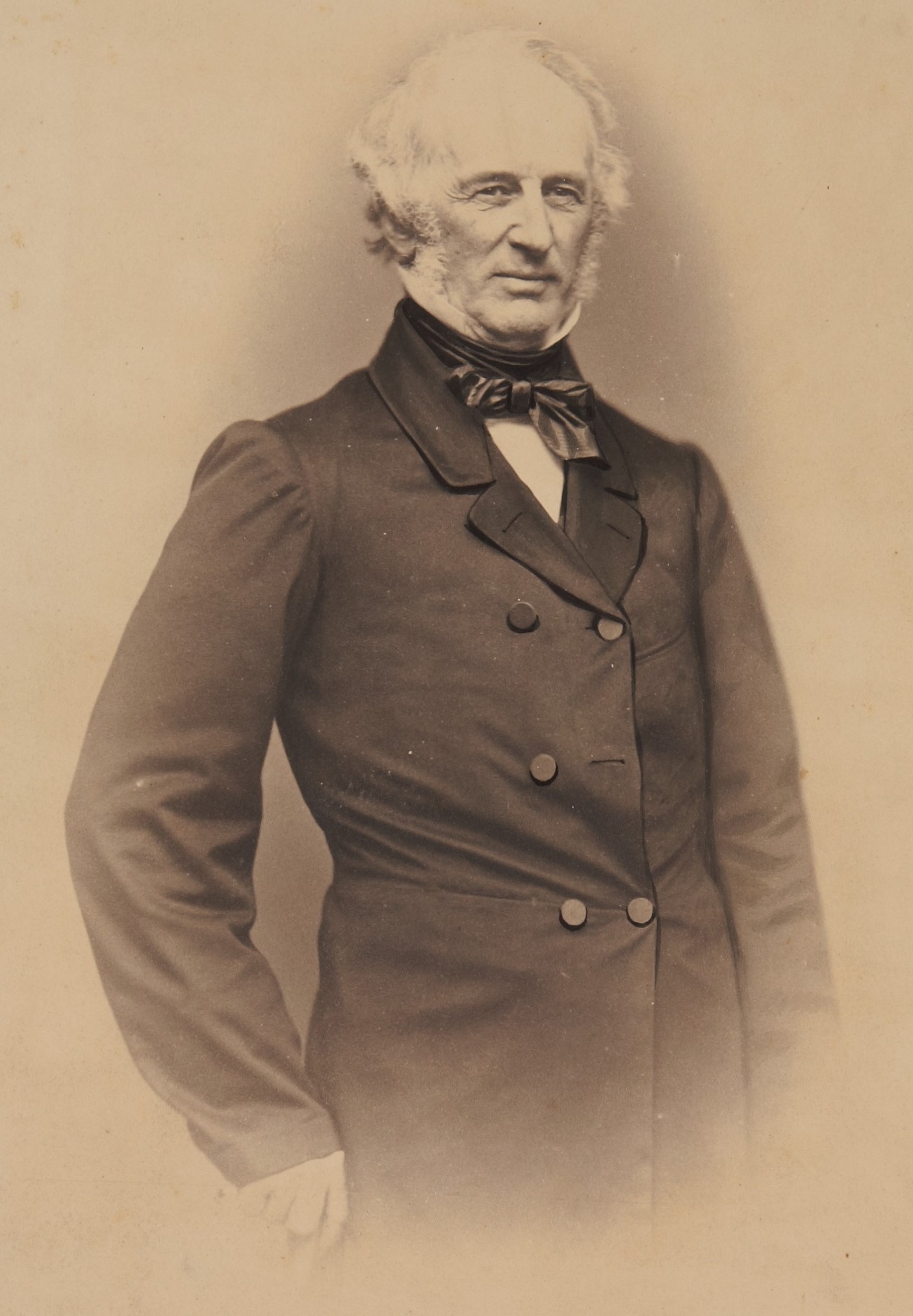
Cornelius Vanderbilt at one point controlled 10 percent of all the money in circulation in the United States.

By Jim O’Neal

A recent New York Times edition has a follow-up story on America’s most expensive house – a 38,000-square-foot beauty listed at $250 million. The current all-time record is believed to be an East Hampton estate that sold for $147 million in 2014, followed by a California house that sold for $117.5 million in 2013. Apparently, there is another Bel Air project under construction that would dwarf all of these at $500 million.

This may seem like a modern-day phenomenon, but it hardly compares with the late 19th century – “The Gilded Age” – when truly vast fortunes were accumulated to the point it required “creative spending,” and real estate was a favored target. The Vanderbilts were a prime example, as shipping and railroad magnate Cornelius Vanderbilt stood out among other famous names of the day, such as Morgan, Astor, Rockefeller, Mellon and Carnegie. At one point, “Commodore” Vanderbilt (as he liked to be called) personally controlled 10 percent of all the money in circulation in the United States.

Naturally, all these wealthy Americans built homes on a grand scale. Grandest of all were the Vanderbilts. They built 10 mansions in New York alone, all on 5th Avenue, one with 137 rooms. And everyone built more palatial homes outside the city, particularly in Newport, R.I. The super-rich even had the nonchalance to call them “cottages,” despite the fact that they were so big even the servants needed to have servants.

This gaudy ostentation generated such widespread disapproval that a Senate committee seriously considered introducing legislation to limit how much a person could spend on a house (but not how many). These were the days when John D. Rockefeller made $1 billion a year (adjusted for inflation) and paid no income tax. No one did. Congress tried to introduce a 2 percent income tax over $4,000 in 1894 and the Supreme Court promptly ruled it unconstitutional.

Warren Buffet thinks we are better off today since rich folks back then couldn’t buy televisions, luxury cars (with GPS), cellphones, jet travel, microwaves, talking movies, air conditioners, Starbucks lattes … or lifesaving CT scans, organ transplants or statins/vaccines – since they didn’t exist. All they had was money.

So like the Commodore’s grandson George Washington Vanderbilt, they turned to real estate and homes. This Vanderbilt heir decided to build a cottage of his own in 1888, when he was still in his 20s. He bought 130,000 acres in North Carolina and built a rambling 250-room mansion. He hired 1,000 workers to build a dining room with a 75-foot ceiling that seated 76. The estate had 200 miles of road and included a town complete with schools, a hospital, churches, banks, a railroad station and shops for 2,000 employees and their families. The surrounding forests were logged for timber and the many farms produced fruit, vegetables, eggs, poultry and livestock.

He had planned to live there part-time with his mother, but she died before it was complete. So he lived there alone until he finally married and had a daughter. Then he died.

As F. Scott Fitzgerald supposedly once said to Ernest Hemingway: “The rich are different from you and me.” To which Hemingway replied, “Yes, they have more money.” (And thus a famous quote/counter-quote myth was born … with many variations.)

Intelligent Collector blogger JIM O’NEAL is an avid collector and history buff. He is president and CEO of Frito-Lay International [retired] and earlier served as chairman and CEO of PepsiCo Restaurants International [KFC Pizza Hut and Taco Bell].
Events Surrounding Rockefeller, AT&T Recall Story of Hydra

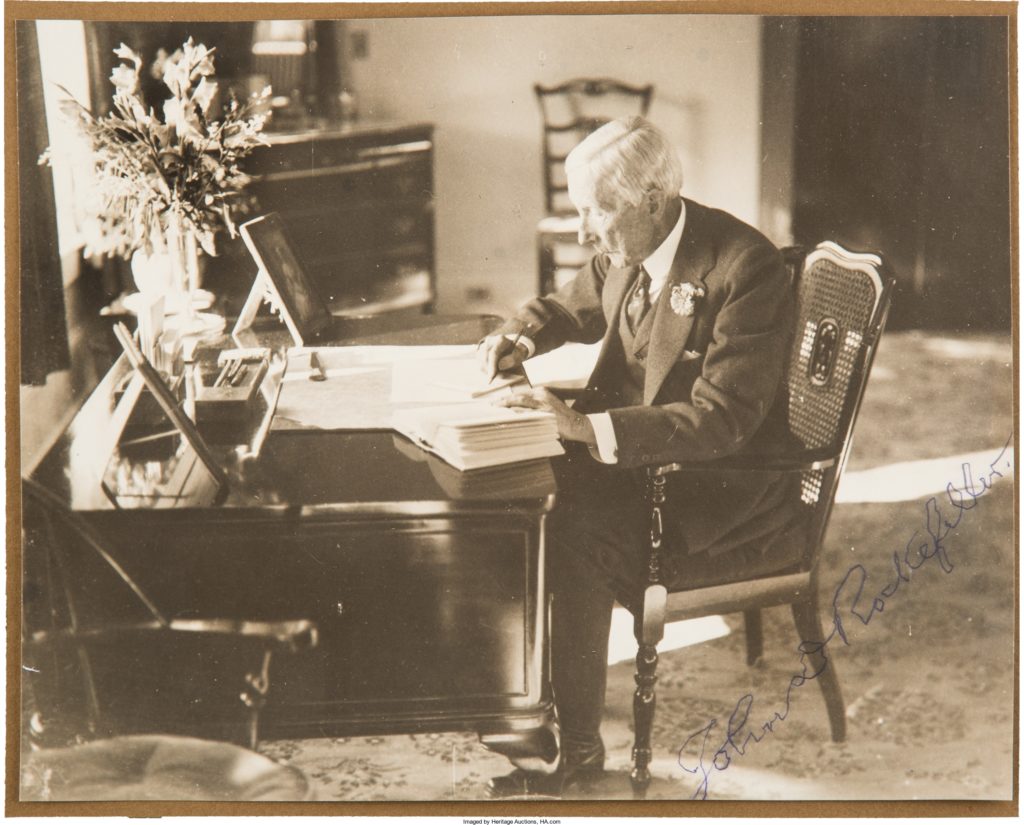
John D. Rockefeller at his desk, 1930s.

By Jim O’Neal

Few people who were alive when Martin Van Buren was president (1837-41) were still alive when Franklin Delano Roosevelt was inaugurated for his second term (1937). John Davison Rockefeller was, and he took advantage of every single day, even preferring to work on his many birthdays.

Were he still alive, it’s almost certain he would be mildly amused to see a modern company – AT&T – seeking approval from a government department for an $85.4 billion acquisition of media giant Time Warner. In 1974, this same agency – the U.S. Department of Justice – filed an anti-trust lawsuit against AT&T. Eight years later, “Ma Bell” was forced to break up by spinning off seven “Baby Bells.”

Perversely, one of these spinoffs, SBC Communications (named Southwestern Bell Corporation until 1995) started methodically reconsolidating and eventually bought the original AT&T and assumed its name. Next, they acquired BellSouth for $85.5 billion, with full FCC approval.

Big ’ins always eat little ’ins (old Texas maxim).

John D. Rockefeller became the world’s richest person (ever) in a similar fashion: consolidating an industry to avoid competition.

The great industrial revolution that transformed America after the Civil War sparked an inflationary boom that resulted in an oversupply of goods. Naturally, this led to price declines that caused a deflationary spiral. The balance of the 19th century was plagued by these boom-bust cycles. As new markets developed, inexperienced businessmen failed to recognize the dangers of supply-demand imbalances as they rushed to make their fortunes.

Crude oil was a classic example, since there was no way to predict increases in supply, and oil refiners proliferated due to low barriers to entry. “So many wells were flowing, the price of oil kept falling, yet they went right on drilling.” Rockefeller was one of the first to recognize there was a need for a systemic solution. He cited the years of 1869-1870 as the start of his campaign to replace competition with “cooperation.”

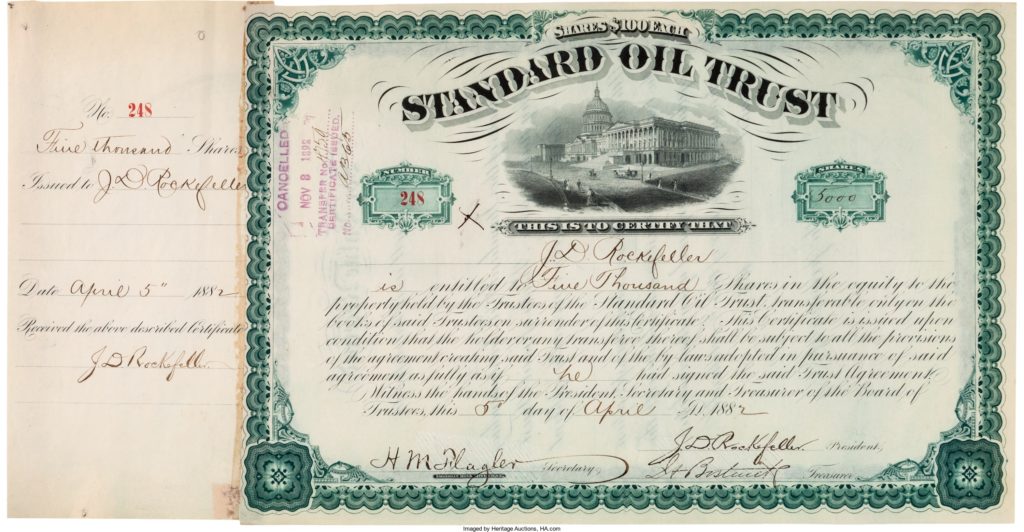
A Standard Oil Trust stock certificate with two John D. Rockefeller signatures, dated April 5, 1882, sold for $7,500 at an April 2014 auction.

By the early 1880s, his Standard Oil Company controlled 90 percent of U.S. refineries and pipelines. In 1882, his clever lawyers created an innovative new kind of corporation that controlled all of the holdings in a “trust.” The trust controlled over 40 companies and it became easy to control production, distribution and refining (and, obviously, prices).

In 1911, the Supreme Court ruled these were illegal monopoly practices and ordered that it be broken up into 34 new companies. In a twist, John D. Rockefeller ended up with stock in all 34 companies, and over the next 10 years their combined net worth increased fivefold, as did Rockefeller’s personal fortune. Today, ExxonMobil Corporation is the largest of the world’s Big Oil companies and is consistently among the top five companies in revenue and profits.

The Greeks had a myth about Hydra, a multi-headed monster that grew two heads every time one was cut off. You can draw your own parallels.

Intelligent Collector blogger JIM O’NEAL is an avid collector and history buff. He is president and CEO of Frito-Lay International [retired] and earlier served as chairman and CEO of PepsiCo Restaurants International [KFC Pizza Hut and Taco Bell].
Winning a War is Difficult, Even with Vastly Superior Forces

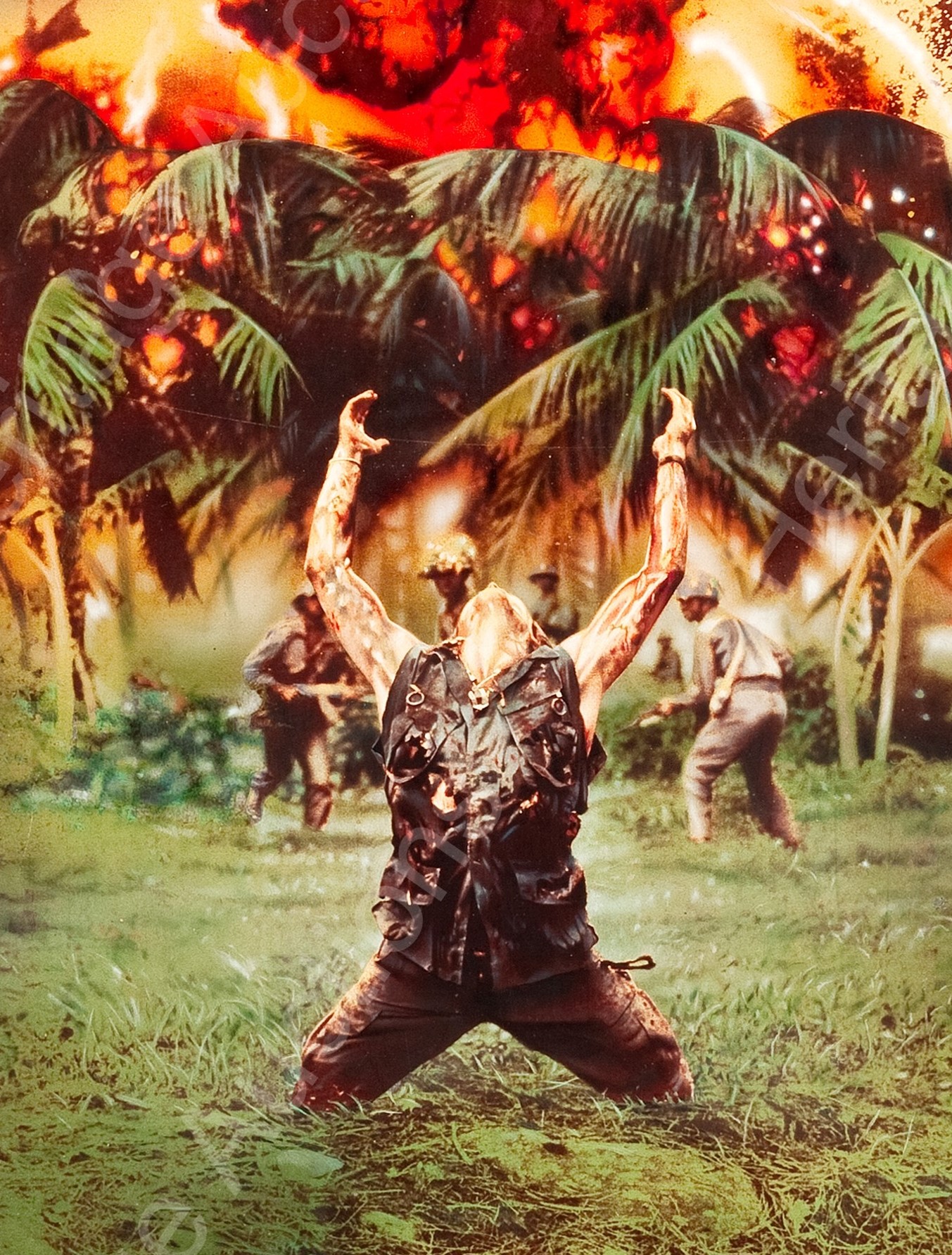
The original movie poster art for Oliver Stone’s 1986 Vietnam war drama Platoon, by artist Mike Bryan, sold for $21,510 at a March 2014 Heritage auction.

By Jim O’Neal

The decision to mount a sustained bombing campaign was not made until Feb. 13, 1965 – two days after the Viet Cong had launched yet another attack on the U.S. barracks at Qui Nhon. The significance was that this decision, which had taken so long, had been kept completely separate from the decision on combat troops. It was to be an activity unto itself. But in their hearts, the military knew better and this was a crucial lapse in judgment. It differed sharply from the decision-making in 1954, when the Army staff cast serious reservations about U.S. aerial intervention in Indochina.

In 1954, Army Chief of Staff Matthew Ridgway had made one thing crystal clear: Air power and ground power could not be separated. If air power was used and failed, ground power would almost certainly be necessary. In 1965, no one made the comparable case as the pressure for bombing escalated too fast.

The bombing campaign was going ahead under the name of Rolling Thunder, designed to force the other side to start negotiating, thus avoiding the use of ground troops. In the intelligence community, the ones most knowledgeable about Vietnam knew with certainty that Hanoi would never negotiate or capitulate. However, the principals were convinced that bombings would preclude the use of any ground forces.

On Feb. 22, nine days after the decision to go ahead with the bombing, General William Childs Westmoreland – commander of U.S. forces in Vietnam – sent in a request for two battalions of Marine Corps, strictly to provide security for the U.S. air base in Danang. It was a modest request, just the two groups, and the mission was minor, as well. Just provide security.

This was the first time American combat units would arrive as units. There was a nagging fear among many in Washington and Saigon that this was not the end. However, it was a small request and it had to be done.

After all, slipping in the first troops was just an adjustment, an asterisk really, to the firm decision they had made to avoid sending in troops. Of course, there had to be protection for the airplanes and if there was bombing, then you needed airfields. And if there were airfields, then troops were needed for security. No one pointed out that a regiment is small and can’t really protect itself. Even as they were bombing, they were preparing for a new rationale: the protection of men and material. The expanding rationale would provide its own rhythm of escalation. The whole basis of the escalation and of providing ground troops hung on a slender hope; it would be brief.

Four short years later, in 1969, United States troops in Vietnam peaked at 549,500, with 16,592 KIA (killed in action).

It is hard to win a war, even with vastly superior forces, if the other side is determined to never quit. You can even leave the country, as we did in Iraq, but chances are you will be back. Especially in wars on “terrorism,” even if you choose to quit, who do you surrender to?

Intelligent Collector blogger JIM O’NEAL is an avid collector and history buff. He is president and CEO of Frito-Lay International [retired] and earlier served as chairman and CEO of PepsiCo Restaurants International [KFC Pizza Hut and Taco Bell].
McCarthy Exploited Vulnerabilities of Frightened Public by Simplifying Complex Issues

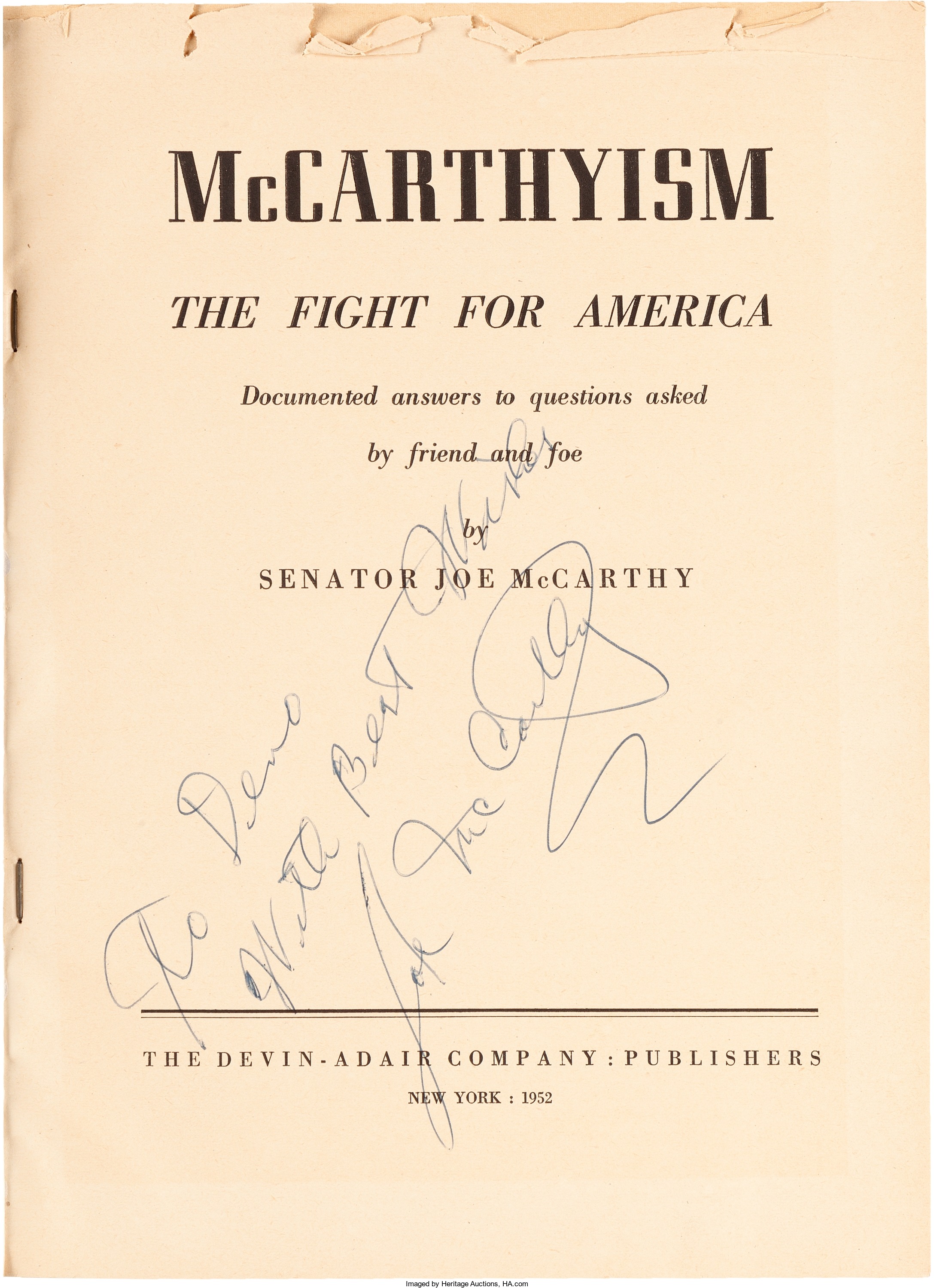
A copy of Joseph McCarthy’s McCarthyism: The Fight for America, 1952, signed by the senator, sold for $206.25 at an October 2013 auction.

By Jim O’Neal

It’s rather interesting to compare the 1930s with the late 1940s and the transition from the era of the New Deal – when liberal ideas were ascendant, and communism, while not popular, was hardly the abhorrent demon it would become.

To Whittaker Chambers (whose 1952 book Witness became a bestseller) and many other Americans, communism was more than a system of government. It had morphed into a campaign for control of the mind and the masses.

Too many Americans seemed to have fallen victim to the “Soviet Experiment” and were infatuated by its promise of egalitarianism, while ignoring the crimes of its authoritarian leadership. Chambers was a gifted intellectual writer, but the anti-communists were to find their most vocal champion by accident. And he was a buffoon.

Joseph McCarthy

Senator Joseph McCarthy of Wisconsin was a hard-drinking, coarse man who later said he knew so little about his crusade that he would find it hard to distinguish Karl Marx from Groucho Marx. In a May 1950 speech to Republicans in West Virginia, he claimed to have a list of 205 communists working in the State Department. He had no list, but in subsequent speeches the number grew to thousands and then four.

But, with self-aggrandizement being his real personal goal, he soon realized he was onto something big when reporters started asking for more information. He played along and became anti-communism’s most captivating spokesman. By suggestion, innuendo and diversion, McCarthy pointed his finger at labor and liberals, at America’s elite, its prominent educational institutions, and at FDR and the New Deal.

Soon, he was not the only one ruining careers and smearing reputations. Around the country, untold numbers of civil servants, schoolteachers and scientists were driven from their jobs by witch-hunts just as vicious as the Wisconsin senator’s. The hysteria included schools banning the tale of Robin Hood for its communist themes; the Cincinnati Reds changing their name to the Redlegs; and Mickey Spillane having his tough private eye going after communist subversives instead of gangsters. Jackie Robinson was called before the House Committee on Un-American Activities to testify about communism’s influence in the black community. Even Hollywood had its own “blacklist” of writers, directors and actors.

Only when McCarthy challenged the character of President Truman’s Secretary of Defense George Marshall did his public opinion begin to sour.

There were plenty of communist agents or sympathizers in America, but it is unlikely that McCarthy or his followers ever found any. What they did was exploit the vulnerability of frightened or insecure people by simplifying complex international developments into language that tapped into cultural divisions. McCarthy helped them find someone to blame.

Fortunately, it didn’t last long after the Senate censored him … twice. He died a hopeless alcoholic at age 48.

The 2005 movie Good Night, and Good Luck with David Strathairn and George Clooney does a terrific job of capturing the era of McCarthyism through the lens of TV journalist Edward R. Murrow’s experience. It’s among my top 20 favorite movies.

Intelligent Collector blogger JIM O’NEAL is an avid collector and history buff. He is president and CEO of Frito-Lay International [retired] and earlier served as chairman and CEO of PepsiCo Restaurants International [KFC Pizza Hut and Taco Bell].
Coolidge Focused on Creating Conditions Under Which Everyone Could Succeed

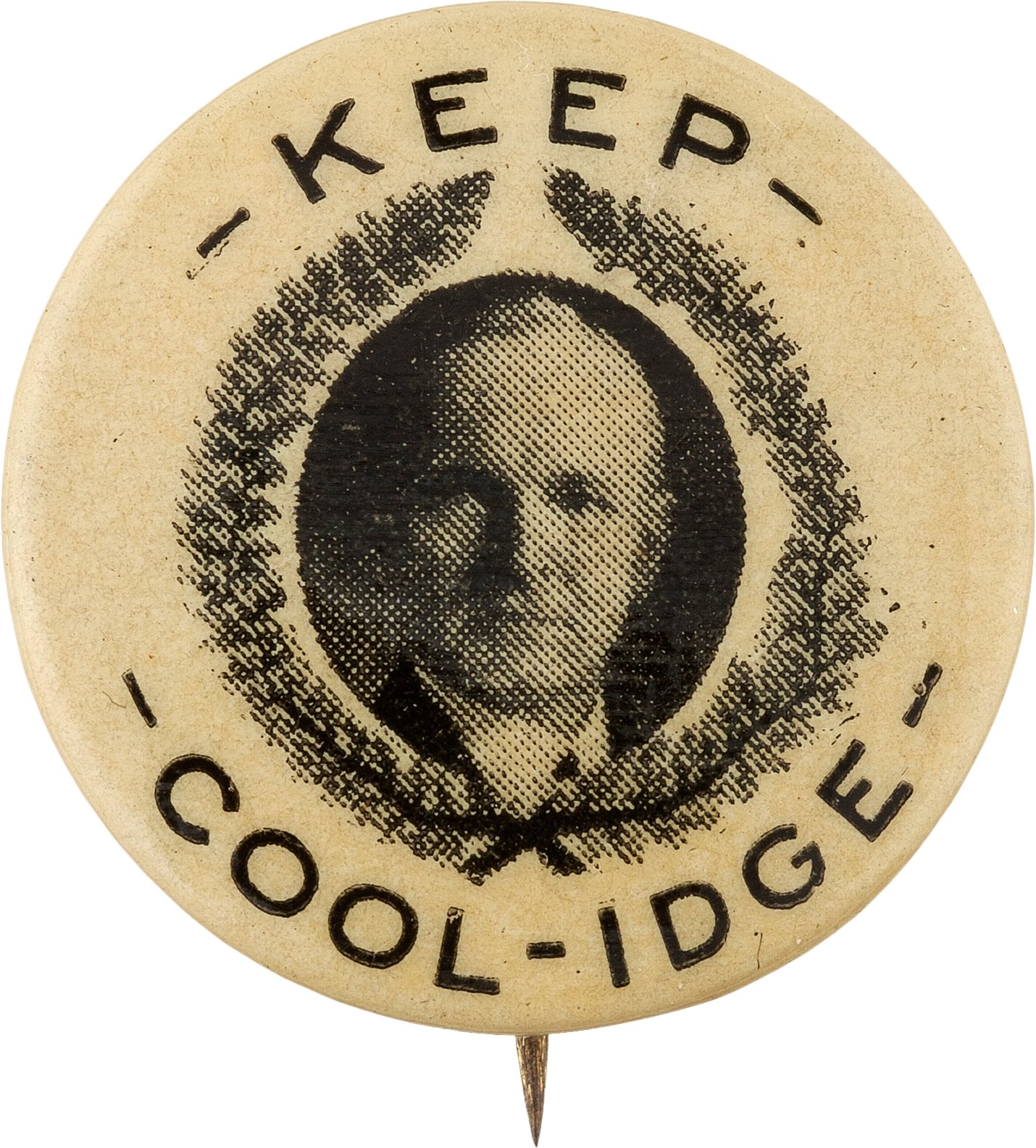
This rare “KEEP COOL-IDGE” campaign button, 1924, sold for $2,250 in February 2015.

By Jim O’Neal

The Republican Party’s 1924 presidential convention in Cleveland was the first to be broadcast on radio. Incumbent President Calvin Coolidge was a cinch to win the nomination as the nation was at peace, the country prosperous and the integrity of the executive branch restored after the Warren G. Harding scandals. “Keep Cool With Coolidge” captured the mood of the country and Democrats were so divided it took 103 ballots before they picked John Davis of West Virginia (“The Disaster in Madison Square Garden”).

The only real surprise was the selection of the Republican vice president candidate. Coolidge favored Senator William Borah of Idaho, who declined. On the second ballot, they nominated Governor Frank Lowden of Illinois, but he stunned everyone by refusing just as delegates were making the vote unanimous. Finally, Charles Dawes was nominated and he accepted. He would win the Nobel Peace Prize in 1925 for his work on World War I reparations and is the only vice president to be credited with a No. 1 pop song (“It’s All in the Game,” 1958, performed by Tommy Edwards).

President Coolidge’s inaugural address in March 1925 was a ringing endorsement of his policies: encourage business and reduce taxes. “Economic legislation is not to destroy those who have already secured success, but to create conditions under which everyone will have a better chance to be successful.”

On Aug. 2, 1927, Coolidge surprised the nation with a terse announcement of his intent to retire. “I do not choose to run for president in 1928.” He explained his reelection would extend his presidency to 10 years … longer than anyone before … and too long in his opinion.

Some observers have speculated that he turned down reelection due to health concerns. Mrs. Coolidge claimed he told her that the next four years may have required greater federal spending … something he was too frugal philosophically to support. Others believe Coolidge retired because he sensed the coming economic crash and got out before his reputation for fostering prosperity was tarnished.

“You hear a lot of jokes about ‘Silent Cal Coolidge.’ The joke is on the people who make the jokes. Look at his record. He cut taxes four times and we probably had the greatest growth and prosperity we’ve ever known. I have taken heed of that because if he did that by doing nothing, maybe that’s the answer.” – President Ronald Reagan

Amen.

Intelligent Collector blogger JIM O’NEAL is an avid collector and history buff. He is president and CEO of Frito-Lay International [retired] and earlier served as chairman and CEO of PepsiCo Restaurants International [KFC Pizza Hut and Taco Bell].