Texians at Alamo Knew They Were Outnumbered, But They Remained

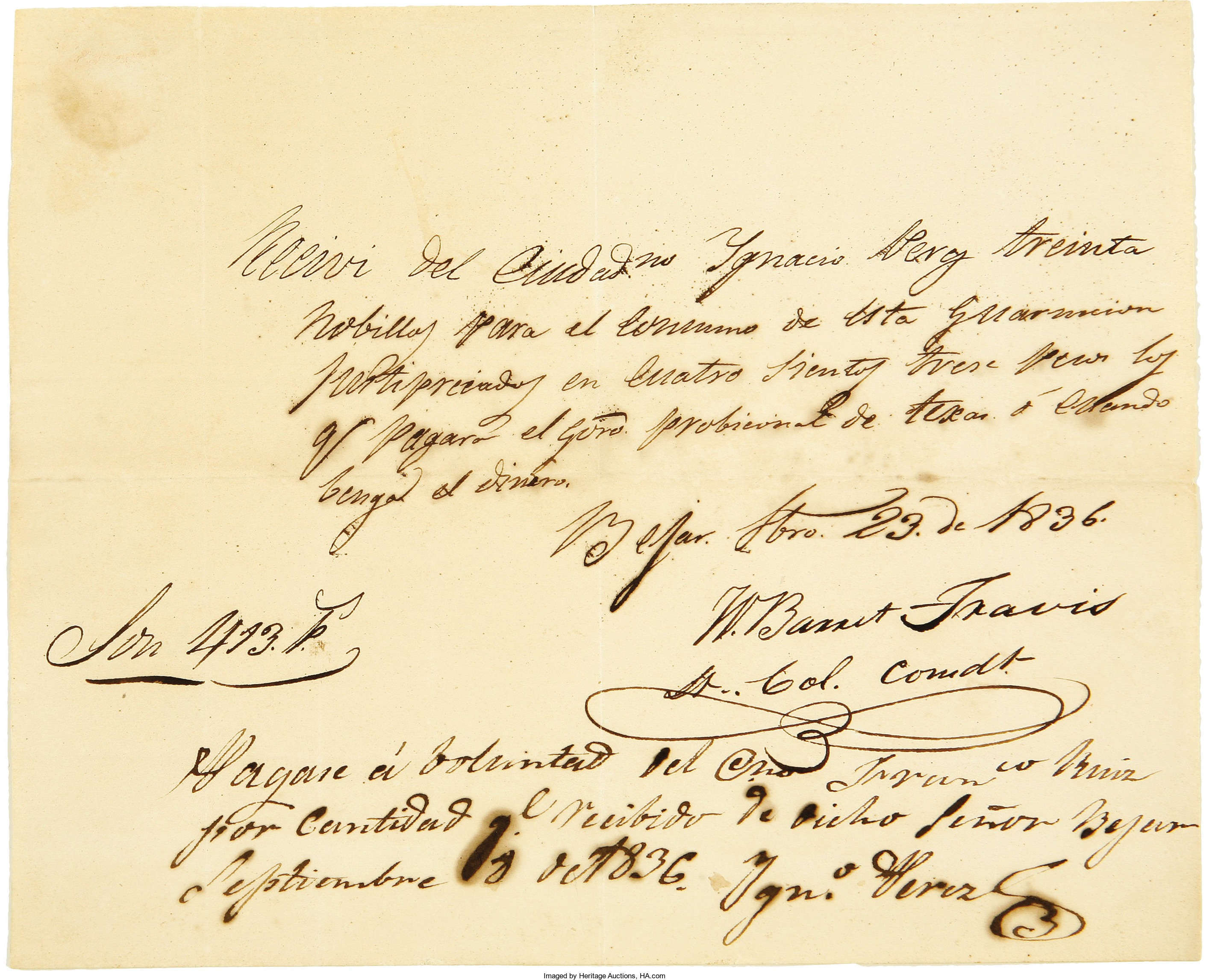
A receipt for supplies signed by William B. Travis while he was at the Alamo sold for $191,200 at a December 2007 Heritage auction.

By Jim O’Neal

When William B. Travis and 29 other men joined “Texian” freedom fighters at the Alamo on Feb. 2, 1836, they brought the total number of volunteers inside the tiny mission to 130. The arrival of Antonio López de Santa Anna, the president of Mexico and General of the Centralist Army, was only three weeks away. Accompanying him north into San Antonio de Béxar and the Mexican controlled state of Coahuila y Tejas were 3,500 to 5,000 soldiers. Santa Anna could never have foreseen how this small force would help bring an end to his country’s rule over Texas.
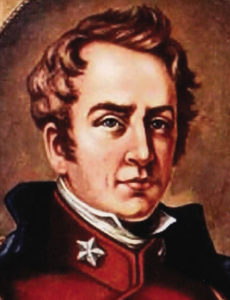
Travis

The Texas Revolution began on Oct. 2, 1835, with the Battle of Gonzales – actually more of a skirmish – called by some the “Lexington of Texas.” It exploded on Dec. 10, 1835, when 100 Texian colonists drove a Centralist division from its Alamo garrison. Instead of following orders to blow up the Alamo and retreat, they stayed and waited for Santa Anna. When the uprising’s original leader, Col. James C. Neill, left the Alamo, the 26-year-old Travis, a poet and lawyer, took command.

He had no formal military training.

On Feb. 23, the Mexican Army finally reached San Antonio and General Santa Anna wasted no time in declaring if the colonists inside the Alamo did not surrender, they would be put to the sword. The Texians knew they were overwhelmed, yet even after Travis explained the odds, they remained. The day after Santa Anna’s warning, Travis sent out a messenger with a letter to supporters. It read, “I am determined to sustain myself as long as possible and die like a soldier who never forgets what is due to his honor and that of his country. VICTORY or DEATH!”
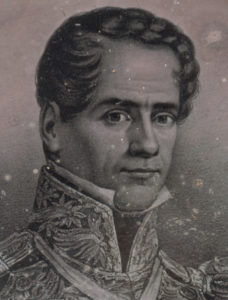
Santa Anna

But neither Travis nor his men were suicidal. They were looking for help from any quarter as the wide net of a Travis’ salutation suggests: “To the People of Texas & All Americans in the World: I call on you in the name of Liberty, of patriotism and everything dear to the American character, to come to our aid, with all dispatch.”

The final 32 men to join the Texas rebels arrived a week later on March 2, the same day Texas delegates seceded from Mexico. The volunteers now totaled 187. Just before dawn on March 6, the Alamo came under attack. Despite an intense battle, by sunrise every Texian was dead or captured. Two months later, an army of inspired colonists defeated Santa Anna at the Battle of San Jacinto and won independence for Texas. I guess Travis was wrong in the end. Both death and victory were possible, at least for some.
Intelligent Collector blogger JIM O’NEAL is an avid collector and history buff. He is president and CEO of Frito-Lay International [retired] and earlier served as chair and CEO of PepsiCo Restaurants International [KFC Pizza Hut and Taco Bell].
Brooklyn Bridge a Testament to American Ingenuity, Spirit

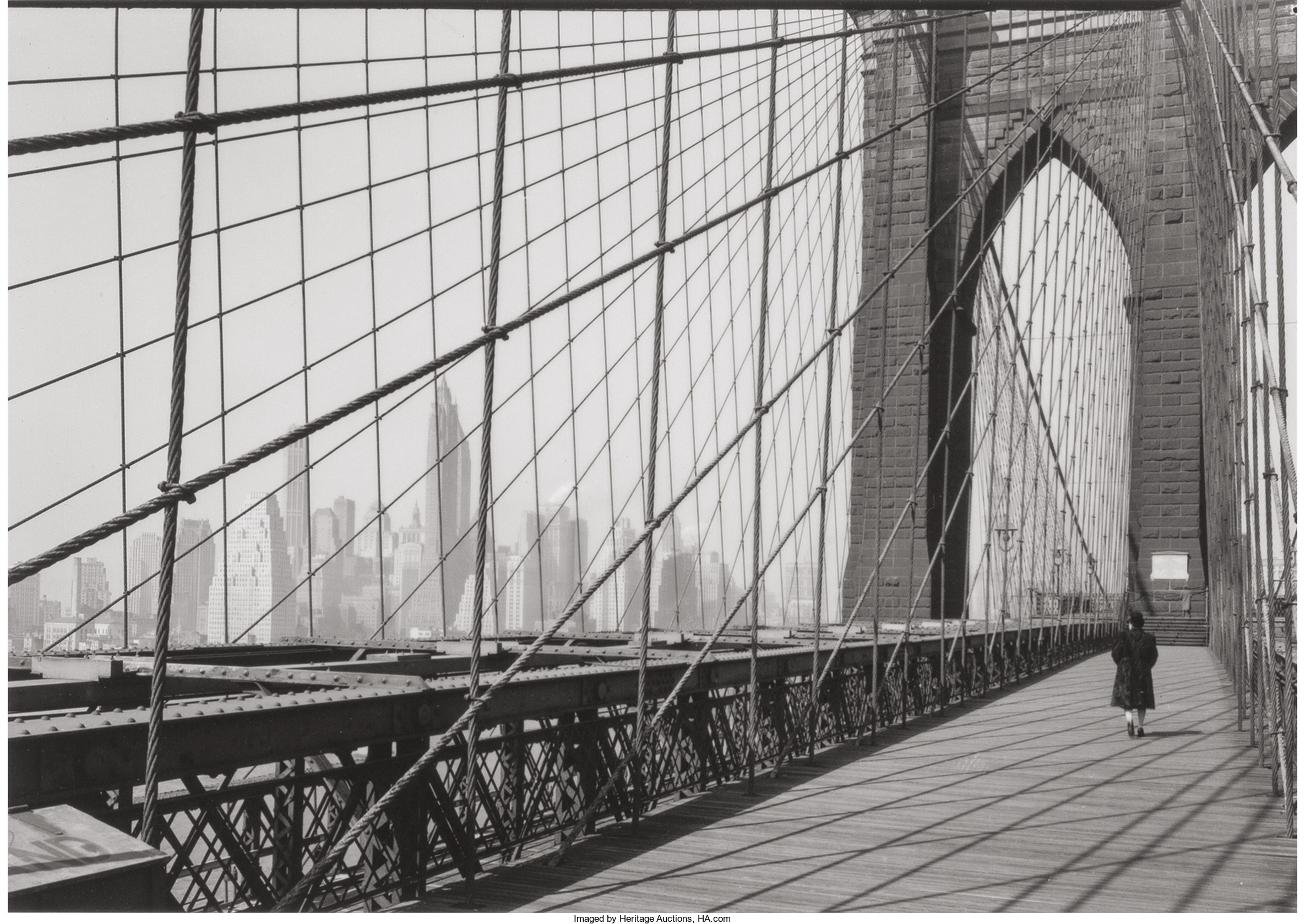
Photographer Todd Webb’s signed gelatin silver Brooklyn Bridge, NY, 1946, went to auction in October 2014.

By Jim O’Neal

In 1966, the American Society of Civil Engineers started a new honor category, “Historic Civil Engineering Landmarks.” The Bollman Truss Railroad Bridge in Savage, Md., was the first to receive this distinction and it remains the only example of an all-metal bridge design used on a railroad. Eventually, they got around to the Brooklyn Bridge and it was added in 1972 as the 27th project recognized.

There is something appealing about bridges and the Brooklyn Bridge surpasses them all. It was the biggest, most famous in the world and is an enduring testament to American ingenuity and spirit. More than a mile long and connecting Manhattan and Brooklyn by spanning the East River, its enormous granite towers loomed higher than anything ever seen. Higher than any building in New York or any structure on the North American continent, it became “The Thing” every visitor to NYC craved to see and a spectacle that awed tens of millions of immigrants.

Its designer, the brilliant John Augustus Roebling, promised – with characteristic immodesty – a stunning example of great engineering combined with unique artistic visual effects. Roebling had perfected the suspension form, with bridges at Niagara, Pittsburgh and Cincinnati, and the masterpiece over the East River was to be his crowning project. Tragically, he died in 1869 before the design was complete after a freak accident crushed his toes. The amputation that followed exposed him to tetanus; another vivid example of the hazards associated with non-sterile medical practices combined with the absence of anti-bacterial drugs.

Fortunately, his son, Washington Roebling, possibly the only other person qualified to take over, was available. A Civil War veteran, he was admired for his intelligence, decisiveness and courage … qualities essential to surmounting the many obstacles ahead. His fearless dedication exposed him to all the potential dangers involved, but he too fell victim to a physical ailment that curtailed his involvement. He spent the next 14 years in confinement, watching over the work with a telescope from a window in his house.

Again, fortune prevailed as his wife, Emily Warren Roebling, visited the site several times a day to appraise the progress firsthand. She also handled the press and the project trustees, gradually becoming familiar with every detail and a remarkable asset for her husband. But because he was never seen, rumors were rampant that Washington had lost his mind and that this daring, great project was actually being run by a woman! In fact, when the towers were complete and the long span was safe, the first horse and carriage to cross included Emily Roebling carrying a rooster as a symbol of triumph.

The bridge opened on May 24, 1883, and President Chester Arthur rode in one of the 1,800 vehicles that crossed it, along with 130,000 people. The fireworks celebration that night was the most spectacular ever seen. The only major incident came six days later when a woman fell down some wooden stairs, causing a stampede that resulted in at least 12 deaths. P.T. Barnum tried to get permission to restore confidence in the bridge’s safety, but it would take a year until May 17, 1884, before he led his famous Jumbo and 21 other elephants across the bridge in a grand show of stability.

Initially, the bridge was designed to provide more space for Manhattan by boosting access to nearby Brooklyn. No one had thought about growing cities up instead of expanding out. As the amazing NYC skyline reminds us today, that was soon to change.

Intelligent Collector blogger JIM O’NEAL is an avid collector and history buff. He is president and CEO of Frito-Lay International [retired] and earlier served as chair and CEO of PepsiCo Restaurants International [KFC Pizza Hut and Taco Bell].
Coney Island Represents America’s Fascination with Outrageous Entertainment

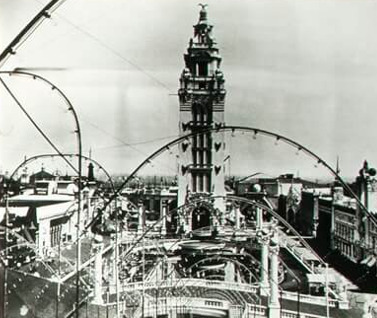
A collection of about 45 historical photographs of Coney Island, from the American Heritage Publishing Archives, went to auction in January 2016.

By Jim O’Neal

Typical stories about Coney Island usually start with some version of huddled masses arriving on America’s Eastern shore at the turn of the century and, before seeing the Statue of Liberty, the Brooklyn Bridge or the newborn skyscrapers, encountering a welcome beacon of bright wonders spread along the sands of the southern tip of Brooklyn. It is a dramatic way to introduce that star of light called the “City of Fire” and some even take it to the next level by comparing it to the bush Moses encountered on Mount Horeb … which burned, but was not consumed.

That does put Coney Island in a revered historical context, but in reality, it is wrong.

From 1885 to 1896, the Elephantine Colossus, a seven-story building (that included a brothel) shaped like an elephant, was actually the first thing immigrants saw when arriving in New York. Designed by James Lafferty – who died broke in 1898 – the 31-room building served as a hotel, concert hall and amusement bazaar. It was built two years before the Statue of Liberty at an estimated cost of $250,000.

It was the second of three elephant buildings built by Lafferty, and on May 30, 1885, The New York Times reported on its opening: “C.A. Brandenburg, manager, hosted a dinner, followed by a tour to the top where he pointed out ‘the spray from Niagara Falls, the Mississippi River, a clump of trees in Yellowstone Park, Rio Janeiro [sic], the Bay of Biscay and even the steeples of London and Paris – remarkable, and all for 10 cents!”

This was Coney Island, three great amusement parks – Steeplechase, Luna Park and Dreamland – each outlined and adorned with yet another fresh and wondrous sight: the electric light bulb. When the sun went down, what appeared to those prospective new Americans was the whole island, strung with frozen pearls of fire, spinning and plunging and whirling. Coney Island, even in daylight, was a stunning experience.

By 1910, just inside Luna Park’s main gate were two crosses plunged into a red heart in some transported bit of Catholic iconography; pilgrims entered a fairy-tale ramble of minarets and onion domes, turrets and colonnades, lagoons and trellises. It was Frederick Thompson’s architectural jungle: grossly extravagant amusement created for the hell of it. The moody alcoholic designed many of Coney Island’s rides like the Steeplechase Ride – a relatively minor jaunt on mechanical horses, until suddenly challenged by an obstacle course that included a dwarf in a harlequin suit taking a swing at legs with a cattle prod. Crowds of New Yorkers in bleachers got a big laugh out of it.

Still other exhibitions reflected the era’s less politically correct sense of entertainment, like revelers watching actual premature babies struggling for life in a sideshow that featured the country’s first incubator. You could visit a year-round village filled with dwarfs and midgets, and view African tribesmen living in actual grass huts. Even the furies of the latest global disasters were introduced on huge stages – hurricanes, floods, volcanic eruptions and war. All products of a time when Americans liked their entertainment tinged with a taste of danger.

Coney was more than a Sunday outing. It was a place where immigrants were literally assimilated in the roiling holiday mobs, a place where they could watch the pageant of their lives displayed like a movie. A conductor-driven rollercoaster called the “Rough Rider” once went ripping through the retaining wall, killing three passengers. It was up and running again the same day. To its wide-eyed audiences, Coney Island was close to real life. Was it any wonder one of the most popular attractions was a fake tenement building that was set on fire and the fire put out by fake firemen – every day, day after day – for a viewing public that itself lived in fire-trap tenements and lived in constant fear?

Coney Island finally played with fire too long, with Dreamland burning in 1911 and Luna Park closing after a fire in 1946. Steeplechase closed in 1964. But the Coney spirit lived on, imitated by the World’s Fairs in Chicago (1933) and New York (1939-40 and 1964-65), and in names of deteriorating amusement parks on the outskirts of many cities. None, though, can hold a candle to that frozen fire that once burned so brightly along the sands of Long Island.

We are left with car chases, oil spills and hurricanes on CNN.

Intelligent Collector blogger JIM O’NEAL is an avid collector and history buff. He is president and CEO of Frito-Lay International [retired] and earlier served as chair and CEO of PepsiCo Restaurants International [KFC Pizza Hut and Taco Bell].
Harvard-Educated Adams Cracked Down on Non-Citizens, Free Speech

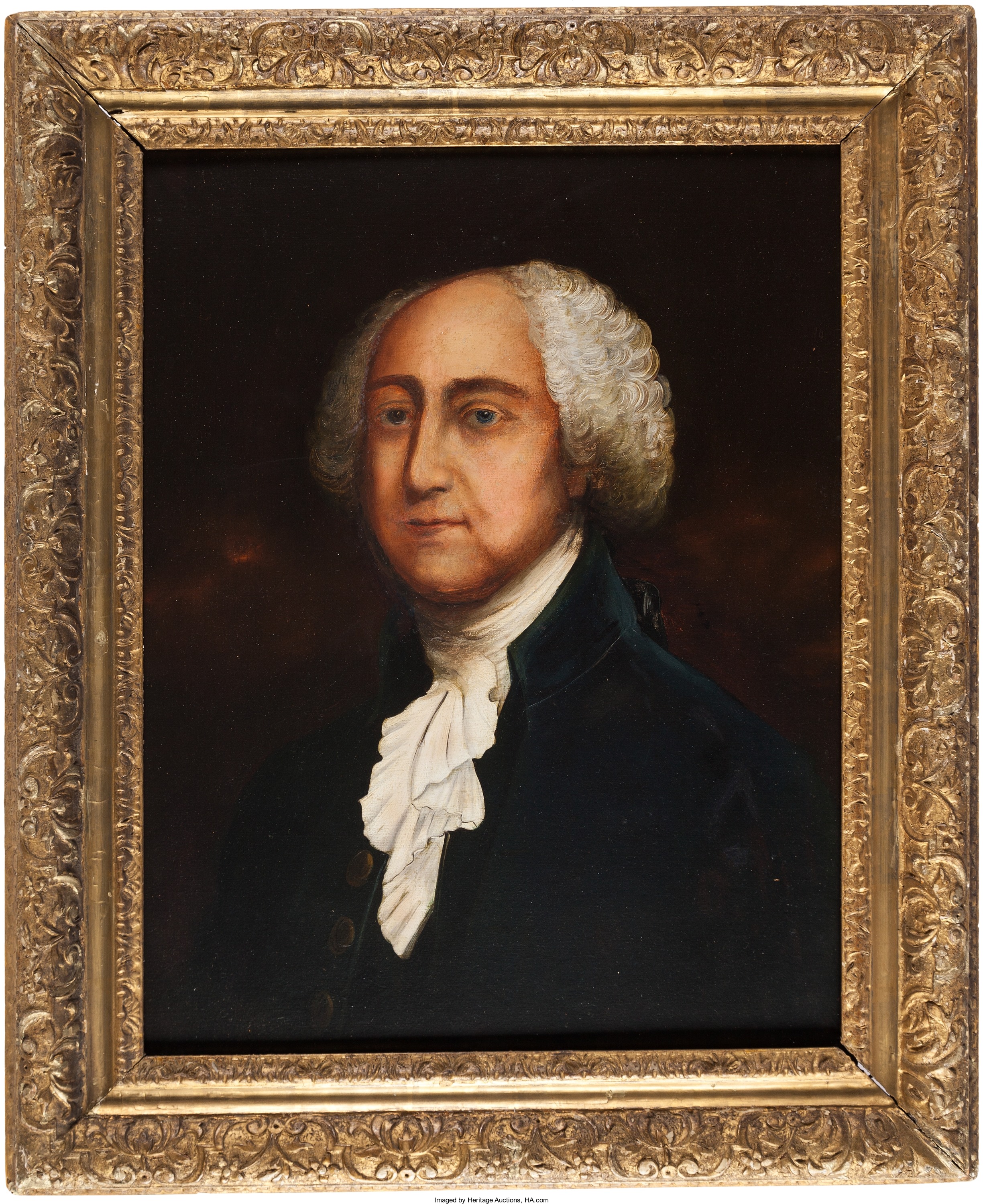
An 1805-dated oil on canvas portrait of John Adams, attributed to William Dunlap, sold for $35,000 at a May 2017 Heritage auction.

By Jim O’Neal

When Barack Obama was sworn in on Jan. 20, 2009, he became the eighth president to have graduated from Harvard, which has educated more U.S. presidents than any other university. Yale is second with five, with George W. Bush counting for both Yale and Harvard (where he earned an MBA).

The first of the “Harvard Presidents” goes all the way back to 1796, when John Adams narrowly defeated Thomas Jefferson 71 to 68 in the electoral vote count. It was the only election in history in which a president and a vice president were elected from opposing parties.

However, Jefferson bounced back four years later in a bitter campaign characterized by malicious personal attacks. Alexander Hamilton played a pivotal role in sabotaging President Adams’ attempt to win a second term by publishing a pamphlet that charged Adams was “emotionally unstable, given to impulsive decisions, unable to co-exist with his closest advisers, and was generally unfit to be president.”

When all the votes were counted in 1800, Adams actually ended up third behind both Jefferson and Aaron Burr (who eventually became vice president). John and Abigail Adams took the loss very emotionally and it alienated their relationship with Jefferson for 20-plus years. Adams departed the White House before dawn on Inauguration Day, skipped the entire inauguration ceremony and headed home to Massachusetts. The two men ultimately reconciled near the end of their lives (both died on July 4, 1826).

Adams had been an experienced executive-office politician after serving eight years as vice president for George Washington. However, his four years as president were controversial. It started when the Federalist-dominated Congress passed four bills, collectively called the Alien and Sedition Acts, which President Adams signed into law in 1798. The Naturalization Act made it harder for immigrants to become citizens, and the Alien Friends Act allowed the president to imprison and deport non-citizens deemed dangerous or from a hostile nation (Alien Enemy Act). And finally, the Sedition Act made it a crime to make false statements that were critical of the federal government.

Collectively, these bills invested President Adams with sweeping authority to deport resident non-citizens he considered dangerous; they criminalized free speech, forbidding anyone to “write, print, utter or publish … any false, scandalous and malicious writing or writing against the government of the United States … or either House of Congress of the United States … with intent to defame … or bring them into contempt or dispute … or to excite against them or either of them … the hatred of the good people of the United States.”

Editors were arrested and tried for publishing pieces the Adams administration deemed seditious. Editors were not the only targets. Matthew Lyon, a Vermont Congressman, was charged with sedition for a letter he wrote to the Vermont Journal denouncing Adams’ power grab. After he was indicted, tried and convicted, Lyon was sentenced to four months in prison and fined $1,000.

For Vice President Jefferson, the Alien and Sedition Acts were a cause of despair and wonderment. “What person, who remembers the times we have seen, could believe that within such a short time, not only the spirit of liberty, but the common principles of passive obedience would be trampled on and violated.” He suspected that Adams was conspiring to establish monarchy again.

It would not be the last time Americans would sacrifice civil liberties for the sake of national security. More on this later.

Intelligent Collector blogger JIM O’NEAL is an avid collector and history buff. He is president and CEO of Frito-Lay International [retired] and earlier served as chair and CEO of PepsiCo Restaurants International [KFC Pizza Hut and Taco Bell].
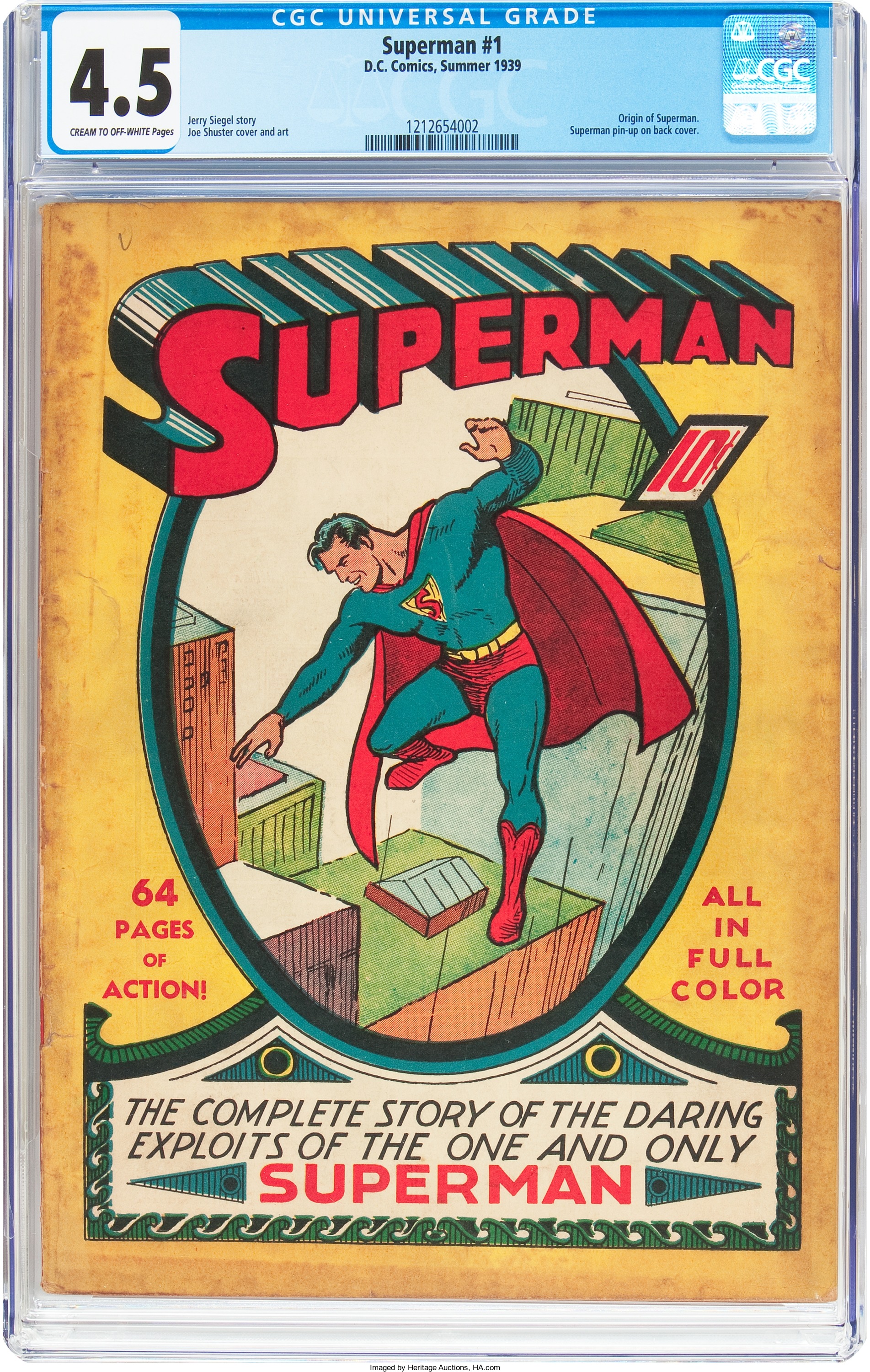
Greatest Generation was Led by Roosevelt, Churchill and Superman

Superman got his own title in 1939. This copy sold for $358,500 at a November 2016 Heritage auction.

By Jim O’Neal

Popular journalist Tom Brokaw in 1998 wrote a book about Americans who lived through the Great Depression and fought in World War II. Millions of others stayed home to support the war effort. Brokaw wrote, “It is, I believe, the greatest generation any society has ever produced,” and went on to argue they did it because “it was the right thing to do,” as opposed to doing it for fame or fortune.

The Greatest Generation became a bestselling book and a term to describe a large group of people who sacrificed in many ways, ended a war, and then came home, went to college on the G.I. Bill, and helped rebuild the world. They certainly preserved our way of life and redirected the domestic economic engine that provided jobs, automobiles, and new homes to a broad swath of our citizens.

However, it seems clear that few Americans alive in 1939 had a hint of this remarkable outcome. All the polls indicated that most were leery of another entanglement in “foreign” wars. They were still acutely aware of the tremendous suffering and loss of life in the last “war to end all wars” – WWI, an “accidental” war that is still a puzzlement today. Historians struggle to explain how or even why it started and, amazingly, how four major empires – German, Russian, Ottoman, and Austro-Hungarian – were toppled in four short years. Approximately no one would have been able to predict such a remarkable situation.

Besides, by 1939, the United States was still mired in a severe economic depression with 17 percent of the workforce unemployed and the most needy and least organized (domestic workers, sharecroppers, new immigrants, blacks, and unmarried women) unable to reap any of the New Deal benefits. On April 14 of that year, John Steinbeck’s novel The Grapes of Wrath was published and it captured the plight of many by focusing on the economic hardships of tenant farmers driven from their Oklahoma land by drought, the Dust Bowl, and bank foreclosures. The book won the National Book Award, the Pulitzer Prize, and was cited prominently in 1962 when Steinbeck won the Nobel Prize.

My family was among the many “Okies” that escaped to California in quest of the milk and honey (no, we didn’t pick any fruit).

Then on Friday, Sept. 1, Germany invaded Poland and democracy around the world was at risk. Economies were in collapse and suddenly communism and totalitarianism seemed to have appeal. There was even talk about revolution in America. When the great British economist John Maynard Keynes was asked if there had ever been anything like the Great Depression, he said, “Yes. It was called the Dark Ages and it lasted 400 years.”

Fortunately, what would become “The Greatest Generation” was led by the greatest leaders: Franklin Roosevelt and Winston Churchill. As an insurance policy, Superman #1 debuted that summer, just in time. Between the three of them, the world was saved!

Alas, only one of them is still around and all the other superheroes are untested rookies. (Sigh.)

Intelligent Collector blogger JIM O’NEAL is an avid collector and history buff. He is president and CEO of Frito-Lay International [retired] and earlier served as chair and CEO of PepsiCo Restaurants International [KFC Pizza Hut and Taco Bell].
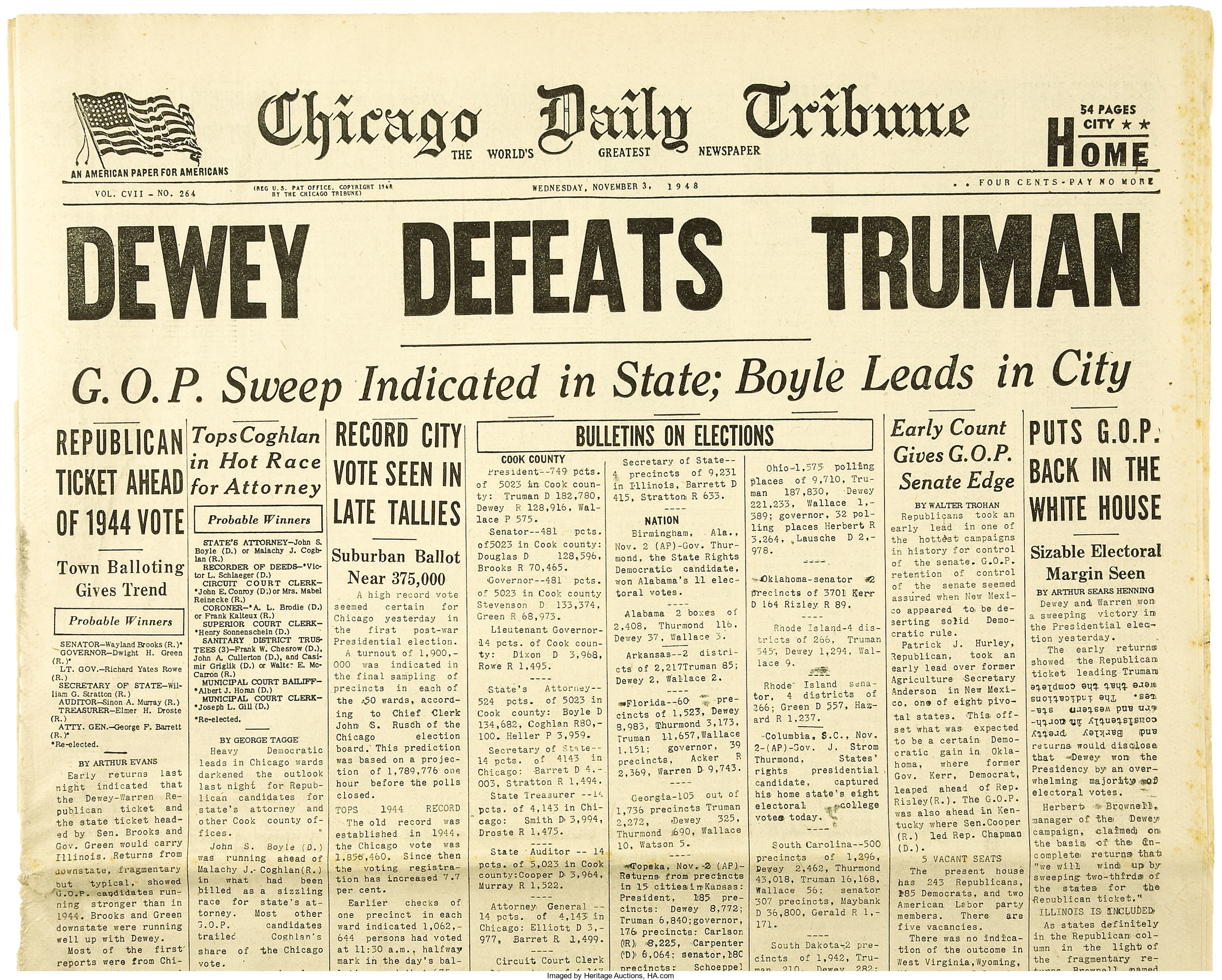
While Dewey Focused on Election, Truman Dealt With Soviets

An original copy of the Chicago Daily Tribune’s famously wrong “DEWEY DEFEATS TRUMAN” edition from Nov. 3, 1948, sold for $1,493 at a June 2008 Heritage auction.

By Jim O’Neal

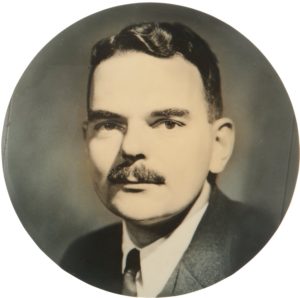
In 1948, Republicans selected New York Governor Thomas E. Dewey (Alice Roosevelt thought he looked like the groom on a wedding cake) to be their presidential candidate. He had lost in 1944 to FDR, but it was the closest anyone had come in four elections. Four years later, Dewey defeated a tough group of competitors that included Minnesota Governor Harold E. Stassen. In fact, Stassen was so close that Dewey challenged him to a debate just before the Oregon Republican primary.

The May 17 Dewey-Stassen debate was the first audio-recorded debate between presidential candidates in U.S. history. The debate centered primarily on the issue of criminalization of the Communist Party of the United States and was broadcast over the radio to the entire country. About 40 million people tuned in and Dewey was thought to be the winner. The real winner may have been voters, since this set a precedent that is still considered important today.

Dewey finally won the Republican nomination on the third ballot on June 24, 1948.

Thomas E. Dewey

President Harry S. Truman had little interest in the Republicans or their convention since on the same date, June 24, the Russians decided to make a move in post-war Germany by blockading all rail, highway and water traffic in and out of Berlin. It seemed clear that Joseph Stalin was intent on forcing the Allies to withdraw from the partitioned city. Except for air, the Allied sectors were entirely cut off and nothing could come in or out of this critical German hub. About 2.5 million people were facing starvation and Truman was asked bluntly if American forces would remain in Berlin or pull out. In typical Midwest-style candor, Truman answered, “We stay in Berlin. Period.”

Four days later on June 28, while Dewey tried to rally voters to look beyond the crisis, Truman acted by ordering a full-scale airlift to Berlin. He sent to Germany two squadrons of B-29s, the giant planes associated with dropping the two atomic bombs on Japan. However, these particular planes were not equipped to carry atomic weapons, a small detail the Russians were unaware of.

Truman didn’t bother to consult with either the White House staff or any of his numerous political advisors in making the decision. He and Secretary of State General George C. Marshall were convinced that the future of Western Europe hinged on the Berlin issue and that leaving the Russians alone in Berlin could lead to a resumption of war. The numbers were sobering. The Allies had 6,500 soldiers in the city, while the Russians had 18,000. In addition, those 18,000 were backed up by 300,000 more in Germany’s Eastern Zone.

Politicians and newspapers editorialists thought it would be impossible to supply 2.5 million people with food, clothing and other essentials, especially when winter rolled around. However, by the fourth week of the airlift, American and British transports were roaring in by the hundreds each day. More pilots were being trained in Montana, flying blindfolded through extremely narrow mock routes, similar to Berlin routes. The New York Times even wrote in atypical tones, “We were proud of our Air Force during the war. We are prouder of it today.”

The effort was heroic, but it was not enough. So Truman stepped up and increased the number of planes, and 30,000 Berliners volunteered in the building of a new airfield. Voila! By October, the airlift was succeeding and Truman sent yet another 26 C-54 transports into the rotation. This increase helped guarantee supplies for the winter. Realizing their blockade ploy had failed, Stalin blinked and backed down!

“To do more would have been a direct threat to peace. To have done less would have been an abdication of our American honor and traditions,” said General Lucius Clay, the top U.S. official in occupied Germany. The 277,804 flights delivered more than 2.32 million tons of food and supplies, almost one ton for every man, woman and child in Berlin, the third-largest city in the world, behind Chicago and New York. Truman called off his airlift on May 12, 1949 … the same day Allied Powers approved the establishment of a new German Federated Republic, where the German people would rule themselves with their own government in Bonn.

They are once again the brightest country in all of Europe and dominate the E.U.

Note: I never met General Lucius Clay while he served as chairman and CEO of Continental Can Company from 1950-62 … although I received a short note from his office when I became plant manager of Continental’s South Gate, Calif., flexible packing group in 1962 at age 25. (I was told that was a record, but there is no proof.)

Intelligent Collector blogger JIM O’NEAL is an avid collector and history buff. He is president and CEO of Frito-Lay International [retired] and earlier served as chair and CEO of PepsiCo Restaurants International [KFC Pizza Hut and Taco Bell].
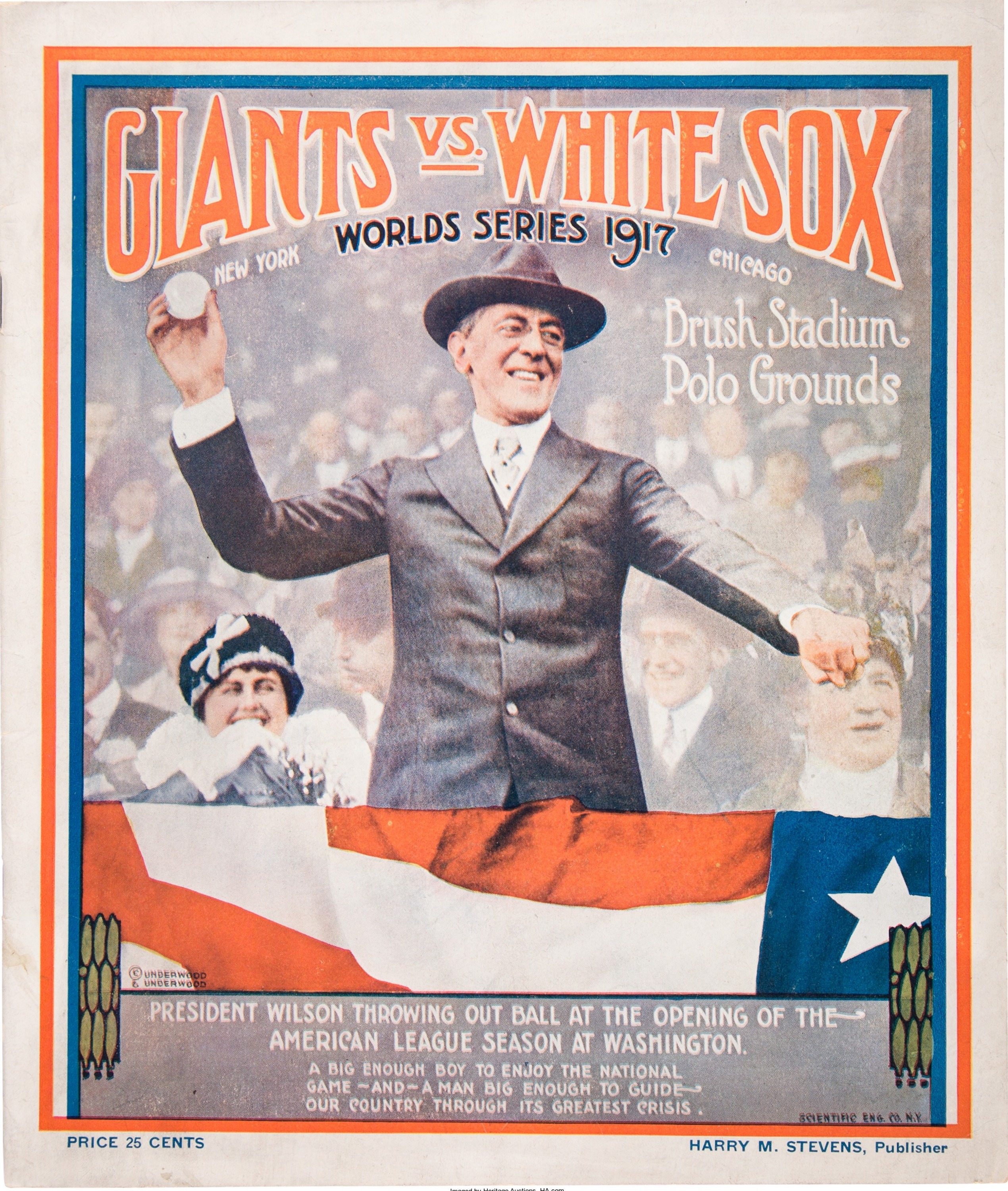
Best Way to Revamp Income Tax Might Be a Do-Over

A 1917 World Series Program, featuring President Woodrow Wilson on the cover, sold for $4,800 at a May 2017 Heritage auction.

By Jim O’Neal

In 1912, after 16 years in the wilderness, Democrats seized control of Congress and the White House, with Woodrow Wilson as their leader. To their disappointment, the new president kept celebrations to a minimum. He delivered a brief inaugural address on March 4, 1913, canceled the inaugural ball, and reviewed the parade with stoic forbearance. This is not a day of triumph, he declared, but a day of dedication. And it was a day to muster the forces of humanity, not the forces of party.

Wilson went on to produce the greatest outpouring of social legislation Americans had ever experienced, during a brief period when the ruling class would use Hamiltonian means of a strong federal government to bring about Jeffersonian ideals of egalitarianism. His presidency would transform the American banking and currency system, create new industrial and farm policies, and expand the protection of America’s natural resources. But the first accomplishment was lowering tariffs and enacting an income tax – reforms aimed directly at middle-class pocketbooks.

Wilson and his associates sincerely believed that the federal government needed to serve as a counterweight to corporate wealth and an aggressive agent to help ordinary citizens. Wilson’s legacy is often cited as a fateful turning point when “do-gooders” harnessed the income tax to both raise revenues to grow government and to redistribute the wealth of Americans in a way they viewed as more fair. Yet at the outset, no one could foresee that war, not social justice, would start an inexorable rise in taxes that would thwart all the moral absolutism dreamed about.

Starting the day after his inauguration, Wilson called Congress into an extraordinary session for a historic assault on the tariff system by delivering his message personally in the first presidential appearance inside the Capitol since the days of President Jefferson. Although he recognized the challenge he faced due to conservative committee barons who dominated Congress, despite being Democrats, Wilson stood with his progressives and intended to use his executive power to the fullest. By September, the Senate actually passed a tariff bill that helped consumers … a historical first.

However, there was the small issue of how to plug the $100 million loss of revenue that was created. And so we now meet the federal income tax, which turned employers into tax collectors. New York’s The Sun summed up the opposition by arguing that income taxes were repugnant except in times of great national emergency and charged “it amounted to taxation of the few for the benefit of the many.” Advocates claimed it was merely a way to tap the “surplus” income of the rich – “over and above the amount necessary for good living.”

On May 8, 1913, the House approved the first income tax that would actually take effect since 1872, when Congress repealed Civil War-era taxes. But the Senate disagreed, with some senators opposing the “confiscation of property under the guise of taxation” and others saying “No honest man can make war upon great fortunes per se.” The war of words continued until a law was passed that affected fewer than 4 percent of Americans, with working-class people virtually excluded. A 1 percent rate on $20,000-$50,000 graduated up to 6 percent on $500,000 and above. There was also a 1 percent flat tax on corporations.

After two years, everyone seemed angry at Wilson for doing either too much or too little. Feeling besieged, he entertained a fantasy of putting on a beard and sneaking out of the White House prison, or putting a sign in front of his office: “Don’t shoot! He’s doing his best.” The reform agenda was mobilizing to act when…

In June, a shot rang out at Sarajevo.

World War I would eventually cost the United States $50 billion and the federal budget grew from $742 million in 1916 to nearly $14 billion in 1918. Excise taxes and tariffs had been providing 90 percent of federal revenue and this was limited. What to do?

Thus started the long story of the U.S. income tax, which at one point grew to 90 percent and has become so complex not even the IRS knows with certainty what lurks on all 50,000 pages of highly technical jargon (or even if 50,000 pages is accurate!). It grows each day … as does the debt that is back in the news.

My recommendation to President Trump is to simply start over, since every effort to reform only adds more pages and complexity. Take a blank piece of paper and write down “Need 18 to 20 percent of GDP to run federal government. Question: What is the best way to get this money and do the least damage in the process?” Answer: Find three smart people to figure it out, then just do it … fast.

Intelligent Collector blogger JIM O’NEAL is an avid collector and history buff. He is president and CEO of Frito-Lay International [retired] and earlier served as chair and CEO of PepsiCo Restaurants International [KFC Pizza Hut and Taco Bell].
Churchill’s Successor Left a Lasting Mark on Great Britain

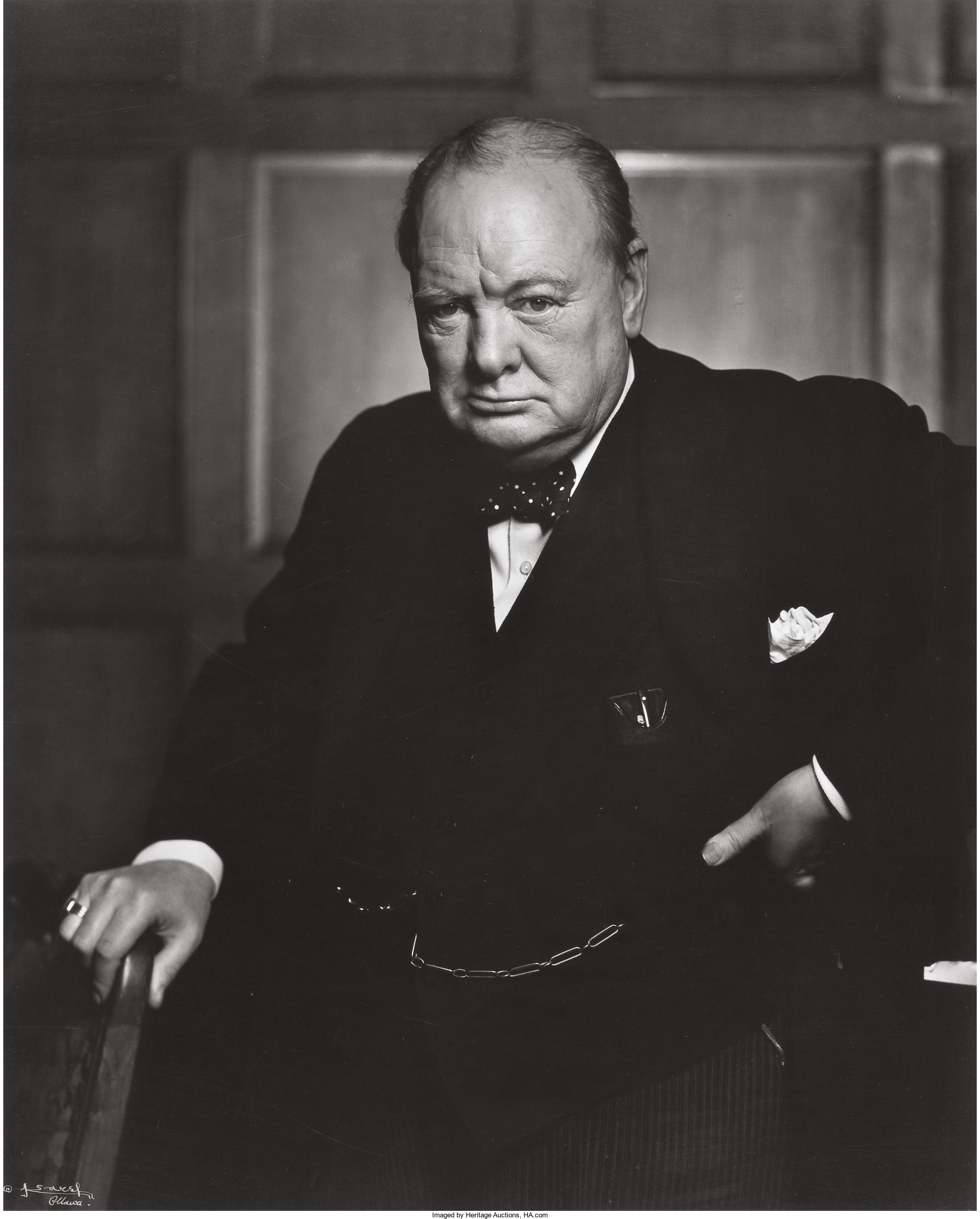
A gelatin silver print of Winston Churchill, 1941, by photographer Yousuf Karsh sold for $11,352 at a May 2011 Heritage auction.

By Jim O’Neal

When Clement Attlee was asked if he wanted to comment on the campaign of 1945, his response was a simple “No.” During this election for Prime Minister of Great Britain, he and wife Violet traveled the countryside extensively in their modest (battered) family car, advocating for a totally new, post-war social policy. One of his more effective political slogans was “You Can Trust Mr. Attlee.” It worked surprisingly well as he led the Labour Party to an upset, landslide win over the venerable Winston Churchill.

Attlee became one of the most successful leaders in modern Britain, despite being habitually shy, laconic, self-deprecating and excessively modest. As Churchill once quipped, “Clement Attlee was a modest man who had much to be modest about.”

Churchill respected Attlee for his basic honesty and firm dedication to accountability. They had served together during World War I and Attlee was even part of the British Army during the disastrous Gallipoli Campaign, which Churchill had conceived while the First Lord of the Admiralty. The strategic premise was to knock Turkey out of the war by attacking the Dardanelles. The campaign went so badly that Churchill was demoted, resigned from the Conservative Cabinet, and ended up commanding an infantry battalion of the Royal Fusiliers.

Clement Attlee

Attlee naively believed that the plan had been sound strategically and had only failed due to poor military execution. In Attlee’s own words, “There was only one brilliant strategic idea in WWI and that was Winston’s ‘the Dardanelles.’” Historians still argue over this yet today, but it was enough to form a bond between the two future prime ministers … one a pure socialist and the other an imperialist of the first order.

During the Second World War (which was just a continuation of the first with a 20-year pause), Attlee served under Churchill in the coalition government of 1940-45 and was the first person to hold the office of Deputy Prime Minister. He somehow held the Labour Party together despite numerous divergent viewpoints and personal ambitions. The colossal egos of Herbert Morrison, Sir Stafford Cripps (reputed to have the finest mind in England), and union strongman Ernest Bevin (dedicated to absolute equality throughout the British Empire) required a rare blend of political leadership – perhaps unique to Attlee.

It is here (in my humble opinion) where we start to witness the real decline of the British Empire. Independence in India, the partition of Pakistan, independence in Burma (Myanmar), Sri Lanka, Palestine and Jordan and exiting Greece. This was followed by the inevitable nationalization of the Bank of England, along with the iron, coal and steel industries. Then, importantly, there was the creation of a comprehensive welfare state. To the United States, the phrase “British socialism” signified economic and political bankruptcy; one of the few things Democrats and Republicans could agree on.

In Attlee’s rationale, these Labour Party policies were merely measures to ensure full employment and welfare based on managed capitalism; “accomplishments” that remained in place until his death in 1962 and beyond. Fortunately, a research chemist-turned-barrister was elected to Parliament in 1959, and 20 years later became the first woman to hold the office of Prime Minister. She was the longest-serving British Prime Minister in the 20th century. Her name was Margaret “The Iron Lady” Thatcher.

The small island that had once ruled the seas and oceans of the world – along with much of its land – was about to enter an era known now as “Thatcherism.” Many, including me, appreciate strong, enlightened leadership grounded in economic and political freedom. She fit the model perfectly.

Intelligent Collector blogger JIM O’NEAL is an avid collector and history buff. He is president and CEO of Frito-Lay International [retired] and earlier served as chair and CEO of PepsiCo Restaurants International [KFC Pizza Hut and Taco Bell].
Carnegie Had a Simple Philosophy on How to Spend Your Life

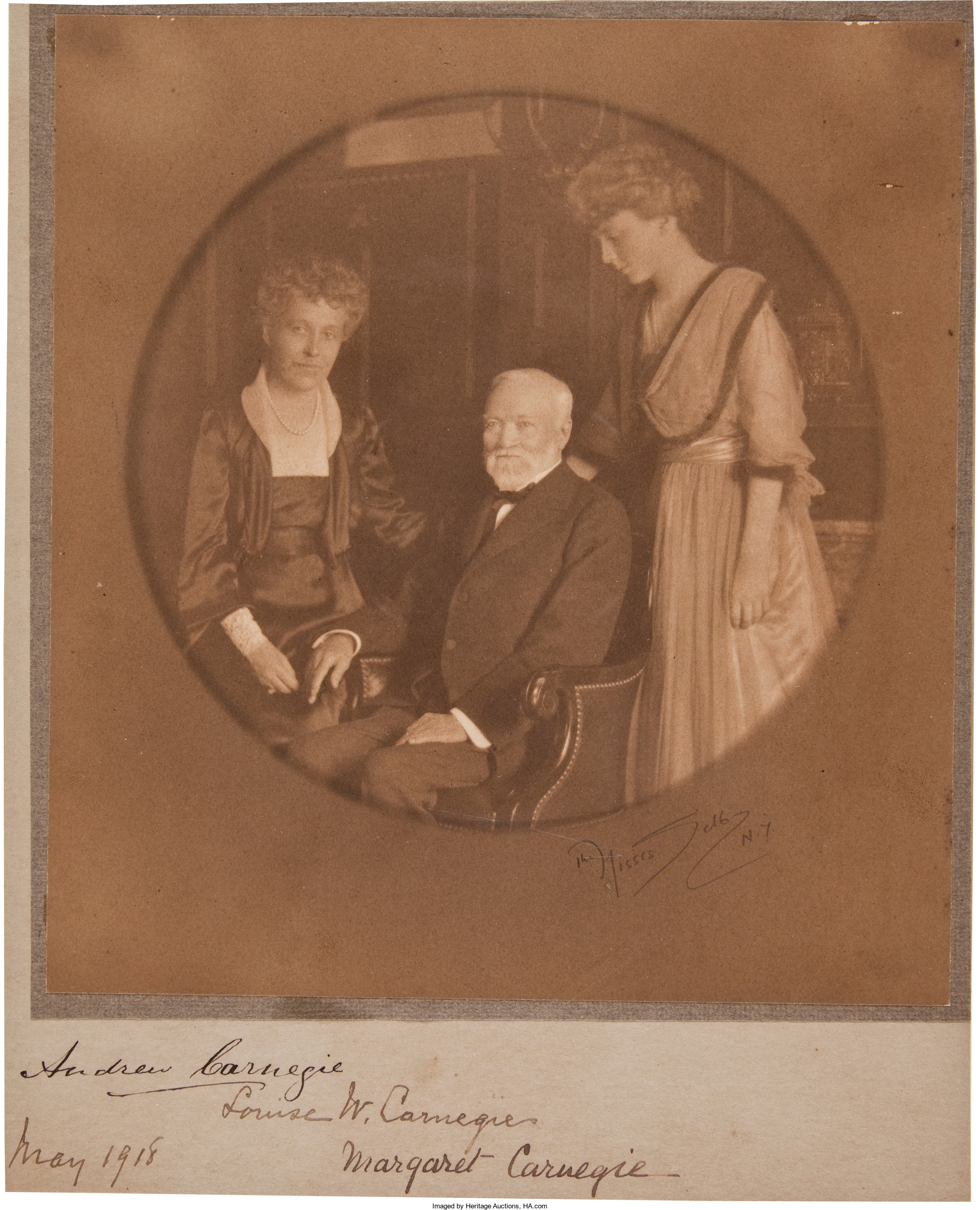
A photograph dated May 1918, signed by Andrew Carnegie, his wife and his daughter, sold for $1,075 at a September 2011 Heritage auction.

“I should consider it a disgrace to die a rich man.” – Andrew Carnegie (1887)

By Jim O’Neal

Andrew Carnegie was born in 1835 in a one-room house in Dunfermline, Scotland, near the northern shore of the Firth of Forth – which is the estuary (firth) of several Scottish rivers, including the River Forth. One should not be surprised to learn that a major employer in Dunfermline today is Amazon. (How else to provide two-hour deliveries to Prime customers everywhere?).

The Carnegie family made it to Allegheny, Pa., and that’s where the young (uneducated) Andrew began his remarkable career. He started as a telegraph messenger boy for the Ohio Telegraph Company and culminated his career with the formation of the Carnegie Steel Company. By 1889, the production of steel in the United States had surpassed that of the entire United Kingdom … a mild embarrassment since Sir Henry Bessemer had invented the first inexpensive process for the mass production of steel using molten pig iron.

When Carnegie sold his companies to J. Pierpont Morgan in 1901, Morgan proceeded to consolidate the entire steel industry in America to form the United States Steel Corporation. This was the first corporation in the world with a market capitalization of over $1 billion. Carnegie’s share was $480 million, which temporarily vaulted him into first place for the Richest Man (a situation John D. Rockefeller soon rectified).

But Carnegie was always more concerned about the best way of dealing with the new phenomenon of wealth inequality and wrote about it in 1899 in The Gospel of Wealth, an article that described the responsibility of philanthropy by the new upper-class, self-made rich. He proposed reducing the stratification between rich and poor by having the wealthy redistribute their surplus instead of passing it along to heirs.

Thus, Andrew Carnegie became the rarest of multimillionaires when the enormously wealthy Scottish immigrant gave the nation one of the most remarkable gifts in history … 1,689 public library buildings in 1,421 communities. The value of his gifts – made between 1886 and 1917 – comes close to $1 billion when adjusted for inflation.

Carnegie funded library buildings in many expected cities, including Pittsburg (his adopted hometown) and New York, but also in places like Jennings, La., and Dillon, Mont. Another added twist was that he only donated money for a building, and only if the local taxing authority agreed to provide the site, then furnish and maintain the library with an annual pledge of 10 percent of the gift. This cleverly motivated local citizens to stay involved, something an outright donation might not have accomplished.

Carnegie had a simple philosophy on how a person should spend their life – the first third getting a first-rate education, the next third making money, and the last third on philanthropy. Not a bad plan.  Carnegie focused his charity on promoting education, peace and equality. When he died, the remainder of his estate, some $30 million, was donated to his causes. The Carnegie name is on far too many buildings and foundations to list … you know many of them.

For some reason, it has always irked me to watch the ultra-rich of today shield their money from taxation by stuffing it in non-taxable, charitable foundations (run by their family), take their income in low-tax dividends, and then complain when their secretaries pay a higher income tax rate … then encourage the feds to raise the tax rate on my pension.

Intelligent Collector blogger JIM O’NEAL is an avid collector and history buff. He is president and CEO of Frito-Lay International [retired] and earlier served as chair and CEO of PepsiCo Restaurants International [KFC Pizza Hut and Taco Bell].
Civil War Has Left a Lasting Scar on This Country

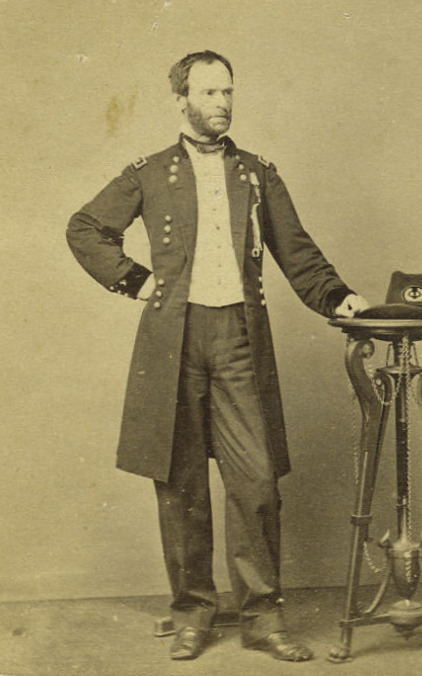
Four scarce cartes de visite of Gen. William Tecumseh Sherman sold for $2,868 at a December 2006 auction.

“General Grant stood by me when I was crazy and I stood by him when he was drunk. Today we stand by each other.” – Paraphrasing General William Tecumseh Sherman

By Jim O’Neal

Among the towering figures of the Civil War, none is more enigmatic than General W.T. Sherman. Widely denounced as fiendishly destructive for his infamous “March to the Sea” across Georgia, Sherman was a brilliant commander and strategist who helped bring the bloody war to a faster and surer end. Yet he left a legacy of “total war” against unarmed civilians and their property that has haunted military leaders and many Americans to the present time.

William Tecumseh Sherman (1820-1891) was born in a simple frame house in Lancaster, Ohio, the sixth of 11 children. His father died suddenly in 1829 and the 9-year-old boy was forced to live with his more affluent neighbors, the Ewings, since his mother was destitute. Thomas Ewing Sr. was a senator, Secretary of the Treasury, and the first Secretary of the Interior for presidents Zachary Taylor and Millard Fillmore.

Ewing used his influence to get Sherman into West Point, where he finished sixth in his 1840 class. He left the Army along with many other officers when it seemed civilian life offered a greater chance for success. After a string of failures in banking, real estate and law, Sherman was in Louisiana just before the war began, running a military academy that would later become the foundation for Louisiana State University.

Though he had great friendships with many who joined the Confederacy and had no moral qualms about slavery, Sherman shared the view of many professional soldiers that secession was treason. He returned to Missouri when Louisiana seceded.

When the Civil War arrived right on schedule, one only has to read his comments to appreciate his insight and candor: “You people of the South don’t know what you are doing. This country will be drenched in blood, and God only knows how it will end. It is all folly. Madness. A crime against civilization! You people speak so lightly of war; you don’t know what you are talking about. War is a terrible thing. You mistake, too, the people of the North … you are rushing into war with one of the most powerful, ingeniously mechanical and determined people on Earth – right at your doors. You are bound to fail!”

And fail they did.

But it was more than a lost war. So great was the sense of gloom that some wondered if we could ever reconcile. Over 620,000 lay dead – 1/12 of the North and a staggering 20 percent of the South. It was more battle deaths than all of our nation’s other wars combined. An astonishing two-thirds of Southern wealth simply disappeared, but the more daunting challenge was the emotional carnage and pure generational hatred. Said one woman rather simply: “Oh, how I hate the Yankees. I could trample on their dead bodies and spit on them forever.”

Psychologists who have studied the impact of natural disasters on society – earthquakes, hurricanes, fires and floods – speak bleakly of a broad and terrible social numbing that occurs, afflicting not simply those directly affected, but whole generations living in a disastrous, merciless waste. It is impossible to measure the full-fledged effect on the Southern psyche … their incoherent grief, their land diseased, their way of life obliterated – all without a cure.

Yet today, we still see the scars and do little to avoid the current generation of schisms that are being fed by forces seemingly determined to divide us … the most blessed people that have ever lived on this tiny planet. Tsk, tsk on us.

Intelligent Collector blogger JIM O’NEAL is an avid collector and history buff. He is president and CEO of Frito-Lay International [retired] and earlier served as chair and CEO of PepsiCo Restaurants International [KFC Pizza Hut and Taco Bell].