
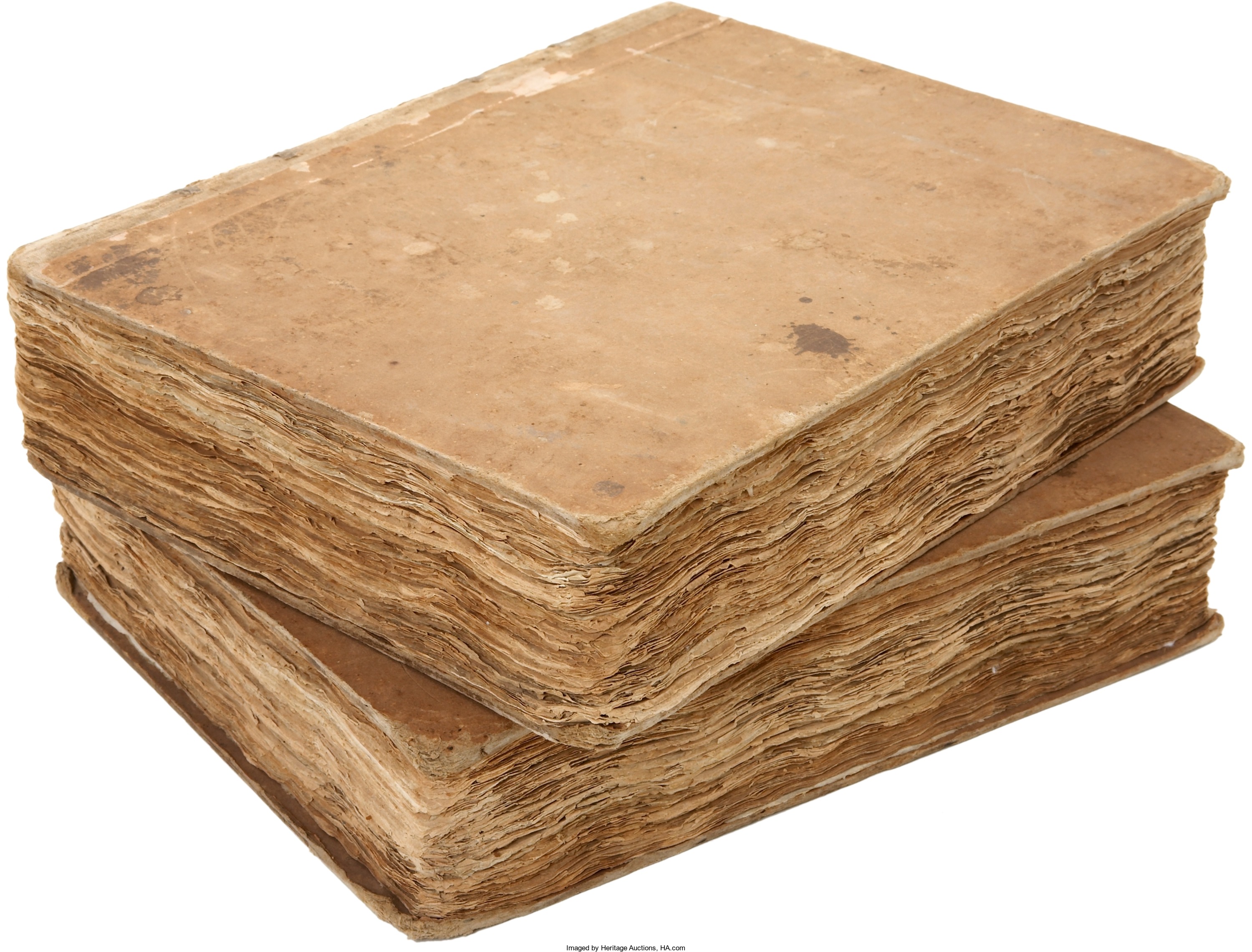
Webster Considered the ‘Father of American Scholarship and Education’

A first edition of Noah Webster’s An American Dictionary of the English Language, with a four-page manuscript in Webster’s hand concerning word origins, sold for $34,655 at a February 2010 Heritage auction.

By Jim O’Neal

Noah Webster published his American Dictionary of the English Language in 1828 when he was 70 years old. It was printed in two quarto volumes with 70,000 word entries. (A quarto was typically 9 x 12 inches or roughly the size of modern magazines.) About 12,000 of the words had never appeared in a published dictionary and Webster tried to harmonize the spelling of a word with its common pronunciation.

Another unique feature was the inclusion of words used in America that were not in British dictionaries. Perhaps that is why George Bernard Shaw – the Irish playwright who won the Nobel Prize in 1925 – is said to have coined the phrase “The United States and Great Britain are two countries separated by a common language.” (There are several variations of this, including one by Winston Churchill.)
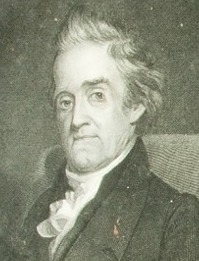
Noah Webster

Webster (1758-1843) also collaborated with Alexander Hamilton and other prominent Federalists, which made him a rich target for Jeffersonian-Republicans who peppered him with insults: a prostitute wretch, incurable lunatic, spiteful viper, pusillanimous traitor, to list just a few. He founded the first daily newspaper in New York, The American Minerva, and a semi-weekly publication later known as the New York Spectator. He was a prolific writer and earned the imposing sobriquet as the “Father of American Scholarship and Education.”

I have gradually abandoned the use of printed dictionaries, but a copy of the old reliable Merriam-Webster still occupies a handy spot in the bookcase. One who didn’t was Emily Dickinson, who used Webster as a reference “obsessively.” Scholars studying her immense body of work routinely turn to Webster for clarification. She was such an eccentric recluse that only a dozen of her 1,800 poems were published while she was alive. The hodgepodge of short lines, unconventional punctuation and slant rhymes make her work difficult to appreciate. But the lady could write and may be the finest American poet of the 19th century.

Webster’s name is still synonymous with “dictionary” despite becoming generic and hyphenated long ago. He died in 1843 after playing a critical role in the Copyright Act of 1831.
Intelligent Collector blogger JIM O’NEAL is an avid collector and history buff. He is president and CEO of Frito-Lay International [retired] and earlier served as chair and CEO of PepsiCo Restaurants International [KFC Pizza Hut and Taco Bell].
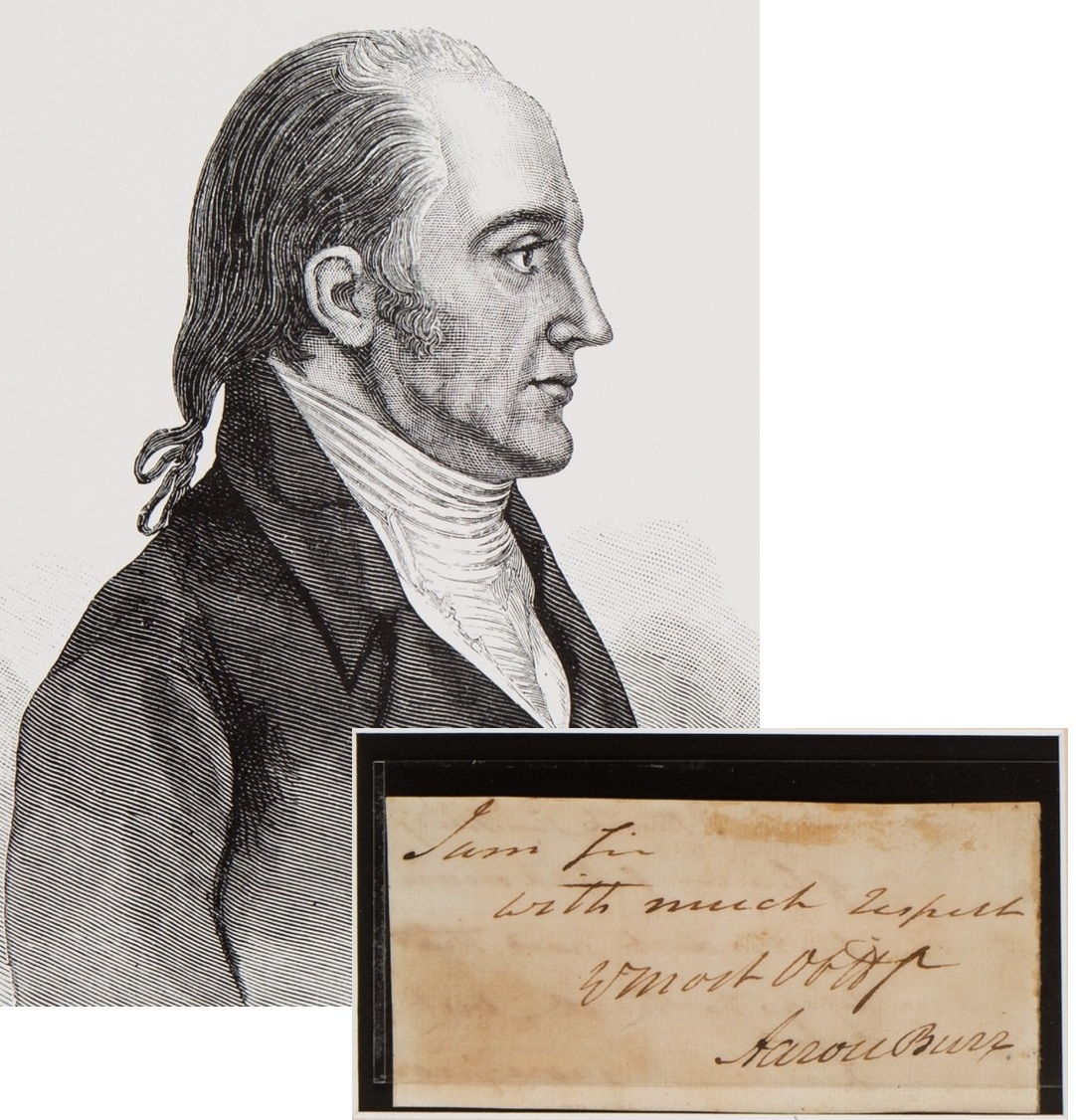
U.S. Politics Has Rarely Seen a Character Like Aaron Burr

The signatures of Aaron Burr (above) and Alexander Hamilton sold for $2,500 at an April 2015 Heritage auction.

By Jim O’Neal

During the 1787 U.S. Constitutional Convention, there was a heated debate between delegates from southern and northern states over how to count slaves when determining a state’s population for both legislative representation and taxes. Finally, the “Three-Fifths Compromise” was reached, giving southern states one-third more seats in Congress and one-third more electoral votes than if slaves had been excluded.

In the presidential election of 1800, Vice President Thomas Jefferson and Aaron Burr were able to defeat incumbent President John Adams and Charles C. Pinckney due to this single factor. However, under Electoral College rules of the day, it took 36 votes in the House of Representatives to make Jefferson president and Burr vice president. This caused a major rift between the two men. Then the relationship really turned bitter after Burr killed Alexander Hamilton in a duel on July 11, 1804.

Burr was charged with murder in New York and New Jersey, but neither reached trial after courts overturned the grand jury indictment. Burr fled to Georgia, but returned to Washington, D.C., to complete his term as vice president and presided over the impeachment trial of Supreme Court Justice Samuel Chase. The Senate refused to convict Chase and he remains the only Justice of the Supreme Court to be impeached.

This was followed by a bizarre series of events involving Burr that included a suspected conspiracy to recruit a group of volunteers for a military expedition down the Mississippi River, provoke a war with Spain, hoping to split off some western states, and create a new inland empire. The expedition collapsed almost immediately and a co-conspirator of Burr betrayed him by sending alarming messages to President Jefferson. Convinced of Burr’s guilt, Jefferson ordered his arrest and he was taken into custody and treason charges were filed. Burr escaped, but was recaptured and taken to Virginia for trial.

In Richmond, they learned the electrifying news that Burr, former VP of the U.S., had been accused of treason and his trial would be held in their courthouse. The trial of such a prominent person attracted legal officials from a broad area. Chief Justice John Marshall was picked to preside over the trial and Burr’s defense lawyers included Edmund Randolph (U.S. Attorney General under George Washington) and Charles Lee, Attorney General for John Adams. The chief prosecutor was James Monroe’s son-in-law, George Hay.

Notable witnesses included Andrew Jackson, a friend of Burr who thought Jefferson was maligning him and started picking fights with Jefferson’s friends – even challenging star witness General James Wilkerson to a duel. Wilkerson was the co-conspirator who provided the incriminating evidence to Jefferson.

The trial started on May 22, 1807, but despite all the intriguing circumstances, there was a lack of evidence as explicated by Judge Marshall and the jury declared the accused not guilty in September. Most observers conceded that the outcome was inevitable. However, Burr’s political career was finally ended and he left America on a self-imposed exile in Europe (presumably to escape his creditors!).

Intelligent Collector blogger JIM O’NEAL is an avid collector and history buff. He is president and CEO of Frito-Lay International [retired] and earlier served as chair and CEO of PepsiCo Restaurants International [KFC Pizza Hut and Taco Bell].
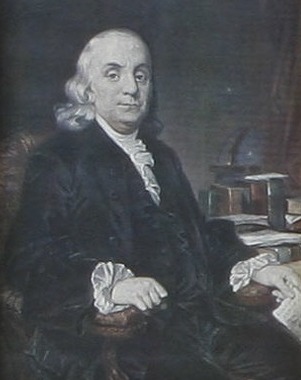
Franklin Consistently Placed Public Interest Above Personal Desires

Benjamin Franklin regretted having been born too soon and missing knowledge that would be “known 100 years hence.”

By Jim O’Neal

“Everything that can be invented has been invented.”

Thus begins a long-time misattribution to Charles Duell, commissioner of the United States Patent and Trademark Office (1898-1901). Researchers have confirmed that the actual source is the June 1899 edition of the humor magazine Punch. In colloquy, a genius asks, “Isn’t there a clerk who can examine patents?” and a boy replies, “Quite unnecessary, sir. Everything that can be invented has been invented.”

One man who definitely didn’t share that view was Benjamin Franklin. Although he was entranced by the discoveries of his day, he regretted having been born too soon. He missed “the happiness of knowing what will be known 100 years hence.” He wrote that by then, there would be “discoveries made of which we have at present no conception.” He was obviously correct about that, having been born very early in the 18th century (1706) and here we are 300 years later still astonished by a continuous flow of remarkable discoveries.

However, for a few of us there is a tinge of regret for being born too late to enjoy his company. A true polymath, Franklin was a pioneering scientist, best-selling author, printer, bon vivant, inventor, political theorist, diplomat, the country’s first postmaster general, and the most prominent celebrity of the 18th century (whew!).

He was also a man of vast contradictions. As a reluctant revolutionary, Franklin desperately wished to preserve the British Empire, and he mourned the break even as he led the fight for American independence. Despite his passion for science, he viewed his groundbreaking experiments as secondary to his civic duties. And although he helped draft both the Declaration of Independence and the Constitution, in his heart he hoped that the new American government would take a different form. This paradox stems from being the rare individual who consistently placed public interest above personal desires.

He is a delight for historians, since writing was his favorite mode of communication and he saved most of the letters he received… while others did the same with his highly valued correspondence. Then there is the autobiography that covers his first 52 years of public and private life; his remaining 32 years are intertwined with historic events. It is little wonder that his name keeps popping up so often yet today.

If he had a blind spot it was over the issue of race. For a man who saw himself as an Englishman living in America, he had grand thoughts about a glorious future for both Britain and America (only). Even without further immigration, America’s population was doubling every 20 years and “will in another century be more than the people of England, and the greatest number of Englishman will be on this side of the water.” If even more English came over, so much the better. But why allow anyone else to come?

“Why should Pennsylvania, founded by the English, become a colony of aliens, who will shortly be so numerous as to Germanize us instead of our Anglifying them, and will never adopt our language or customs, any more than they can acquire our complexion.” Franklin’s view, from a 1751 essay, was as politically incorrect then as it would be today. But, he went even further in what now would be called “ethnocentric.” He wanted to keep out not only Germans, but everyone except the English.

However, always the realist, he offered a wistful apology. “But perhaps I am partial to the complexion of my country, for such kind of partiality is natural to mankind.”

Perhaps when time travel is practical, he will get a glimpse of all the wonders in the modern world that we take for granted too often. He will be one happy man… and I hope to be around to hear what he says.

Intelligent Collector blogger JIM O’NEAL is an avid collector and history buff. He is president and CEO of Frito-Lay International [retired] and earlier served as chair and CEO of PepsiCo Restaurants International [KFC Pizza Hut and Taco Bell].
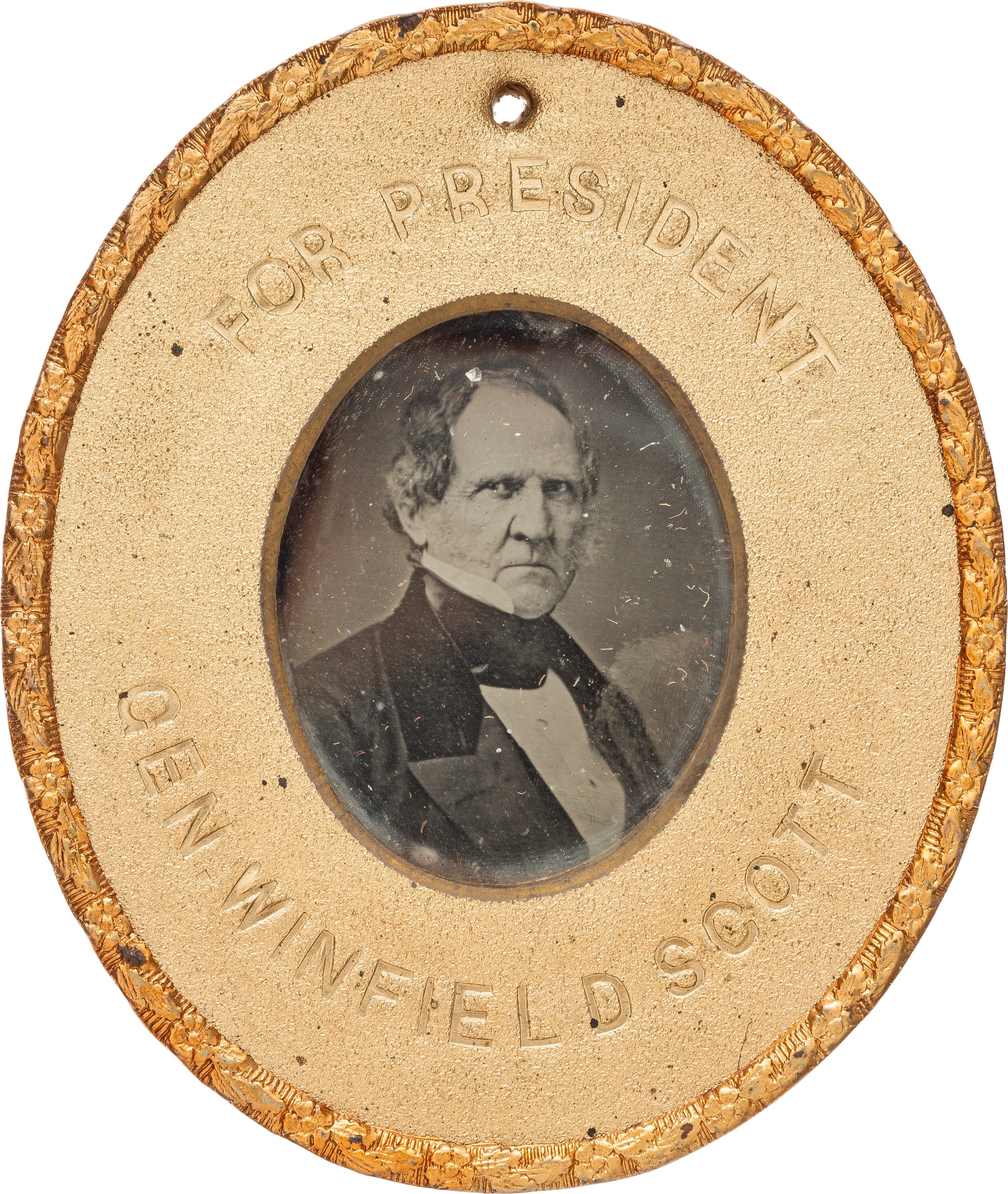
Winfield Scott Arguably the Most Astonishing Military Officer in U.S. History

A Winfield Scott “For President” daguerreotype from his unsuccessful 1852 bid for the presidency sold for $25,000 at a September 2015 Heritage auction.

By Jim O’Neal

Some historians have labeled him as remarkable, perhaps the most remarkable in American history. For more than 50 years, he served as an officer in the U.S. Army, wearing the stars of a general from 1814 until his death in 1866 at age 80. Following Andrew Jackson’s retirement from the Army in 1821, he served as the country’s most prominent general, stepping down in late 1861, six months after the start of the Civil War.

Lieutenant General Winfield Scott, hero of the War of 1812, conqueror of Mexico in a hazardous campaign, and Abraham Lincoln’s top soldier at the beginning of the Civil War, was born in Virginia in 1786. It was a time of “an innumerable crowd of those striving to escape from their original social condition,” as described by French observer of America, Alexis de Tocqueville.

Success rested on the possession of land, driving both ambitious Americans and their government west.

Winfield’s father died when he was 5, and his mother died in 1803 when he was 17 and on his own. By 1807, he had tired of schooling and joined a prominent law firm in Richmond, “riding the circuits” where he helped provide legal assistance to litigants. It was here that the governor of Virginia made an appeal for volunteers to the state militia after a British frigate intercepted an American ship to search for four deserters from His Majesty’s Navy … the famous Chesapeake-Leopard Affair.

The people of the United States reacted with surprising violence, almost lynching British officers and attacking a nearby squadron. “For the first time in their history,” wrote American historian Henry Adams, “the people of the United States learned in June 1807 the feeling of a true national emotion.”

Public opinion forced President Thomas Jefferson to issue a proclamation requiring all armed British vessels to depart American waters. Then he called on all governors to furnish forces of 100 militia each. Winfield Scott felt an overwhelming urge to play a part and eagerly joined his fellow Virginians.

Thus began a long, storied military career, both during the consolidation of the nation and its expansion.

As a general, he was not the architect. It was President James Madison who attempted to unsuccessfully annex Canada in 1812. It was President Jackson who decided that American Indians east of the Mississippi must be moved to western lands following the passage of the Indian Removal Act of 1830 (the infamous “Trail of Tears”). President John Tyler eventually settled the boundary dispute with Britain over the border between Maine and New Brunswick, Canada. James K. Polk manipulated the War with Mexico that expanded the nation into the southwest. And President James Buchanan used General Scott to secure the San Juan Islands, between Vancouver Island and the mainland, during the Pig War between the United States and Great Britain.

For each of these presidents, the agent and builder, in contrast to the architect, was General Scott. In this role, Scott served under 14 presidents, 13 of them as a general officer. Winfield “Old Fuss and Feathers” Scott lost his own bid for the presidency as the unsuccessful candidate for the Whigs in 1852. However, he certainly had the longest and most astonishing military career in U.S. history. And that includes all the other great men: Washington, Jackson, Grant, Lee, Eisenhower, etc.

Intelligent Collector blogger JIM O’NEAL is an avid collector and history buff. He is president and CEO of Frito-Lay International [retired] and earlier served as chair and CEO of PepsiCo Restaurants International [KFC Pizza Hut and Taco Bell].
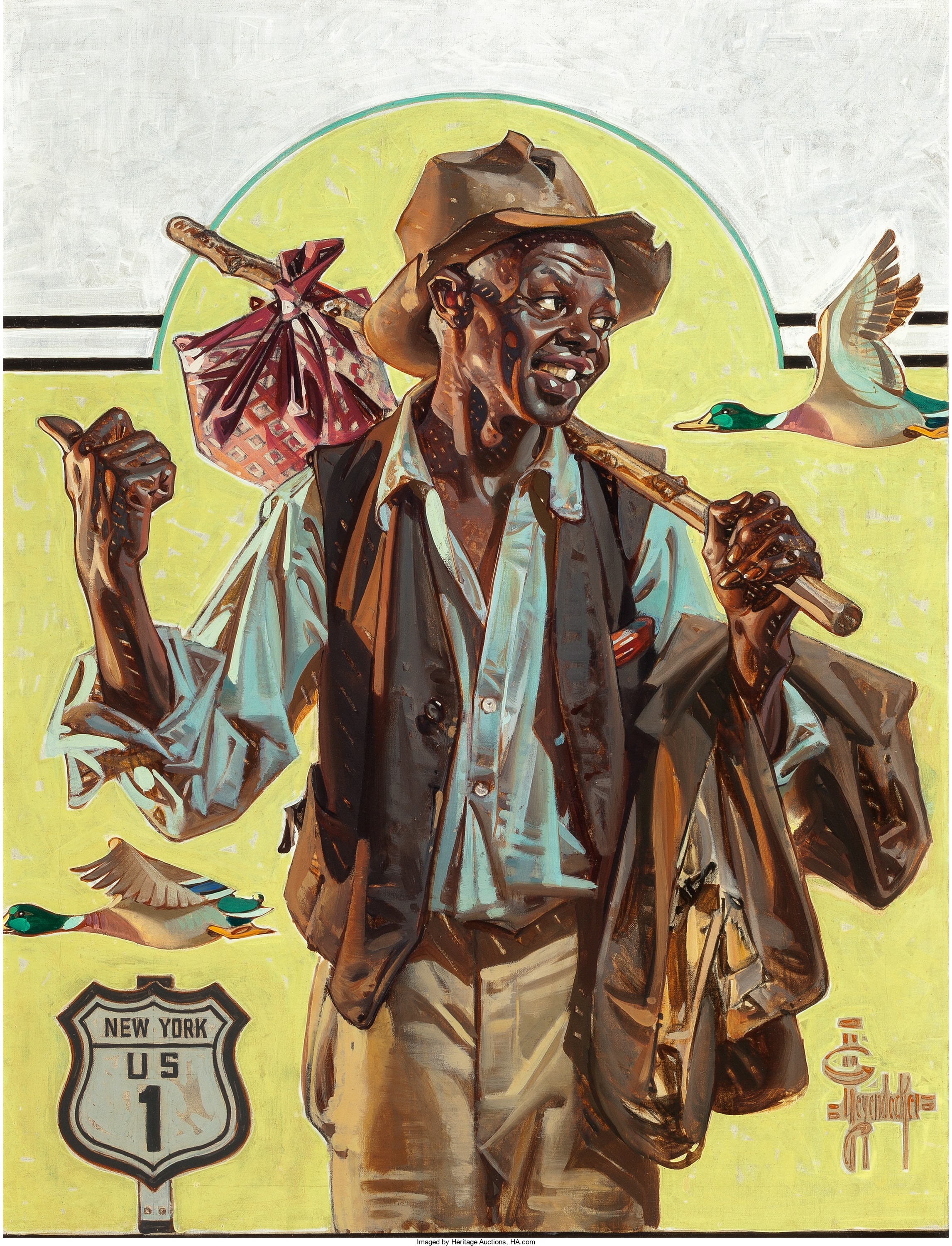
Look to 1935 if Goal is Infrastructure Projects That Work

Joseph Christian Leyendecker’s cover illustration for the Oct. 19, 1935, edition of The Saturday Evening Post sold for $137,000 at a May 2015 Heritage auction.

By Jim O’Neal

“The social objective is to try to do what any honest government … would do: to try to increase the security and happiness of a larger number of people in all occupations of life and in all parts of the country … to give them assurance that they are not going to starve in their old age.”

Although this could have been taken directly from any Bernie Sanders speech anytime over the past 10 years … it was actually a response from President Franklin D. Roosevelt on June 7, 1935, when answering a question about the social role of government.

This was the same week that Babe Ruth announced his retirement from the Boston Braves, only six days after he hit three home runs in the last game he played. It was the end of an era and it came right in the middle of the Great Depression.

Bread lines were still long and double-digit unemployment was accepted as the new normal. People were generally depressed and hope was a rare commodity.

Technological unemployment threatened to permanently engulf huge sectors of the workforce, particularly less skilled and older workers in general. Observers suggested that deep structural changes in the economy meant that the majority of those over 45 would never get their jobs back. Lorena Hickok (Eleanor’s paramour) opined that, “It looks like we’re in this relief business for a long, long time.” The president’s advisor, Harry Hopkins, was soon speaking of workers who had passed into “an occupational oblivion from which they will never be rescued… We shall have with us large numbers of the unemployed. Intelligent people have long since left behind them.” Sound familiar?

Even FDR chipped in with his “Fireside Chat” on June 28, 1934: “For many years to come, we shall be engaged in rehabilitating hundreds of thousands of our American families … The need for relief will continue for a long time; we may as well recognize that fact.”

The Emergency Relief Appropriation Act became law on April 18, 1935. The bill approved the largest peacetime appropriation in American history. This single appropriation authorized more spending than total federal revenues in 1934; with a special $4 billion earmarked for work relief and public works construction. Roosevelt and the bill’s architects did NOT believe they were addressing a transient disruption in the labor market, but a long-term (perhaps permanent) inability of the private economy to provide employment for all who wanted to work.

Thus were born many federal agencies, with the Works Progress Administration (WPA) the largest. The WPA employed 3 million people in the first year and in eight years it put 8.5 million people to work at a cost of $11 billion. WPA workers built 500,000 miles of highways, 100,000 bridges, as many public buildings, plus 8,000 parks.

When the current administration and Congress debate “infrastructure projects,” they would be well served to study this period in American history. These folks really knew how to do it!

Intelligent Collector blogger JIM O’NEAL is an avid collector and history buff. He is president and CEO of Frito-Lay International [retired] and earlier served as chair and CEO of PepsiCo Restaurants International [KFC Pizza Hut and Taco Bell].
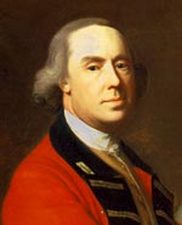
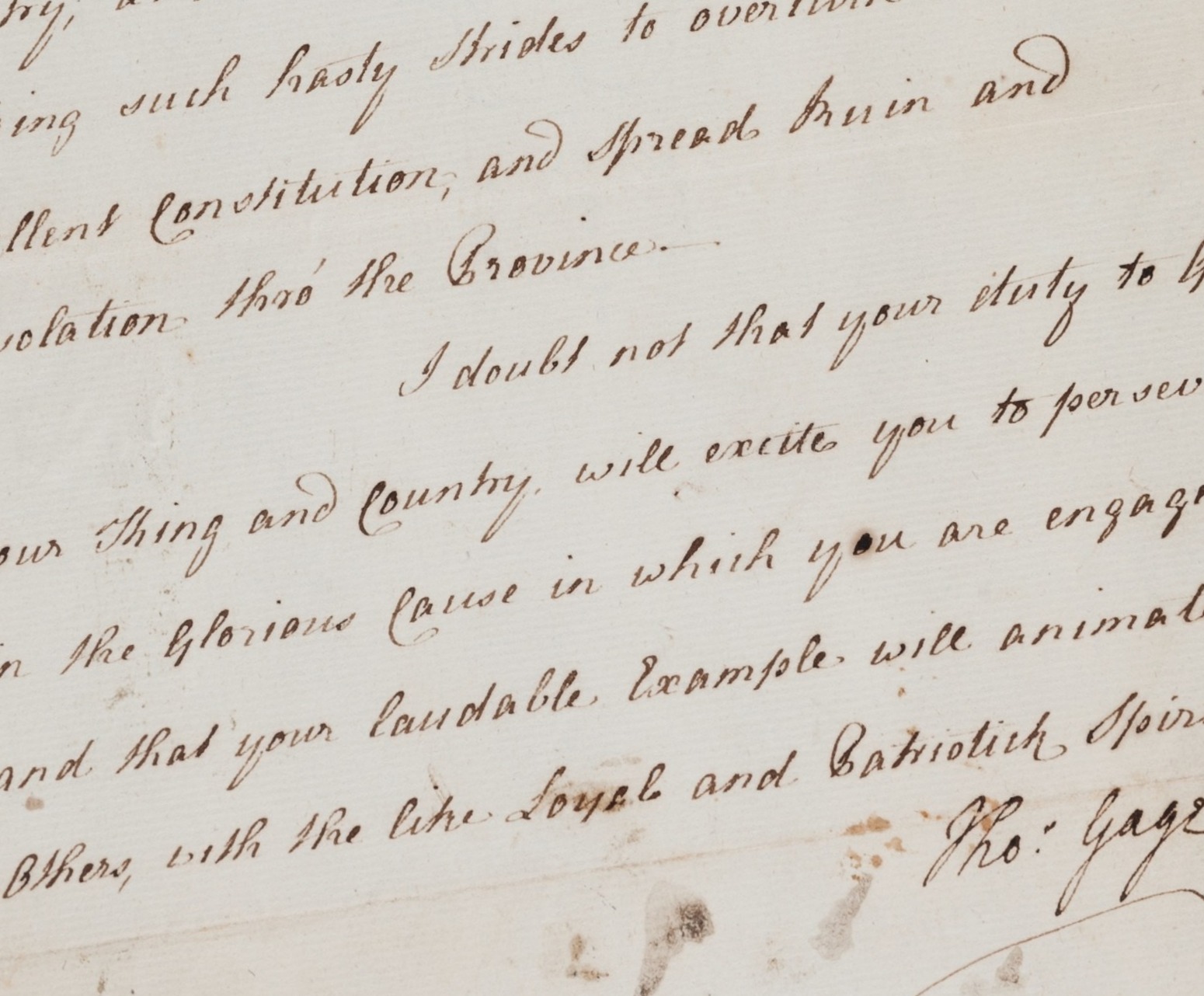
British General Had Unfortunate Assignment of Quelling a Revolution

A letter signed by Thomas Gage, a year before the opening shots of the Revolutionary War, sold for $5,625 at an October 2013 Heritage auction.

By Jim O’Neal

Thomas Gage was the general in charge of Great Britain’s forces in North America from 1763 to 1775. As commander-in-chief, he held the most powerful office in British America, although he spent a disproportionate amount of time in New York City, enjoying the lively social scene.

It was during Gage’s tenure that colonial tensions escalated over political acts in London, starting with the highly unpopular Stamp Act of 1765.

Thomas Gage

Although Gage and his family were in Great Britain in late 1773 and missed the Boston Tea Party (Dec. 16, 1773), it provoked the British Parliament to enact a series of punitive measures that became known as the Intolerable Acts (or the Coercive Acts). Since Gage had experience in North America that extended all the way back to the French and Indian War in 1755, he was selected to be the military governor of Massachusetts in early 1774. It was his job to implement the Acts and quell the nascent rebellion.

In April, John Hancock and Samuel Adams had decided to hide out in Lexington, Mass., in Hancock’s childhood home to avoid contact with the British as they made their way to the Second Continental Congress. It was a wise decision since Gage had received instructions from London to arrest them as ringleaders of the insurgency. He also planned to seize gunpowder that was stored in nearby Concord.

However, the patriots received a tip about the raid and Paul Revere was dispatched to warn Hancock and Adams. When British troops descended on Lexington on April 19, they were confronted by a small band of volunteers. Now-historic shots were fired, killing eight Americans and wounding 10, while the British lost a single horse before they moved on to Concord.

It was a much different story when the British proudly marched back to Boston in their crisp red uniforms. Suddenly, they were engulfed on all sides by armed men, many of them local farmers, who were protected by buildings, trees, rocks and fences. They were known as the Minutemen, since they were highly mobile, self-trained in weaponry, deadly accurate with firearms, and able to respond quickly to military threats.

The British, frantic to seek safety, scrambled back to Boston after 273 soldiers were either killed or wounded. The colonists lost 95 men and were now prepared to challenge the once-invincible British, despite the enormous difference in resources. A larger and longer conflict was finally ignited.

John Adams got it exactly right when he said, “The battle of Lexington on the 19th of April changed the instruments of warfare from the pen to the sword.”

Intelligent Collector blogger JIM O’NEAL is an avid collector and history buff. He is president and CEO of Frito-Lay International [retired] and earlier served as chair and CEO of PepsiCo Restaurants International [KFC Pizza Hut and Taco Bell].
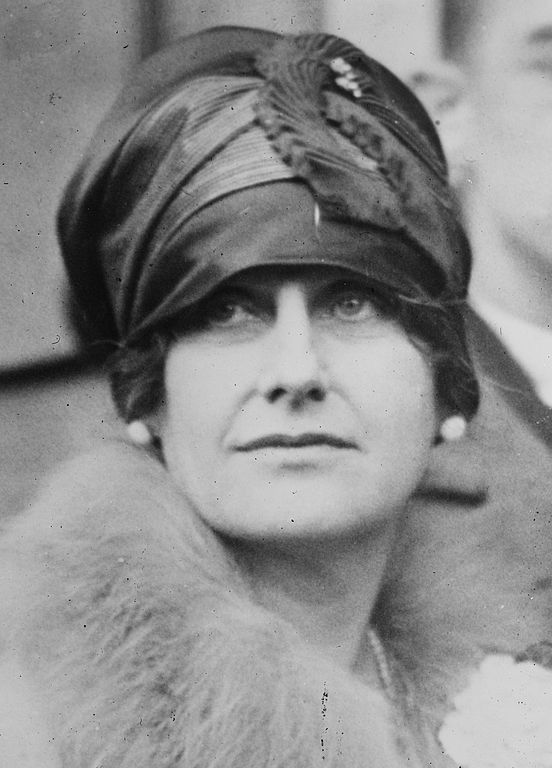
Trailblazing Politicians Broke Glass Ceilings More Than 100 Years Ago

Nellie Tayloe Ross in 1933 was appointed director of the U.S. Mint, the first woman to hold that position.

By Jim O’Neal

The history of female governors in the United States dates to 1909. Carolyn Shelton served as acting governor of Oregon for a weekend to fill a temporary void.

Next was Soledad Chacón, who served as New Mexico’s acting governor for two weeks in 1924. (She also has claim to the first Hispanic woman elected to statewide office in the U.S.) This was another temporary situation, but Chacón claimed responsibility for “substantial duties.”

The first woman actually elected governor was Nellie Tayloe Ross of Wyoming – elected in 1924 (four years after U.S. women won the right to vote) and assuming office in 1925. Her husband had been elected governor in 1923, but he died in 1924. Nellie Ross formally won the next election despite refusing to campaign.

Ross remains the only woman elected governor of Wyoming; she lost her reelection in 1926. However, her short stint served as a springboard to national politics. At the 1928 Democratic National Convention, she received 11 votes for VP on the first ballot. This convention was held in Sam Houston Hall in Houston, the first one held in the South since the Civil War.

New York Governor Alfred “Al” Smith ended up with the Democratic Party presidential nomination, despite being a Roman Catholic. His running mate, Joseph Robinson from Arkansas, holds the distinction of being the last U.S. Senator selected by a state legislature. (The 17th Amendment, adopted in 1913, changed the process by establishing a popular-vote selection.)

Later, in 1933, Franklin D. Roosevelt appointed Ross to director of the U.S. Mint. She was the first woman to hold that position as well. She died in 1977 at age 101, the oldest ex-governor (at the time).

Intelligent Collector blogger JIM O’NEAL is an avid collector and history buff. He is president and CEO of Frito-Lay International [retired] and earlier served as chair and CEO of PepsiCo Restaurants International [KFC Pizza Hut and Taco Bell].
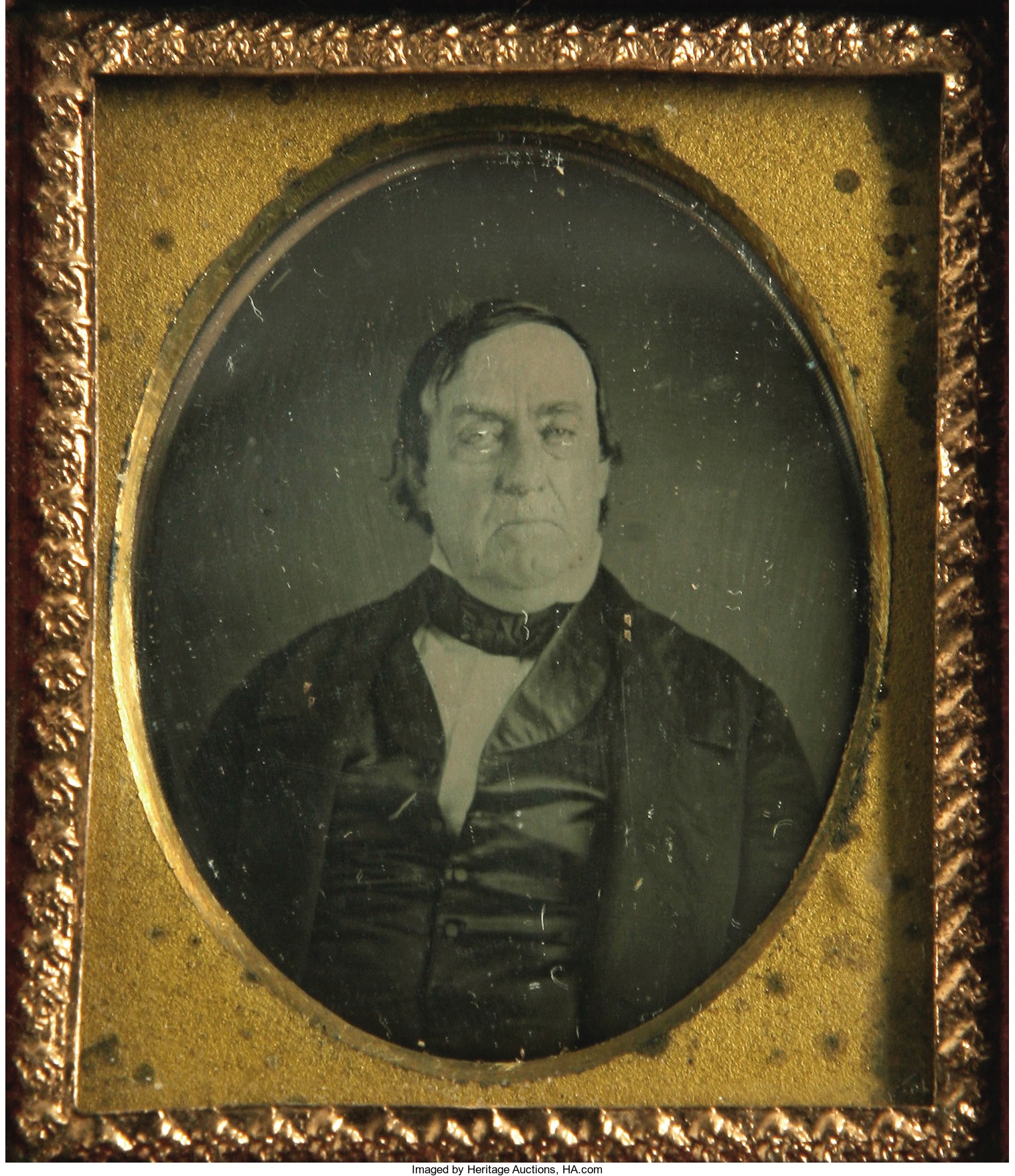
Secretary of State Cass Resigned to Protest Inaction Over Looming War

This rare political campaign daguerreotype of Lewis Cass from 1848 realized $17,925 at a February 2007 Heritage auction.

By Jim O’Neal

By 1857, Lewis Cass was back in national politics as secretary of state for our only bachelor president, James Buchanan. As an old military man, Cass was growing increasingly concerned about activities in the South. He could sense the undercurrent of war that had been brewing for 20-plus years, but this time it was more palpable.

He was convinced that it would be prudent to beef up military garrisons in the South as a show of determination. It would also help prevent the South from appropriating guns and supplies that could be used against the Union if war did break out. He also attempted to persuade President Buchanan to send federal troops to Charleston, S.C., since that was an obvious hot spot.

Although Cass would prove to be absolutely correct, Buchanan refused to take any action, since “It was not in the country’s best interest.” However, privately, he was predicting “he would be the last president of a United States” because he thought the country would divide permanently … soon.

On Dec. 13, 1860, Cass resigned in protest. It was the only viable option he had to demonstrate how strongly he disagreed with the administration.

Lewis Cass died in 1866, a year after the bloody civil war he was so determined to prevent ended. He had a long career that stretched across 13 presidencies starting with Thomas Jefferson (as a U.S. marshal), followed by brigadier general, governor (Michigan), secretary of war, and secretary of state.

The Lewis Cass Legacy Society is still active and his name is still recognized in Michigan.

Intelligent Collector blogger JIM O’NEAL is an avid collector and history buff. He is president and CEO of Frito-Lay International [retired] and earlier served as chair and CEO of PepsiCo Restaurants International [KFC Pizza Hut and Taco Bell].
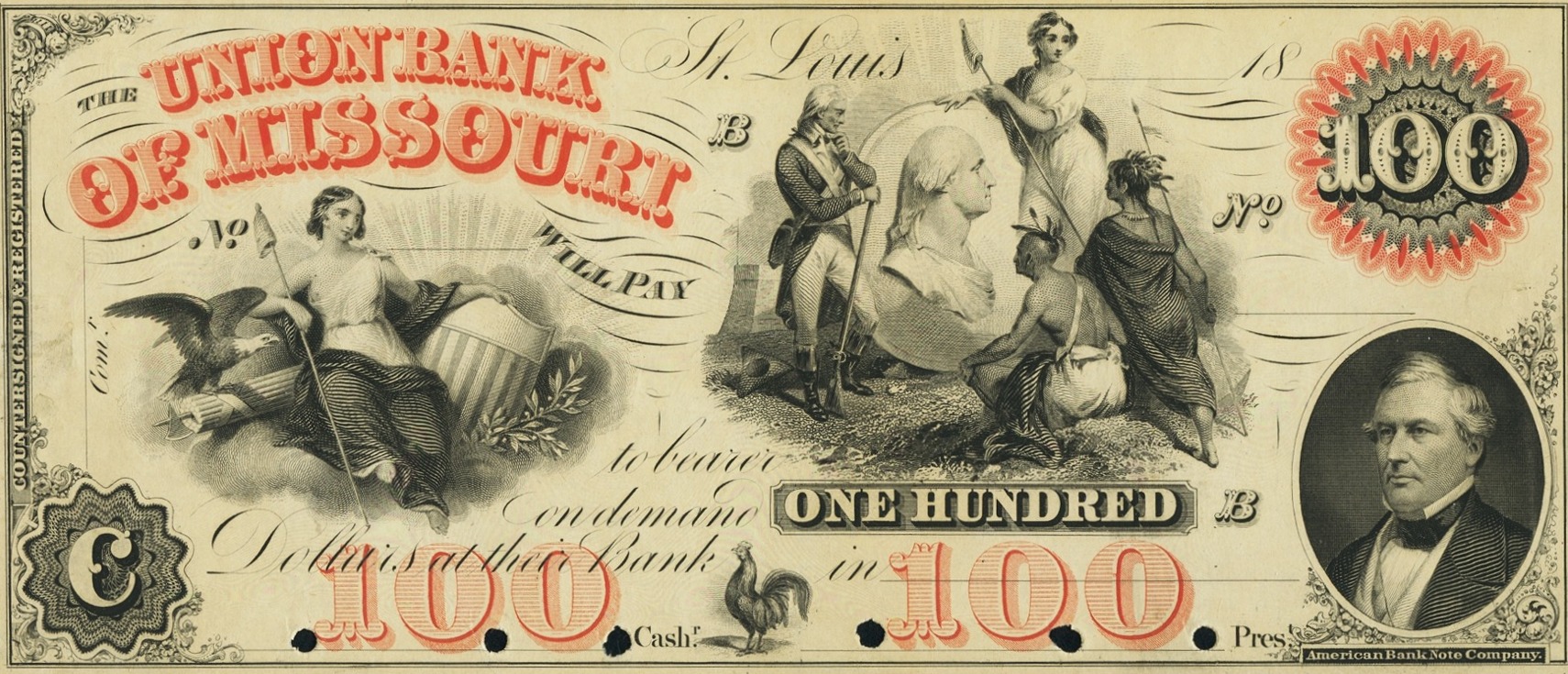
Fillmore Often Makes the ‘Forgettable Presidents’ Club

Millard Fillmore appears on the lower right corner of this Union Bank of Missouri $100 Color Proof. It realized $61,687.50 at an October 2015 Heritage auction.

By Jim O’Neal

Millard Fillmore, the 13th president, was the last not affiliated with either the Democrat or Republican parties. Born in a log cabin, he developed slowly since he did not read well and was apprenticed when he was 14 years old. After several years, he bought out his indenture for $30, but never saw a map of the United States until he was 19.

However, he learned to love books and spent a lot of time just reading.

Later, his entry into politics was through the New York State Assembly as an anti-Mormon candidate. Eventually, he made it into the U.S. House by following Whig Party policies. He even made a run at being the Whig Party VP candidate in 1844, but finished a weak third. Then, to top it off, he was defeated for governor of New York that same year.

It looked like his career had peaked.

However, his luck changed in 1848 when the Whigs picked General Zachary Taylor to run for president. Taylor was a slaveholder from Louisiana, had never run for office, and had never even voted.

Taylor and Fillmore had also never met, but the Whigs hoped Fillmore would help balance the ticket … a strategy that worked!

Vice President Fillmore was largely ignored when the administration finally took office. That is until President Taylor died unexpectedly and Fillmore was thrust into the Oval Office.

Alas, he gradually lost support of the Whig Party and was unable to generate a lot of support for reelection. One major cause was signing and then enforcing the proslavery Fugitive Slave Law, which alienated Northern Whigs.

During the 1852 convention, Fillmore made a valiant effort, but on the 53rd ballot, Winfield Scott finally prevailed as the Whig Party candidate. He would go on to lose the general election to Democrat Franklin Pierce.

In 1856, the American Party (“Know Nothings”) convinced Fillmore to make another run for the presidency; he won a single state. Curiously, many historians argue that Fillmore was never an actual American Party member, never attended a single meeting, and was even out of the country when all this happened.

All of this is true, but they overlook the fact that he did mail a letter affirming his acceptance of the nomination. So, I say he was an official candidate despite the unusual circumstances and the rather obvious lack of any real interest.

Fillmore often makes the “Forgettable Presidents” club … but we remember him because he was the first president to turn down an Honorary Degree … a Doctor of Civil Law from Oxford. His reason was a little hokey (he could not read or understand it since it was in Latin), but that only makes him more qualified for our club.

Intelligent Collector blogger JIM O’NEAL is an avid collector and history buff. He is president and CEO of Frito-Lay International [retired] and earlier served as chair and CEO of PepsiCo Restaurants International [KFC Pizza Hut and Taco Bell].
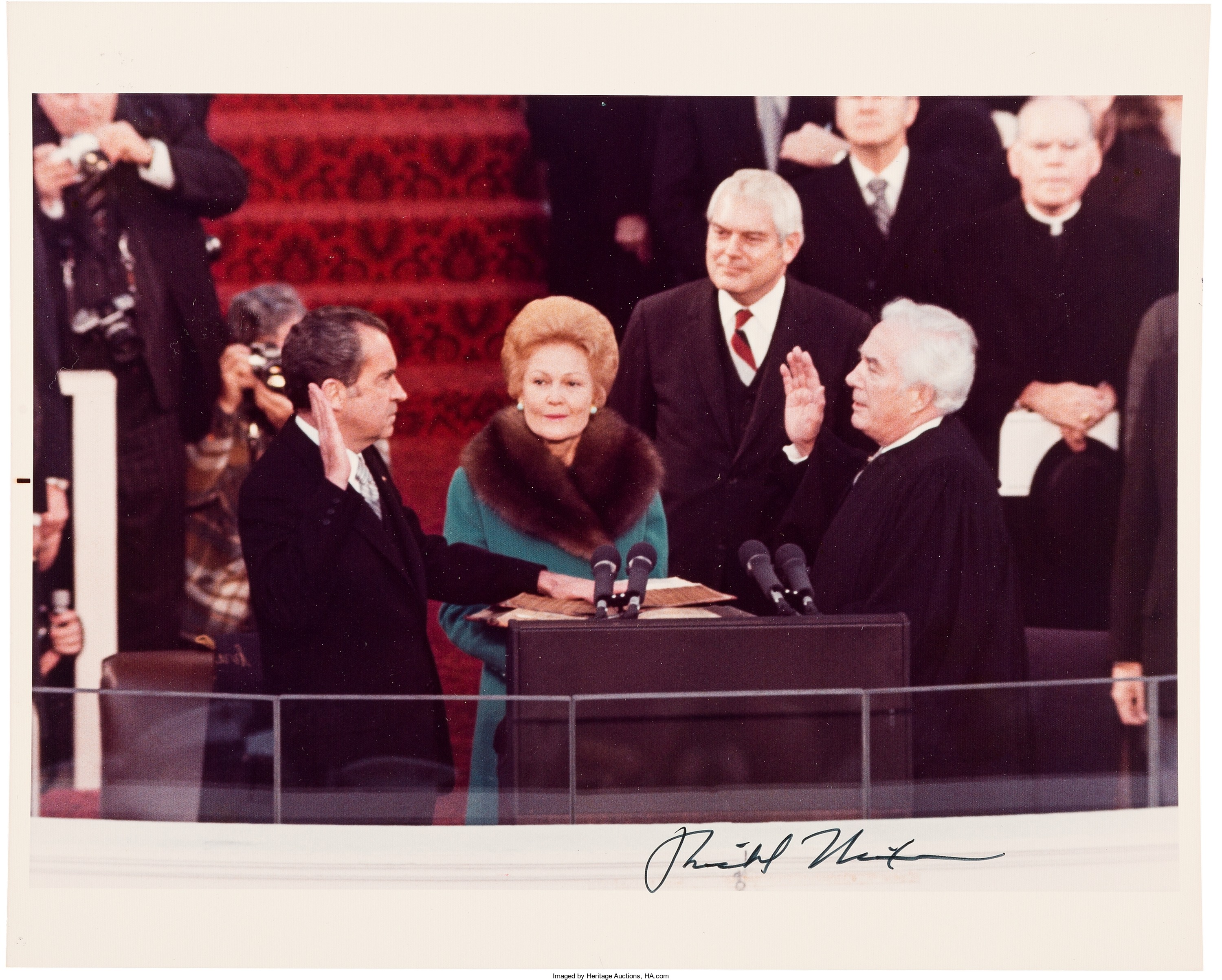
Life, History Have Not Been Fair to Pat Nixon

As the wife of President Dwight D. Eisenhower’s vice president, Pat Nixon, above at her husband’s 1973 inauguration, was trained at the knee of Mamie Eisenhower, the quintessential 1950s political wife.

By Jim O’Neal

As the nation seems transfixed again on the White House and there is a special counsel investigating “everything,” it is nostalgic to see old faces popping up on CNN as the “I” word is faintly heard.

John Dean has returned with his colorful Richard Nixon anecdotes and even Richard Ben-Veniste is back. Ben-Veniste was a special prosecutor during the Watergate scandal and chief counsel for the Democrats in the less-famous, but much longer and tedious Senate Whitewater Committee, which was investigating the Clintons (especially the first lady) over their curious relationships before they left Arkansas.

Rarely does anyone mention earlier first lady Pat Nixon. She grew up on a small truck farm in Artesia, Calif., about 20 miles from my high school (Compton). She lost her mother to cancer when she was 12 and was forced to take over the family household chores, including the laborious task of doing the laundry, which involved building a fire in an outdoor brick fireplace and lifting the clothes with long sticks from cauldrons of boiling water into cold water and then hanging them out to dry.

She also took care of two older brothers and her father for five years until he died from silicosis (miner’s disease). She was an orphan at 17 and determined to get a college degree. She worked her way through the University of Southern California, graduating cum laude in 1937. She met Richard Nixon when they were auditioning for parts in a local production of the mystery drama The Dark Tower. She was teaching shorthand and typing at a high school and he was a young lawyer from Duke University Law School. (He had been accepted into the FBI, but never received the notice.)

They married in June 1940, and then he was off to the Navy for several years. He ran for Congress with Pat as his office manager. She basically devoted the rest of her life supporting his political ambitions. She was crushed when he lost the 1960 presidential race to John F. Kennedy and never understood why reporters never investigated the speculation that Chicago Mayor Richard Daley had stolen Illinois’ 27 electoral votes or why her husband had not demanded a recount.

Nixon promised Pat that he was finished with politics after he lost his 1962 comeback campaign for governor of California, famously blasting the deeply hated press with his parting message, “You won’t have Nixon to kick around anymore.” Pat was relieved and her happiest days were after that defeat, when the family moved to New York and Nixon retreated to private life as a lawyer.

By the time they did get to the White House in January 1969, the Vietnam War was raging and the feminist movement was in full swing. As the wife of President Dwight D. Eisenhower’s vice president, Pat was trained at the knee of Mamie Eisenhower, the quintessential 1950s political wife.

Although she never publicly crumbled, Watergate took a terrible toll on Pat Nixon’s health. She lost sleep, lost weight and rumors of her drinking started.

Her loyal aides fought back, saying she enjoyed an occasional highball and a cigarette at the end of a long day. However, Pat told her daughter Julie, “Watergate is the only crisis that got me down. It is just constant and I know I will never live to see the vindication.”

She was right about that. Life and history have not been fair to Pat Nixon … period.

Intelligent Collector blogger JIM O’NEAL is an avid collector and history buff. He is president and CEO of Frito-Lay International [retired] and earlier served as chair and CEO of PepsiCo Restaurants International [KFC Pizza Hut and Taco Bell].