President Tyler’s Extreme Use of His Veto Alienated Political Leaders

president-john-tyler
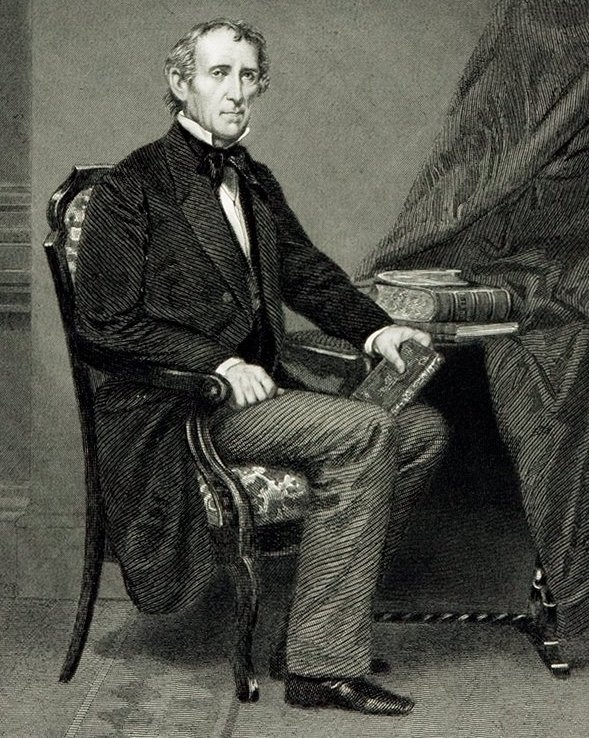
As vice president, John Tyler assumed the presidency after William Henry Harrison’s death shortly after taking office. Tyler served the remaining three years and 11 months of Harrison’s term.

By Jim O’Neal

The election year of 1844 found President John Tyler in the awkward position of having no political party willing to nominate him for re-election. Tyler’s extreme use of his veto pen had alienated the Whigs, who were exasperated with his stubbornness and unwillingness to negotiate.

Earlier in February, the president, his cabinet members and several hundred prominent individuals (including Dolley Madison) were on the new steam-powered warship the USS Princeton when a gun’s celebratory shot exploded. When the smoke cleared, eight men lay dead, including Secretary of State Abel Upshur, Secretary of the Navy Thomas Gilmer and ex-New York Senator David Gardiner.

Tyler ordered the bodies taken to the White House and laid in state in the East Room, where the funerals were held before burial in the Congressional Cemetery. Gardiner’s daughter Julia had been carried from the ship by President Tyler and chose to stay on at the White House to fully recuperate. Tyler’s first wife Letitia was the first First Lady to die in the White House and the president struck up a relationship with (the now-wealthy) Julia Gardiner. They were married four months later on June 16, 1844, causing quite a stir in the social circles of Washington. Tyler was 54 and Julia was 30 years younger. Over the years, she would bear seven children to join the eight from the earlier marriage.

Meanwhile, the Democratic National Convention in Baltimore was deadlocked between Martin Van Buren and Lewis Cass of Michigan. Then they received word that James Knox Polk was former President Andrew Johnson’s choice and so “Young Hickory” Polk was picked unanimously on the ninth ballot. When Polk’s nomination was flashed from Baltimore to Washington by Samuel F.B. Morse’s telegraph – the first official use of this new communication tool – Washington observers were sure the instrument had failed because the news was not plausible. Henry Clay, the Whig nominee, sarcastically asked, “Who is James K. Polk?”

It was a close contest, but Polk became the first “Dark Horse” candidate to win and the only Speaker of the House (ever) to be elected president. The 49-year-old Polk was also the youngest man to ever become president – to that time – when he took the oath of office on a rainy March 4, 1845. However, three days earlier on March 1, Congress passed a joint House-Senate resolution approving the annexation of Texas and Tyler signed it. And on his last day in office, Tyler also signed legislation admitting Florida as the 27th state.

On the same day, March 3, Congress mustered enough votes (two-thirds in each house) to override one of Tyler’s vetoes … the first time in history a presidential veto had been overridden. Immediately after Polk’s inauguration, Tyler and his family left for Virginia. Two days later, the Mexican minister to Washington filed a protest, calling the annexation of Texas an “act of aggression.” Mexico broke off diplomatic relations and the Mexican War soon followed.

Welcome to Washington, Mr. President.
Jim O'NielIntelligent Collector blogger JIM O’NEAL is an avid collector and history buff. He is President and CEO of Frito-Lay International [retired] and earlier served as Chairman and CEO of PepsiCo Restaurants International [KFC Pizza Hut and Taco Bell].
Transfer of Power Between Hoover, Roosevelt Tense but Peaceful

herbert-hoover-classic-ok-america-button
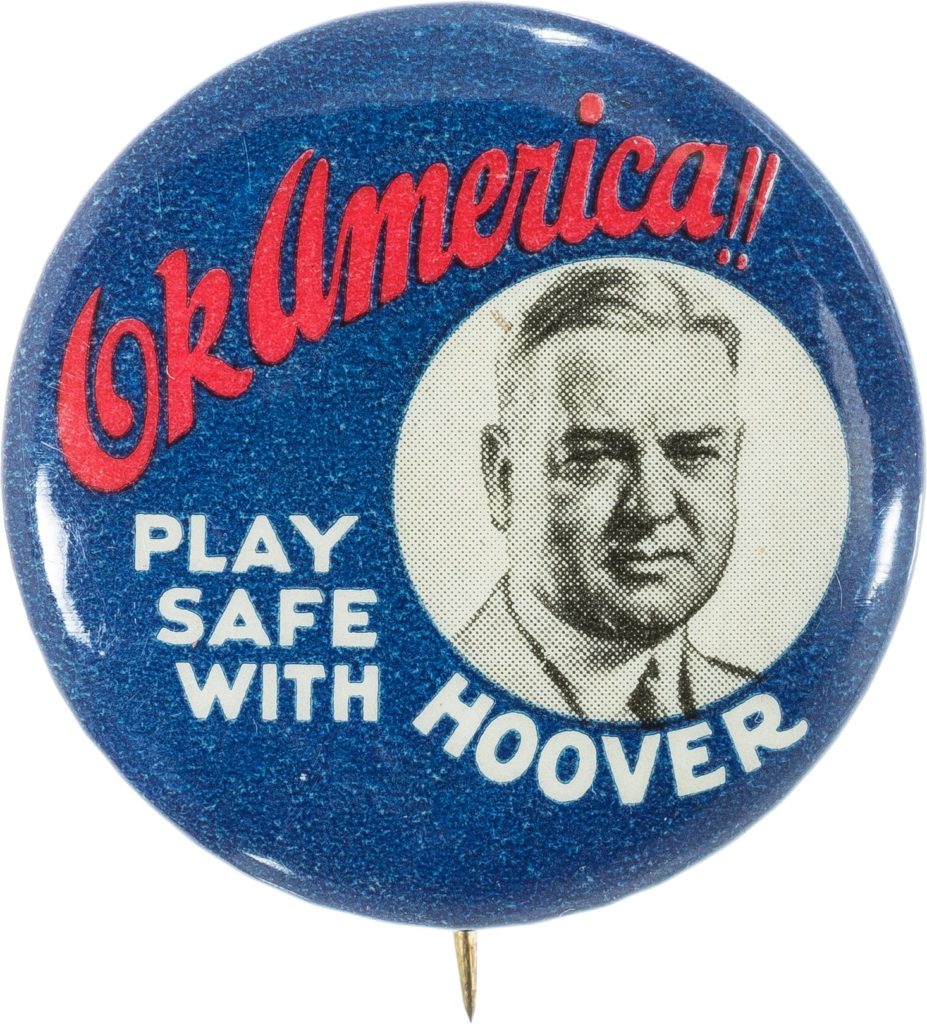
This “OK America!” button from Herbert Hoover’s 1932 re-election campaign sold for $2,500 at a September 2015 Heritage auction.

By Jim O’Neal

Herbert Hoover aspired to the presidency of the United States strictly for the opportunity to serve the public. When elected in 1928, he was universally recognized as the greatest living humanitarian. He helped organize the return of thousands of Americans stranded in Europe before the outbreak of World War I (taking no salary) and also directed the program for relief to millions of Belgians and French (after Germany invaded Belgium) as head of President Wilson’s Food Administration.

For several years after the war, he continued to serve without salary as Secretary of Commerce for presidents Warren Harding and Calvin Coolidge until he resigned to run for president in 1928. He won by a large margin and in his inauguration speech on March 4, 1929, he described the future of the country as being “bright with hope.”

Three and a half years later, Republican prosperity had vanished, beginning with the stock-market crash seven months after Hoover took office. Protesting veterans of the Bonus Army were camped out in sight of the Capitol and milling around the White House to display their frustration and bitterness.

Hoover was on a tour of the Midwest the day the stock market crashed. For seven rainy days, he plodded from town to town on his train, proclaiming prosperity to anyone willing to listen. He arrived home on Oct. 4, 1929, and at a press conference the next morning, he assured newsmen the country’s businesses stood on a solid foundation.

Days later, on Oct. 19, Black Tuesday, the stock market fell sharply, but the president earnestly believed this was only a tough patch, like the Panic of 1907. Like most people, he seems to have had little idea of how bad the worst would be. The plan he presented to Congress in December was totally unorthodox by calling on the federal government to save the day through a series of programs that included education reform, housing for the underprivileged, jobs in long-term construction, lower taxes and a balanced budget … while making government more effective and efficient.

To add to the gloom of 1929, the Executive Office burned to its walls on Christmas Eve as carolers serenaded. The destruction of the Executive Office was a better symbol for the Hoover presidency than the White House, since virtually all the programs failed and the country started a downward spiral that would continue until we had to gear up for the next world war.

In the summer of 1932, Franklin Delano Roosevelt was nominated by the Democratic National Committee in Chicago. On Aug. 11, Hoover formally accepted the Republican nomination that had been offered several months earlier. But he chose to bury himself in work for the balance of August and all of September. By then, the Democrats were in full stride and FDR became the president-elect.

However, the transfer of office from Republican to Democrat was chilly. At best, the feeling between the two men was of mutual contempt. The Hoovers declined to host the traditional March 3 dinner for the incoming president, and the Roosevelts had no intention of attending. Hoover was frustrated that FDR did not accept any of his advice and Roosevelt had grown weary of listening. (This would lead to changing the inauguration of March 4 to January 20, since it was too long to have a lame duck badgering the new guy.)

A small awkward tea ceremony was finally negotiated and that was that. A quiet, peaceful transfer of the most powerful political office in the world.

Jim O'NielIntelligent Collector blogger JIM O’NEAL is an avid collector and history buff. He is President and CEO of Frito-Lay International [retired] and earlier served as Chairman and CEO of PepsiCo Restaurants International [KFC Pizza Hut and Taco Bell].
The 1850s Represented a Challenging Time for America

u-s-senator-jefferson-davis-gold-pocket-watch
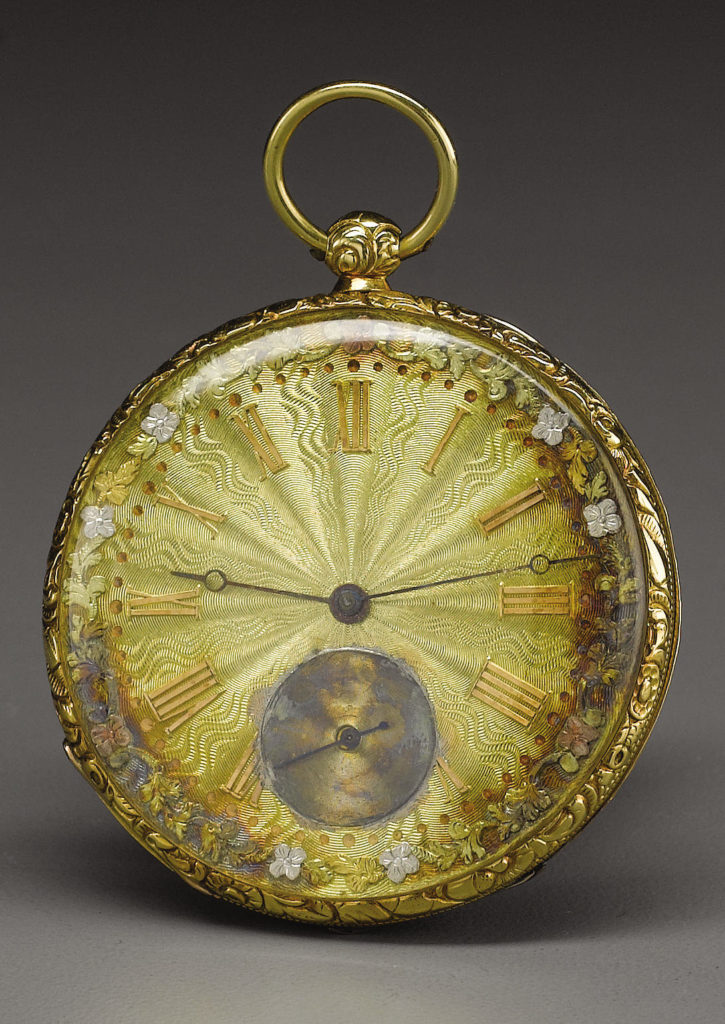
U.S. Senator Jefferson Davis presented this gold pocket watch to Franklin Pierce the year Pierce was nominated for president. Pierce was Davis’ favored candidate since Pierce had not openly opposed slavery. This watch sold for $15,535 at a June 2007 auction.

By Jim O’Neal

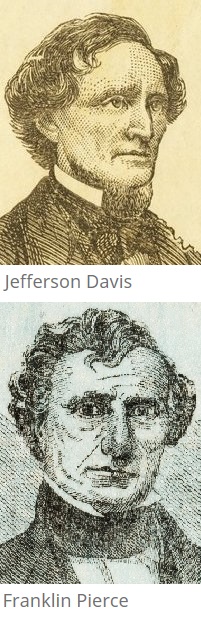
jefferson-davis-and-franklin-pierceIn 1819, the United States was a divided nation with 11 states that permitted slavery and an equal number that did not. When Missouri applied for admission to join the Union as a slave state, tensions escalated dramatically since this would upset the delicate balance. It would also set a precedent by establishing the principle that Congress could make laws regarding slavery, a right many believed was reserved for the states.
In an effort to preserve harmony, Congress passed a compromise that accepted Missouri as a slave state and Massachusetts would be divided (creating Maine) and admitted as a free state. The passage of the Missouri Compromise of 1820 earned U.S. Senator Henry Clay the nickname of the “Great Pacificator.”

It was the first real crisis over the slavery issue and kicked the can all the way to the 1850s, however, observers like Thomas Jefferson were profoundly upset. He said just the threat of disunion in 1820 caused him to be apprehensive about the future. He foresaw the potential for civil war, saying, “My God, this country is going to have a blow up. When it hits us, it’s going to be like a tornado.”

Those words would prove to be eerily prophetic.

By the 1850s, the disagreement had splintered into a five-way dispute. Abraham Lincoln and the Republicans arguing with the Southern Democrats. The Northern Democrats, led by Stephen A. Douglas, versus the Southern Democrats through Jefferson Davis. There were heated arguments between Frederick Douglass (and the political abolitionists) and William Lloyd Garrison, who favored non-violent moral suasion, and both against the non-political-process abolition that led to John Brown’s violent actions.

The War with Mexico (1846-48) had fueled these contentious debates since there was no consensus on how to treat the vast new territories of California, Utah, New Mexico or even Texas. After years of wrangling, the Compromise of 1850 put a bandage on it and several other lingering issues (e.g., the Fugitive Slave Act, the banning of slave trade in Washington, D.C.). Neither side was satisfied, but the Union remained intact.

However, the tentative peace was fleeting. When the 1854 Kansas-Nebraska Act was passed, with cooperation between U.S. Senator Stephen Douglas and President Franklin Pierce, the inevitability of a civil war was finally a stark reality. The election of Lincoln in 1860 was the final straw and seven Southern states seceded, even before his inauguration, to form a new confederacy.

Formal hostilities began on April 12, 1861, when Confederate forces fired on the Federal seaport of Fort Sumter in Charleston, S.C., and would not end for four bloody years. Even Jefferson’s metaphor of a tornado never contemplated the death and destruction that took place.

Jim O'NielIntelligent Collector blogger JIM O’NEAL is an avid collector and history buff. He is President and CEO of Frito-Lay International [retired] and earlier served as Chairman and CEO of PepsiCo Restaurants International [KFC Pizza Hut and Taco Bell]

‘Outlined Against a Blue, Gray October Sky … the Four Horsemen’

1924-the-four-horsemen-of-notre-dame-signed-photograph
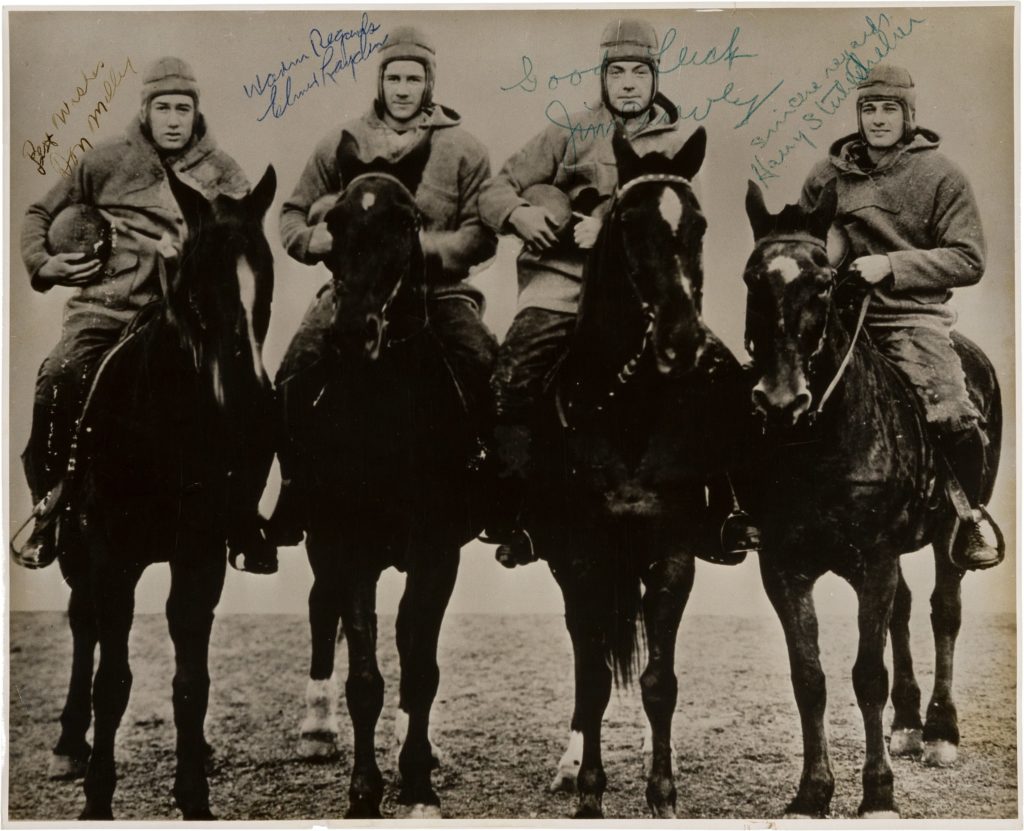
After being nicknamed the “Four Horsemen,” a Notre Dame publicity aide made arrangements to set up this photo. Signed by Don Miller, Elmer Layden, Jim Crowley and Harry Stuhldreher, this original photograph sold for $5,975 in November 2013.

By Jim O’Neal

In 1941, Elmer Layden left Notre Dame to become the first commissioner of the NFL.

If that name sounds familiar, it is probably because he was one of the “Four Horsemen of Notre Dame.”

Layden’s teammates included Harry Stuhldreher, Don Miller and Jim Crowley. Coach Knute Rockne had devised the line-up in 1922, but it took the great sportswriter Grantland Rice to ensure their immortality after a 13-7 victory over Army in 1924.

Rice penned the most famous line in the history of sports journalism:

“Outlined against a blue, gray October sky, the Four Horsemen rode again.”

All four players were elected (easily) to the National Football Foundation College Football Hall of Fame.

●●●

There has been a debate about who had the worst temper in tennis … John McEnroe or Jimmy Conners.

jimmy-conners
Conners

In 1986, Conners threw one of his famous tantrums in the fifth set of the semi-finals in the Lipton International Players Championships.

After a close call, he first stormed over to the umpire’s chair. No relief. Then, he began ranting and screaming while running around the court. Still no help. Finally, when it seemed clear that the call would stand, he took his racket, packed his gear and left the court.

The effect was a forfeit of the match to opponent Ivan Lendl, who had been quietly observing the antics. Later, Conner was fined $5,000.

●●●

In May 1955 at the Los Angeles Coliseum, Charlie Dumas high-jumped 6 feet 9½ inches and won the California State High School championship. In the process, he broke the all-time U.S. National Inter-Scholastic Record by 4½ inches. Don’t recall where I was … probably at the beach.

However, on June 29, 1956, I picked him up and we drove to the same Los Angeles Coliseum for the U.S. Olympic trials. Our tickets were not at the box office as promised, and we both had to pay a 25-cent admission.

It was worth it.

Not only did Charlie qualify, on his third and last jump, he set a new world record and became the first person in history to high jump the magical 7 feet.

He then won the Olympic gold medal at the 1956 Summer Games in Melbourne, and set another world record.

Jim O'NielIntelligent Collector blogger JIM O’NEAL is an avid collector and history buff. He is President and CEO of Frito-Lay International [retired] and earlier served as Chairman and CEO of PepsiCo Restaurants International [KFC Pizza Hut and Taco Bell].

Let’s Not Forget that America Remains a Unique Place

medal-struck-for-henry-clay
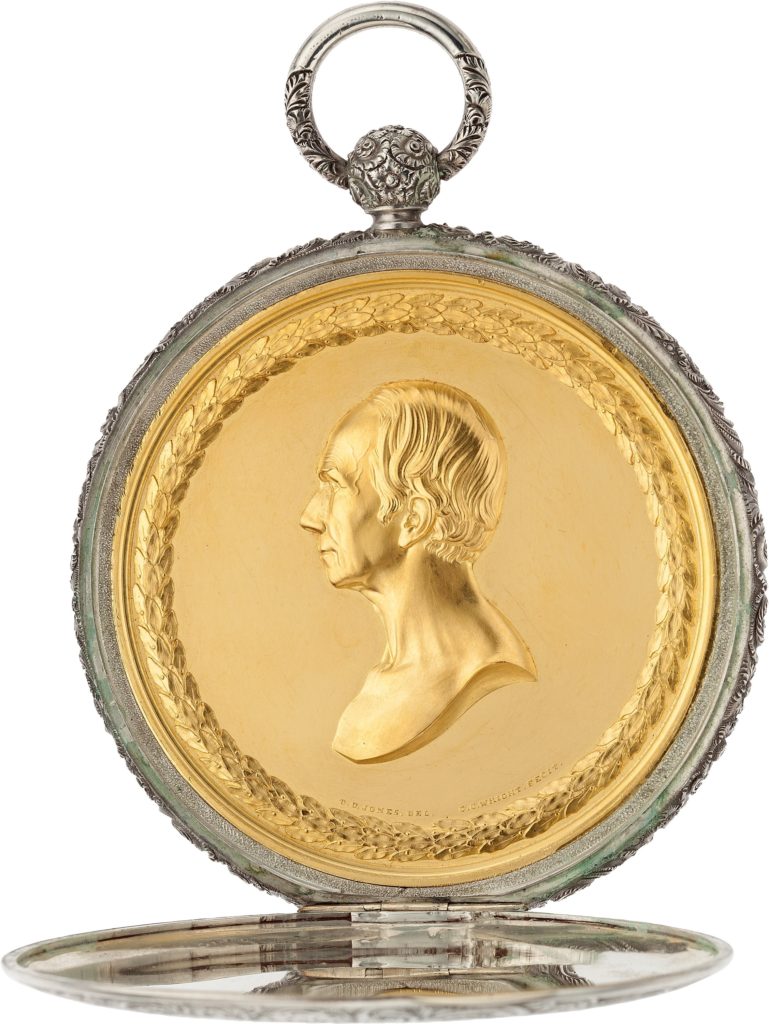
A U.S. Mint medal struck for presentation to Henry Clay in 1852 sold for $346,000 at a September 2016 auction.


By Jim O’Neal

The 1800 census reported 5.3 million people living in the United States – more than twice the number in the colonies at the beginning of the American Revolution. There were four cities with populations greater than 10,000 – Baltimore, Boston, Philadelphia and New York. Half of all Americans were under 16 years old.

The men and women who were born between 1776 and 1800 would not have had any contact with the colonial era. They would have none of the sensibilities of having been subjects of the King of England. They were the inheritors of the revolution and took seriously that they had inherited a remarkable revolution. They intended to demonstrate to a world of monarchs what democracy, what a democratic society could truly be.

Thomas Jefferson’s influence was the most pervasive in this generation and was constantly the subject of discussion. The statesman Henry Clay loomed as a hero as did DeWitt Clinton, because of his leadership in building the Erie Canal. Jefferson was important because he so clearly articulated a different conception of what a republic could be and he had a unique vision of how human beings could participate in their society. He is a point of reference throughout this period.

Once the Revolutionary War was won, there was an outpouring of people into the western parts of New York, Virginia, Georgia and Pennsylvania. By 1820-1830, people primarily farmed since 85 percent lived in rural areas.

Then came the shift to commerce, manufacturing and the professions – medical, teaching, preaching, legal. This required an infrastructure of teachers as literacy spread almost everywhere. Railroads, canals, steamboats and roads were all enablers of this new society, allowing it to flourish and grow.

The military was small, other than the swelling for the War of 1812, but troops quickly demobilized from 70,000 back down to 14,000. West Point was teaching civil engineering, with military people participating in economic life via the railroads and canals. Each veteran received 160 acres of land and they pushed further west.

In the North, almost everyone was educated, including free blacks. In the South, fewer were educated, but there were lots of academics for planters’ children. When the British writers Frances Trollope and Charles Dickens toured America, they found a society that was intoxicatingly free and saw things they loved: the outpouring of human energy, voluntary association at will, the zeal of forming a society to determine America’s character.

To paraphrase Benjamin Franklin when asked what the founders had created: “A republic, madam, if you can keep it.”

The first generation of Americans did a pretty fair job and we are still reaping the benefits of their efforts. I hope this generation does as well in keeping the flame of liberty burning brightly. America is still a unique place on Earth.

Jim O'NielIntelligent Collector blogger JIM O’NEAL is an avid collector and history buff. He is President and CEO of Frito-Lay International [retired] and earlier served as Chairman and CEO of PepsiCo Restaurants International [KFC Pizza Hut and Taco Bell].

Battle of Stalingrad Defined Struggle Between Fascism and Bolshevism

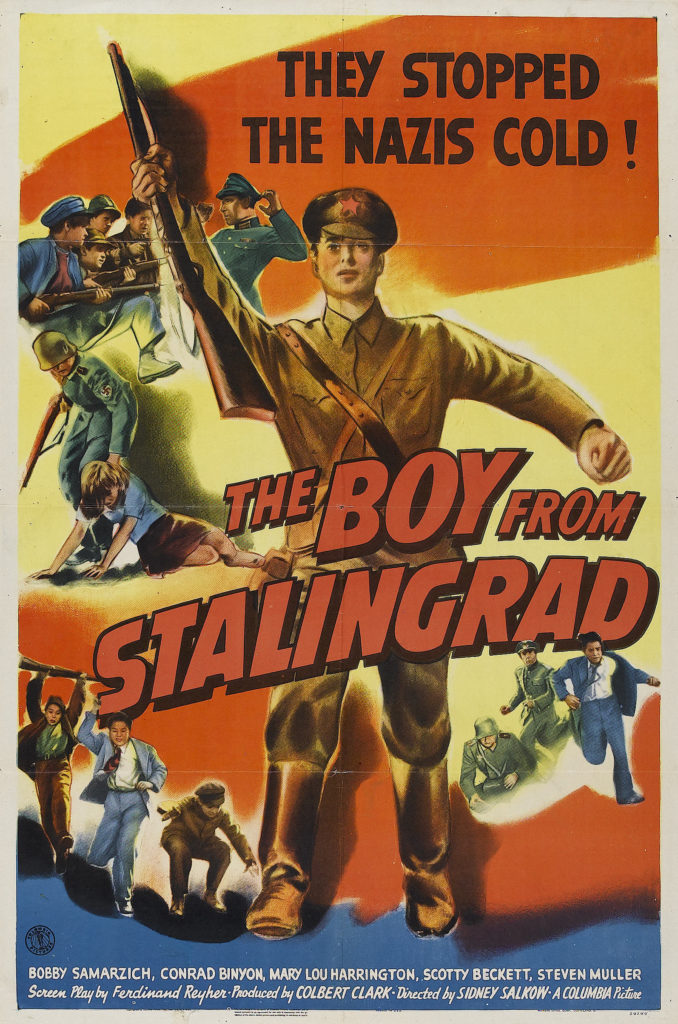
the-boy-from-stalingrad-columbia-1943
The Boy from Stalingrad was a 1943 Columbia Pictures movie about Russian youths fighting the German assault on Stalingrad. The propaganda film was officially approved by the U.S. government, which briefly worked to maintain its wartime alliance with the Soviets.

By Jim O’Neal

While the siege of Leningrad was under way, a ferocious battle was beginning over Stalingrad, a sprawling provincial city of half a million, outlining the banks of the Volga River.

If there was one battle that defined the struggle between fascism and Bolshevism – the essential confrontation that Adolf Hitler had long dreamed of winning – it was this one. From a strategic standpoint, it would allow Germany to cut off the supply route to the Russian Army up north and open the way for the Wehrmacht to control the oil fields surrounding the Caucasus Mountains.

But Hitler wanted Stalingrad for a personal reason, too. Joseph Stalin had named this city in 1925 to honor the battle he had led there during the Russian Civil War. Its capture would be a symbolic victory and erode Russia’s willpower. However, Stalingrad would prove important to both sides and together they would expend the lives of 1 million people in just five months.

The drama began with the Germans attacking the city’s northern edge and discovering Russian civilians, many of them women in dresses, firing the guns. It was a harbinger of the legendary Russian resistance. That night, an enormous roar deafened Stalingrad, the sound of 600 German planes descending at once. They dropped bombs carrying incendiary devices and when they ignited, the city was so bright from flames that soldiers 40 miles away claimed they could read a newspaper. In all, 40,000 civilians died that night and the worst was yet to come.

Since the city was home to several prized armament plants, tanks rolled off the assembly line directly into battle. Yet it was hand-to-hand combat that came to dominate the fighting – building by building, block by block, rooftop to rooftop – until giant piles of rubble remained. Snipers worked from every garret, booby traps appeared at every turn, and hand grenades came flying from every angle. The insanity of the fighting was obvious even to impotent commanders, but the two leaders in Moscow and occupied Ukraine insisted their armies fight on.

Ignoring the pleas of his advisors, Hitler failed to protect his flanks and fresh Russian troops encircled the city, trapping the entire German army inside. Now they were the ones under siege, starving and freezing while they waited for the promised reinforcements that never came.

By January 1943, the battle was over and 80,000 German troops were marched off to Soviet camps, where all but a handful would eventually die. Things would only go downhill from here as the German people lost faith and the Allies started their offense directly against the Fatherland.

Jim O'NielIntelligent Collector blogger JIM O’NEAL is an avid collector and history buff. He is President and CEO of Frito-Lay International [retired] and earlier served as Chairman and CEO of PepsiCo Restaurants International [KFC Pizza Hut and Taco Bell].

Siege of Leningrad was Devastating for Russian People

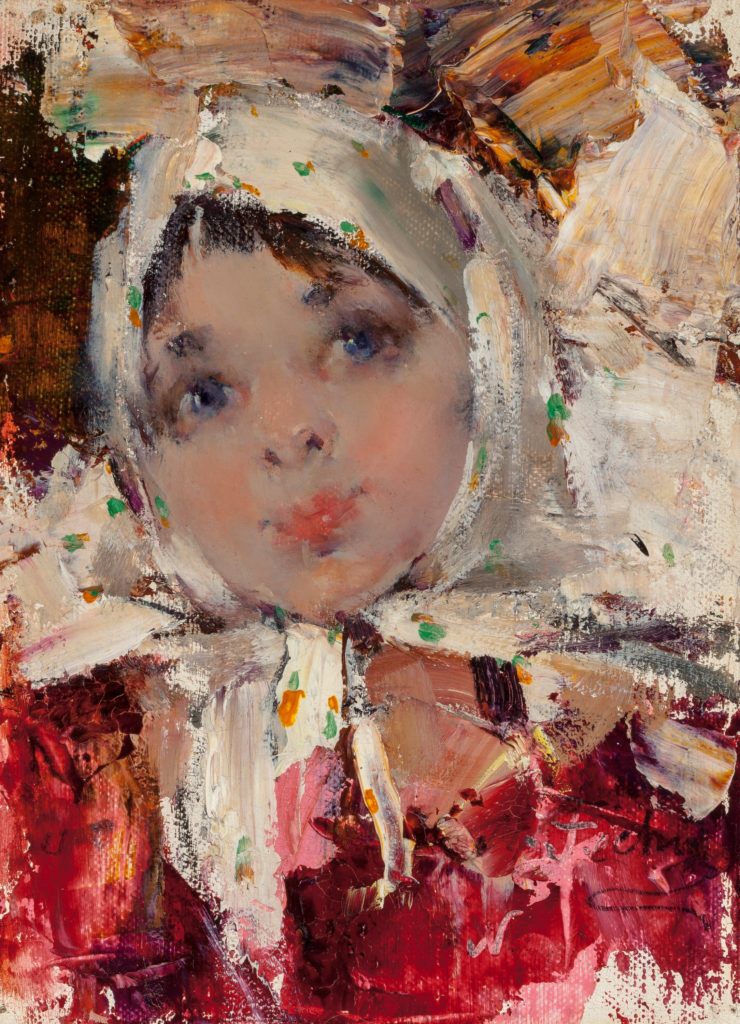
nicolai-fechin-russian-girl
Nicolai Fechin’s Russian Girl, an oil on canvas laid on masonite, sold for $109,375 at a November 2015 Heritage auction.

By Jim O’Neal

The suffering brought on by World War II was enormous, but when the total picture is considered there is little doubt that the greatest pain was borne by the people who lived within the grasp of the century’s most vicious tyrants: Joseph Stalin and Adolf Hitler.

While Americans were busy managing the factories that made them the “Arsenal of Democracy” and focusing on Japan, the people of Central Europe and Western Russia were in a life-and-death struggle fought on the very streets of their cities.

Throughout the winter of 1941-42 and onward for 900 days, the people of Leningrad were suffering dramatically. Concerned that his German army might encounter enormous losses if they launched an all-out assault, Hitler ordered a blockade of the city. By starving its 3 million people, he hoped to break Russian morale and force them to surrender.

Since Leningrad was closed on the west by the Baltic Sea, to the east by the 80-mile-wide Lake Ladoga and to the north by the Finnish army, the Wehrmacht only needed to seal the southern flank to isolate the city. But even as the Germans closed ranks around them and started bombing warehouses and supply routes, the hearty citizens showed they would not be so easily defeated. Volunteers built thousands of air-raid shelters and pillboxes, and cut down trees to block the Germans’ path.

By late December 1941, Leningrad was down to two days’ supply of flour and people had to make bread from cellulose, sawdust and floor sweepings of flour. Animal feed became human food, weeds were boiled to create soup and the dead were hidden so families could continue receiving their daily rations. 53,000 perished that month, and by February another 200,000 would join them.

Somehow the city hung on.

Then came a breakthrough. Scientists discovered Lake Ladoga had frozen so deeply that it could support truck traffic. They cautiously started sending convoys across the “Road of Life.” In the first seven days, 40 trucks sunk to the bottom, but dozens of others made it and returned with precious food. Then women and children were evacuated and the city limped along in darkness and silence since there was no oil to light the lamps and even the birds were dead. In fact, every creature – living or dead, including the human corpses in the gutters – had been picked over by the hungry hordes.

Leningrad Radio broadcast from the generator of a ship frozen in a river and aired the sound of a metronome between programs to let listeners know the city was not dead, yet. By the time Leningrad was liberated in January 1944, nearly 1 million people had died.

There were more civilians dead than in any city, in any war, in the history of mankind.

During this siege, Hitler became obsessed with conquering Stalingrad and that proved to be a fatal mistake that cost him the war. The little colonel from Bavaria proved to be a poor general.

Jim O'NielIntelligent Collector blogger JIM O’NEAL is an avid collector and history buff. He is President and CEO of Frito-Lay International [retired] and earlier served as Chairman and CEO of PepsiCo Restaurants International [KFC Pizza Hut and Taco Bell].

President Wilson’s Daughters Were Champions of Women’s Suffrage

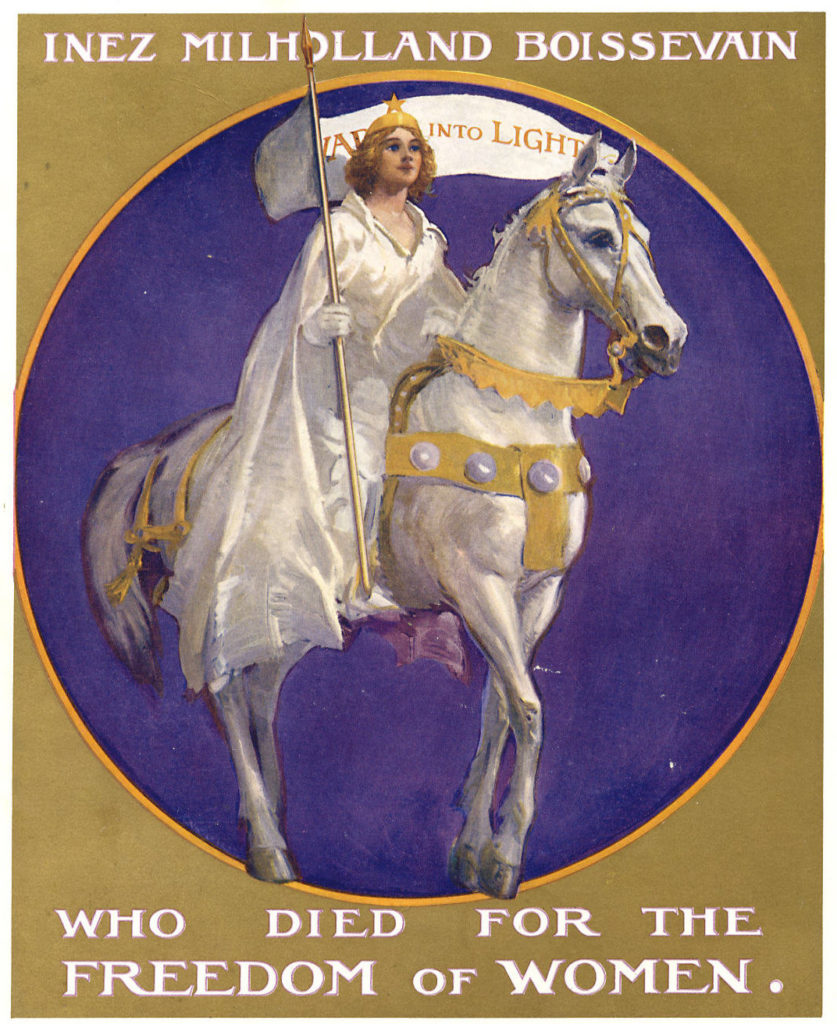
suffrage-poster-inez-milholland
A poster featuring Inez Milholland Boissevain was produced to commemorate her ride through Washington, D.C., and her fateful death in 1916. This example realized $402.50 at a June 2005 auction.

By Jim O’Neal

On March 3, 1913, the day before the presidential inauguration, the Thomas Woodrow Wilson family arrived in Washington, D.C. There was very scant attention paid to the arrival of the new president-elect since it coincided with an unusually high-profile demonstration.

About 8,000 women, led by Vassar-educated lawyer Inez Milholland Boissevain (astride a beautiful white horse), were marching in the capital’s streets to further the cause of women’s suffrage. There were marching bands, floats and pageantry galore along the route. The demonstration was intended to emphasize frustrations with the slow progress in Congress, despite the many years of effort to gain national rights.

Prior to 1912, only 1.3 million women in six states had equal voting rights with men and a mere three states had been added for a grand total of nine. However, the movement seemed to be gaining broader support, although eight more years would be needed before the 19th Amendment was approved.

On this particular day, the crowds were boisterous and opponents took delight in spitting on their banners and throwing lighted cigarettes and cigars at and on marchers. At times, the crowds got out of control and more than 100 people were trampled or bruised to the point they required hospital care.

The three Wilson daughters, Margaret, Jessie and Eleanor (nicknamed Nellie), were all ardent supporters of women’s suffrage and were constantly badgering their father to make it a priority even before he was elected. Jessie had even taken a bold stance while in college and ended up resigning from her sorority when her efforts were scorned.

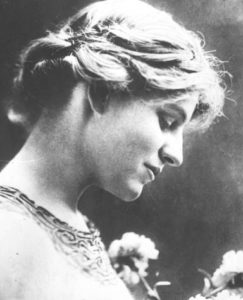
jessie-woodrow-wilson-sayre
Jessie Woodrow Wilson

Jessie Woodrow Wilson was born on Aug. 28, 1887, and educated far beyond most women of the day, similar to outgoing First Lady Helen Taft. She had studied at Goucher College and Princeton, where she was Phi Betta Kappa after her high academic accomplishments. After college, she worked at the Lighthouse Settlement House for women millworkers, where she observed firsthand the downtrodden women, and it transformed her into a passionate supporter of women’s suffrage and equal rights.

In 1915, Margaret acted as honorary hostess for the convention of the National American Women Suffrage Association (later known as the League of Women Voters) and Eleanor would speak at the convention along with members of her father’s cabinet. 1915 was also the first year a U.S. president would attend the World Series. The Philadelphia Phillies won the first game, but it would take 65 years before the next one (1980). The Red Sox easily won the series 4-1. Their pitching staff was so good that a young pitching star named George “Babe” Ruth was limited to a single appearance as a pinch-hitter (he grounded out).

Jessie Wilson continued her political career and even introduced Al Smith as the first Catholic presidential nominee in 1928 (he lost to Herbert Hoover), and was obviously poised for big things when Franklin D. Roosevelt won the first of his four elections and dominated the Democratic Party.

Alas, on Jan. 15, 1933, Jessie Woodrow Wilson Sayre died at age 45 following complications from abdominal surgery. I suspect she would have been heavily involved in politics had she lived a longer life.

Jim O'NielIntelligent Collector blogger JIM O’NEAL is an avid collector and history buff. He is President and CEO of Frito-Lay International [retired] and earlier served as Chairman and CEO of PepsiCo Restaurants International [KFC Pizza Hut and Taco Bell].

Historian Understood How Frontier Shaped Character of Americans

frederick-jackson-turner-the-significance-of-the-frontier
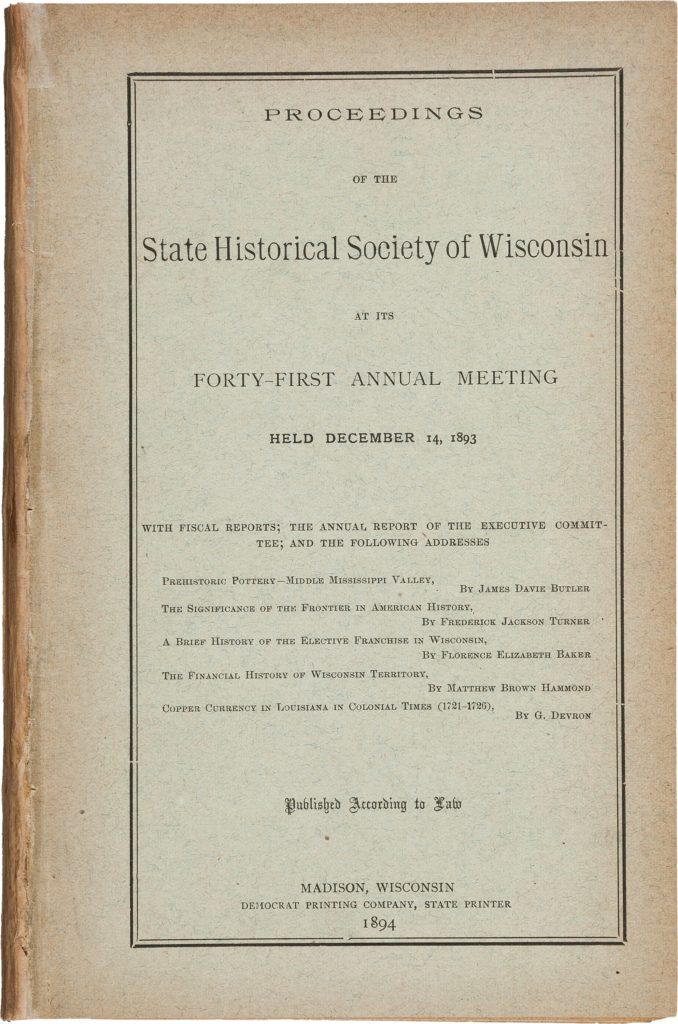
Frederick Jackson Turner’s address “The Significance of the Frontier in American History” had its first print appearance in “Proceedings of the State Historical Society of Wisconsin at its Forty-First Annual Meeting.” A copy of the 1894 book, original spine perished, realized $3,250 at a September 2016 auction.

By Jim O’Neal

turner-copy
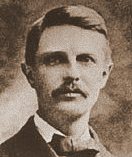
Turner

Frederick Jackson Turner was a young, undistinguished American historian at the University of Wisconsin in 1893, yet he was invited to join a list of speakers at a conference of the American Historical Association being held at the World’s Columbian Exposition in Chicago. The odd location had prompted many of the nation’s best scholars to decline to attend, primarily because of concern they would be reading their latest papers over the din of an outsized carnival.

Of course, the entire decade of the 1890s was viewed as unusual by many, with a pervasive sense that something important was ending. It was also a tumultuous time. The Massacre at Wounded Knee (1890) had resulted in the deaths of several hundred Lakota Sioux – the last major armed conflict between American Indians and the U.S. Army. Ellis Island had opened as a U.S. immigration depot and over the next 20 years, 13 million immigrants would enter via the island. Wyoming became the 44th state to enter the union, the first with women’s suffrage. There was the Panic of 1893, when the government almost ran out of gold and had to get help from J.P. Morgan.

More importantly, the census of 1890 reported that the frontier had vanished! Many Americans had a powerful sense that they were running up against the end of their history and were on the verge of something new, but unknown.

For Turner, this was a totally unexpected opportunity – a career breakthrough – to expound on his pet theology, developed over years of study. An avid fisherman, hiker and proponent of the American West, he had concluded that American life and character owed a debt to the pursuit of the frontier. And now, the 1890 census declared it closed – all of the land explored, claimed and settled. The young Turner saw a nation facing a crisis of the unknown.

However, Turner’s thesis was elementary and appealing. He declared that American pioneers were not simply transplanted Europeans, but a people unto themselves and shaped by their environment, as opposed to their history or institutions. The frontier hardship made them self-reliant and individualist. Free land made them generous and optimistic. Frontier challenges required them to adapt, innovate and even cooperate democratically.

Frederick Jackson Turner on the significance of the frontier in American history:

“American democracy was born of no theorist’s dream. It came out of the American forest and gained new strength each time it touched a new frontier.

“The wilderness masters the colonist. … It takes from him the railroad car and puts him in a birch canoe. It strips off the garments of civilization and arrays him in the hunting shirt and moccasin. … Little by little he transforms the wilderness, but the outcome is not the old Europe. … Here is a new product that is American.”

Teddy Roosevelt and I both wholeheartedly agree with Turner’s thesis about the role of the frontier in shaping the character of Americans.

Jim O'NielIntelligent Collector blogger JIM O’NEAL is an avid collector and history buff. He is President and CEO of Frito-Lay International [retired] and earlier served as Chairman and CEO of PepsiCo Restaurants International [KFC Pizza Hut and Taco Bell].

Chicago World’s Fair was More Than a Ferris Wheel, Buffalo Bill and Commemorative Coins

1893-worlds-columbian-exposition-admittance-ticket
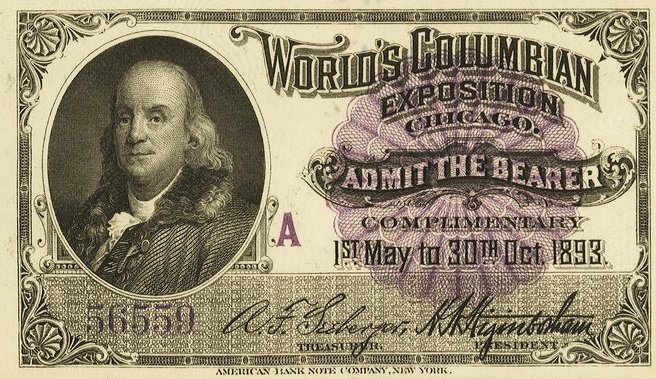
A group of 18 World’s Columbian Exposition tickets, including this scarce Benjamin Franklin piece, realized $1,265 at a January 2011 Heritage auction.

By Jim O’Neal

In 2003, bestselling author Erik Larson wrote The Devil in The White City, a non-fiction narrative of a serial killer who murdered up to 200 people using the 1893 World’s Columbian Exposition (the Chicago World’s Fair) as a backdrop. Leonardo DiCaprio reportedly has the film rights and Martin Scorsese will direct.

There was a lot of competition for the fair between Chicago and New York City. NYC bolstered their bid when Cornelius Vanderbilt, William Waldorf Astor and J.P. Morgan pledged $15 million in support. But Chicago prevailed by matching the $15 million from Marshall Field, Philip Armour and Gustavus Swift (of meatpacking fame, who sold “Everything but the squeal,” a highly effective slogan highlighting how they used all animal parts to make other products and eliminate pollution).

However, what sealed the deal was a pledge by Lyman Gage, president of the powerful First National Bank of Chicago, to provide millions of dollars to help finance exhibitors. Gage would later serve as the 42nd Secretary of the Treasury under both William McKinley and Teddy Roosevelt.

Chicago was eager to host the event and demonstrate how much progress they had made after the disastrous Fire of 1871 involving Mrs. O’Leary’s cow. They painted so many stucco buildings white and had new electric lights illuminating so many streets that they earned the nickname “The White City.” They successfully conveyed the image of fresh, sanitary and new. There was also a major initiative called City Beautiful that included cleaning up trash in streets, empty lots and alleys.

A major mistake they made was denying William Frederick Cody (“Buffalo Bill”) permission to perform his famous Wild West Show. Ever the shrewd businessman, he simply set up shop outside the fairgrounds and siphoned off customers. However, the fair’s shaky finances received a big boost when Pittsburgh-based bridge maker George Ferris debuted his new invention – a 264-foot-tall Ferris Wheel. It could accommodate 2,160 people at a time and with a fare of 50 cents (double the cost of a fair ticket), it bailed out the fair and wiped out a big budget deficit.

The federal government also pitched in with the introduction of the country’s first postcards, a new commemorative stamp, and two new commemorative coins. One was a quarter featuring Queen Isabella – who financed the voyage of Columbus. It was the first time a U.S. coin honored a woman. The other was the 50-cent commemorative Columbus coin, both still popular with coin collectors today. The entire fair was an homage to Columbus, celebrating his voyage 400 years earlier, despite being one year late.

On July 12, American historian Frederick Jackson Turner skipped the Wild West Show and the docking of a replica from Norway of a Viking ship – just two of the hundreds of events that attracted up to 28 million spectators to the fair. Turner opted to put some finishing touches on his thesis before delivery at the Art Institute of Chicago that night.

More on his historic speech in my next post.

Jim O'NielIntelligent Collector blogger JIM O’NEAL is an avid collector and history buff. He is President and CEO of Frito-Lay International [retired] and earlier served as Chairman and CEO of PepsiCo Restaurants International [KFC Pizza Hut and Taco Bell].