After Disaster of 1812, President Madison and First Lady Recovered Their Legacies

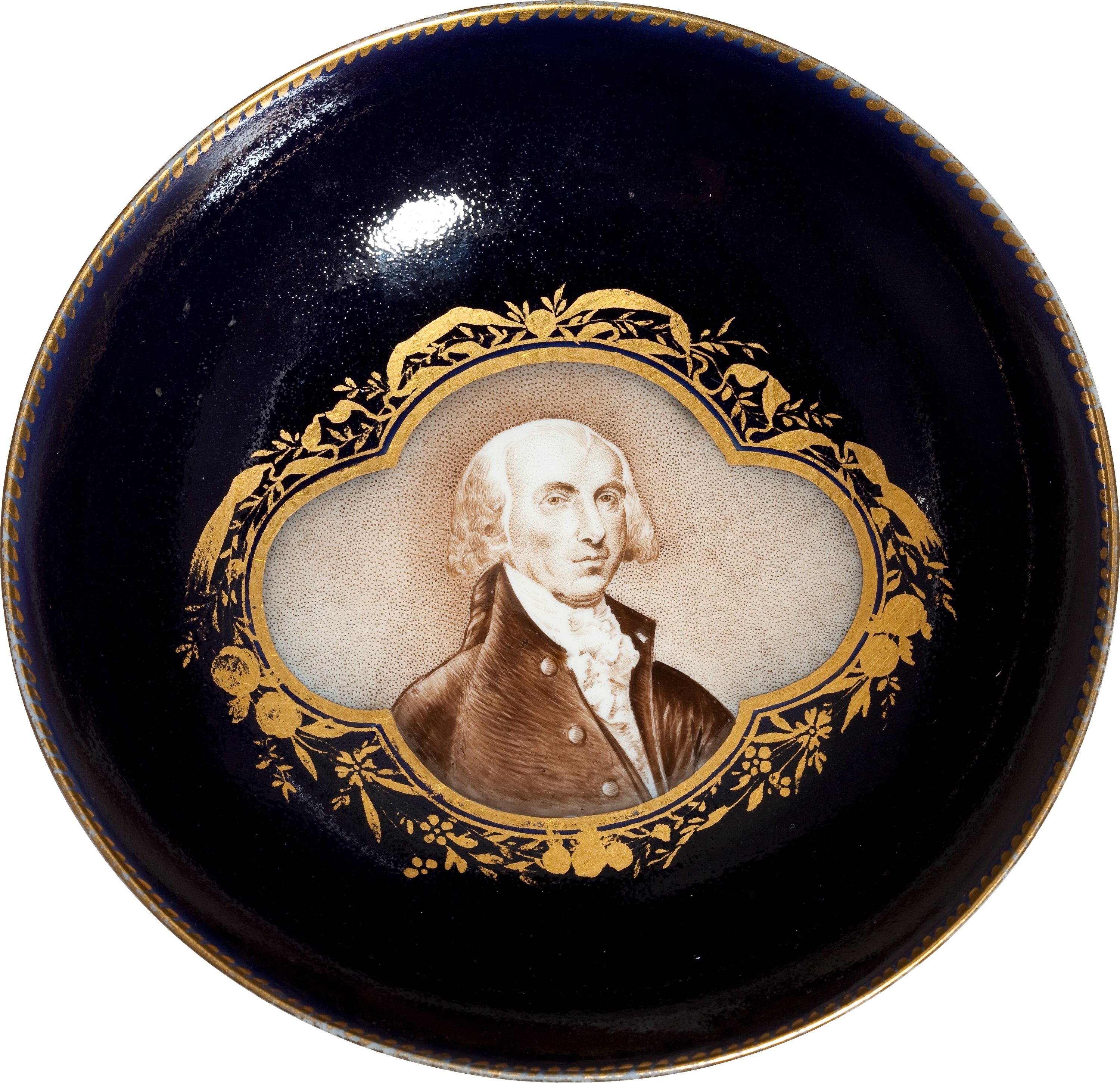
james-madison-circa-1812-meissen-saucer
This James Madison Meissen saucer, circa 1812, sold for $13,145 at a November 2011 Heritage auction. Little material culture was produced during Madison’s presidency.

By Jim O’Neal

Three days after the fall of Washington in the War of 1812, James and Dolley Madison returned in the wake of the British departure. They visited the ruins of the capital and White House, which sunk them into melancholy.

That the president of the United States had been burned out of his house mortified America, and the symbolic impact transcended the sad reality. Madison was accused of cowardice because he had fled, and the press claimed Dolley could have saved more than she did … a lot more. A Washington newspaper even stated angrily that a positive result of burning the White House was that it ended her queenly entertaining.

These difficult times came to a sudden, happy ending with the news of the Battle of New Orleans and the return of the American delegation from Ghent with a peace treaty. The president jubilantly proclaimed the war was at an end. While the glory of the hour went to General Andrew Jackson, both the president and first lady recovered their legacies and good names.

The White House had been burned to a shell, but it was the neatest of fires as the refuse had fallen precisely within the stone walls and no debris was scattered on the grounds. Crews dug for salvage in the deep bed of ashes and rubble that filled the basement, however not much was worth saving. The refuse was simply thrown into a nearby gully and attention turned to rebuilding (an important distinction).

A bill for rebuilding was rammed through Congress in two days to make sure Washington, D.C., remained the capital – and not some more-centralized area beyond the mountains, like Cincinnati, as some had proposed. Any “Phoenix” would rise from these ashes. As President Madison carefully pointed out, “the bill specifically stated ‘rebuilding’ not relocation.”

Considering that it took nearly 10 years to build the first WH, reconstruction moved along quickly, but not fast enough for the man who occupied the unfinished White House in October 1817.

A tall, blush-faced Virginian who looked all of his 58 years, James Monroe was the last luminary of the Revolutionary generation to occupy the presidency. Like George Washington, he had fought in the War of Independence and had been wounded at Trenton. Years later, he served as a delegate in negotiations with France for the Louisiana Purchase. During the Madison administration, he had been Secretary of State and Secretary of War, always with an eye on the presidency.

When he finally reached his goal, he knew exactly what he wanted to accomplish. Refusing to act as head of his party, he instead insisted that the war had united all Americans into one and that political parties were no longer needed! He proceeded to usher in “The Era of Good Feelings.”

We miss him.
Jim O'NielIntelligent Collector blogger JIM O’NEAL is an avid collector and history buff. He is President and CEO of Frito-Lay International [retired] and earlier served as Chairman and CEO of PepsiCo Restaurants International [KFC Pizza Hut and Taco Bell].
Teddy Roosevelt Brought Vim, Vigor and Vitality to the White House

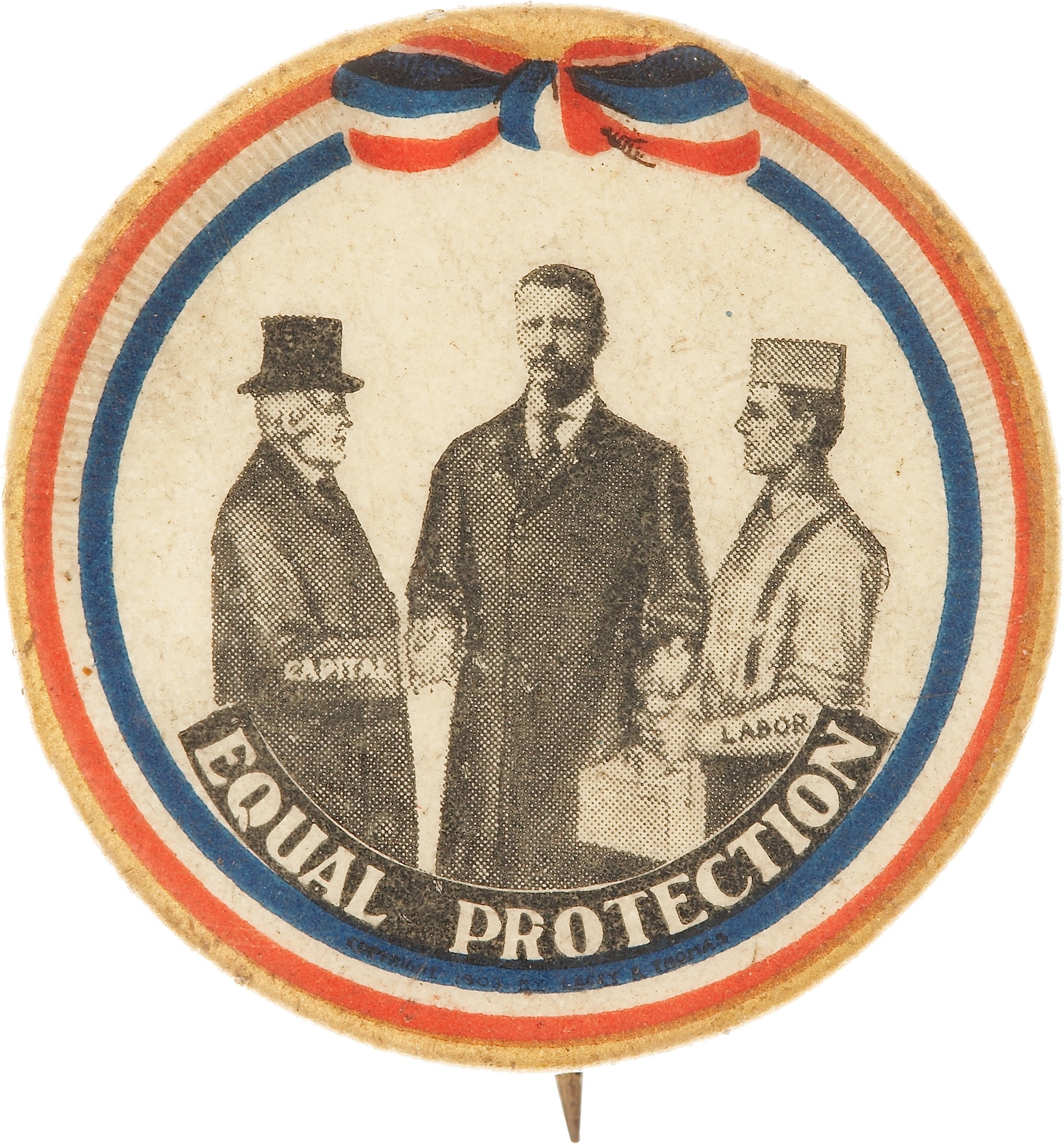
theodore-roosevelt-exceptionally-rare-type-of-equality-button
Teddy Roosevelt political pins often illustrated the theme of “equality,” inspired by Booker T. Washington’s visit to the White House. This rare variant sold for nearly $9,000 at a November 2009 Heritage auction.

By Jim O’Neal

During his first year as president, Teddy Roosevelt left the White House as he had found it. But when the Roosevelts and their six lively children moved in, it had become obvious that there was insufficient room for both governmental offices and a family home. This prompted a complete remodeling, the first in nearly 100 years. Leading architects designed a new West Wing of executive offices that was joined to the main building by a colonnade. The second floor of the main building had the offices replaced by private bedrooms, sitting rooms and playrooms for the presidential family.

Like John Tyler, Millard Fillmore, Andrew Johnson and Grover Cleveland, Roosevelt had not been sent by the voters to live in the White House, having moved in only after the death of an elected president. He knew he lacked the public and party power to support the new international presidency that President William McKinley developed, yet he was destined to dramatize it to the world.

Born in 1858, he is (surprisingly) the only president born in New York City. The first new president of the 20th century and the youngest man to ever hold the office, he brought a vim, vigor and vitality to the White House that swept away any lingering cobwebs of the 19th century. Later, elected in his own right, Roosevelt began to act with an even bolder style than before. In his annual message to Congress in December 1904, he announced an expansion of the concept of the Monroe Doctrine that became known as the Roosevelt Corollary.

The Russo-Japanese War had been going on for more than a year when TR began efforts in 1905 as a mediator. He succeeded in getting the two nations to sign a peace pact in Portsmouth, N.H. On Dec. 10, 1906, he became the first American to win the Nobel Peace Prize.

One of the first controversial issues had occurred during his first year in office on October 16 when he held a “family supper.” Among the invited guests was the great educator Booker T. Washington, whose biography, Up From Slavery, was being widely read. The press reaction was instantaneous; this dinner guest was the hottest news since the McKinley assassination.

“Probably The First Negro Ever Entertained at the White House” screamed the headlines of the Atlanta newspaper, and many others were also harsh in their criticism. No African-American received a special invitation to the WH for many years.

It seems exquisitely delicious and ironic that a black family has had their “family meals” in the same White House over the past 2,800-plus nights and, importantly, anyone of any race is only there by their special invitation!

Things do change.

Jim O'NielIntelligent Collector blogger JIM O’NEAL is an avid collector and history buff. He is President and CEO of Frito-Lay International [retired] and earlier served as Chairman and CEO of PepsiCo Restaurants International [KFC Pizza Hut and Taco Bell].
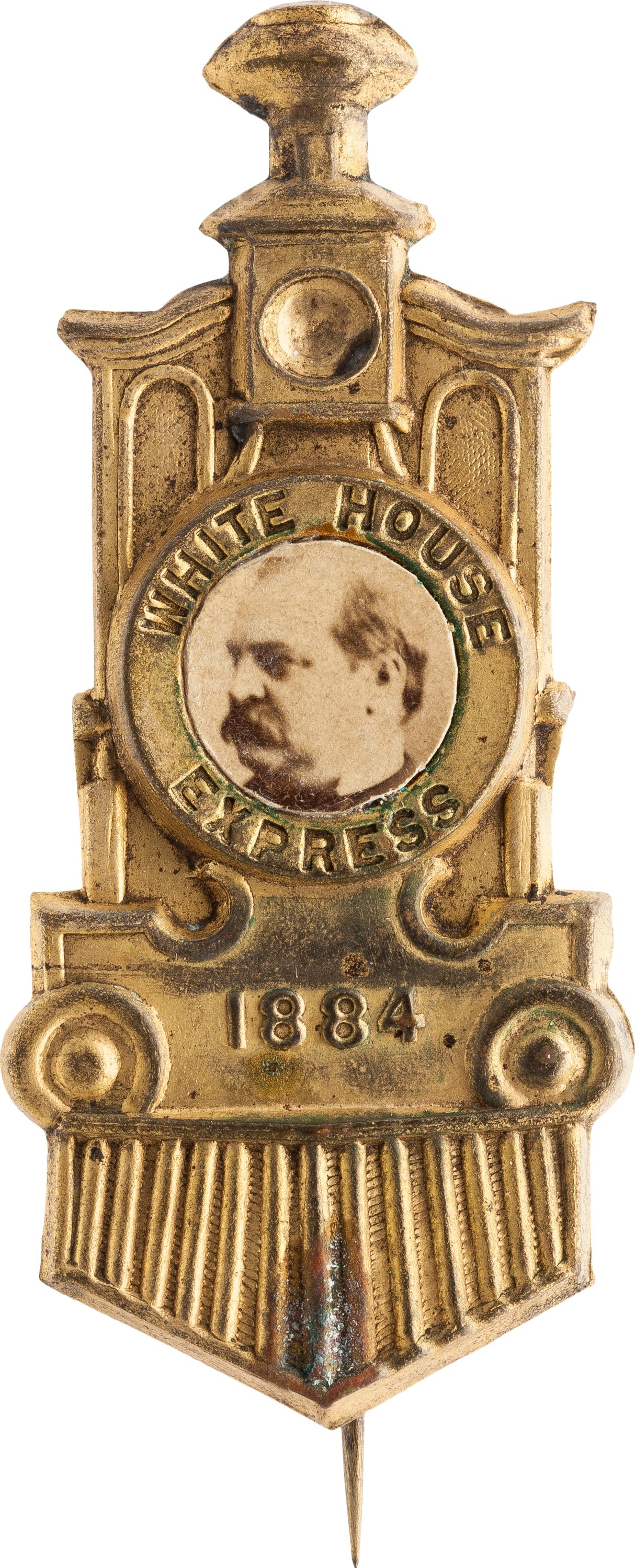
Cleveland Won, Lost then Won Again in a White House Milestone

grover-cleveland-single-portrait-photo-pin
This Grover Cleveland single-portrait photo pin from his first presidential campaign in 1884 sold for $3,500 at a June 2015 Heritage auction.

By Jim O’Neal

When Grover Cleveland delivered his inaugural address on March 4, 1885, he stood confidently with one hand behind his back and without notes. The 47-year-old bachelor was the first Democrat to become president after the Civil War. He had developed a sterling reputation for honesty and repudiated cronyism.

He had been elected mayor of Buffalo in 1881 as a reform candidate dedicated to cleaning up corruption in city government. He soon became known as the “Veto Mayor,” turning down one crooked measure after another that had been approved by his corrupt city council. This served as a springboard to becoming governor of New York, surprising even the leaders of the Tammany Hall machine by rejecting proposals that clearly only benefited insiders of the gang. Cleveland read every word of every law passed by the legislature – even if it meant working all night – before signing or vetoing.

So there was a large crowd listening intently to his inauguration remarks where he again promised to reform the federal government by applying sound business principles and revamping the pernicious civil-service system that protected too many incompetent public employees. He committed to a merit system that recognized good performance rather than party subservience.

Nevertheless, Democrats from all parts of the country descended on Washington expecting to be rewarded with more than 100,000 jobs Cleveland had the power to fill. But, he refused to remove Republicans from office just because of party affiliation. Newspapers of both parties attacked Cleveland and he responded with one of the most sweeping denunciations ever made against the press.

“I don’t think there was ever a time when newspapers lying was so general and mean as the present, and there was never a country under the sun where it flourished as it does in this. The falsehoods daily spread before the people in our newspapers, while they are proofs of the ingenuity of those engaged in newspaper work, are insults to the American love of decency and fair play of which we boast …”

Throughout his first administration, Cleveland ruthlessly continued to veto special-interest legislation, running up a total of more than 300 vetoes. For perspective, the grand total for the 21 presidents who preceded him was only 132. Naturally, he managed to make a lot of political enemies, and they extracted their vengeance when he ran for a second term. Despite the antagonism of special-interest groups, the Democratic National Convention in June 1888 nominated him by acclamation.

Then the Republicans and Tammany Hall went to work and got behind Benjamin Harrison. Cleveland received 100,000 more votes, but the New York electoral votes gave Harrison the nod. When Cleveland’s term ended on March 4, 1889, he claimed, “There was no happier man in the United States.” However, his young wife Frances (Cleveland had married her while in office) told the White House staff to take good care of the furnishings because they would be back in exactly four years.

She was prescient. They returned right on schedule as promised – making Cleveland the first president to serve two non-consecutive terms.

Jim O'NielIntelligent Collector blogger JIM O’NEAL is an avid collector and history buff. He is President and CEO of Frito-Lay International [retired] and earlier served as Chairman and CEO of PepsiCo Restaurants International [KFC Pizza Hut and Taco Bell].
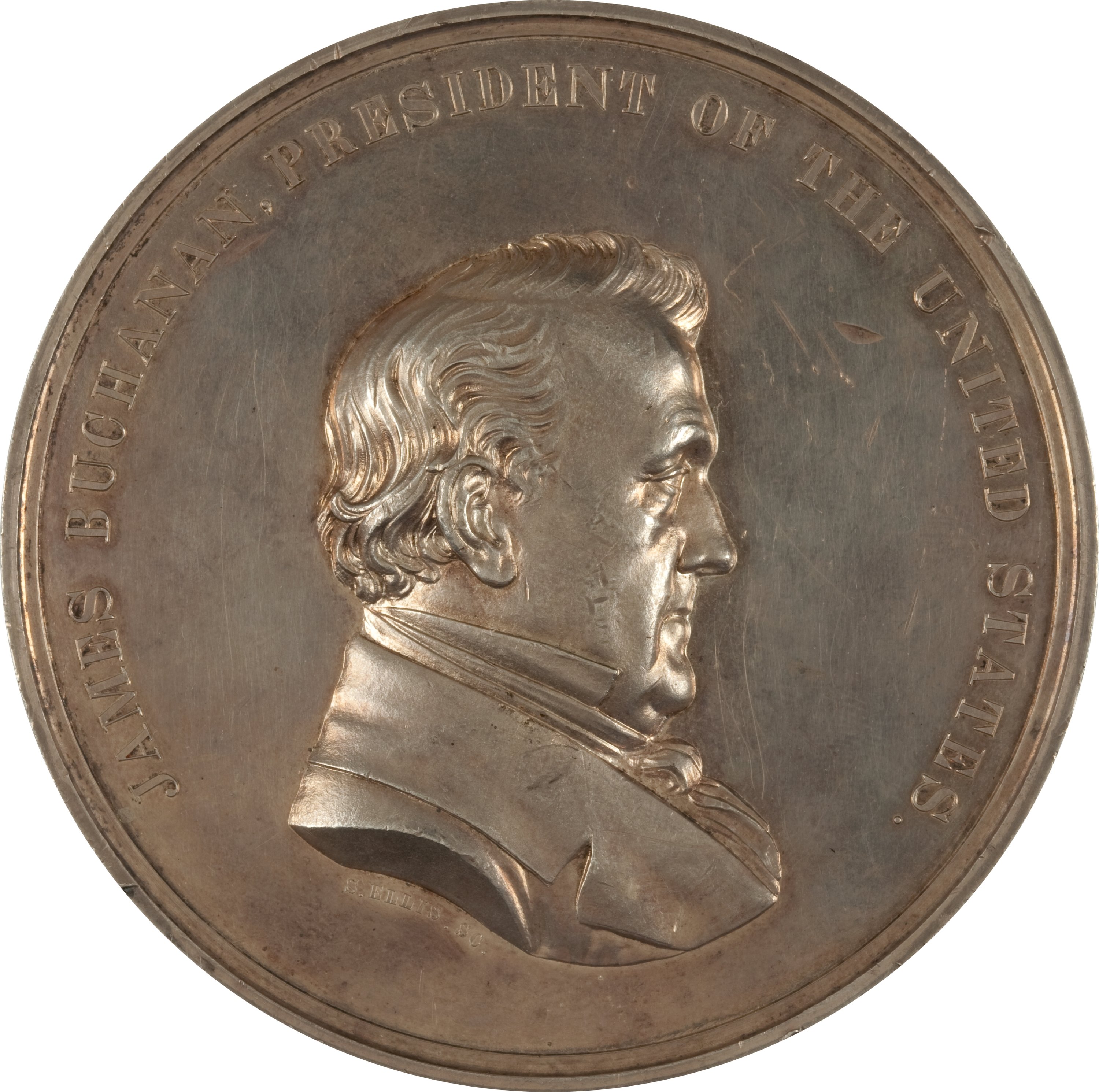
Buchanan Left Looming Disaster of Seceding South to Lincoln

james-buchanan-silver-japanese-embassy-medal
Commemorative medals were gifted to a Japanese delegation when they visited the United States and President Buchanan in 1860. This Silver Japanese Embassy Medal sold for $10,157.50 at a November 2011 Heritage auction.

By Jim O’Neal

Abraham Lincoln began making appearances in the East in early 1860 and emerged a national figure. That summer, Republicans obtained a semblance of unity behind a ticket of Lincoln for president and Hannibal Hamlin for vice president. Their victory in November was no surprise at the White House or anywhere else.

Outgoing President James Buchanan had four months left to serve and knew he was sitting on a powder keg. He started to distance himself from Southern advisers and, as disunion started to loom as a reality, Cabinet meetings became an ordeal. Buchanan had a sharp legal mind and a keen perception of people; he did not share the president-elect’s optimism that threats of secession were mere tactical bluffs by vocal Southerners.

However, the bachelor Buchanan and his niece Harriet Lane, who served as official White House hostess, entertained as usual during the winter of 1860-61. Each week, there were two major dinners for about 40 guests in the State Dining Room. Smaller “family” dinners honored Cabinet members. They were all gala affairs with masses of flowers and superb French cuisine with separate wines for each course. In prison, five years later, ex-Senator Jefferson Davis wrote that the Buchanan White House had come closest of any to being a “Royal Court.”

On election day, a committee from South Carolina had called at the White House asking Buchanan what his plans were for the unfinished forts in Charleston harbor. In his desk was a puzzling document marked “Scott’s views” from General Winfield Scott. It presumed that a Lincoln victory would result in a takeover of the small forts and, importantly, every military installation in every state that seceded!

Without answering the Southern committee, Buchanan convened his Cabinet to debate what should be done. Finally, Buchanan simply dismissed the issue and the Cabinet heads left. They were passed on the stairs by a messenger bringing the news that the commander of Fort Moultrie-Charleston had been confronted by a mob while trying to transfer supplies.

This was the first overt action taken against the Union by the hotheaded South Carolinians.

On Dec. 20, 1860, Buchanan wrote to a friend: “I have never enjoyed better health or a more tranquil spirit. … All our troubles have not cost me an hour’s sleep or a single meal. … I am leaving the rest to Providence.”

That same evening, word was received: South Carolina had seceded.

During the last days of December, members of the Cabinet began to resign. Treasury Secretary Howell Cobb was the first to go. Most of the others followed after much shouting, table-pounding and book-slamming rage. Gray-faced and unsmiling, the president sat puffing on his cigar as his Cabinet fell apart.

On New Year’s Day 1861, South Carolina began seizing federal property around Charleston harbor and then it spread. Six more states seceded and grabbed forts, offices, custom houses, mints and arsenals. But Buchanan stubbornly maintained the status quo, waiting for his successor to shoulder the burden.

Just after 11 a.m. on Feb. 14, a messenger raced up the stairs to the Cabinet room and slipped a card into the president’s hand. Buchanan read it and stood up smiling. “Gentlemen,” he announced, “Uncle Abe is in the Red Room below. Let us not keep him waiting.”

There was a new sheriff in town.

Jim O'NielIntelligent Collector blogger JIM O’NEAL is an avid collector and history buff. He is President and CEO of Frito-Lay International [retired] and earlier served as Chairman and CEO of PepsiCo Restaurants International [KFC Pizza Hut and Taco Bell].
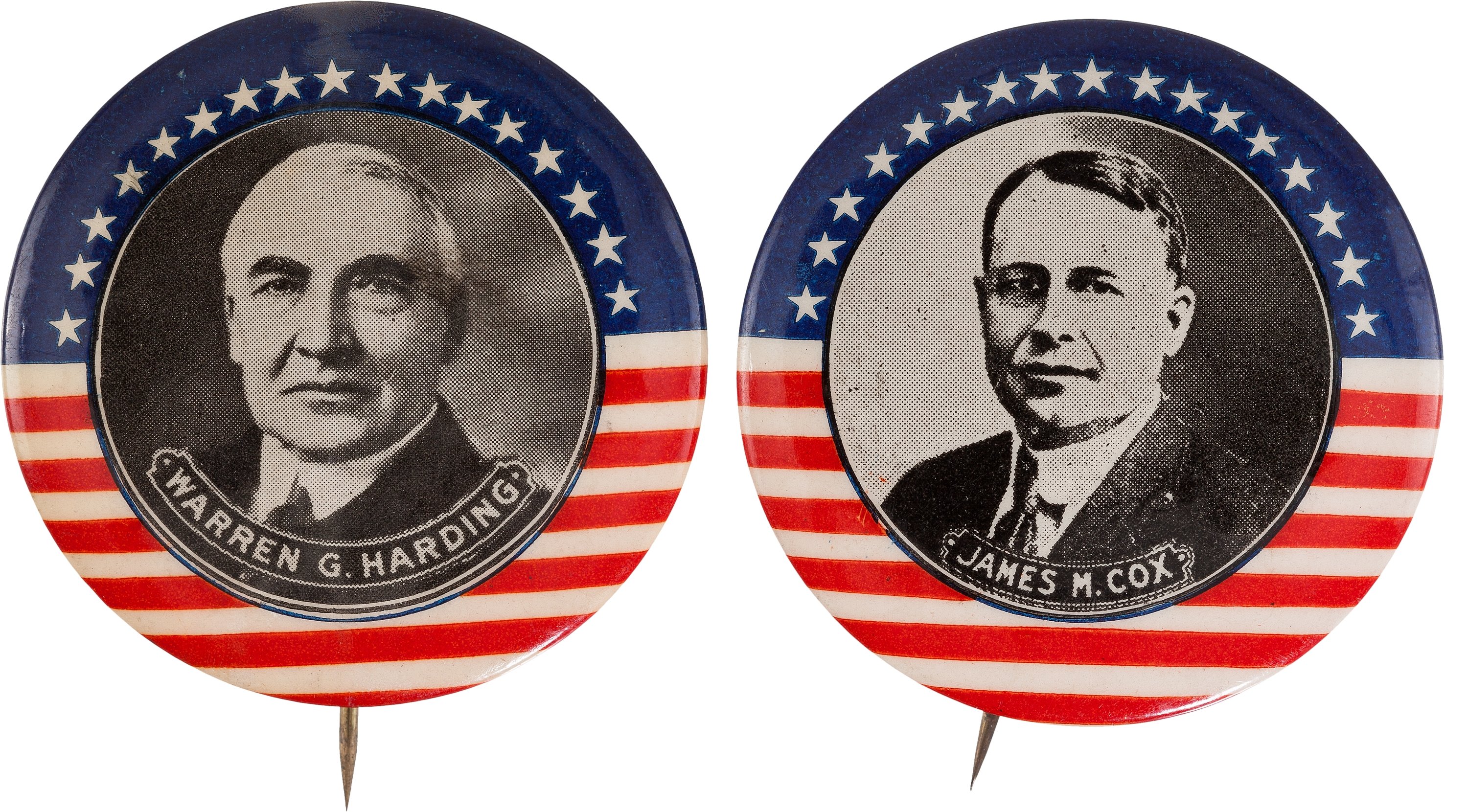
President Harding Entered Office on a High Note … then Came the Scandals

warren-g-harding-and-james-m-cox-absolutely-stunning-matched-pair-of-large-1920-rarities
This matched pair of Warren G. Harding and James M. Cox 1920 campaign buttons sold for $6,875 at a November 2013 Heritage auction.

By Jim O’Neal

The Republicans returned to power in the election of 1920 with the victory of Warren G. Harding of Ohio. Isolated even further in the confines of the White House, Woodrow Wilson and family waited out the year and the first two months of 1921. The outgoing president’s condition had stopped improving. He was feeble and mostly occupied with his books and papers, though he now lacked the mental acuity that was key to his greatness.

Late in his term, Wilson was awarded the Nobel Peace Prize and his spirits rose. Remorse yielded to genuine gratification, an indulgence he rarely allowed himself even in the good times. However, Edith Wilson found little diversion from this almost oppressive situation. The world was slowly passing the Wilsons by without a second glance.

The 1920 campaign had been dull and lackluster, with Harding remaining in Ohio on his front porch, greeting thousands of well-wishers and speaking to them informally. The Democrats had tried to make the League of Nations a campaign issue, but Harding’s position was too obscure since he was really only interested in preserving the Senate’s constitutional rights regarding foreign treaties. When voters got to the polls, politicians discovered the campaigns had not mattered. The people were so tired of government restrictions and hardships imposed by the war that they sought a complete change in administrations and a return to “America First.”

Harding and running mate Calvin Coolidge drubbed James Cox and Franklin D. Roosevelt in both the popular vote and electoral college (404 to 127).

Between the election and inauguration, Harding chose his cabinet, carefully balancing the membership with close political friends and leaders in the Republican Party. It was a blue-chip group that included Charles Evans Hughes (former governor of New York, Supreme Court Justice and presidential candidate in 1916) as Secretary of State; Secretary of Commerce Herbert Hoover; and millionaire Pittsburg banker Andrew Mellon as Secretary of Treasury. But there were also a few friends, like Albert Fall (Interior) and Harry Daugherty (Attorney General), who would become infamous for corruption.

Friends of Harding and Daugherty flocked from Ohio to Washington for jobs. Headquarters for the “Ohio Gang” was the “Little Green House” on K Street, where government favors and appointments were bought and sold. Evidence of Harding’s knowledge is sketchy; his friends just assumed he would agree in order to please them. But late in 1922, Harding learned of irregularities at the Veterans’ Bureau, where huge amounts of surplus materials were sold far below market value and in turn new supplies were purchased far above fair value, all without competitive bidding.

The head of the agency, Charles R. Forbes – one of Harding’s poker buddies – was allowed to resign, but the attorney for the Bureau committed suicide. This was soon followed by the death of another close Harding friend, Jess Smith, who shared an apartment with Daugherty and was a member of the “Ohio Gang.” Sensing trouble, Harding had asked him to leave Washington, however Smith shot himself to death. But the biggest surprise surfaced after Harding died of a heart attack in San Francisco in August 1923.

Secretary of Interior Fall had allowed two large federal oil fields in Elk Hills, Calif., and Teapot Dome, Wyo., to be opened to private oil companies. He was convicted of bribery ($400,000) and sent to prison. Attorney General Daugherty was brought to trial in 1924 for conspiracy in much of this, but refused to testify to avoid “incriminating the dead president” and it hung the jury.

How much Harding actually knew about the corruption among his friends will never be known. After his death, Mrs. Harding burned all his papers and correspondence, diligently recovering and destroying even personal letters in the possession of other people. Since she had also refused to have Harding’s corpse autopsied in San Francisco, there have always been rumors he was actually poisoned.

Ah, Washington, D.C. – such a small city, but with so many untold mysteries.

Jim O'NielIntelligent Collector blogger JIM O’NEAL is an avid collector and history buff. He is President and CEO of Frito-Lay International [retired] and earlier served as Chairman and CEO of PepsiCo Restaurants International [KFC Pizza Hut and Taco Bell].
Looking Back, President Ford’s Pardon was the Right Thing to Do

lf
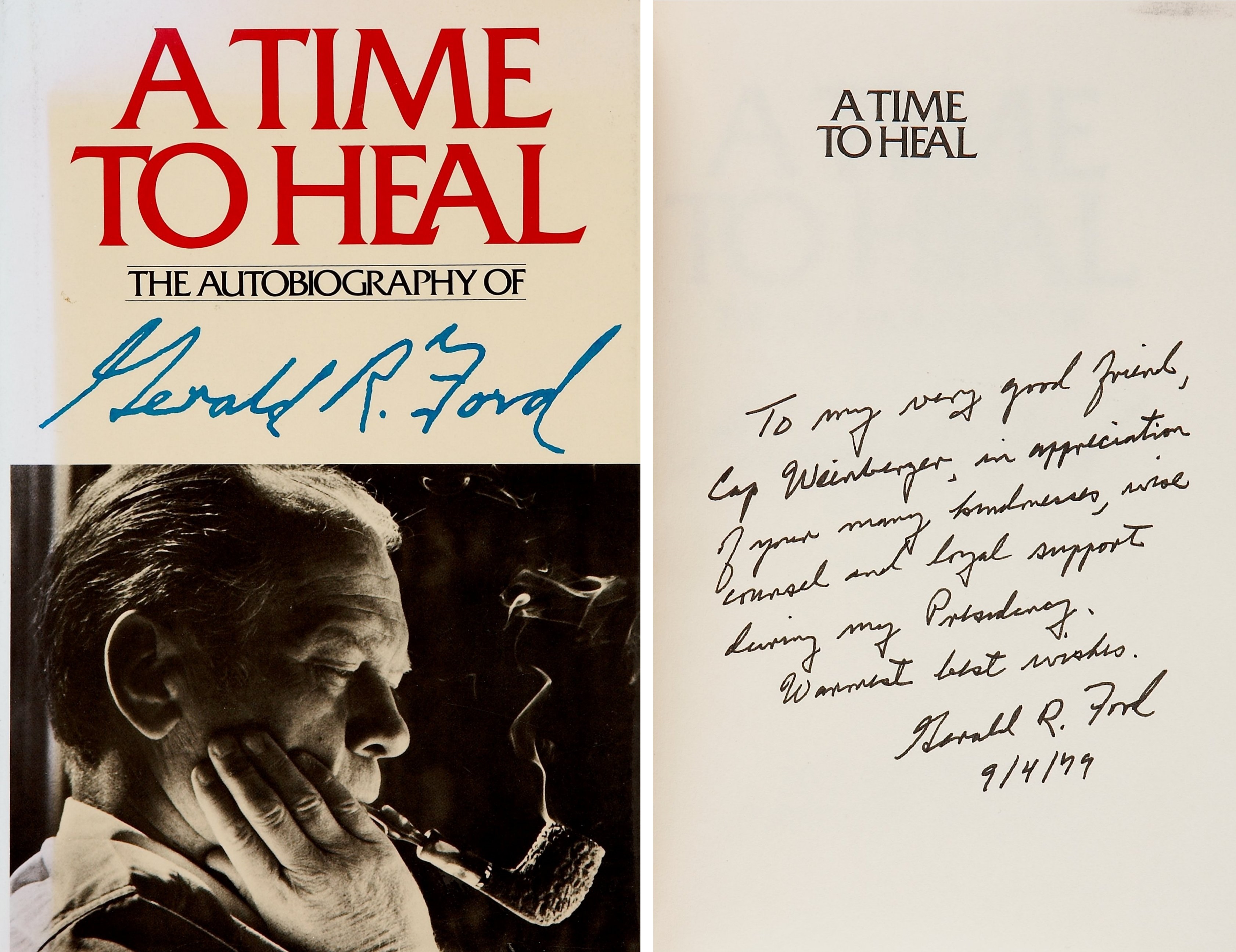
A first edition copy of Gerald Ford’s 1979 autobiography A Time to Heal, inscribed to Caspar Weinberger, sold for nearly $900 at a February 2010 auction.

By Jim O’Neal

When Vice President Spiro Agnew resigned in 1973, accepting conviction for income tax violations in lieu of facing trial on bribery charges, the door to the White House swung open to Gerald R. Ford.

The Constitution’s 25th Amendment, adopted in 1967, came into use for the first time. It provided that a vacancy in the office of vice president could be filled by nomination by the president and confirmation by both houses of Congress. President Richard Nixon, reeling from the twin blows of the Watergate scandals and the Agnew bribery charges, began a frantic scramble to fill the vacancy with someone acceptable to the public and whom Congress would quickly approve. He also needed someone he could trust as unquestionably loyal.

Ford’s nomination was announced by Nixon on Oct. 12, 1973, barely two weeks before the House Judiciary Committee began formal proceedings to determine whether Nixon should be impeached. Nobody in Congress could dig up a smidgen of impropriety regarding Ford and the House approved his nomination 387-35 on Dec. 6 after a Senate vote of 92-3 on Nov. 27. During the hearings, Ford was asked if he would pardon Nixon should he resign and GRF replied, “I do not think the public would stand for it.”

A short but tumultuous eight months later, Ford became the 38th president of the United States in a moment of high drama at noon on Aug. 9, 1974. Shortly before, the nation had been glued to the TV as Nixon became the first president in history to resign. He departed the White House after a tearful farewell to his staff. A few minutes later, the cameras turned to Ford, the first vice president to ascend to the presidency by appointment.

Ford was sworn in on the same East Room platform where Nixon had stood moments earlier, although the White House was not the usual place for a swearing-in ceremony. Rutherford B. Hayes was sworn in before the fireplace in the Red Room, FDR’s fourth term began on the South Portico, and Harry S. Truman had taken the oath in the Cabinet Room. By then, the Nixons were on Air Force One headed for San Clemente. When the clock struck noon, the designation of the plane was dropped.

Within a week of Ford’s swearing in, documents were being hauled out by Nixon staffers in “suitcases and boxes” every day. Working late on Aug. 16, Benton Becker, Ford’s legal counsel, observed a number of military trucks lined up on West Executive Avenue, between the West Wing and the Executive Office Building. Upon inquiry, he was told they were there “to load material that was to be airlifted from Andrews Air Force Base to San Clemente.” Sensing something was wrong, Becker got the Secret Service to intervene and the trucks were unloaded and the material returned to the EOB. Soon, an armed guard was stationed there to protect them.

Perhaps one last ploy by Tricky Dick, à la the 17 minutes of recording “accidentally” erased. We will never know. But we do know that the Ford-Nixon pardon that caused such a national outrage has finally been judged the prudent thing to do … finally.

Jim O'NielIntelligent Collector blogger JIM O’NEAL is an avid collector and history buff. He is President and CEO of Frito-Lay International [retired] and earlier served as Chairman and CEO of PepsiCo Restaurants International [KFC Pizza Hut and Taco Bell].
Ineffective Leadership is the Last Thing Needed in the White House

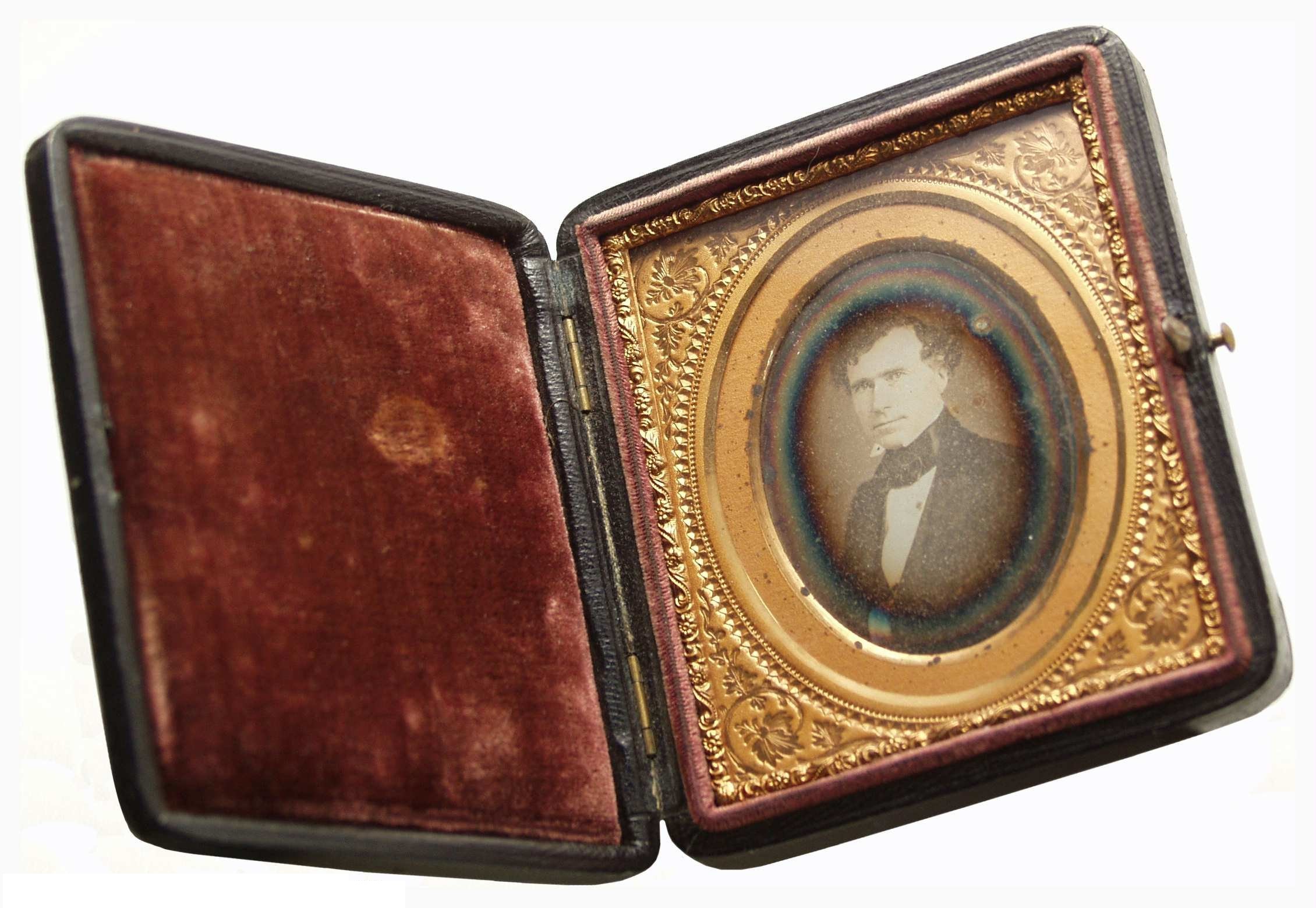
franklin-pierce-daguerreotype
This Franklin Pierce daguerreotype, housed in a leatherette case, sold for $15,525 at a November 2003 auction.

By Jim O’Neal

Millard Fillmore was the last Whig president and also the last to represent the kind of American nationalism that had appeared during the War of 1812. His successor, Franklin Pierce (1853-57), was a northern Democrat who supported the extension of slavery and a nominee selected by his party in order to win both northern and southern votes. He had praised the Compromise of 1850 and promised to prevent slavery from becoming a national issue.

He was swept into office with the greatest electoral landslide since James Monroe.

A politician’s politician, the curly-headed Pierce never lost an election. At his inaugural ceremony, he stood away from the lectern and spoke extemporaneously; it was more of a sermon than an inaugural address. He challenged the nation with the promise of a bright, prosperous future and his listeners cheered as though they had been delivered at last.

He was also a master of knowing how to get along with all people – evidenced by the fact he is the only president in history who served a complete term without making a single change in his Cabinet. But he totally misjudged the temper of the time, since he regarded the abolitionists as a lunatic fringe that should be ignored. And when he signed the Kansas-Nebraska Act and the repeal of the 1820 Missouri Compromise, he unwittingly let loose a storm that made slavery a greater national issue than ever before.

Unable to accomplish much due to a deeply divided Congress, President Pierce still desperately wanted to be nominated for a second term. But just before the Democratic Convention began in Cincinnati on June 2, 1856, reports of bloodshed in Kansas alarmed the country. Armed battles raged between anti- and pro-slavery factions, firing up public anger.

The telegraph wires clicked constantly, with Pierce anxiously reading each dispatch. In the oval room, he read newspapers until his eyes grew too tired and then had his wife read them to him. He followed every detail of the convention, considerably more confident than he should have been. At the convention, Pierce’s supporters abandoned him in favor of Stephen A. Douglas, but the strategy failed and James Buchanan took the prize home to Pennsylvania.

Buchanan was the last of the weak, compromising northern Democratic presidents, more sympathetic to slave owners than to northern abolitionists. When he tried to push through Kansas as a slave state, he infuriated the North and shattered the Southern Democratic Party. As Southern states seceded from the Union, one by one, in the last months of his administration, Buchanan stood by helplessly, unable to take resolute action.

This string of three weak, ineffective men – Fillmore, Pierce and Buchanan – clearly demonstrate the unequivocal effects of poor leadership, as the catastrophic violence of a civil war nearly destroyed our young nation.

Jim O'NielIntelligent Collector blogger JIM O’NEAL is an avid collector and history buff. He is President and CEO of Frito-Lay International [retired] and earlier served as Chairman and CEO of PepsiCo Restaurants International [KFC Pizza Hut and Taco Bell].
Jefferson Stretched Constitution to its Limit

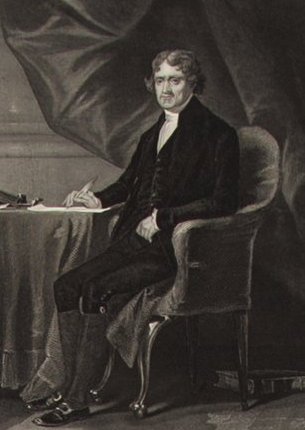
thomas-jefferson
Thomas Jefferson proved to the world the strength of the American republic and its democratic system.

By Jim O’Neal

Thomas Jefferson was 57 years old when he was sworn in as president on March 4, 1801, in a simple ceremony in Washington, D.C. He was the first president to take office in the new capital, then a city of 6,000, but without representation in Congress. In 1961, the 23rd Amendment to the Constitution granted the district one non-voting, at-large delegate to the House of Representatives and three electoral votes in presidential elections, but no representation in the U.S. Senate. In 1973, they were granted limited self-government, which includes a mayor and a city council with 13 elected members.

Since the passage of the amendment, the district’s three electoral votes have been cast for the Democratic Party’s presidential and vice presidential candidates in every election. They are bound by law to never have more electoral votes than a state (in this case Wyoming, which has three).

Denounced as a radical and atheist by his political opponents, Jefferson became the first leader of an opposition political party to wrest control of the national government from the party in power. Despite grim prophecies by the outgoing Federalists that the Constitution would be overthrown, he proved to the world the strength of the American republic and its democratic system. Jefferson believed the United States should remain an agrarian country of small farms and a national government that offered little interference in the lives of its citizens. He warned of the evils of large cities – with disease, poverty and centralized power that fostered corruption.

However, as president, in his own words, he “stretched the Constitution till it cracked” by using presidential powers to double the size of the country, presumably to give people room to spread out and avoid dense urbanization (the Louisiana Purchase), and discharge major political appointees of his predecessor. Chief Justice John Marshall restrained him from applying the same principle to federal judges.

After suffering through the embarrassment of the Aaron Burr-Alexander Hamilton affair, he chose the elderly George Clinton for vice president in his second term, with the obvious intent to ensure a VP that was too old to succeed him. He then orchestrated the election of his old Virginia friend and Secretary of State James Madison to become the fourth president.

Refusing all pleas for a third term, he more than welcomed his pending retirement, writing “Never did a prisoner released from his chains feel such relief I shall in shaking off the shackles of power … I thank God for the opportunity of retiring from them without censure and carrying with me the most consoling proofs of public approbation.”

For his epitaph, he asked for “not a word more” about his time as vice president or president. After 17 years in retirement, his wish was granted and his cherished University of Virginia (which he founded) and the Declaration of Independence seem fitting memorials for this remarkably versatile man to which we all owe an eternal debt of gratitude.

Jim O'NielIntelligent Collector blogger JIM O’NEAL is an avid collector and history buff. He is President and CEO of Frito-Lay International [retired] and earlier served as Chairman and CEO of PepsiCo Restaurants International [KFC Pizza Hut and Taco Bell].
President Garfield’s Successor Had No Public Service, Military Experience


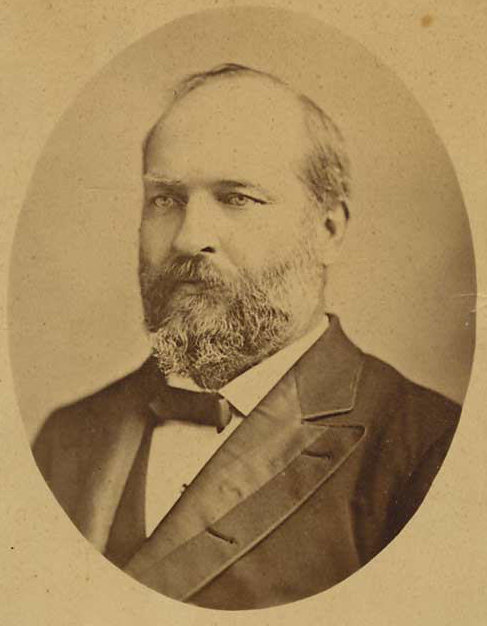
j-garfield
James Abram Garfield was born into abject poverty but rose to the highest office in the land.

By Jim O’Neal

James A. Garfield was the second president to be assassinated, serving only 200 days as chief executive. For 80 of those days, he lay near death with a bullet lodged in his spinal area. He finally died after a bevy of doctors probed for the bullet with their germ-laden hands and instruments (the X-ray was 14 years in the future). He succumbed to the massive infection they unwittingly created.

The last president elected who was born in a log cabin, Garfield was a self-made man in the tradition of Horatio Alger (who was then at the height of his popularity). He worked as a canal boat boy at 17, became a college president at 26, and was the youngest general in the Union Army at age 30. After 17 years in the House and Senate, he became the leader of the Republican Party and was one of the finest orators of that era.

His predecessor, President Rutherford B. Hayes, wrote: “The truth is no man ever started so low that accomplished so much in all our history … not Franklin or Lincoln … He is the ideal candidate because he is the ideal self-made man.”

After being sworn in on the Capitol steps on March 4, 1881, the 49-year-old Garfield’s first act was to turn and kiss his aged mother … the first time a president’s mom was present at an inauguration.

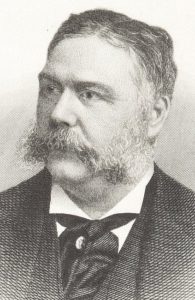
chester-alan-arthur
Arthur

Chester Alan Arthur, on the other hand, had never been elected to public office before becoming Garfield’s vice president, and he also had no leadership experience from the military. This was a first in American politics, where the word “politician” had become synonymous with “corrupt.” He was known as “The Gentleman Boss” of the Republican Party in New York City, always behind the scenes building the organization and managing the elections of others.

Only two years earlier, President Hayes had made Arthur the symbol of the evils of patronage by dismissing him as Collector of the Port of New York – an action hailed as a triumph of reform. No wonder that even a leading Republican exclaimed, “Chet Arthur President of the United States. Good God!”

The White House that greeted the new President Arthur was weathered by months of grief. Early autumn rains had soaked the crepe, sending streaks of black dye running down the chalky white walls. There had been no president in the White House for a month, and when Arthur examined the entire house, the disarray was depressing, with pipes for cooling still cluttering the floors upstairs, canvas pipes stretched up the stairwell, and others poking into the heating vents. Baggy summer slipcovers and naked, shuttered windows were everywhere. Some of the walls and ceilings were stripped and partially sanded, just as the painters had left them.

The wealthy new president took over the pathetic renovation that was under way and hired designer Louis Tiffany to renovate it completely in art nouveau style. He also added the elevator that had been ordered for Garfield. It was obviously not electric and required an elaborate hydraulic system that proved the source of endless problems.

Happily, all of the cleanup was completed – and the new president decided to clean up the civil service system, as well. He pledged to Congress to support any reasonable merit system they thought was practical and kept his word by signing into law the Pendleton Civil Service Reform Act on Jan. 16, 1883.

It is probably time to take another look at the current system, since a little sunlight is a good disinfectant.

Jim O'NielIntelligent Collector blogger JIM O’NEAL is an avid collector and history buff. He is President and CEO of Frito-Lay International [retired] and earlier served as Chairman and CEO of PepsiCo Restaurants International [KFC Pizza Hut and Taco Bell].
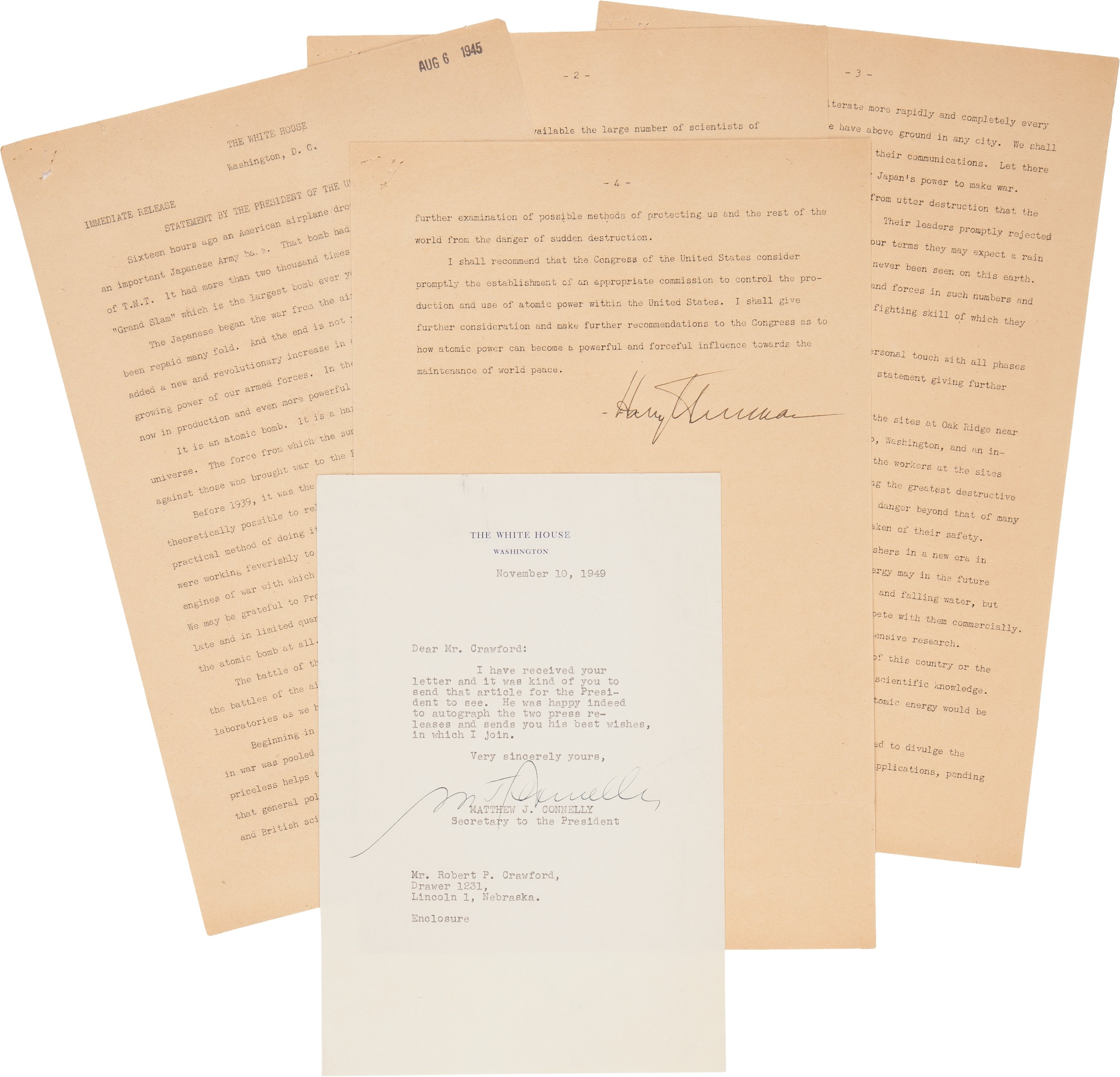
Concerns Over Harry Truman Vanished as New President Exerted His Leadership

1945-white-house-press-release
A 1945 White House press release signed by Harry S. Truman as president announcing the bombing of Hiroshima realized $77,675 at an October 2010 Heritage auction.

By Jim O’Neal

In February 1945, Franklin Delano Roosevelt traveled to Yalta in southeastern Russia to discuss plans for peace with Winston Churchill and Joseph Stalin. He reported to Congress that plans had been arranged for an organization meeting of the United Nations on April 25, 1945. He said, “There, we all hope, and confidently expect, to execute a definite charter of organization under which the peace of the world will be preserved and the forces of aggression permanently outlawed.”

Upon his return, he looked tired and older than his 63 years. Late in March, he went to Warm Springs, Ga., for an overdue rest. On April 12, 1945, he was working at his desk as an artist painted his portrait when he suddenly complained of “a terrible headache.” A few hours later, at 4:45 p.m., he died of a cerebral hemorrhage. The last words he had written were “The only limit to our realization of tomorrow will be our doubts of today. Let us move forward with strong and active faith.”

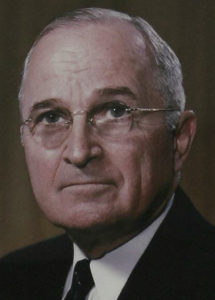
harry-s-truman
Truman

His successor, the first president to take office in the midst of a war, Harry S. Truman, said he felt “like the moon, the stars and all the planets had fallen on me.” The nation and world wondered if he was capable of taking Roosevelt’s place. His background and even his appearance added to the nervous uncertainty. He was the first president in 50 years without a college education. He spoke the language of a Missouri dirt farmer and World War I artilleryman – both of which he had been. Instead of talking like a statesman, he looked like a bank clerk or haberdasher – both of which he had been. And worst of all, everyone knew that for more than 20 years he had been a lieutenant of Tom Pendergast, one of the most corrupt political bosses in the country.

What most people didn’t know was that he was scrupulously honest, knew his own mind and was one of the most knowledgeable students of history ever to enter the White House. Importantly, he understood the powers of the president, and knew why some men had been strong chief executives and others had been weak leaders.

When he learned about the atomic bomb, there was no soul-searching or handwringing debates. He ordered it dropped on Japan because he was sure it would save American lives and quickly end World War II. It did not bother him in the least that years later, intellectuals would question whether one man should have made such an awesome decision alone. He knew in his heart that he was right … period.

Two of his well-known sayings capture the essence of Give’m Hell Harry Truman: The Buck Stops Here (a sign on his desk) and my favorite … If you can’t stand the heat, stay the hell out of the kitchen!

Leaders get paid to make tough decisions.

Jim O'NielIntelligent Collector blogger JIM O’NEAL is an avid collector and history buff. He is President and CEO of Frito-Lay International [retired] and earlier served as Chairman and CEO of PepsiCo Restaurants International [KFC Pizza Hut and Taco Bell].