
Trade Has Enriched Our World for Centuries

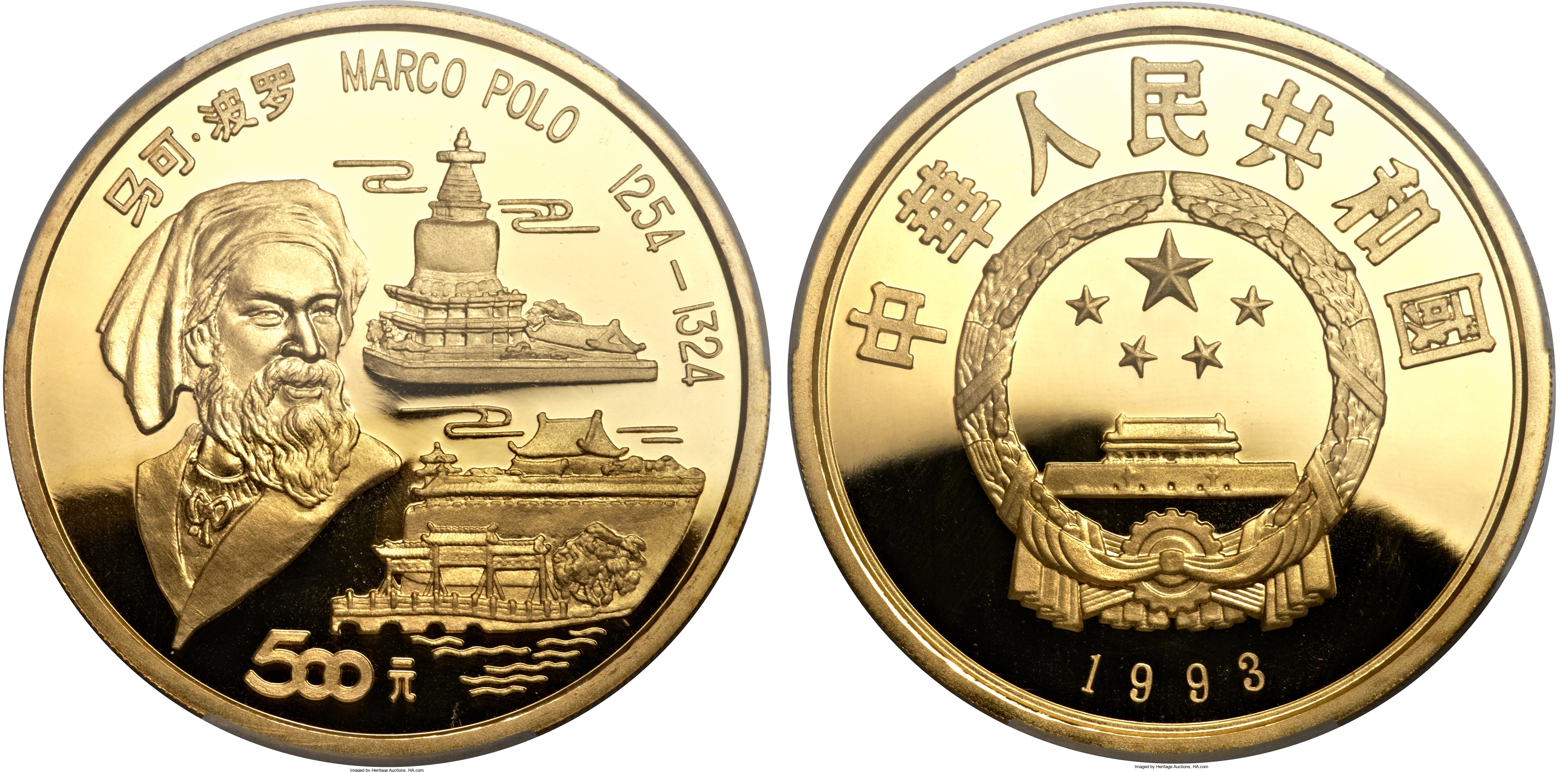
The People’s Republic of China in 1993 celebrated Marco Polo’s contributions with a commemorative 500 Yuán coin. This gold Proof sold for $52,875 at a January 2014 auction.

By Jim O’Neal

As campaign rhetoric on trade continues to be a hot topic, it may be time to review some history.

Venetian merchant Marco Polo’s arrival in 1275 at Shangdu, the capital of the Great Kublai Khan, marked the end of a four-year journey. He had traveled from Italy to the Mongol capital along the length of the Silk Road. This was an ancient network of routes that carried precious goods between China and Europe for centuries.

The Silk Road had first become a conduit for trade when the Chinese Han Dynasty pushed into Central Asia in the late 2nd century. From then on, goods like jade and silk were carried west, passed from caravan to caravan by a series of merchants who met caravans of furs, gold and horses traveling in the opposite direction. Chinese inventions like gunpowder, paper and magnetic compasses were also brought west on this route, arriving at Constantinople and the Black Sea ports.

By the 13th century, sections of the Silk Road had become less safe. However, following the Mongol conquest, the Great Kublai Khan stabilized it so a merchant could travel from Khanbalik (Beijing) to Baghdad safely. Italian city-states such as Pisa, Genoa and Venice also pioneered maritime trade across the eastern Mediterranean, which enabled merchants to connect directly with sea routes that linked West Asia and Egypt to China via the Indian Ocean.

The profits for merchants taking advantage of Pax Mongolica (peace in Eurasia) could be enormous. The costs to ship might amount to 3,500 Florins, but the cargo sold could yield seven times that. By 1326, Genoese traders were a common sight in the principal Chinese port of Zaitun.

The Silk Road flourished for another century, but the 1335 collapse of the Mongols in Persia and overthrow of the Yuan in 1368 blocked European traders at the western end by the growth of the Muslim Ottoman Empire. But the taste of profits was too intense and that’s when Portuguese sailors took over, eager to trade directly with China via the sea alternative to the defunct Silk Road.

Marco Polo (1254-1324) stayed in China for 17 years, traveling extensively in the Khan’s service, before returning to Venice, where he lived the rest of his life. Few people from this era are familiar to modern society, but last night I saw a TV commercial with a group of kids in a swimming pool playing with Marco.

It is sometimes humorous to listen to various people debating trade, but they are victims of the WTO/NAFTA/TPP/currency manipulation myths and generally unaware of the rich history of world trade and just how sophisticated our trading partners really are.
Jim O'NielIntelligent Collector blogger JIM O’NEAL is an avid collector and history buff. He is President and CEO of Frito-Lay International [retired] and earlier served as Chairman and CEO of PepsiCo Restaurants International [KFC Pizza Hut and Taco Bell].
Hitler Used Unrest to Decimate Rivals, Set Europe On Path to War

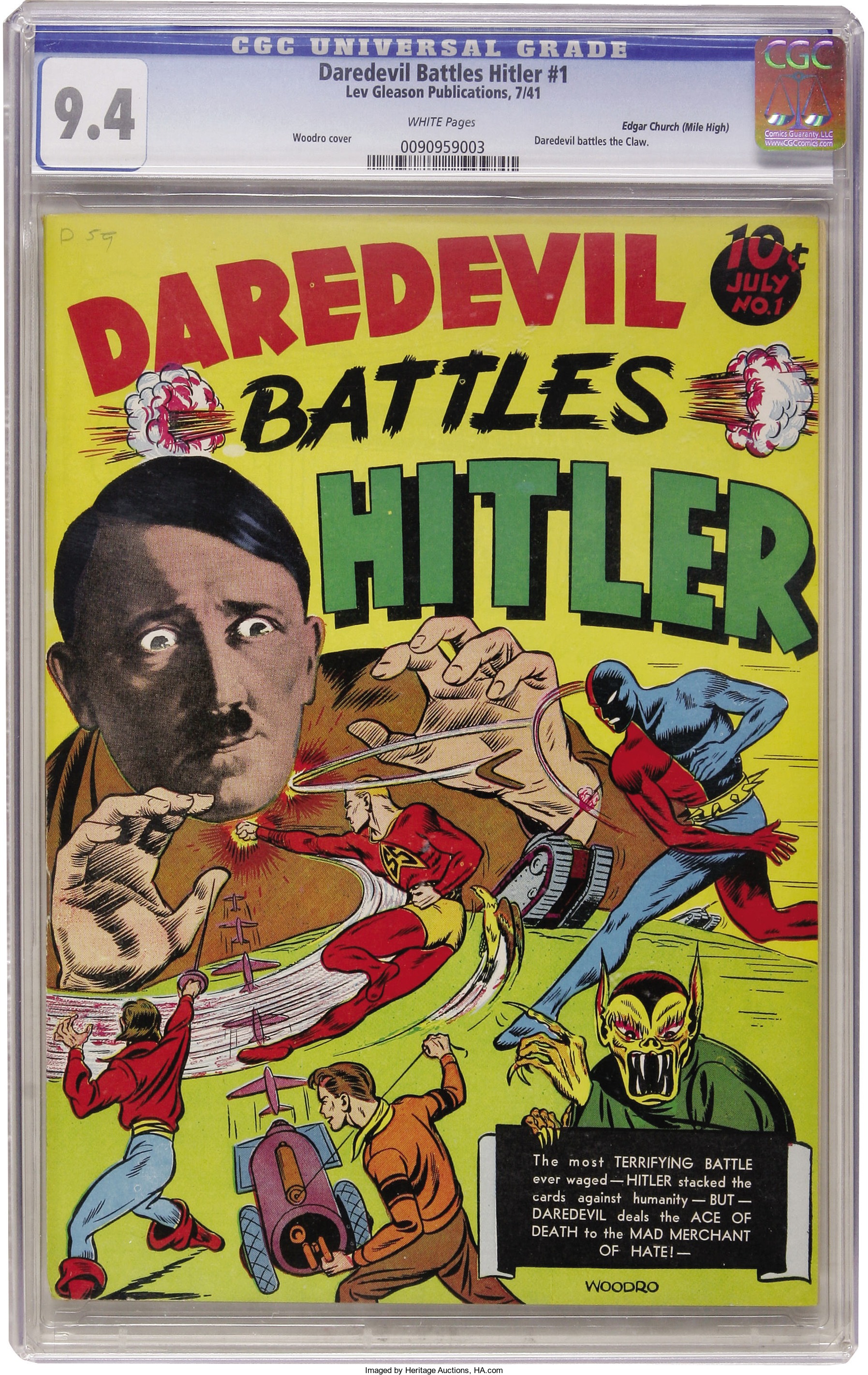
By 1941, Adolf Hitler (“The Mad Merchant of Hate”) and his Axis allies occupied most of Europe and North Africa. This copy of Daredevil Comics #1 (Lev Gleason, 1941) sold for $41,825 at an August 2007 Heritage auction.

By Jim O’Neal

On June 28, 1919 – exactly five years after Gavrilo Princip assassinated Archduke Franz Ferdinand – Germany reluctantly signed the Treaty of Versailles that ended their participation in World War I. The terms of the treaty were so punitive that the German people were stunned. After all, the treaty had been signed without any of their borders being crossed and many believed the army had been betrayed by politicians. There was even talk of restarting the war as crowds demonstrated in the streets.

The treaty was a long, extensive document that included extraordinarily high reparations (the “War Guilt” clause) covering everything from lost farmland to veteran pensions and anything in between. The French were especially eager to punish the Germans since over 1 million Frenchmen had been killed, mostly within their country. However, the Allies were also vindictive and determined to render Germany incapable of ever starting another war.

The German delegation had attempted to mitigate the harsh terms with a 400-plus page counter-proposal, but it was a futile effort and they were forced to accept the Allies’ conditions verbatim. What had been intended to cease all hostilities, ironically, merely extended them by the crushing burden imposed on the German people.

The implications turned out to be significant.

For the next two to three decades, Germans harbored deep resentment over such an unfair agreement and were susceptible to radical ideas for revenge. Further, the slowing European economies made everyday life difficult for broad swaths of people everywhere. Extremist fascist and communist ideologies seemed to offer solutions to national problems in Spain, Italy and Russia.

The National Socialist (or Nazi) Party was founded in Germany with racism as a formal guiding principle. The gradual disintegration of formal government structures cleared the way for Adolf Hitler to become chancellor. In 1933, when fire broke out at the Reichstag – the German parliament building – Hitler claimed it was a communist plot. This was all he needed as an excuse to decimate his rivals, assume an absolute dictatorship and set Europe back on the path to war.

However, it was the seeds that were planted in the Hall of Mirrors at Versailles that sprouted into the conflagration that would become another war. Sadly, the whole world again would join the war, and we still bear the scars of our involvement.

William Tecumseh Sherman was right when he declared that war is hell, a lesson that every generation seems to need to learn for themselves.

Jim O'NielIntelligent Collector blogger JIM O’NEAL is an avid collector and history buff. He is President and CEO of Frito-Lay International [retired] and earlier served as Chairman and CEO of PepsiCo Restaurants International [KFC Pizza Hut and Taco Bell].
In Mid-1930s, News Joined Entertainment to Shape American Culture

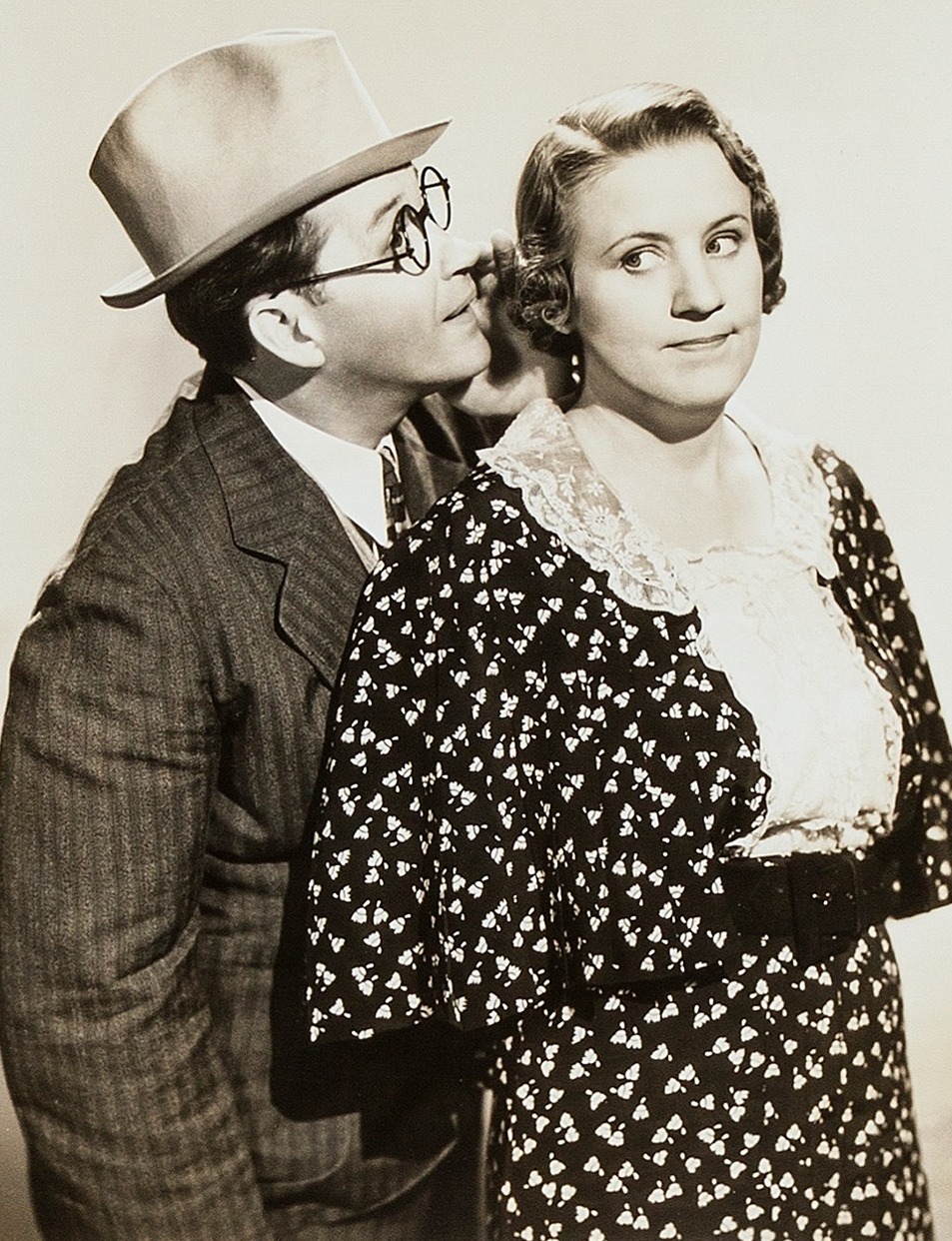
The Fibber McGee and Molly radio show premiered in 1935 and aired for nearly 25 years.

By Jim O’Neal

In the mid-1930s, neither of the two big radio networks – NBC and CBS – had a news department. All they did was air a couple of daily five-minute news broadcasts that were supplied by the Press Radio Bureau. But toward the end of the decade, the country began to count on getting its news from both networks.

It became a standard evening ritual in houses. People gathered around rather large radio sets when it was time for the news and there was little conversation until it was over. They listened to commentator H.V. Kaltenborn with coverage of the Spanish Civil War, including the crackle of genuine gunfire … a real first on the radio.

In fact, as radio brought news into people’s homes, it began affecting public opinion on things going on in the world. So when something important happened in Europe, the country was eager to listen. Prior to this, they were mildly interested, but didn’t feel that they were intimately involved. Now, they were fascinated.

When Adolf Hitler annexed Austria, there was a full hour of coverage with correspondents in Paris, Berlin, London and New York acting like today’s Anderson Cooper. Then, in 1939, came the Czech crises, which was a major radio event and the country was enthralled by it … listening as much as possible. The minute-by-minute coverage monopolized the attention of the country and it was a great novelty to hear Hitler speak or British Prime Minister Neville Chamberlain returning from Munich waving a paper and saying, “This means peace in our time!”

To hear the actual words was simply amazing.

It is no exaggeration to say that radio brought the country together, all at the same time, everyone listening to the same things. And the country liked being tied together that way. In the morning, people would say, “Did you hear that last night? What do you think?”

People didn’t quite see how all those things overseas were going to affect them personally, but it was the greatest show they’d ever been offered, and it helped the country overall achieve the melting-pot effect. Radio played a major role in helping people escape the daily humdrum with the soaps during the day and Jack Benny, Burns and Allen, Bob Hope, and Fibber McGee and Molly at night.

Politics could never compete with The Shadow in my book.

Now we have to listen to both sides of every issue (sometime all sides) from “talking heads” who claim to be experts, who debate every point and counterpoint. Who are these people? How to judge their expertise or veracity when the ether is filled with so many divergent views? If you don’t have an opinion, just pick one and you can amaze your friends with your brilliant insights.

My advice is to watch the Fishing Channel. These folks really know their stuff and you can probably believe most of it … except when you hear “You should have been here last week. They were really biting!”

Jim O'NielIntelligent Collector blogger JIM O’NEAL is an avid collector and history buff. He is President and CEO of Frito-Lay International [retired] and earlier served as Chairman and CEO of PepsiCo Restaurants International [KFC Pizza Hut and Taco Bell].
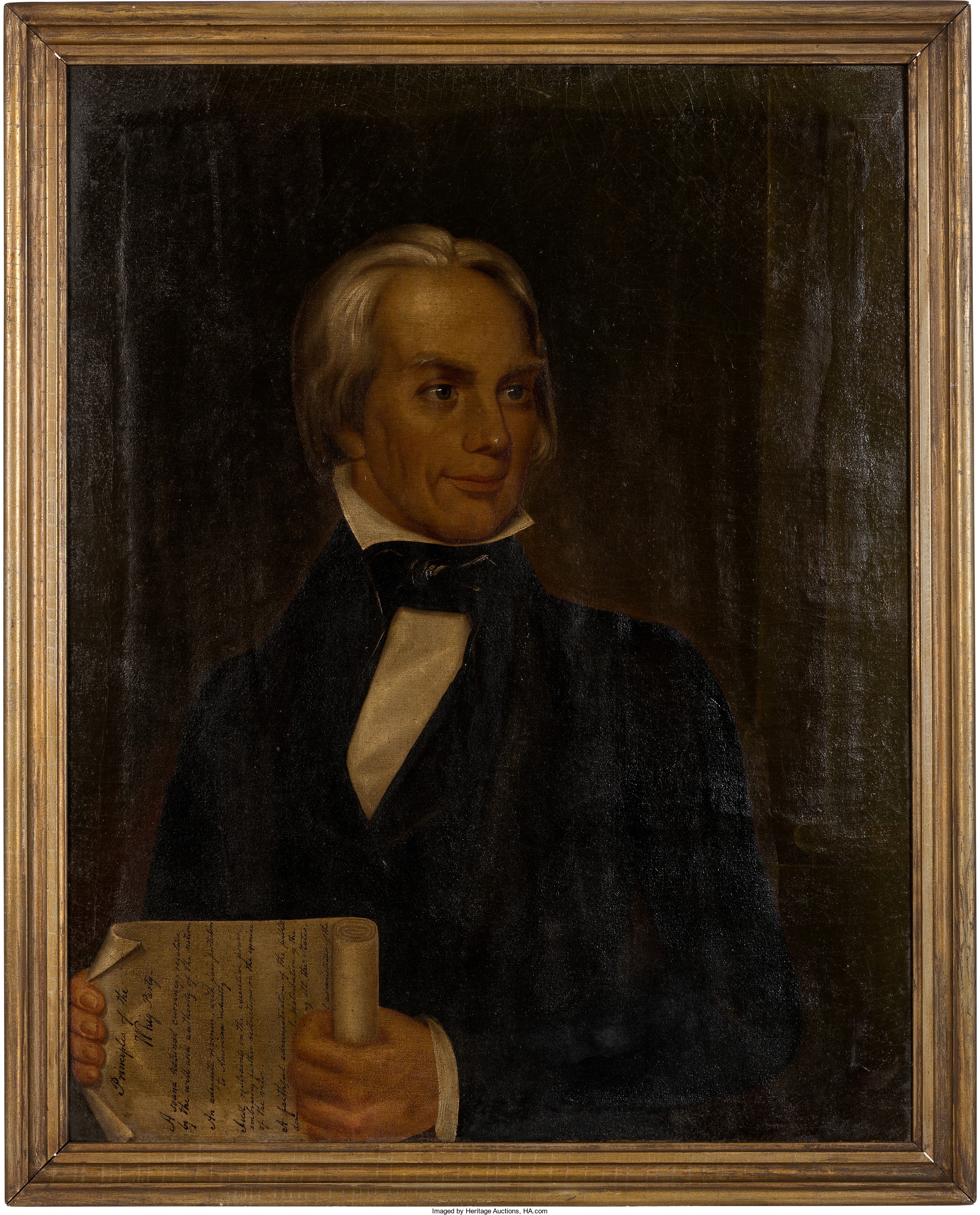
1824 Presidential Election Among Strangest in History

Henry Clay was among the presidential candidates in 1824. This folk art campaign portrait of Clay sold for $9,375 in May 2016.

By Jim O’Neal

The 12th Amendment to the U.S. Constitution was added to clear up some fuzzy rules for presidential elections that popped up in both 1796 and 1800.

In addition to requiring separate votes for president and vice president, it added procedures for the House of Representatives if no candidate received a majority of votes. The Amendment was proposed by Congress in 1803 and then ratified by the requisite three-fourths of states in June 1804. It was easier to gain consensus in those early days.

For the next 20 years, things went smoothly as Virginians continued to occupy the White House. Presidents Thomas Jefferson, James Madison and James Monroe all served two terms with no controversies, at least regarding elections.

Then came 1824.

To begin, all the candidates were from the same party … the Democratic-Republican. Tennessee nominated Andrew Jackson (born in North Carolina). Kentucky chose Henry Clay. William Crawford got a nomination from Georgia, albeit from a splinter group. John C. Calhoun of South Carolina ignored state officials and nominated himself. And finally, John Quincy Adams (the eventual winner) was the conventional “favorite son” from Massachusetts following in his father’s footsteps.

Then the fun started.

First, Calhoun quickly realized he didn’t have broad support and withdrew from the presidential race. However, in a twist, he nominated himself for vice president for both Jackson and Adams, which ensured him a victory.

Crawford suffered a stroke, but remained in the race, finishing in third place. Adams finished a disappointing second in both the popular and electoral votes.

Jackson had the highest number of popular votes and ended up with the most electoral votes. However, since the votes were split four ways, he did not have a majority (more than 50 percent).

The new rules threw the election into the House of Representatives, except Clay was eliminated since only the three top electoral vote-getters were eligible for the runoff. A great controversy then erupted when Clay, who was Speaker of the House, switched Kentucky’s vote from Jackson to Adams, giving him the office … thus making Andrew Jackson the only person to win both the popular and electoral votes and lose the election.

Then John Q. Adams made Henry Clay the Secretary of State in what has become known as the infamous “corrupt bargain.” No proof has ever surfaced of this quid pro quo, but Andrew Jackson certainly believed it … so much so that he resigned from the Senate and spent the next three years plotting against Adams.

It apparently worked, since he vanquished JQA in 1828 and then won again in 1832.

If this year’s nominating process and campaigns seem to border on the bizarre, you would be right. Just consider how 1824 would compare if they had been cursed with 24/7 cable TV.

Jim O'NielIntelligent Collector blogger JIM O’NEAL is an avid collector and history buff. He is President and CEO of Frito-Lay International [retired] and earlier served as Chairman and CEO of PepsiCo Restaurants International [KFC Pizza Hut and Taco Bell].
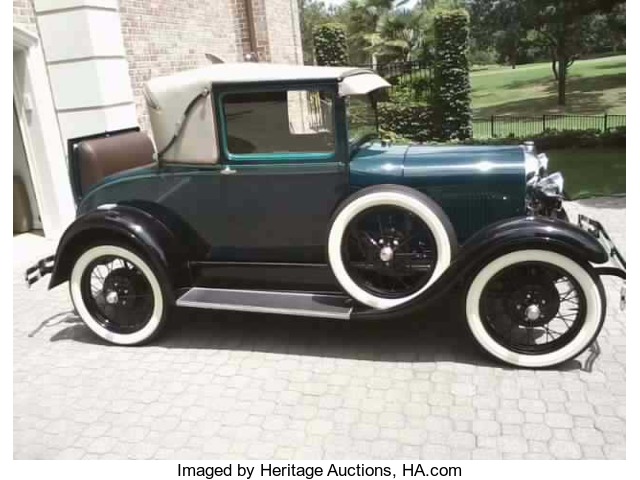
Don’t Curse Traffic; Autos Helped Create Our Thriving Consumer-Based Economy

By 1929, more than half of all American families had a car. This 1929 Ford Model A realized $42,500 at an October 2013 auction.

By Jim O’Neal

Automobiles have been around for a long time. Henry Ford built his first one in 1893 and his first Model T was completed in 1908. In 1920, there were already 8 million horseless carriages sputtering and rattling around the poorly charted “roads” of the American countryside, most of them Tin Lizzies purchased for the remarkably low price of $300.

But in the succeeding years of that decade, the mass rush to the automobile began to have its impact. By 1929, more than half of all American families had a car; by 1930, there were more cars on the streets of New York City than on the entire European continent.

The change was sudden and dramatic. The automobile was the first significant improvement in self-guided travel since the bicycle was introduced in Scotland in 1839 and had caused a similarly dramatic effect on the 19th century.

The burgeoning automobile age established a new sense of freedom and individuality; people no longer had to make their plans according to train schedules and they traveled by themselves instead of with hundreds of strangers. At the same time, it also established a new, wider sense of community. Small towns that existed miles from anywhere else were now connected to each other by roads, giving large groups of people access to first-rate medical care, higher quality education, and whatever else lay “down the road.”

Thanks to the car, thousands of suburban communities flourished, providing people with the luxury of homes surrounded by real grass, despite having to commute longer distances to their jobs in the city. This even led to tourism helping blend discrete regions and meld society together. Spurred on by demanding auto owners, building roads became a prime activity of government, second only to education.

And with each mile of road came something new.

The first motel in 1925 in San Luis Obispo, Calif. The first set of red lights in NYC (1922). The first shopping center in Kansas City in 1922. The first national road atlas (Rand McNally, 1924). The first public parking garage in 1929 in Detroit.

One out of eight people who owned cars actually worked in the industry, building them or producing the required tires, oil and steel. It led to the eight-hour workday, the five-day workweek and safer working conditions. It even changed how people thought about money and credit. Buying a car was a real debt and by the end of the 1920s, more than 60 percent of all sewing machines, vacuum cleaners and refrigerators were bought on purchase plans, and one-third of all furniture, including radios!

A consumer-based economy would be a powerful force and today represents 70 percent of our total economic output.

So the next time you’re stuck in a traffic jam or cursing about too many potholes, consider the alternative and the rich history that is included.

Jim O'NielIntelligent Collector blogger JIM O’NEAL is an avid collector and history buff. He is President and CEO of Frito-Lay International [retired] and earlier served as Chairman and CEO of PepsiCo Restaurants International [KFC Pizza Hut and Taco Bell].
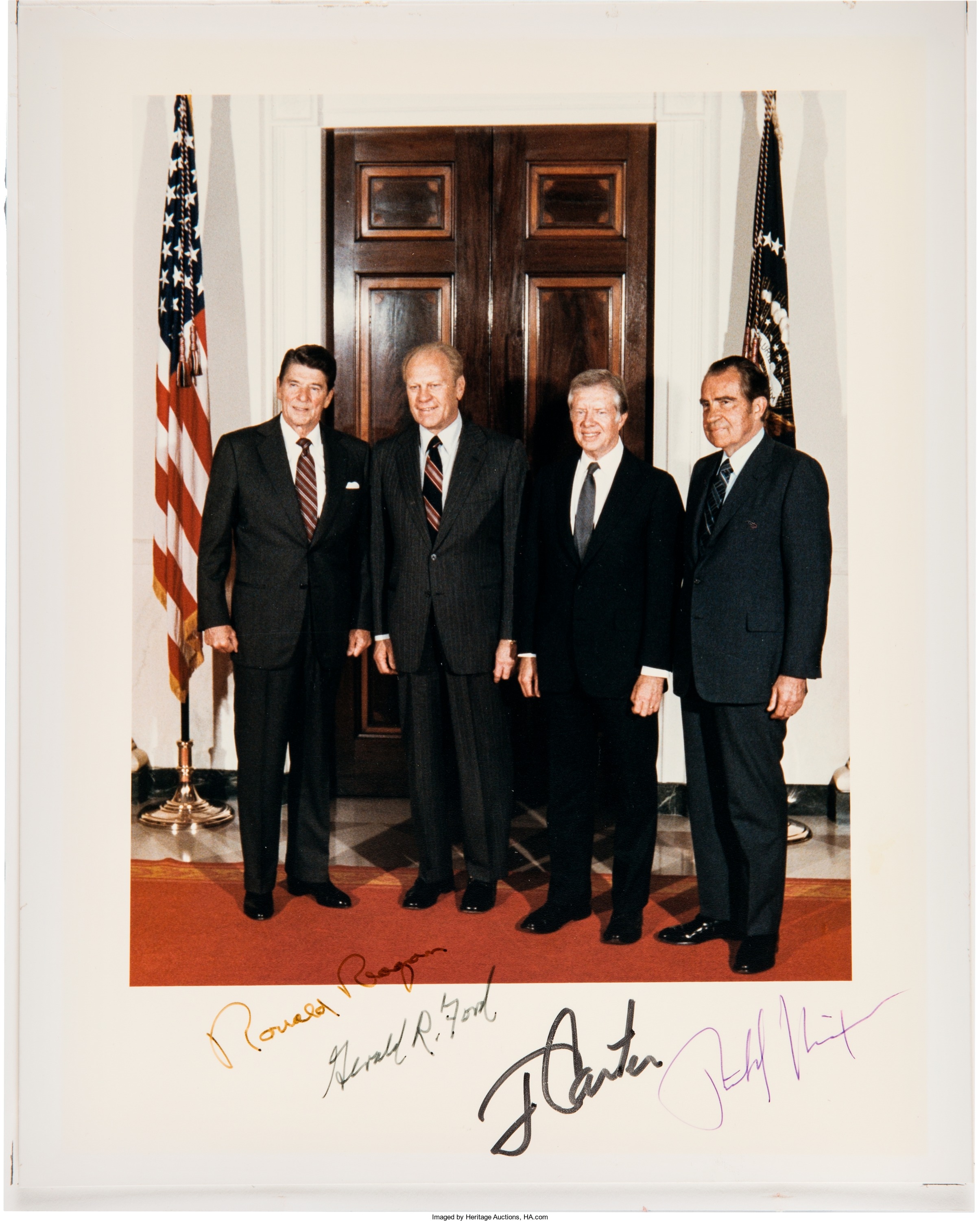
Iran-Contra Affair Exposed a Reality of Reagan Administration

President Ronald Reagan autographed this photo along with Gerald Ford, Jimmy Carter and Richard Nixon.

By Jim O’Neal

At 6 p.m. on Wednesday, Nov. 11, 1987, I was sitting in the Eisenhower Cabin at the Augusta National Golf Club sipping on a Stoli and tonic (there are 10 cabins inside the gates of the course where they play the Masters). It had been a good day, starting with eggs, biscuits and gravy, ham and grits for breakfast and fried chicken for lunch (we took a short break after the front nine).

My playing partner was Charlie Yates, who had played in the first Masters (1934), was Low Amateur five different years, and won the British Amateur Championship in 1938 (he died in 2005 at age 92).

When the 6 p.m. news came on, the big story was the Iran-Contra affair and President Ronald Reagan was scheduled to make a speech from the Oval Office at 8 p.m. I remember commenting that he should just say, “I’m the president and it was my decision due to national security … now who wants to do something about it?” I guess he didn’t … we were having dinner over at the club.

Earlier, on July 7, a 43-year-old ram-rod straight Marine lieutenant colonel had walked into the Caucus Room of the Russell Senate Office Building, raised his right hand for swearing in and proceeded with a performance that would etch his name onto the short list of 20th-century folk heroes. The appearance of Oliver North before the Senate committee charged with investigating the Iran-Contra affair had been anticipated for months … ever since the sensational discovery that the Reagan administration had concocted a bizarre plan to ship American arms to Iran to gain funding for the Contra rebels fighting the Marxist government in Nicaragua.

The plan was a violation of several laws and the trades seemed in direct contradiction of the morally direct philosophy that had been such a large part of Reagan’s appeal. Attorney General Ed Meese and others initially blamed North, an aide on the National Security Council, for directing the operation. But North appeared to be a scapegoat for more powerful Reagan officials, maybe even Reagan himself.

The comparisons to Watergate were tempting and, ultimately, the most commanding comparison came in the central question (again): “What did the president know and when did he know it?” The answer remained unclear despite dozens of people testifying, but that hardly spared Reagan. Either he was a figurehead in a rogue government or an impotent and forgetful leader with a lack of attention to detail.

We spent a long night at the bar with a group of members explaining how the “Iron Mike” golf club testing machine worked, and debating Titleist golf balls versus Wilson Pro Staff.

I think Reagan finally fessed up after blaming his memory … sadly portending things to follow.

Jim O'NielIntelligent Collector blogger JIM O’NEAL is an avid collector and history buff. He is President and CEO of Frito-Lay International [retired] and earlier served as Chairman and CEO of PepsiCo Restaurants International [KFC Pizza Hut and Taco Bell].
Americans Familiar with Getting Over the Gloomy Pessimism

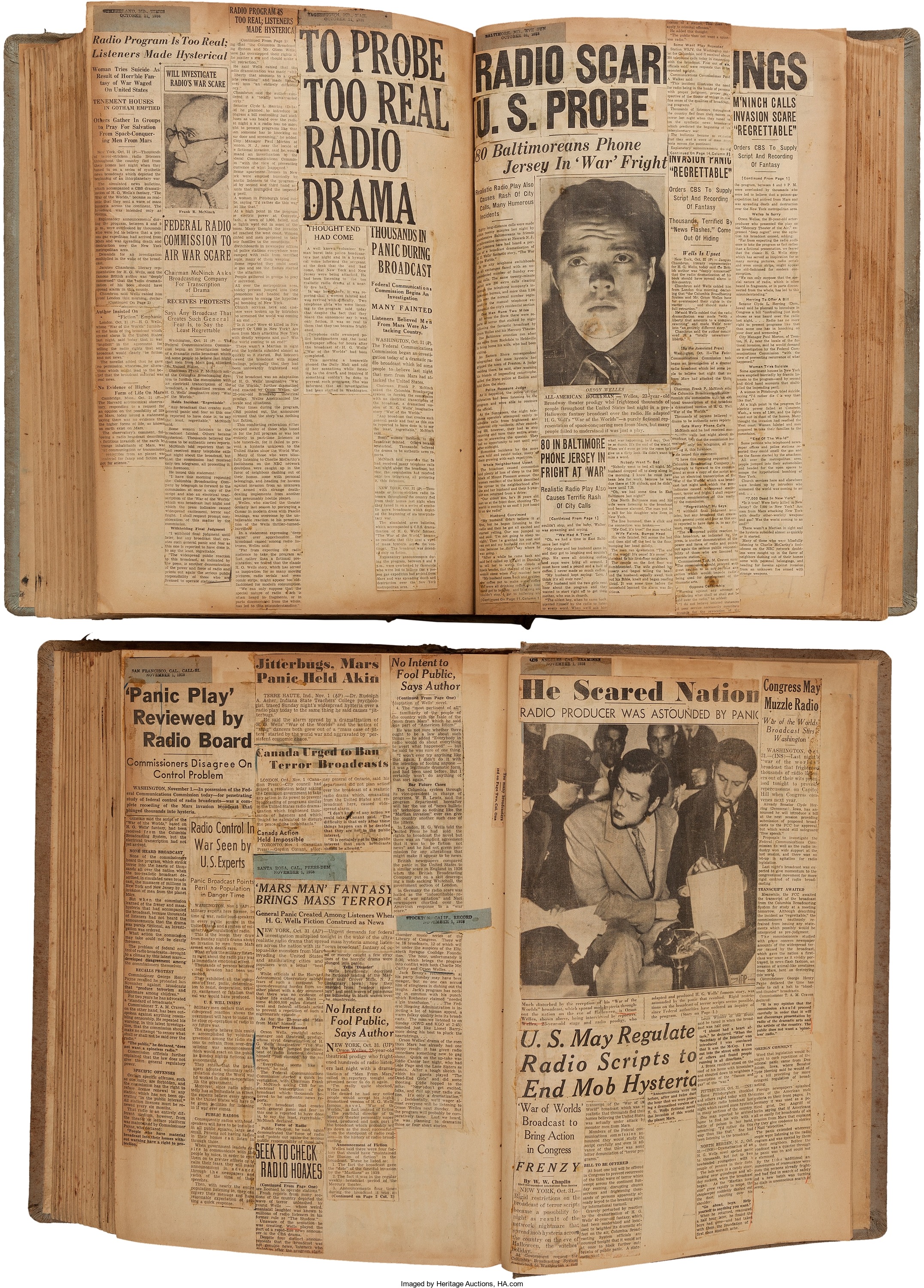
Two scrapbooks with news clips about the 1938 War of the Worlds broadcast, compiled for Orson Welles by a professional clipping service, realized nearly $4,700 at an April 2014 Heritage auction.

By Jim O’Neal

The most popular radio show in America in the mid-1930s was NBC’s The Chase and Sanborn Hour. A variety show, it featured the antics of ventriloquist Edgar Bergen and his sidekick Charlie McCarthy. By 1938, it was so dominant that competing network CBS could not find a sponsor willing to back a show to go against it.

In semi-desperation, the network commissioned Orson Welles, a 23-year-old director who had thrilled theater critics with his unusual staging of Macbeth, set in Haiti with an all-black cast. He agreed to provide CBS each week with a one-hour, commercial-free drama aired directly against Bergen on Sunday nights.

On Oct. 30, 1938, Welles’ Mercury Theater opted to present a radio play based on H.G. Wells’ The War of the Worlds. However, at the last minute, the young director decided to exploit the reputation of radio as the medium of truth and offered the play as realistically as possible. They began as if they were presenting an evening of ballroom music and then interrupted the band with a sudden announcement that Martians had landed on a farm near Grover’s Mill, N.J. From there, the story unfolded much as a real crisis might, with radio reporters relaying dispatches from the scene.

“Ladies and gentlemen, this is the most terrifying thing I have witnessed…,” sobbed Welles’ correspondent as he encountered the invaders. “There, I can see the thing’s body. It’s large as a bear and glistens like wet leather… the eyes are black and green like a serpent. The mouth is V-shaped with saliva dripping from its rimless lips.”

In the course of a single hour, Welles’ Martians landed on Earth, constructed deadly ray machines, defeated the American Army, destroyed radio communications and occupied large sections of the country. Remarkably, hundreds of thousands of Americans believed every word of it.

Radio stations were inundated with calls from listeners gripped with fear. Train stations were crowded with families demanding tickets “anywhere.” In New York City, theaters were emptied in panic and in Northern New Jersey – the site of the Martian landing – roads were jammed with people in cars packed with precious belongings, fleeing extraterrestrial annihilation.

When Welles signed off at 9 p.m., police were ready to arrest him, but he had broken no laws and the FCC only issued a mild reprimand.

His program had touched a sense of apocalypse that dominated the lives of many people in the late 1930s. Everywhere they looked, there were signs that things were going deeply awry. The American economy had remained stubbornly stagnant; one-third of the people were “ill-housed, ill-clad and ill-nourished,” in FDR’s own words.

Even nature looked like an enemy. Only a month before, the East Coast had endured a storm of such mammoth proportions that it felt like an invasion, as well. The Hurricane of 1938 caused more damage than the Chicago Fire and more deaths than the 1906 San Francisco earthquake. Seven hundred people were killed and the homes of more than 63,000 people were destroyed. Forty-foot waves crashed against Long Island, with ocean spray felt as far north as Vermont.

Yet even as people struggled to keep food on the table and their homes on the ground, it was the rumblings of war around the globe that jangled nerves. First, it was Italy seizing Ethiopia, then a civil war in Spain, and the Nazis in Germany making preparations for more war in Europe (again). But this time, most Americans were convinced we would never get involved in these foreign affairs and even had promises of “no American boys in foreign wars” from our leaders.

Twelve years later, after a global war ended with the dropping of two atomic bombs, America would make a fresh start with the glorious 1950s — after all, this is the United States! — and leave all that gloomy pessimism behind us forever.

And so we will again.

Jim O'NielIntelligent Collector blogger JIM O’NEAL is an avid collector and history buff. He is President and CEO of Frito-Lay International [retired] and earlier served as Chairman and CEO of PepsiCo Restaurants International [KFC Pizza Hut and Taco Bell].
Napoleon a Brilliant Administrator, Soldier Who Tried to Unite Europe

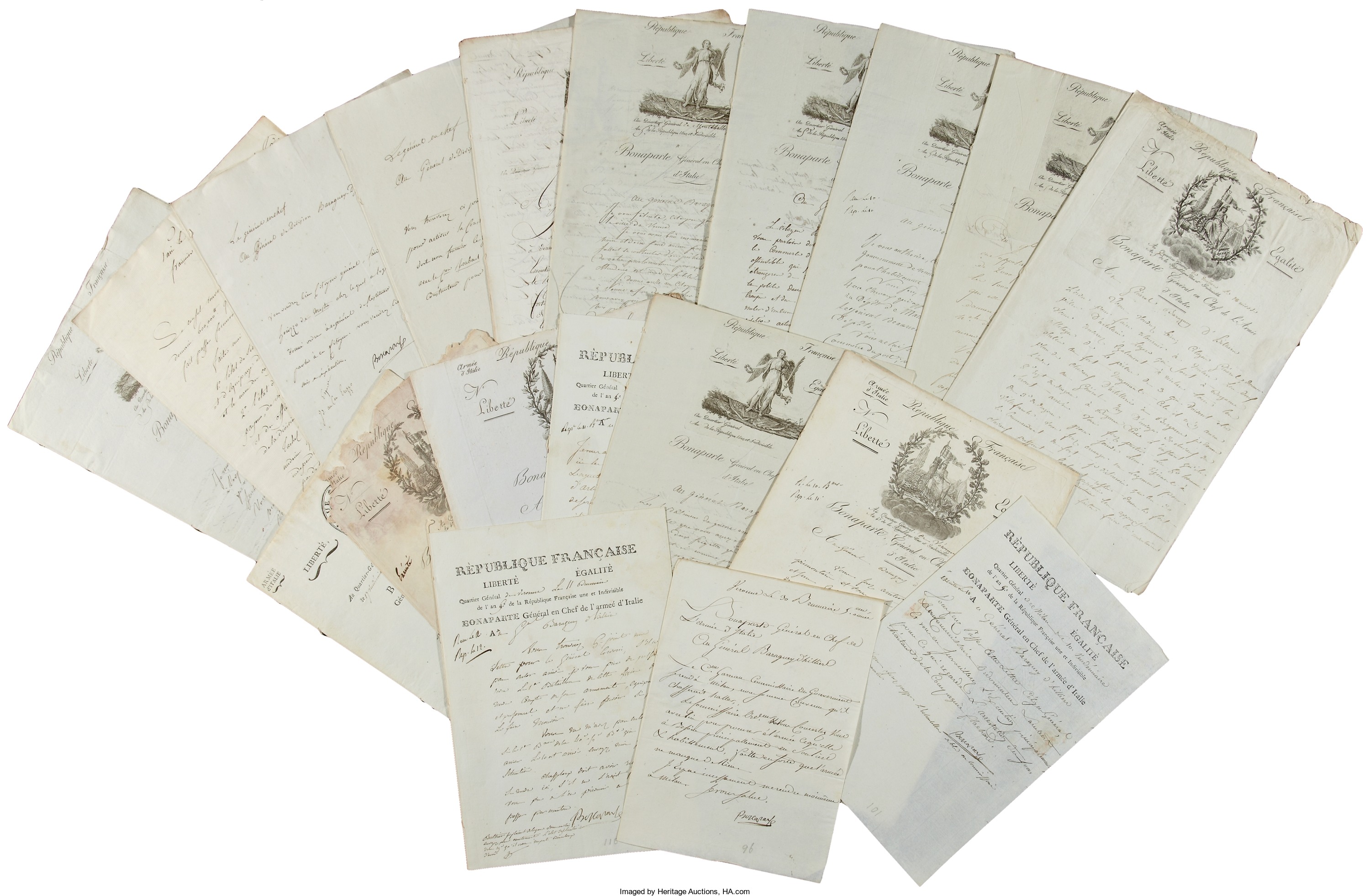
A collection of 19 letters signed by Bonaparte and dated between October 1796 and April 1798, during Napoleon’s Italian Campaign, realized $22,705 at a June 2010 Heritage auction.

By Jim O’Neal

Napoleon’s defeat at the Battle of Waterloo, south of Brussels, on June 18, 1815, marked his final overthrow as Emperor of the French, ending 23 years of European warfare. It was an epic encounter in which 118,000 British, Dutch and Prussian forces prevailed over a French Army of 73,000 hastily assembled by Napoleon.

Napoleon Bonaparte bred a sense of French invincibility.

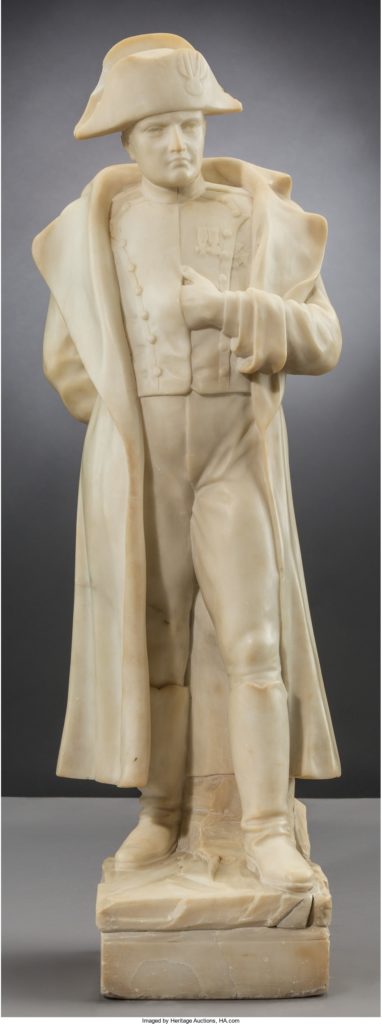
Born in Ajaccio, on the island of Corsica, to a family of minor Italian nobility, Napoleon Bonaparte (1769-1821) was commissioned by the French army and was an enthusiastic supporter of the Revolution. In 1796, at age 26, he was appointed to command the Army of Italy, winning a series of impressive victories.

Increasingly convinced of his destiny, by 1800, having staged a coup d’état, he dominated France as he would subsequently dominate Europe. He was as brilliant and tireless an administrator as he was a soldier.

His most enduring reform was the 1804 introduction of the Napoleonic Code, which is still the basis of French law. He bred a sense of French invincibility, and this made his eventual defeat all the more traumatic for the nation. Of the 450,000 men he led against Russia in 1812, barely 40,000 survived. At Leipzig, Germany, in 1813, outnumbered 3 to 1 by forces from Austria, Prussia, Russia and Sweden, he suffered another major defeat.

Forced to resign in 1814, Napoleon was exiled to the island of Elba in the Mediterranean. He escaped before his final defeat and his imperial ambition ended in the Waterloo mud. In 1815, he was dispatched to Saint Helena in the South Atlantic, where he died six years later.

Famous last words: “I must make all the peoples on Europe one people, and of Paris the Capital of the World.” – Napoleon Bonaparte, 1815, the Battle of Waterloo

Jim O'NielIntelligent Collector blogger JIM O’NEAL is an avid collector and history buff. He is President and CEO of Frito-Lay International [retired] and earlier served as Chairman and CEO of PepsiCo Restaurants International [KFC Pizza Hut and Taco Bell].
For a Moment, It Seemed Warfare as We Know it Was in Its Final Days

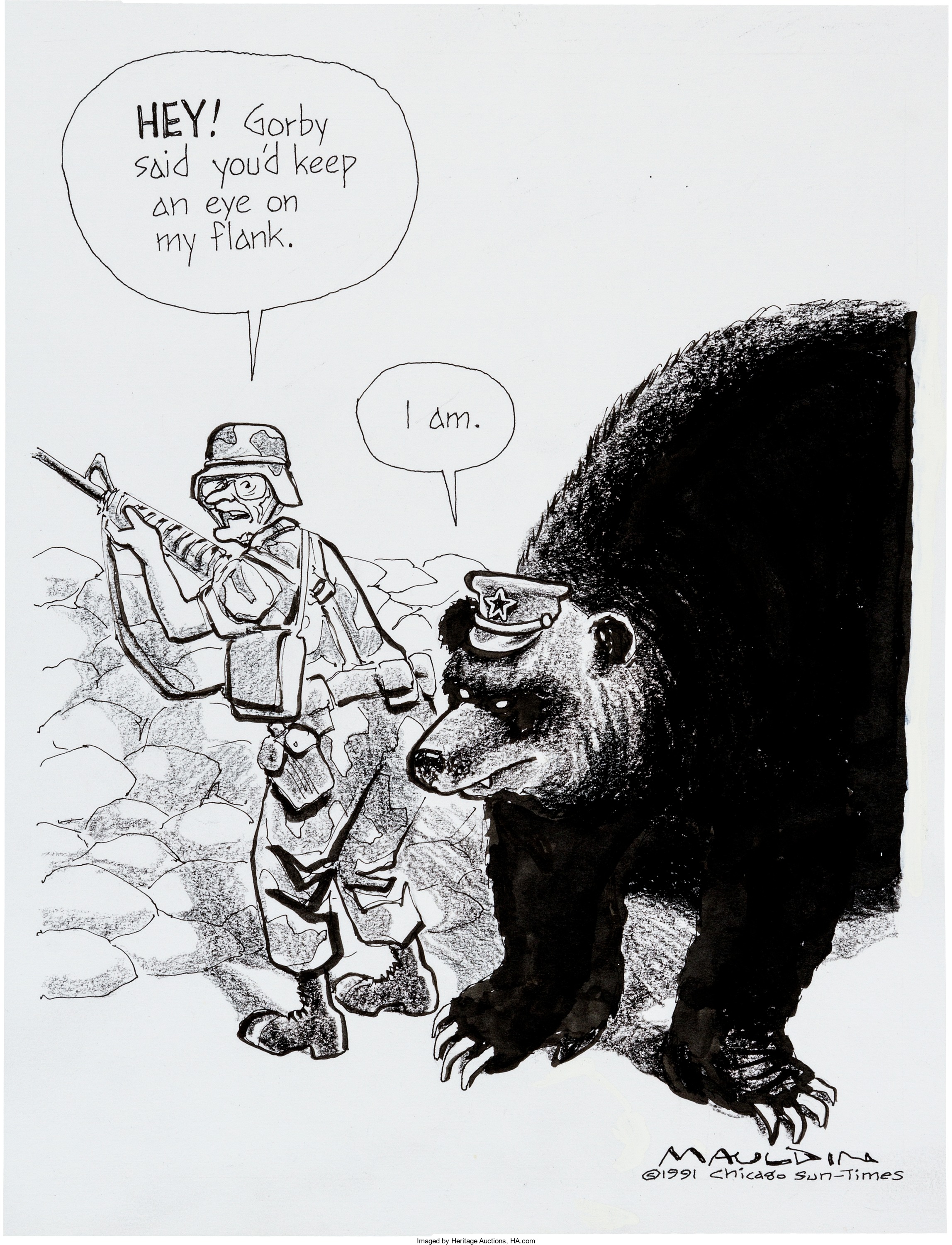
An original 1991 Desert Storm editorial cartoon by Bill Mauldin for the Chicago Sun Times realized $418.25 in a November 2014 Heritage auction.

By Jim O’Neal

When it comes to naming military campaigns, few compare with “Desert Storm.” Besides its obvious evocations of sand-blown landscapes, the name could also work as the title of a pulp novel or B movie, even a video game. In early 1991, more than two dozen allied nations began an assault on Iraq in an attempt to drive its forces from neighboring Kuwait.

It was a classic military rout.

In just over 40 days of American air attacks, followed by fewer than 100 hours of ground fighting, thousands of high-tech bombs (precision-guided munitions) rained down on Iraqi positions. Enemy troops were driven back to Baghdad and into international humiliation.

For the United States, the war was the first since the debacle in Vietnam, and the American public entered into an anguished debate as President George H.W. Bush had pushed for congressional approval. Who could know if Iraq would become to the ’90s what Vietnam had been to the ’60s and ’70s?

Still, there was no denying these were different times. Among the allies standing with the U.S. against Saddam Hussein’s seizure of oil-rich Kuwaiti sands was the Soviet Union, the first instance since World War II in which Americans and Soviets fought on the same side. It also positioned the allied nations as a quasi-international police force stopping acts of raw aggression.

World War I had advanced combat into the sphere of mechanized warfare. World War II had taken technology even further and made civilians targets. Now, in Iraq, computer technology advanced both the tools and the strategy until it resembled science fiction. Beginning with the launch of a Tomahawk missile from the deck of the USS Wisconsin on Jan. 17, 1991, Baghdad became the site of one of the most devastating air raids in history.

There was now no doubt that warfare had entered a new epoch. With satellites mapping the globe it seemed possible war would soon become as simple as deleting a computer file – scanning a battlefield, identifying a target and systematically destroying it.

It was a clean war, precise and efficient, fought so fast it hardly demanded attention. There were few American losses (148 dead vs. 200,000 Iraqis) and undeniable results … Iraq out of Kuwait. Plus, we could tune in to CNN to get the latest update during an occasional coffee break.

The world was finally coming to its senses and if someone committed an act of aggression, it would only take a few coordinated responses to restore harmony. Finally, we could channel our energy and resources to eliminating disease, world hunger and a thorough cleansing of the air and oceans.

War was such a dumb idea. Why did it take us so long to recognize what a waste it was? The new millennium was impatiently waiting for us to get a fresh start.

Sigh.

Jim O'NielIntelligent Collector blogger JIM O’NEAL is an avid collector and history buff. He is President and CEO of Frito-Lay International [retired] and earlier served as Chairman and CEO of PepsiCo Restaurants International [KFC Pizza Hut and Taco Bell].
Britain’s Constitutional Monarchy had a Bloody Beginning

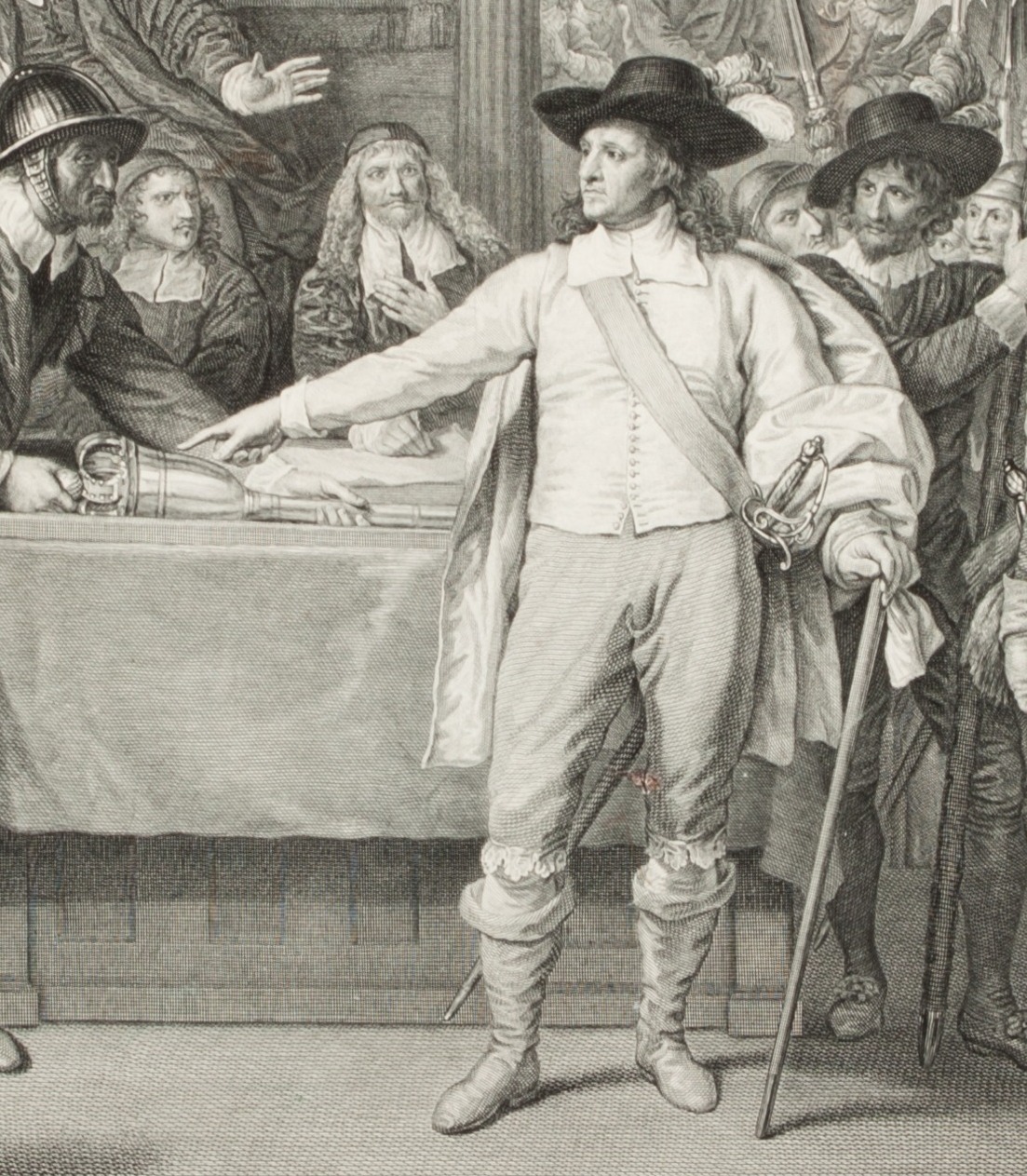
Oliver Cromwell is often included among lists of the most important Britons of all time.

By Jim O’Neal

During the 1640s, England was plunged into a series of wars that, collectively, became known as the English Civil War. On one side were the Royalists – predominantly the aristocracy who supported King Charles I and his right to rule independently of Parliament.

On the other side were the Parliamentarians – mainly smaller landowners and tradesmen who held puritanical beliefs and disliked Charles’ autocratic rule.

Initially, the Royalists gained the upper hand, but in 1644 the Parliamentarians reorganized their troops under Oliver Cromwell and forced Charles to surrender in 1646. However, the king restarted the war two years later and this Second Civil War – which ended in a Royalist defeat at the Battle of Preston in 1648 – began a chain of events that led to King Charles’ trial for treason and his beheading in 1649.

Cromwell formed a republic called the Commonwealth of England, but he too had trouble with Parliament and imposed a stern puritan authority on both the Scots and Irish. Soon after he died, the country welcomed back Charles I’s exiled son, Charles II, and then his Catholic brother, James II.

However, this did not go well because of favoritism to Catholics, which offended both Anglicans and Protestants. Finally, in 1688, James was deposed by the Glorious Revolution and replaced by Protestant Queen Mary and her Dutch husband William of Orange.

In 1689, William and Mary accepted the Bill of Rights, trial by jury, and made the monarchy subject to the law of the land.

Since that time, Great Britain has remained a constitutional monarchy, in which no king or queen can ever defy Parliament, as King Charles I had attempted. Perhaps it is because it is easier to wear a crown if one has a head to place it upon!

Jim O'NielIntelligent Collector blogger JIM O’NEAL is an avid collector and history buff. He is President and CEO of Frito-Lay International [retired] and earlier served as Chairman and CEO of PepsiCo Restaurants International [KFC Pizza Hut and Taco Bell].