
President Nixon’s Resignation Restored Faith in the System

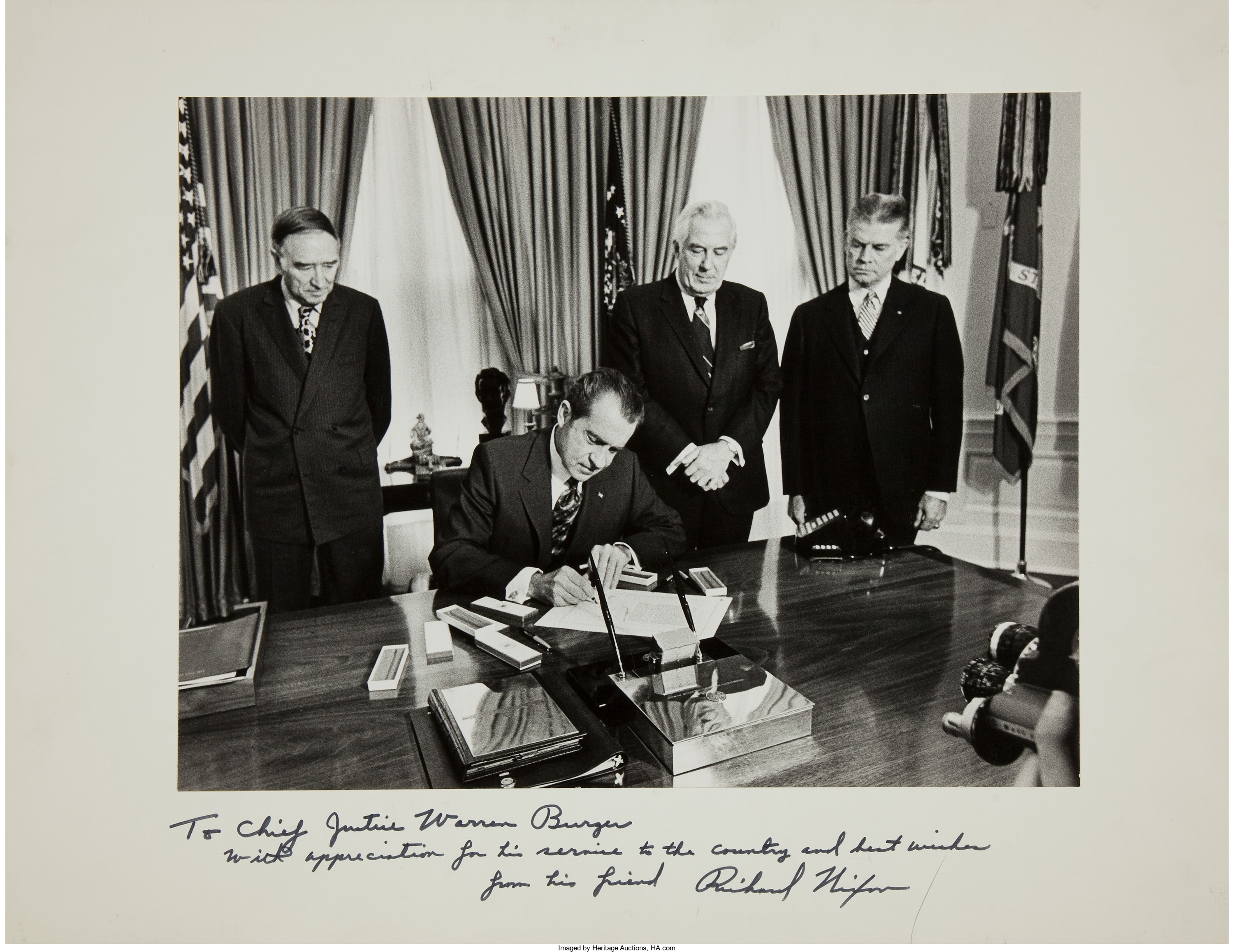
A photograph inscribed by Richard Nixon to Supreme Court Justice Warren Burger sold for nearly $6,000 at an April 2011 Heritage auction.

By Jim O’Neal

In mid-1971, The New York Times began publishing excerpts from a secret Defense Department study, “History of U.S. Decision Making Process on Vietnam Policy.” The study had been leaked to the press by former Defense Department analyst Daniel Ellsberg, who, joined by his 10-year-old son and 13-year-old daughter, photocopied its 7,000 pages, snipping off the words “Top Secret” from each page.

Better known to the public as the Pentagon Papers, it became a best-seller in book form. While few could understand the arcane language, they knew what it revealed: The government had been lying to them about both the motives and its conduct in Vietnam. By playing David to the government’s Goliath, Ellsberg became a kind of folk hero to the growing anti-war movement. It seemed the only thing the left and right could agree on was their distrust of their own government.

Still, by 1973, the preoccupation was not the war or the sad economy, but a constitutional crisis that carried the name of a Washington luxury apartment and office … Watergate.

When the break-in at the Watergate offices of the DNC was first revealed in June 1972, Presidential Press Secretary Ron Ziegler described it as a “third-rate burglary,” hardly worth reporters’ attention, except for two at The Washington Post. Over the next two years, as the tentacles of a very complicated story reached higher and higher, the president would try to avoid involvement by throwing subordinates overboard, but the dirty water reached the highest office in the land.

Richard Nixon had an amazing public career, starting with Congress in the late 1940s; his pursuit of Alger Hiss; eight years as Dwight Eisenhower’s VP; his own run for the presidency in 1960; and then the dramatic comeback to the Oval Office in 1968 … only to face an ignominious departure six years later.

Nixon compiled a 28-year run at or near the center of the world’s stage, but on the morning of Aug. 9, 1974, the 37th president of the United States – his eyes red, his voice shaky – addressed his staff in the East Room, imploring them to never “hate those who hate.” Then he and his wife Pat exited the mansion doors, walked on a fresh red carpet and disappeared into the helicopter Army One.

Nixon was a private citizen seated in a California-bound 707 somewhere over Missouri when Vice President Gerald Ford recited the oath of office as the new president. Chief Justice Warren Burger turned to Senate Leader Hugh Scott. “It worked, Hugh,” he said of the system. “Thank God it worked.”

With a swiftness that restored faith in the system, the forced exit of one leader and the entrance of his successor had been carried off smoothly.

P.S. For movie fans, the 1976 film All the President’s Men, with Robert Redford, Dustin Hoffman and Jason Robards, is well worth another viewing.
Jim O'NielIntelligent Collector blogger JIM O’NEAL is an avid collector and history buff. He is President and CEO of Frito-Lay International [retired] and earlier served as Chairman and CEO of PepsiCo Restaurants International [KFC Pizza Hut and Taco Bell].

Bastille Day Reminds Us That Freedom Vital to Civilized World

This 20½-inch high French carved-ivory figure of Louis XVI from the 19th century realized $19,120 at an October 2006 Heritage auction.

By Jim O’Neal

It’s Bastille Day.

On July 14, 1789, an enraged Parisian mob, seeking weapons to defend their city from a rumored royal attack, stormed the crumbling fortress known as the Bastille and murdered its governor and guards. This violent defiance of royal power has become the symbol of the French Revolution, a movement that not only engulfed France, but also reverberated around the world. The ideas articulated in the revolution spelled the end of Europe’s absolute monarchies and inspired their eventual replacement by more democratic governments.

The indecisive French King Louis XVI was hardly the person to confront any crisis, especially one as serious as that facing France in 1789. In the previous century, his great-grandfather, Louis XIV, the Sun King, had established France as an absolute monarchy with all power concentrated in the king’s hands. His palace at Versailles was the most sophisticated court in Europe and a bastion of aristocratic privilege.

In October 1789, events suddenly accelerated when a vast crowd, outraged by a lack of bread in Paris, descended upon Versailles and forcibly removed the royal family to Paris, ransacking the palace for good measure. In what would become an unnerving foretaste of the violence to come, the severed heads of the guards at Versailles were paraded on stakes as Louis and his family were escorted to the capital.

By September, a kind of hysteria gripped the city. A mob stormed the Tuileries, where the royal family was held, slaughtering the Swiss Guards. Louis XVI was put on trial as a traitor and executed on the guillotine in January 1793. Eventually, order was restored by the end of 1795.

Whatever the importance of the French Revolution, it remains the subject of intense historical debate. Its goals of ending repressive monarchy and championing universal rights were confused and often violent. Furthermore, by 1804 Napoleon had effectively swapped one form of absolutism for his own, albeit more effective than any had known since Louis XIV.

Still, it remains a pivotal moment in the belief that freedom should underpin the civilized world … a principle we still embrace with every ounce of energy.

Jim O'NielIntelligent Collector blogger JIM O’NEAL is an avid collector and history buff. He is President and CEO of Frito-Lay International [retired] and earlier served as Chairman and CEO of PepsiCo Restaurants International [KFC Pizza Hut and Taco Bell].
Colonization of Americas Propelled Spain’s Emergence as First Global Superpower

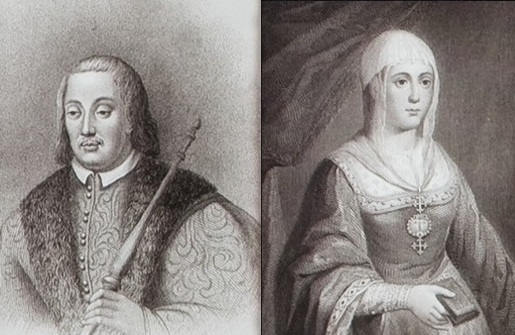
Ferdinand and Isabella transformed Spain from separate, confused realms into a unified and powerful nation.

By Jim O’Neal

At midnight on Jan. 2, 1492, Abu Abd Allah, the Muslim Emir of Granada, handed over the keys to his city to King Ferdinand and Queen Isabella. They were the joint rulers of the Christian Spanish states of Aragón and Castile. This single act marked the end of nearly 800 years of Muslim rule in the Iberian Peninsula.

It also marked the eclipse of a great civilization renowned for its architectural splendors and rich tradition of scholarship. At the same time, it signaled the birth of a confident, united Spain that would soon divert its energies away from crusading against its Muslim neighbors to instead building an empire in the New World.

Despite an agreement that guaranteed freedom of worship, in 1502 the monarchs decreed that any Muslim over the age of 14 who refused to convert to Christianity had to leave Spain within 11 weeks. This edict, combined with the expulsion of Jews in Granada 10 years earlier, transformed Spain into a much more homogeneous, but highly intolerant state.

Once united, they needed a new target for their compulsive crusading.

Enter Christopher Columbus and his expeditions to the New World. In 1492 – the same year as the fall of Granada – he provided the Spanish an ideal outlet for their ambitions. Their colonization of the Americas propelled Spain’s emergence as the first global superpower.

When one examines the relatively unimportant role they play today as one of the European Union’s “PIIGS” (Portugal, Ireland, Italy, Greece, Spain) – the unflattering acronym for countries with significant fiscal issues – it becomes easier to see how global superpowers can fade into the dustbin of history.

Jim O'NielIntelligent Collector blogger JIM O’NEAL is an avid collector and history buff. He is President and CEO of Frito-Lay International [retired] and earlier served as Chairman and CEO of PepsiCo Restaurants International [KFC Pizza Hut and Taco Bell].
Things Didn’t Turn Out Well for Russia After Tsar Gave Up Alaska

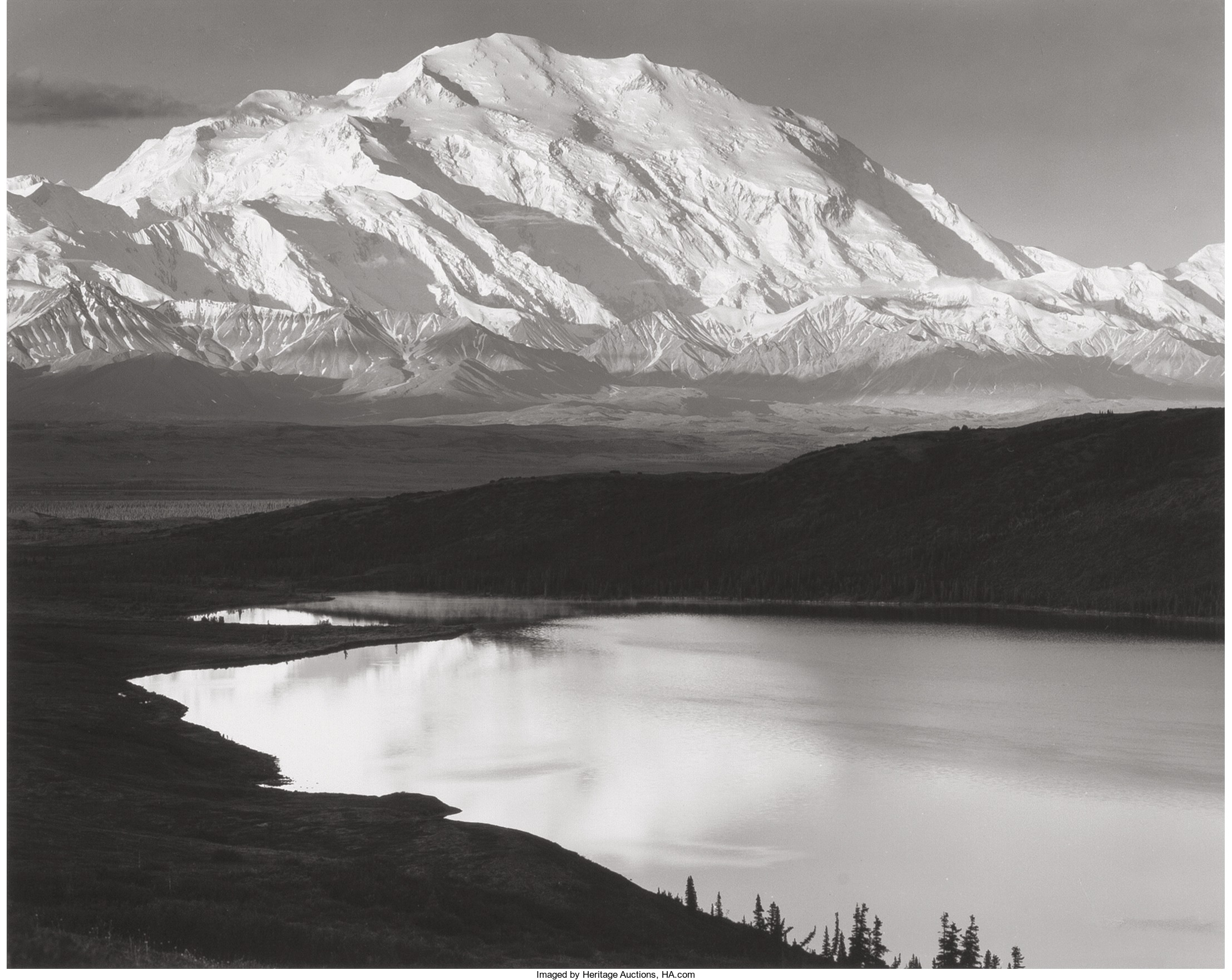
A portfolio of 12 signed prints by Ansel Adams, including Mount McKinley, Alaska, 1948, realized $37,500 at an October 2014 Heritage auction.

By Jim O’Neal

Russia offered to sell Alaska to the United States in 1859 since they were concerned that the British would simply take it and add it to their Canadian portfolio. But the looming Civil War prevented any binding agreement. After harmony in the U.S. was restored, Secretary of State William Seward was quick to pounce.

In 1867, the United States paid $7.2 million to Tsar Alexander II in a mildly controversial transaction dubbed “Seward’s Folly” and “Polar Bear Park.” Once gold was discovered in the Yukon, followed by the Klondike Gold Rush, most skeptics’ doubts were dispelled.

Earlier, in 1861, Alexander II had issued an Emancipation for Russia’s 20 million serfs (non-free workers), but it was not for purely humanitarian reasons. This was a further attempt to modernize a Russia that was falling behind the industrializing nations of the West. To assume their perceived rightful place, they adopted wide-ranging reforms across political, social, economic and military areas.

The effects were mixed at best and Emancipation did very little to improve Russian agricultural productivity or the serfs’ well-being. However, Alexander refused to consider any real constitutional reform and maintained a conviction of his divine right to rule as an absolute monarch … which he did until his assassination in 1881 by the terrorist group Narodnaya Volya (“People’s Will”).

His successor, Alexander III, was willing to embrace industrial reform, but also created a police state, suppressed protest and made trade unions illegal. He also scrapped the concept of a Duma (representative council) and increased military capability. Politically, however, the regime’s unwillingness to reform would ultimately ensure its complete destruction in a Soviet revolution.

The polar bears had a better fate, as Alaska became a full-fledged U.S. state in 1959.

Jim O'NielIntelligent Collector blogger JIM O’NEAL is an avid collector and history buff. He is President and CEO of Frito-Lay International [retired] and earlier served as Chairman and CEO of PepsiCo Restaurants International [KFC Pizza Hut and Taco Bell].
Diderot’s ‘Encyclopédie’ Ushered In New Era of Thought

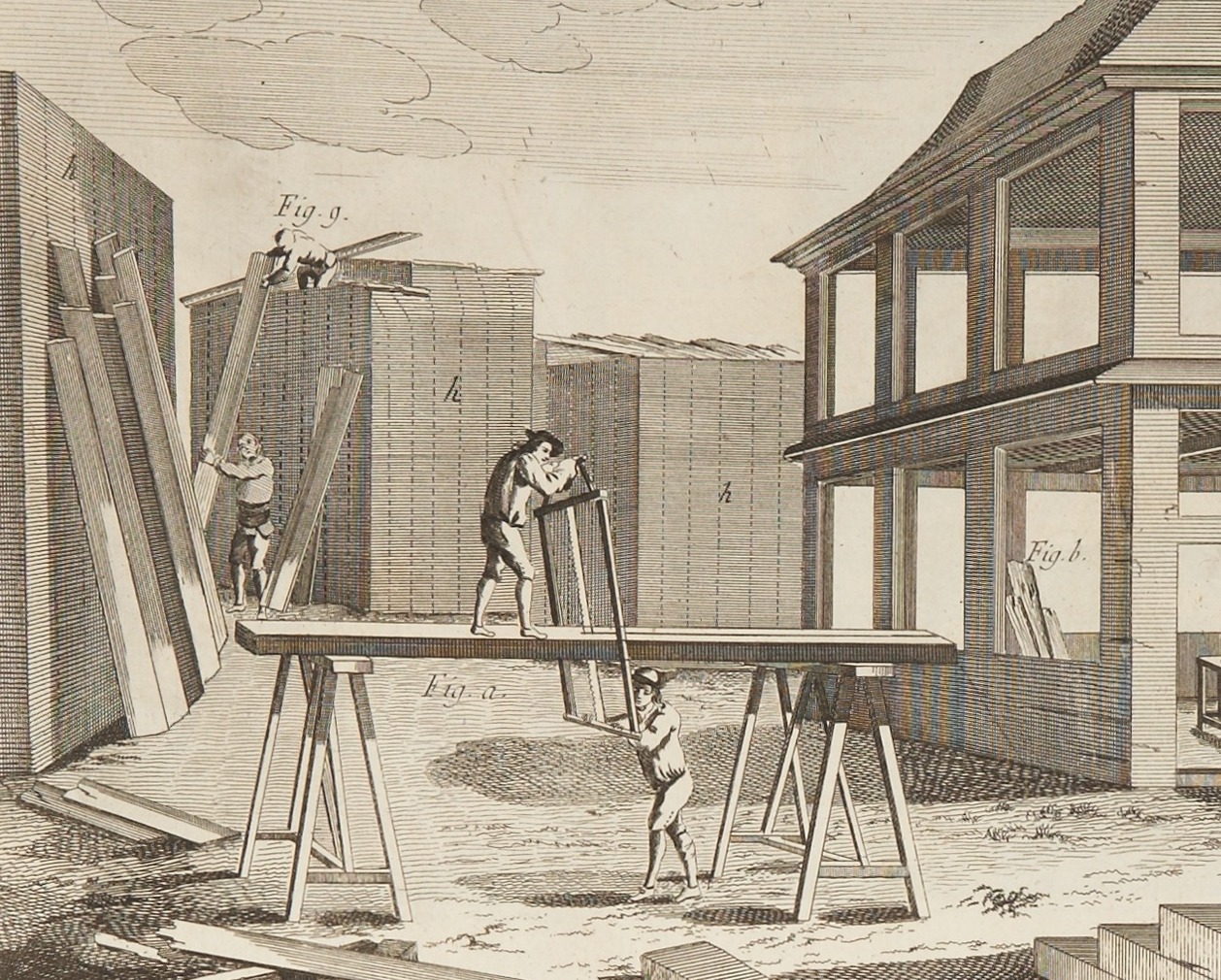
Denis Diderot’s Encyclopédie included entries on technologies of the period, describing traditional craft tools and processes.

“Skepticism is the first step toward truth.” – Denis Diderot (Philosophical Thoughts, 1746)

By Jim O’Neal

In the middle of the 18th century, French philosopher Denis Diderot decided to compile the collective knowledge of the Western world into an encyclopedia. He invited France’s leading intellectuals – scientists, literary men, scholars and philosophers – to write articles for a huge “Classified Dictionary of Sciences, Arts & Trades.” His role was both editor-in-chief and contributor.

The first volume appeared in 1751 and the full work, consisting of 17 volumes of text and 11 volumes of illustrations, was completed 21 years later. The basic mission of the Encyclopédie was to catalog the knowledge of the Western World’s Age of Enlightenment. This was a multifaceted intellectual movement that started circa 1715, although its true origins were contained in works done by pioneers of modern scientific and philosophical thought of the previous century.

The 72,000 multi-disciplinary articles distilled the ideas and theories of France’s key Enlightenment thinkers, including the writers and philosophers Voltaire, Jean-Jacques Rousseau and Montesquieu. The articles were centered on three main areas:

1. Rational thought (not faith or religious doctrines),

2. Observation and scientific experiments, and

3. The search for organizing government around natural law and Justice.

Excluding religion and God as specific categories was controversial since religiosity had been at the very heart of life and thought in Europe for centuries. The Encyclopédie and the Enlightenment per se internationally denied this key distinction, in addition to magic, mythology and other arcane beliefs. In spite of repeated efforts by authorities to censor its articles and intimidate and threaten its editors, the Encyclopédie became the most influential and widely consulted work of the period.

In Europe, the Enlightenment had a profound impact on social, political and intellectual life. Its proponents believed they were sweeping away oppressive medieval views and ushering in a new era that they hoped would be characterized by freedom of thought, open mindedness and tolerance.

More than 250 years later, this remains a work in progress.

Jim O'NielIntelligent Collector blogger JIM O’NEAL is an avid collector and history buff. He is President and CEO of Frito-Lay International [retired] and earlier served as Chairman and CEO of PepsiCo Restaurants International [KFC Pizza Hut and Taco Bell].
Firebombing of Dresden Remains Controversial Seven Decades Later

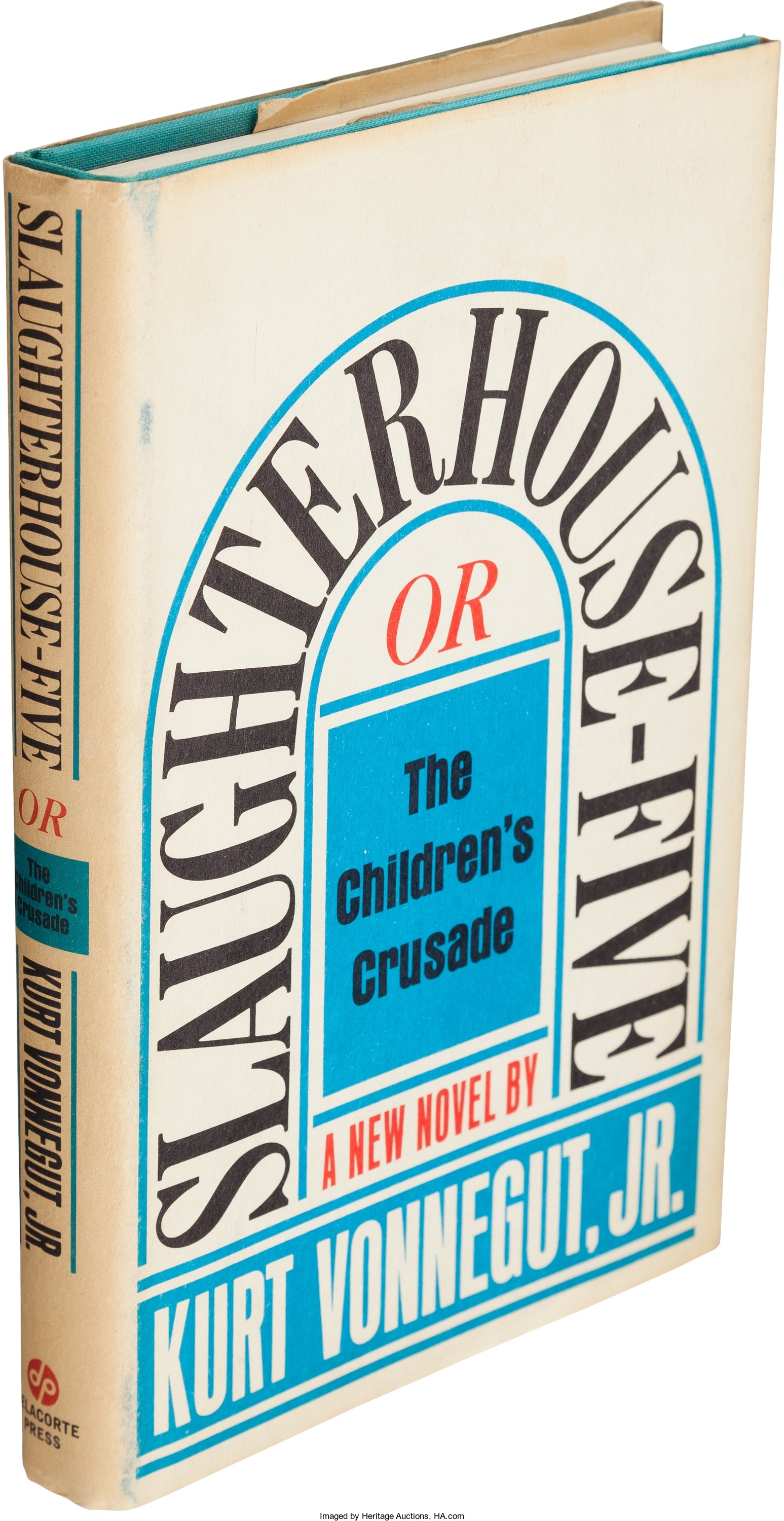
A 1969 presentation copy of Kurt Vonnegut’s Slaughterhouse-Five, inscribed by the author, realized $4,500 at an April 2015 Heritage auction. A central storyline is the main character surviving the Allied firebombing of Dresden.

By Jim O’Neal

The famous bombing raid of Dresden, Germany, on Feb.13-15, 1945, has been called the most barbaric, senseless act of World War II. During the night, the RAF Bomber Command carried out the first raid, with 873 bombers dropping thousands of incendiaries and high-explosive bombs as large as 4 tons. This set the city on fire and started a ferocious firestorm. As the rising columns of intense heat sucked up oxygen and burned it, hurricane-like winds were created and temperatures soared up to 1,000 degrees Fahrenheit.

At noon, 311 B-17s from the U.S. Eighth Air Force dropped 771 tons of bombs on the flaming city, specifically with the intent of killing firefighters and rescue workers as they worked on the streets. The following day, another 210 B-17s dropped 461 tons of bombs on the remains of the city.

The firestorm raged for four days and could be seen from 200 miles away.

On the ground, people in air-raid shelters suffocated or were baked alive. Author Kurt Vonnegut (a German POW) described the scene in a letter to his parents: “On February 14th, the Americans came over, followed by the R.A.F. Their combined labors killed 250,000 people in 24 hours and destroyed all of Dresden – possibly the world’s most beautiful city. But not me. … After that we were put to work carrying corpses from air-raid shelters; women, children, old men; dead from concussion, fire or suffocation. Civilians cursed us and threw rocks as we carried bodies to huge funeral pyres in the city.”

Vonnegut was eventually liberated by the Soviets after their planes strafed and bombed his POW railroad car. He said he was the only man to be shot at by Germans, Americans and Russians … and bombed by the British … and survive.

Why would the Allies want to bomb a commercial city into ruins when it was probably devoid of any genuine war targets? One theory is that they had simply run out of strategic places to hit. The cities along the Rhine-Ruhr in Western Germany had been demolished and/or occupied by mid-February. Berlin, Leipzig and other central cities were rubble. Dresden was one of the few relatively intact cities and was attracting refugees.

The British, unjustifiably, got most of the blame and the attack became a mark of shame. So much so that Marshal Arthur Harris, Commander of the RAF Bomber group, was the only major British wartime leader not to be honored with peerage after the war.

Vonnegut’s death toll was gradually reduced over time to 35,000, but his sci-fi book and movie Slaughterhouse-Five is filled with his WW2 experiences.

Jim O'NielIntelligent Collector blogger JIM O’NEAL is an avid collector and history buff. He is President and CEO of Frito-Lay International [retired] and earlier served as Chairman and CEO of PepsiCo Restaurants International [KFC Pizza Hut and Taco Bell].
Railroads Helped America Claim Position as Most Powerful Nation on Earth

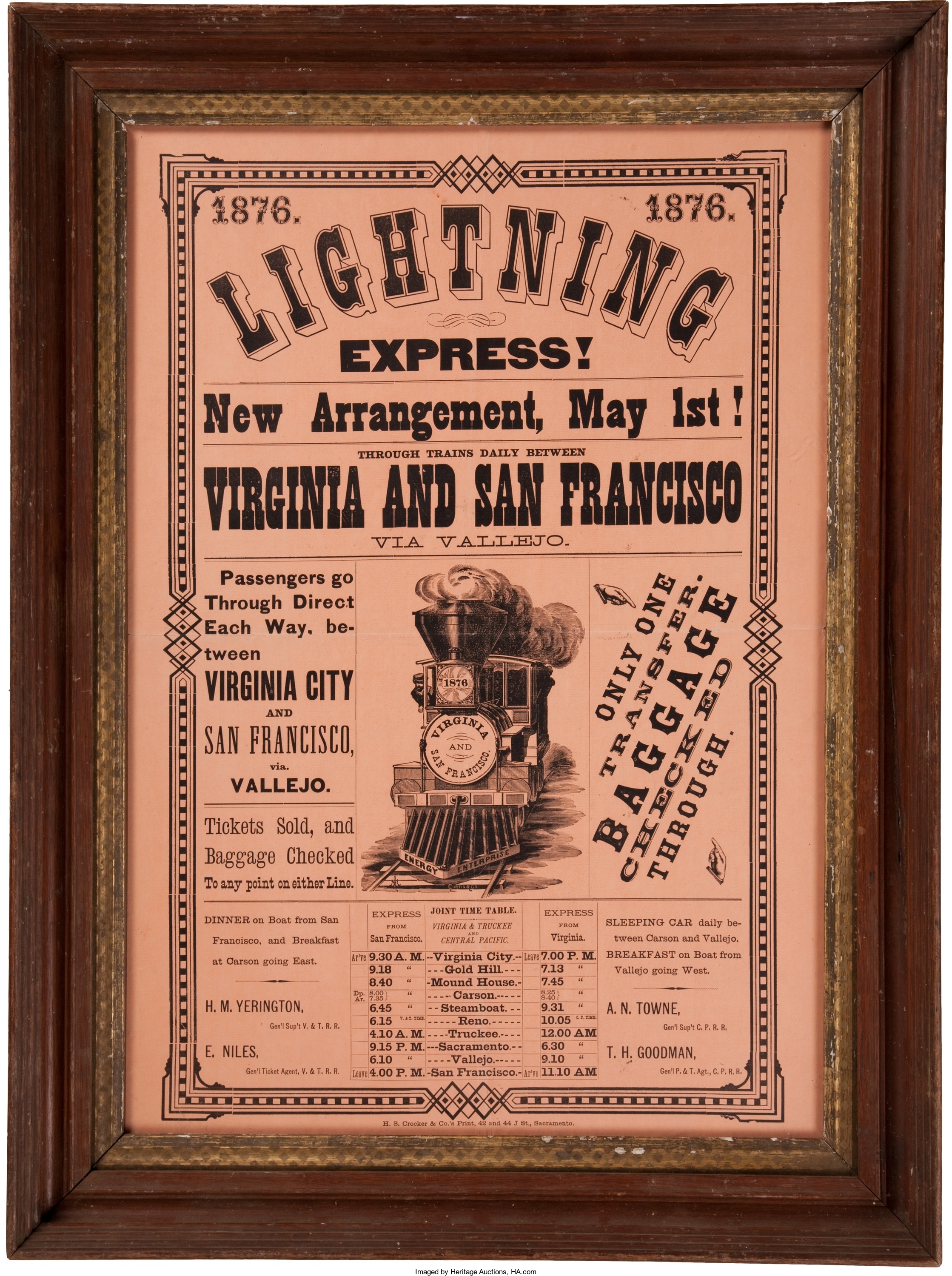
This 1876 “Lightning Express” broadside promoting the first through train service connecting the gold and silver fields of Virginia City, Nev., with San Francisco realized $13,145 at a November 2011 Heritage auction.

By Jim O’Neal

The first American railroad was only 13 miles of track and formally known as the Baltimore & Ohio Railroad. The “B&O Line” was started by a group of Baltimore merchants in 1828 and opened in 1830. At the time, turnpikes, rivers and canals were the primary modes of travel and transport.

By the beginning of the Civil War, railroads had become a major American industry, with numerous companies competing in a broad geographic area over 30,000 miles of track. The first railroad to link the East to the West was completed in 1869.

The Central Pacific Railroad had started in Sacramento and immediately had to confront the Sierra Nevada mountains … 7,000 feet up from the Sacramento Valley to the summit of the Sierras. Then there was the critical issue of labor since the mines were paying premium rates and workers were a scarce commodity.

A controversial decision was made to bring in Chinese laborers. Creative companies sprang up to organize these activities and, ultimately, 12,000 Chinese workers were digging and blasting through the mountains. For $30 a month, they had to feed themselves and live in makeshift camps alongside the tracks. When it snowed, they carved out entire galleries under the snow and lived there for weeks at a time.

The Union Pacific Railroad began in Omaha, Neb., and their laborers were primarily Irish, up to 10,000 at times, although a few Civil War veterans and other migrants were used. Brigham Young, one of the original incorporators of the Union Pacific, was instrumental in steering the railroad through Utah. This provided badly needed jobs for Europeans who had come to join the Latter-day Saints.

When the two railroads finally met, it was in Promontory, Utah, and the Promontory Spike was pounded into the ground on May 10, 1869.

Big projects, big money and big government always seem to include corruption. And so it was with the Transcontinental Railroad. During the 1872 reelection campaign of President Ulysses S. Grant, a major scandal erupted that ground Washington, D.C., to a standstill. Major members of the administration and other ranking politicians were charged with enriching themselves. By then, railroads had become a major force in politics and everyday life. To have the industry linked to wild accusations of bribery and corruption was a significant letdown.

The House of Representatives was forced to start hearings after scandals erupted in newspapers almost daily. They started in closed session, but were soon open as crowds of reporters and spectators overflowed the rooms. It was the center of attraction for the nation’s capital on a daily basis.

Eventually, they caught fewer than 25 politicians who had profited off the railroads, but a larger group was actually linked to the scandal, including cabinet members, Vice President Schuyler Colfax, Vice President-elect Henry Wilson, Speaker of the House James Blaine and Representative James Garfield, the future president. All were tainted with the same scandalous brush, although some were able to mitigate the charges and salvage their reputations.

In spite of the scandals, the nation obviously benefited significantly from railroads, primarily because of their influence on settlement patterns of those who ventured West. The large, empty space that was still generally called “The Great American Desert” flourished.

Wagon-train caravans were largely abandoned and huge areas of land were transformed into productive farms to help feed a growing country. Ranch land developed all the way to the Pacific Ocean. Everyone seemed to benefit with the exception of the Plains Indians, who were exploited as their lands, mineral rights and even their way of life were lost.

The United States was entering the Gilded Age and gearing up to leverage the enormous opportunities waiting in the 20th century. The American worker was the envy of the world as compulsory education created large pools of labor that were literate and competent. They were eager to hone their skills with the new technologies that Edison, Bell, Ford, et al. were churning out. When combined with its natural resources, rule of law and a Constitutional Democracy, America was poised to become the most powerful nation on Earth.

Railroads played an important role in that achievement.

Jim O'NielIntelligent Collector blogger JIM O’NEAL is an avid collector and history buff. He is President and CEO of Frito-Lay International [retired] and earlier served as Chairman and CEO of PepsiCo Restaurants International [KFC Pizza Hut and Taco Bell].
1968 Was Much Lousier Than the Queen’s Annus Horribilis

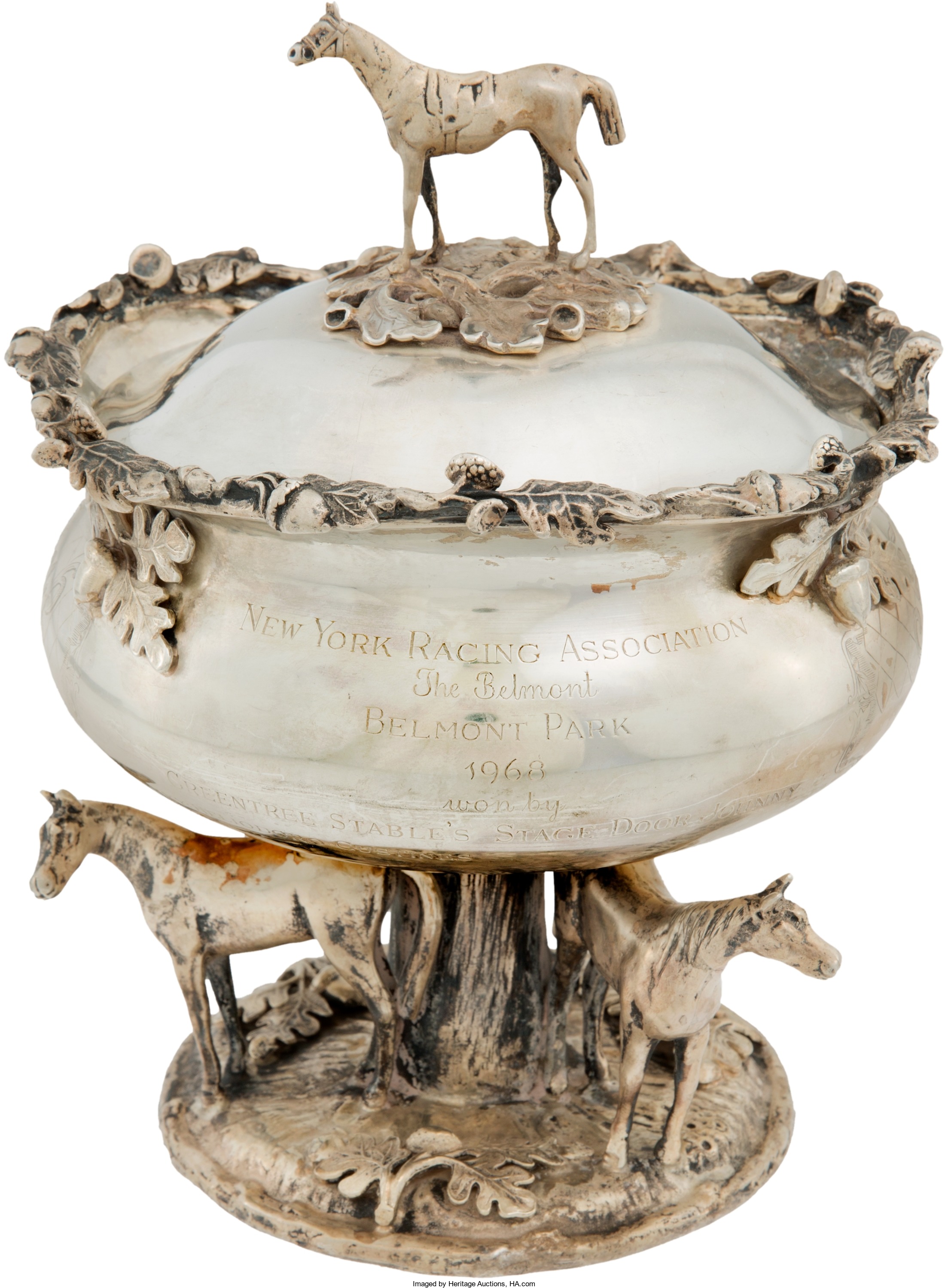
The 1968 Belmont Stakes winner’s trophy presented to jockey Heliodoro Gustines for his win on Stage Door Johnny realized $28,680 at a February 2015 Heritage auction.

By Jim O’Neal

Citing a string of unpleasant events, Queen Elizabeth II in a speech on Nov. 24, 1992, labeled the year her annus horribilis.

For many in the United States, 1968 was more of a lousy year than the events that seemed to perplex Her Royal Majesty.

In Washington, D.C., the Willard Hotel, where at least seven presidents had been guests (starting with Franklin Pierce), went bankrupt.

China exploded its seventh atomic bomb in an attempt to catch up, and France did the same with its first hydrogen bomb. A U.S. Air Force B-52 crashed in Greenland, spilling radioactive materials on an expanse of ice. It was the 13th time such an accident had occurred.

In Biafra, 3 million civilians died in a war with Nigeria, many of them of basic starvation as the world stood by and did nothing.

It was that kind of year.

On Jan. 31, the Tet Offensive in Vietnam caught everyone off guard and was followed by the My Lai Massacre. LBJ decided he’d had enough and did not stand for re-election.

At the Kentucky Derby, Dancer’s Image finished first, but was disqualified after traces on phenylbutazone were discovered in the post-race urinalysis. Then, Dancer’s Image was disqualified in the Preakness for bumping. So, Forward Pass won two of racing’s Triple Crown. Dancer’s Image did not run the Belmont – won that year by Stage Door Johnny – and remains the only winner of the Derby to be disqualified.

On April 4, Martin Luther King Jr. was assassinated and cities across the nation rioted. On June 5, Robert Kennedy was assassinated in Los Angeles at the Ambassador Hotel as he was trying to follow his brother into the White House.

It was that kind of year.

The U.S. submarine Scorpion was lost at sea with 99 men, which would have been the biggest naval disaster of the year. However, it was overshadowed by the spectacular fate of another U.S. ship near North Korea.

The USS Pueblo was labeled an environmental research ship, but was really an electronic snoop with antennas and high-tech radar. They cruised the Sea of Japan seeking signals from North Korea. On Jan. 23, the Pueblo was attacked and captured by the North Korean navy.

The news that a U.S. naval vessel had been captured – the first since the USS Chesapeake in 1807 – stunned the entire country. U.S. Secretary of State Dean Rusk called it an act of war and senators were howling for action! Two appeals to Russia to act as a mediator were rejected and the U.N. Security Committee refused to get involved.

Finally, U.S. and North Korean negotiators got the men and Commander Lloyd M. Bucher released. But, incredibly, the USS Pueblo is now a tourist attraction in Pyongyang at the Victorious War Museum, complete with tours and a video. The U.S. State Department is still hoping for a release … 48 years later.

Annus horribilis … American style.

Jim O'NielIntelligent Collector blogger JIM O’NEAL is an avid collector and history buff. He is President and CEO of Frito-Lay International [retired] and earlier served as Chairman and CEO of PepsiCo Restaurants International [KFC Pizza Hut and Taco Bell].
China’s Fall to Communists Launched Dark Period in American History

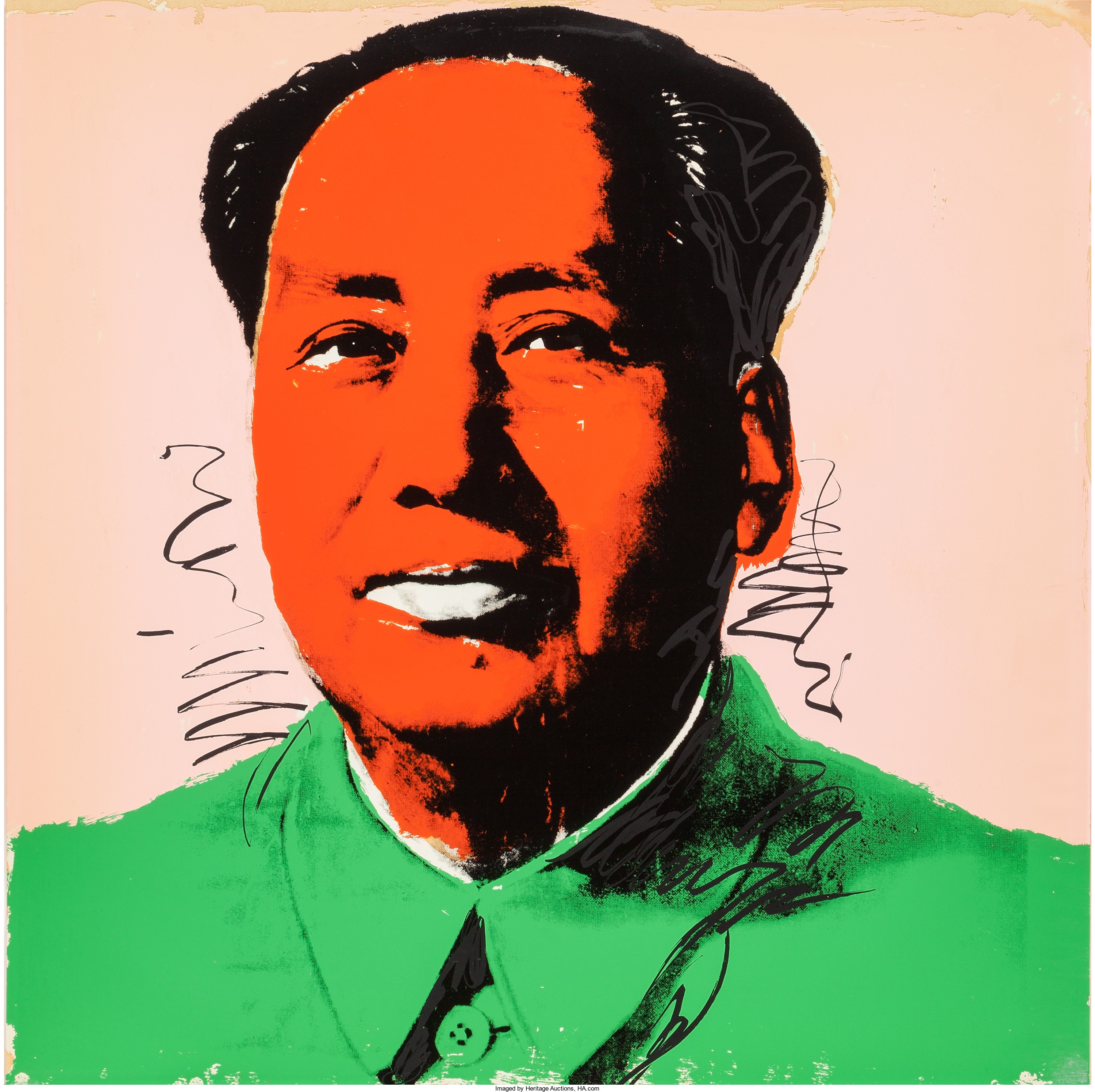
Andy Warhol’s screenprint Mao (With Orange Face), 1972, realized $47,500 at a May 2015 Heritage auction.

By Jim O’Neal

On April 4, 1949, the day the United States and 11 other nations signed the North Atlantic Treaty Organization (NATO), a Communist General by the name of Chu Teh began massing a million of Mao Tse-tung’s seasoned troops on the north bank of the Yangtze River. This was the last natural barrier between Mao and the few southern provinces still loyal to Chiang Kai-shek’s Nationalist Party, or Kuomintang (KMT).

Three weeks later, Chu Teh’s veterans stormed across the Yangtze, but only met token resistance. Chiang had withdrawn 300,000 of his most reliable soldiers to form a rear-guard perimeter around Shanghai. A week later, Chiang fled across the Formosa Strait to Taiwan, along with a cadre of KMT, but it seemed clear that China was a lost cause.

Mao Tse-tung proclaimed Red China’s sovereignty on Sept. 21, 1949 – the same day West Germany declared its sovereignty – and this was followed by Chiang announcing the formation of his new government in Taipei. Chinese politician Sun Yat-sen’s 50-year-old vision for a democratic China was dead, and the U.S. expectation that Chiang would establish the non-communist world’s eastern anchor died with it.

The world now had two Chinas!

The American response was slow. Newspapers had carried regular accounts of the Chinese Communists and the KMT’s slow disintegration, but China was so vast, the geography so unfamiliar and movements of the unmechanized armies so slow, that Americans had lost interest in these distant battles.

However, when the KMT collapsed, U.S. Secretary of State Dean Acheson decided to lay out the entire situation before the American people. On Aug. 5, 1949, the State Department issued a 1,054-page white paper, conceding the world’s largest nation had fallen into communist hands. The chain of events leading to this tragic end was also explained, including the $2 billion that had been largely wasted and the 75 percent of American arms shipments that had fallen into Mao’s hands.

The American people were stunned by this admission. Everything American diplomats had achieved in Europe – the Truman Doctrine, the Marshall Plan, NATO – seemed to have been annulled by this disaster in Asia.

The burning question was … who was responsible for losing China?

Richard Nixon of California flatly blamed the Democrats. On Feb. 21, a young congressman from Massachusetts, John F. Kennedy, said that at Yalta, a “sick” Franklin Roosevelt had given strategic places to the USSR. This, Kennedy concluded, “is the tragic story of China, whose freedom we fought to preserve. What our young men saved, our diplomats and our presidents have frittered away.”

Thus began one of the darkest periods in American history. President Harry S. Truman’s Executive Order 9835 created the “Loyalty Order” program and in 1947, the FBI began stalking “disloyal and subversive persons” by conducting name checks on 2 million federal employees and background checks on 500,000 annual applicants for government jobs. During the program’s five years, the FBI screened over 3 million Americans and conducted 10,000 field interviews. Preliminary indictments were filed against 9,977, of whom 2,961 were arraigned.

Seth Richardson, chairman of the Subversive Activities Control Board, summed up his findings for a Congressional committee: “Not one single case or evidence directing toward a case of espionage has been found by the FBI indicating that a particular case involves a question of espionage.”

In the entertainment industry, “blacklisting” became a form of blackmail and took its toll on a small group for a full decade.

Time has blurred the sharp contours of the Age of Suspicion, but it was a dark period that must never be allowed to recur.

We still don’t know, or agree on, who lost China.

Jim O'NielIntelligent Collector blogger JIM O’NEAL is an avid collector and history buff. He is President and CEO of Frito-Lay International [retired] and earlier served as Chairman and CEO of PepsiCo Restaurants International [KFC Pizza Hut and Taco Bell].

Big-Money Elections Date Back More than 100 Years

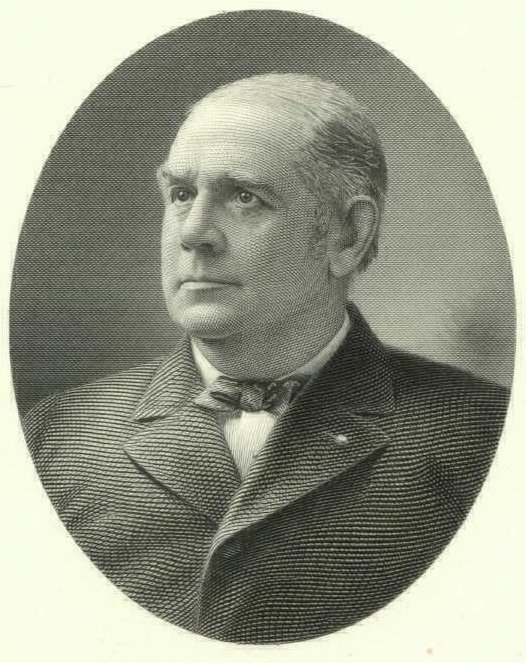
Marcus Alonzo Hanna is considered one of the earliest “kingmakers” in American politics.

By Jim O’Neal

Bernie Sanders just announced his campaign has raised an astounding $222 million to date, with 99 percent coming from individuals!

Money has always been a factor in politics, however, modern political fundraising really got going in 1896 when William McKinley ran for president. It was due to the innovation of a successful Cleveland businessman who had made his personal fortune in the coal and iron industry.

Marcus Alonzo Hanna (1837-1904) was rejected for participation in the local Civil Service Reform Association, so he opted for the world of politics instead. He had some quirky habits like gorging on hard candy, eating chocolates by the box and a belief that government existed to serve business. He preferred the company of other wealthy men and scoffed at books and scholars alike.

He became recognized as the Republican Party boss of Ohio, a state that had produced Supreme Court Justices, presidential cabinet members, and five presidents (this would later increase to eight … the record). Ohio was a wonderful training ground for national politics.

Hanna had successfully backed McKinley (former congressman) for Ohio governor in 1892 and rescued him from bankruptcy in 1893 by paying off a $30,000 business debt. Three years later, he became McKinley’s full-time presidential campaign strategist after spending $100,000 of his personal money securing the Republican nomination for McKinley.

Hanna then positioned McKinley perfectly for the 1896 general election, first by successfully blaming the Democrats for the Panic of 1893 and then becoming the precursor of the modern media consultant. He controlled the political schedule and tailored a message that fit the strategy of the campaign. He insisted that McKinley simply sit on his front porch in Canton, Ohio, receive delegations from all over the country and occasionally issue a carefully worded public speech.

Even the railroads cooperated by reducing fares for Canton-bound Republican delegations. They flocked by the trainload. In a single day, McKinley spoke to 80,000 people, who in turn exchanged greetings and pledged their loyalty. Meanwhile, hundreds of orators crisscrossed the country spreading the word of the Ohio Republican. The campaign paid for the trips and Hanna personally approved every itinerary and all invoices.

Then they countered every speech by Democratic rival William Jennings Bryan by printing millions of documents in German, French, Italian, Dutch, Hebrew and Spanish and then distributing them in closely contested states. This combination of messaging and pamphleteering on such a vast scale cost more money than had ever been spent on any political campaign. New York banks, insurance companies and millionaires were expected to kick in 0.25 percent of their capital and even John D. Rockefeller’s Standard Oil Co. contributed $250,000!

The result was an overwhelming victory and legislators have been chasing “campaign finance reform” ever since. I wish them luck, as the price for admission today is a cool billion dollars. Even Mark Hanna might be shocked by today’s election economics, but I suspect he would adapt rather easily. He was one smart dude!

P.S. Hanna also made it into the U.S. Senate a couple of times before dying in 1904.

Jim O'NielIntelligent Collector blogger JIM O’NEAL is an avid collector and history buff. He is President and CEO of Frito-Lay International [retired] and earlier served as Chairman and CEO of PepsiCo Restaurants International [KFC Pizza Hut and Taco Bell].